Case study
TRAX: A waterjet that runs on rainwater
TRAX (formerly Safety Step Australia) · Rock Valley, NSW, Australia · Ordered December 2019
Customer background
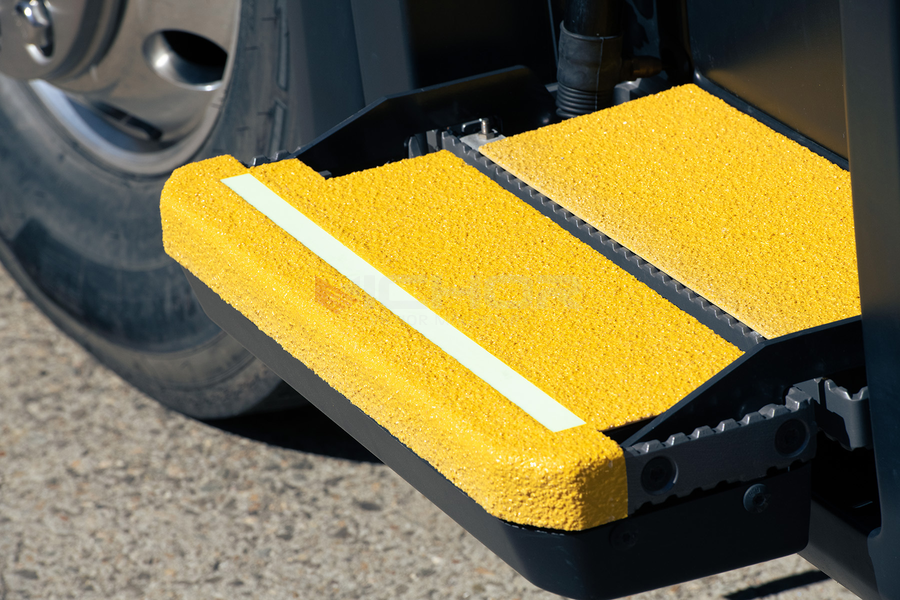
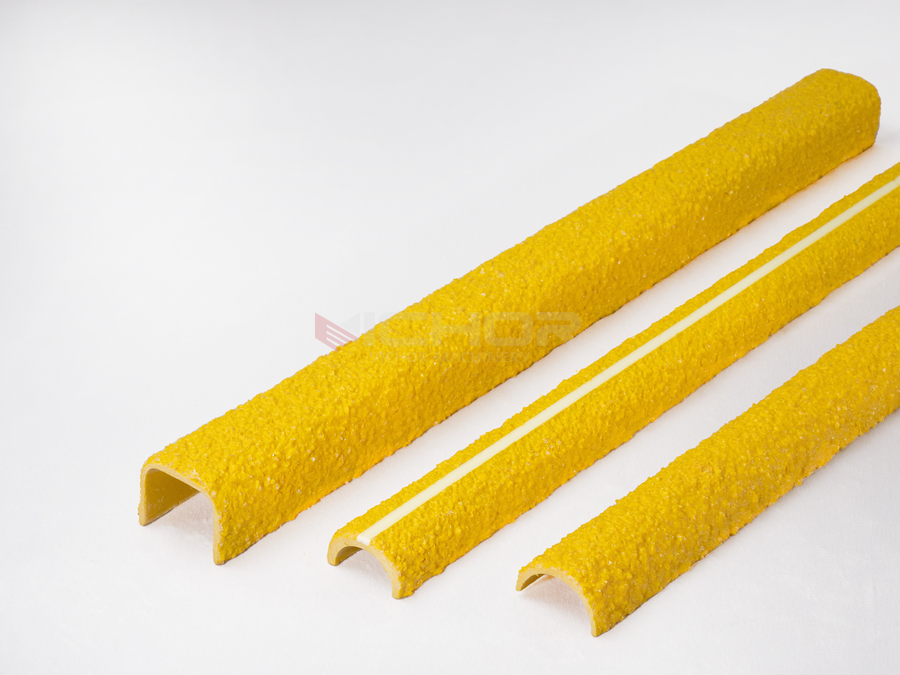
Steve and Christine Quinn started the business in Auckland, New Zealand, in 1993. It grew into Safety Step, set up manufacturing in Australia, and became TRAX in 2023. Their son James joined in 2008, and together father and son developed the company's all-composite FRP anti-slip covers, with the grit running right through the material instead of coated on the surface.
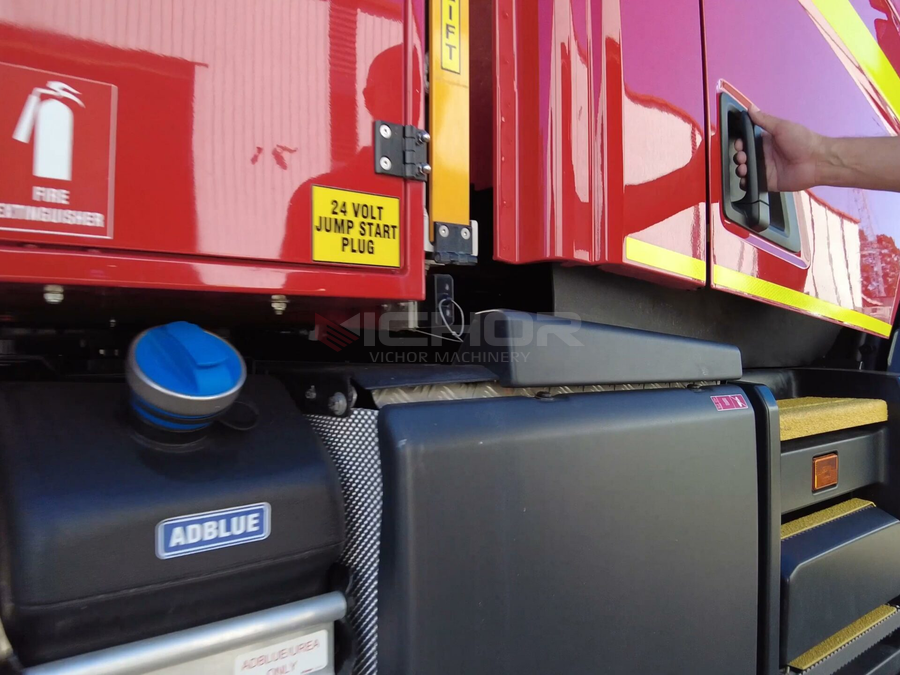
The covers go on truck steps, mining equipment, airport ground support equipment and emergency vehicles.
Concerns before buying
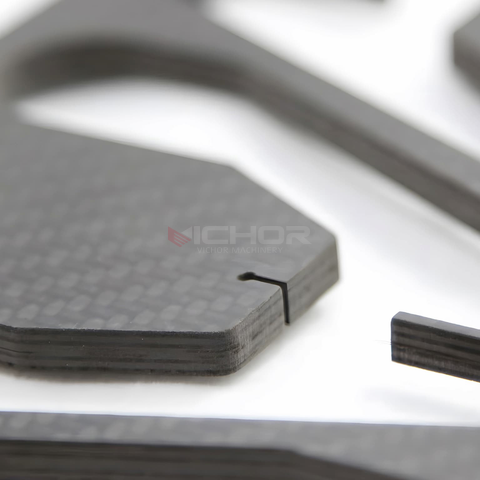
Their material almost never changes: 4 mm FRP with white fused alumina grit embedded right through it. As Steve put it:
“…the material we will be cutting will almost always be the same - 4mm FRP (fiberglass with embedded white fused alumina grit).”
Steve Quinn · November 2019 · Email
That grit is an abrasive in its own right, and it blunts saw blades and router bits fast.
Then there was water. The factory is in a rural area and runs entirely on rainwater collected in tanks:
“As explained to you, we are in a rural location and rely upon rain water collected in large tanks so our supply is finite.”
Steve Quinn · December 2019 · Email
Why VICHOR
Before deciding, Steve wanted to hear from someone who already ran a VICHOR. We put him in touch with Scott of Scott's Steelworkz in New Zealand, and the two spoke:
“I had a chat with Scott, he lives not far from where I live in New Zealand.”
Steve Quinn · November 2019 · Email
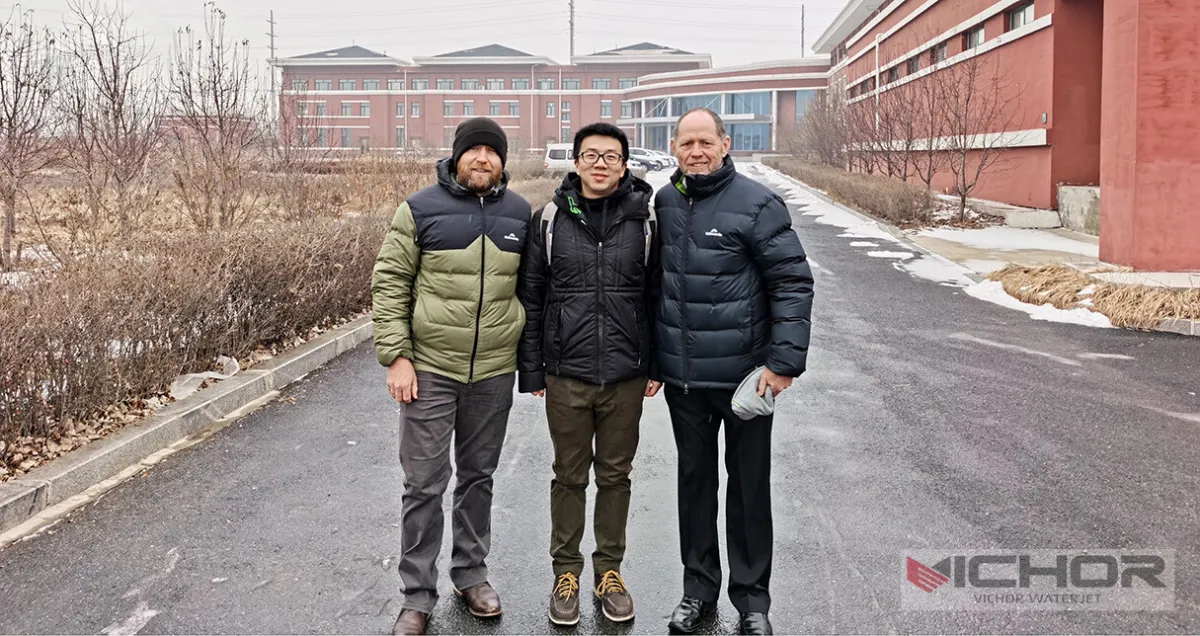
In December 2019, Steve and James came to see our factory and signed the contract that same month.
Machine and configuration
| Model | WCM-P60III-G3020 |
| Ordered | December 2019 |
| Intensifier pump | WCM-P60III, plus a standby intensifier |
| Cutting table | G3020 · 3000 × 2000 mm |
| Cutting head | One 3-axis cutting head |
| CNC system | ECS CNC system |
Installation
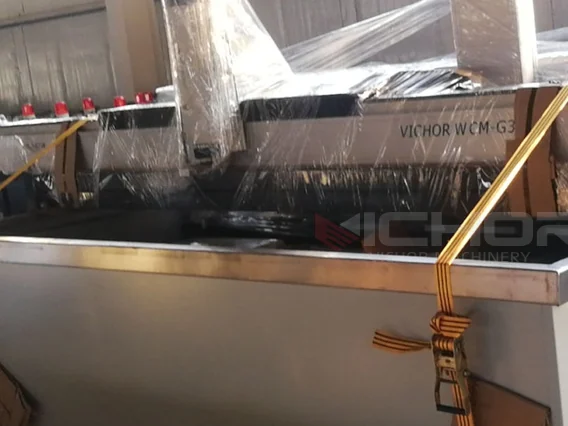
The machine shipped in February 2020. By the time it cleared customs in Australia, COVID had closed the borders and our engineers could not travel. So we sent written installation instructions, connection diagrams and step-by-step videos, and answered every question as it came up. James had never worked with a waterjet before. With help from a local engineer, he assembled the machine himself.
“Your written instructions are a really big help.”
Steve Quinn · April 2020 · Email
Once the factory's power supply and water system were ready, we guided James through start-up remotely.
Running on rainwater
Every drop the factory uses is collected rainwater, and all of the waterjet's water is recovered and reused. The family built its own closed-loop treatment system, and we helped them choose the equipment and supplied the oil chiller and deionization components.
TRAX still buys its consumable parts from VICHOR.
01
Rainwater tanks
02
Settling
03
Fine filtration, ~0.4 μm
04
Deionization
05
Ozone treatment
06
Waterjet, then back to the loop
What this case shows
A family business with no waterjet experience assembled its own machine while the borders were closed. Today it cuts its own products on rainwater.
“We are very pleased with both the machine purchased from Vichor, and with the outstanding and ongoing support you and your team has offered.”
Steve Quinn, TRAX · December 2024 · Email
FAQ
FRP cutting: common questions
Can a waterjet cut FRP with embedded abrasive grit?
Yes. A waterjet has no saw blade or router bit for the grit to blunt: the abrasive jet erodes the fiberglass and the grit together. TRAX cuts 4 mm FRP with embedded white fused alumina grit on a single 3-axis cutting head.
Can a waterjet run on recycled water?
Yes, as long as the water is treated to the quality the pump requires. TRAX runs on collected rainwater and reuses all of its waterjet water, treated through its own settling, fine filtration, deionization and ozone system.
Can a VICHOR waterjet be installed without a VICHOR engineer on site?
Yes. When our engineers could not travel during COVID, TRAX assembled its machine with our written installation instructions, connection diagrams and step-by-step videos and the help of a local engineer, while we answered questions remotely.
More case studies
QUOTE
Cutting FRP or other abrasive composites?
Tell us the material, thickness and sheet size you cut. We'll recommend a configuration, estimate the cutting time and send you a price.