Case study
Latitude: Underwater waterjet cutting for a French rocket company
Latitude SAS · Reims, France · Installed in 2026
Customer background
Based in Reims, France, Latitude develops small satellite launch vehicles and provides launch services.
What mattered to the customer
Latitude first inquired through VICHOR's website in July 2025. The team asked about delivery to Reims, on-site installation by a VICHOR engineer, certification documents, and how thick an aluminum plate the machine could cut. Most of their cutting would be aluminum plate between 1.5 and 25 mm thick, with thicker material needed only occasionally and cutting speed less important for those thicker plates. When choosing options, they specifically asked whether the water level in the cutting tank could be raised and lowered quickly. After ordering, they asked how the water level control system worked.
Why VICHOR
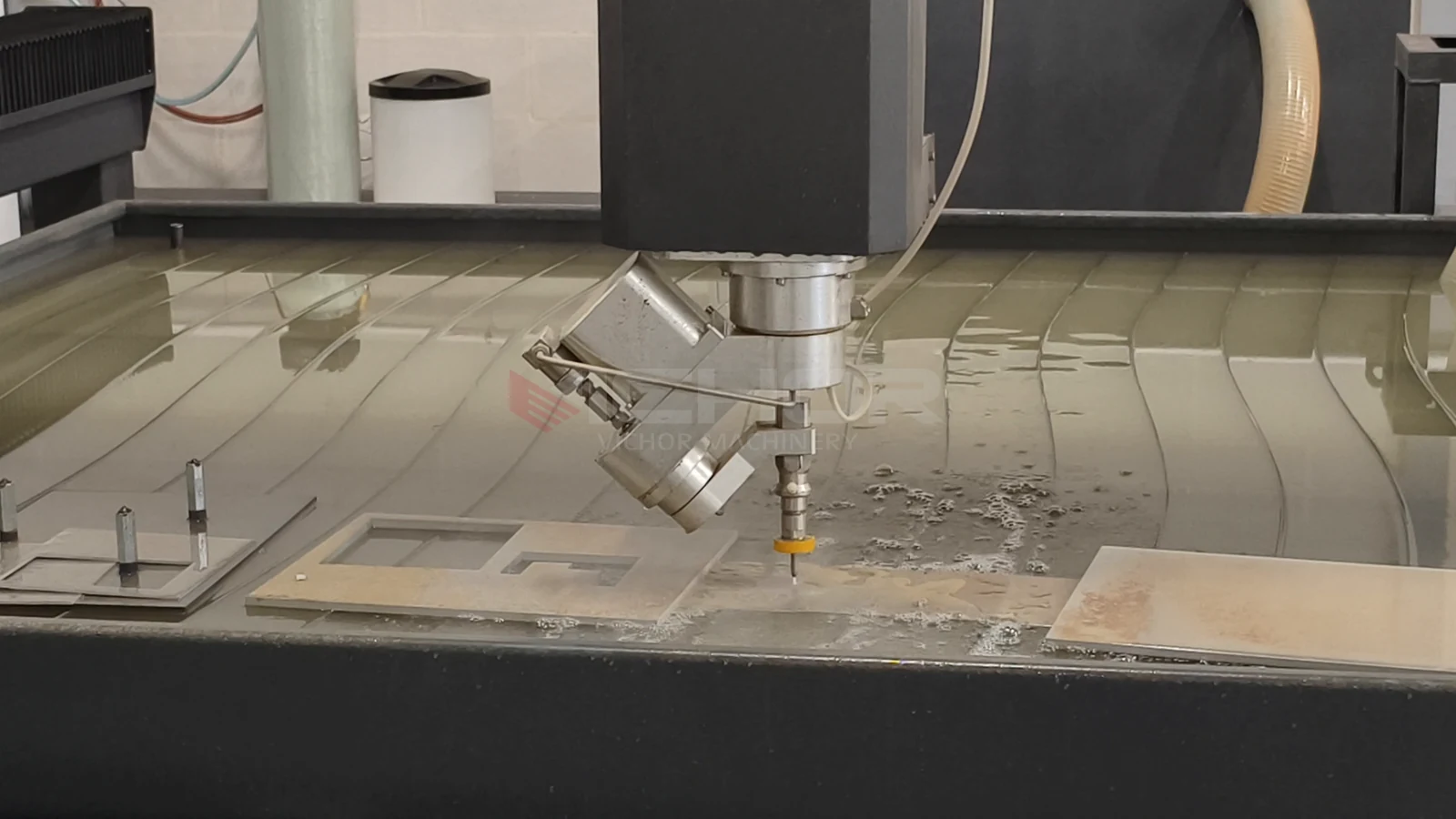
- Underwater cutting: VICHOR equipped this machine with a water level control system. Before cutting, the water level is raised above the workpiece so it can be cut under water. Afterwards, the water is lowered to unload and load workpieces. Two pumps handle draining and refilling to lower and raise the water level in the cutting tank.
- A pump chosen for the work: once Latitude explained that it mainly cut thin aluminum plate, VICHOR recommended the standard P60IV intensifier pump.
- European owners to talk to: VICHOR introduced two owners in Italy, including Francesco Gullotti. Latitude later reported that those European users' feedback on the equipment and service had been very helpful.
- CE documentation was supplied with the quotation.
Machine and configuration
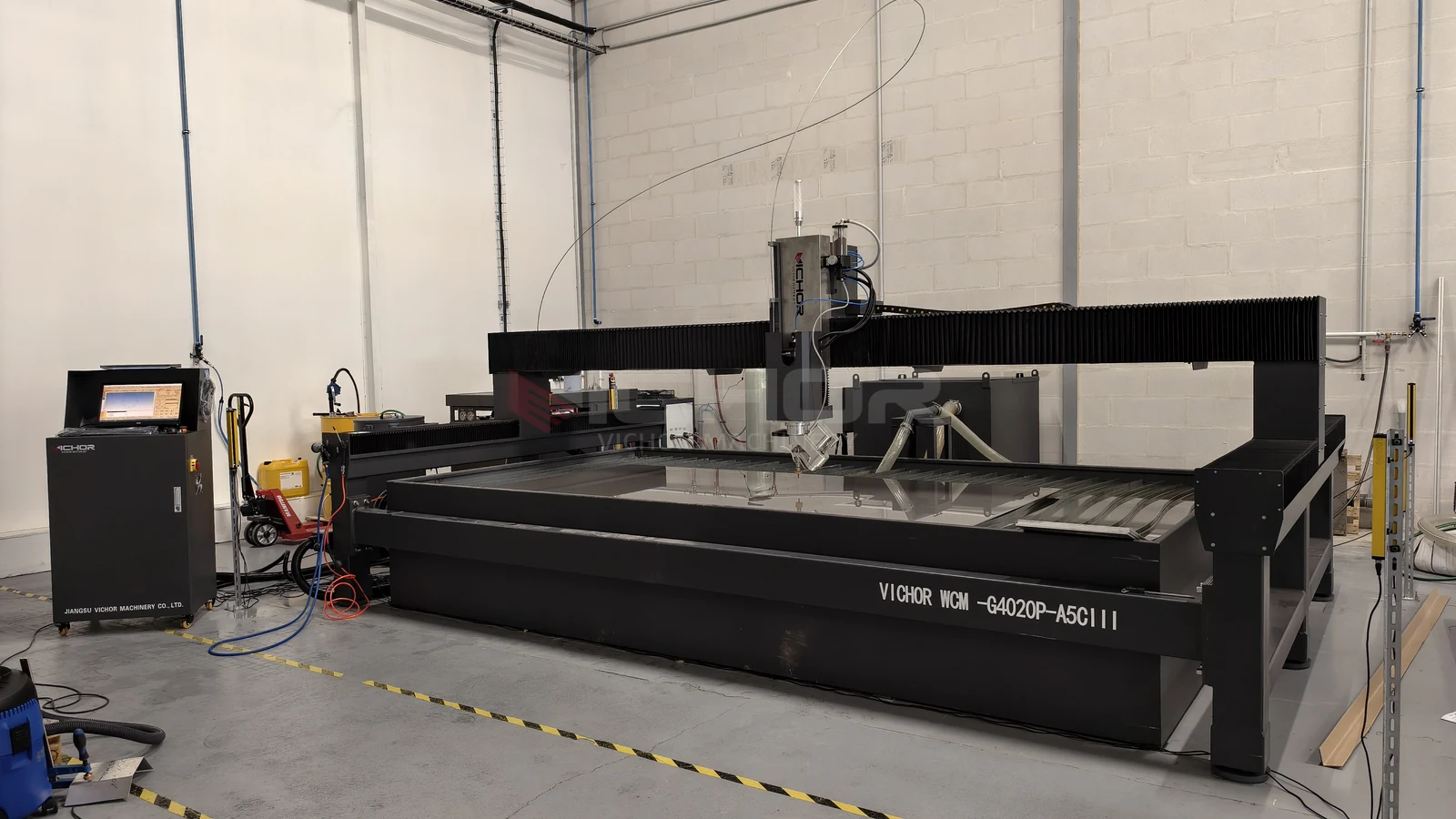
WCM-P60IV-G4020P-A5CIII-NC100
| Standard equipment |
|
|---|---|
| Selected options and upgrades |
|
What underwater cutting changes
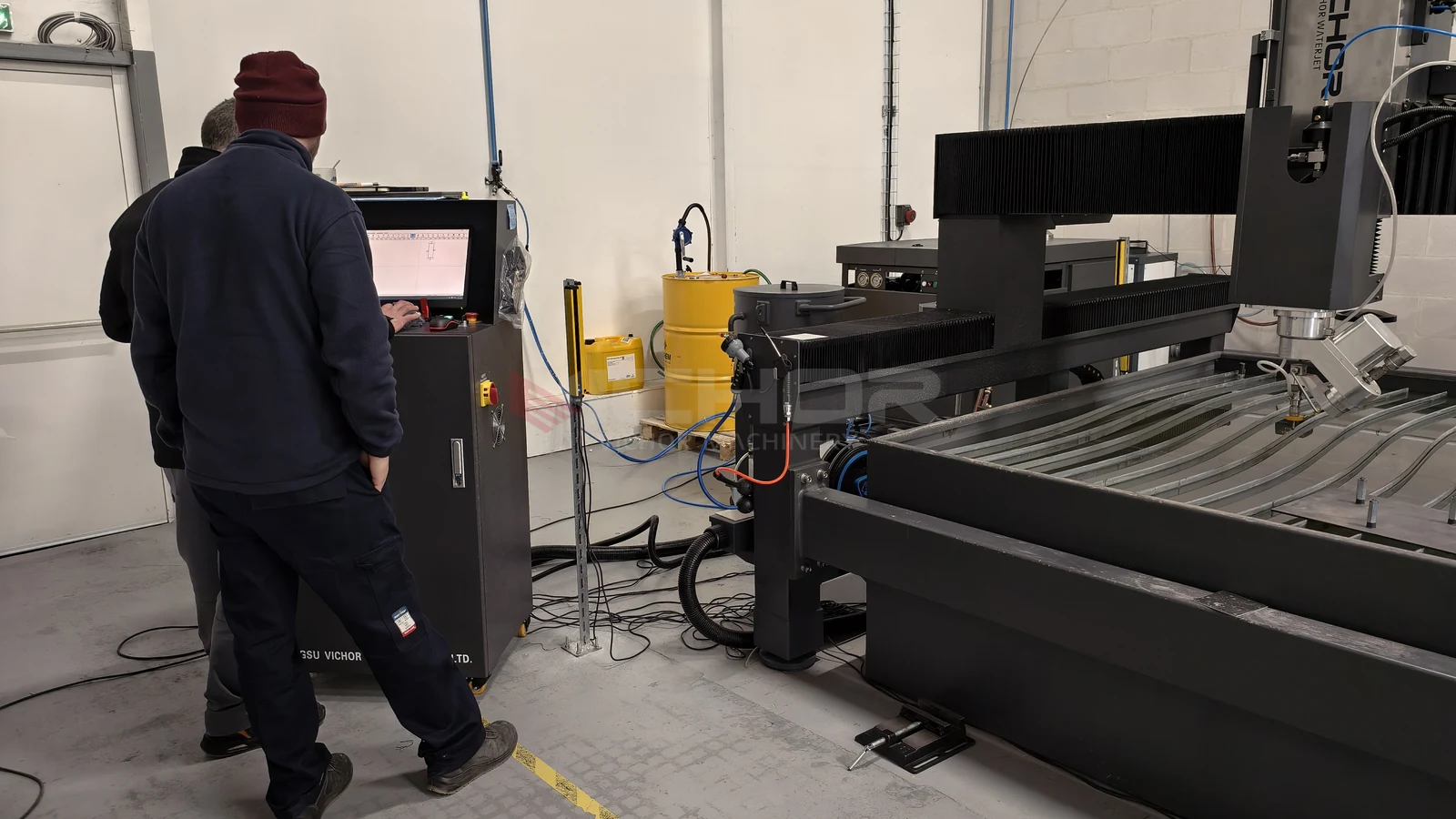
During underwater cutting, water absorbs most of the jet's energy after it passes through the workpiece. Workshop noise is greatly reduced. Less water and abrasive splash out, keeping the area around the machine cleaner and reducing abrasive dust in the air. The workpiece surface is also less prone to frosting from abrasive-laden splashback. For Latitude's mainly aluminum work, this helps keep part surfaces cleaner.
Installation and training
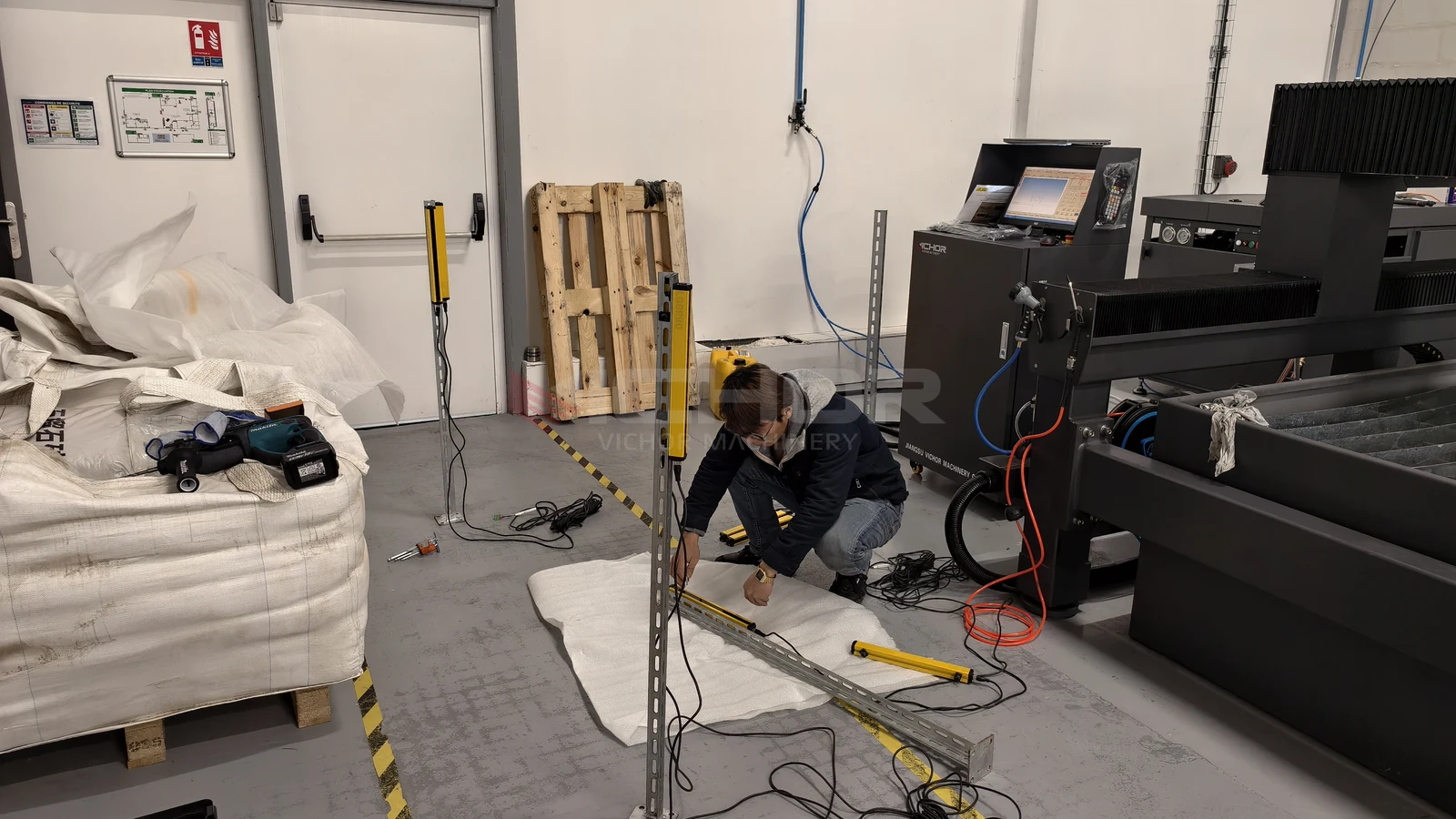
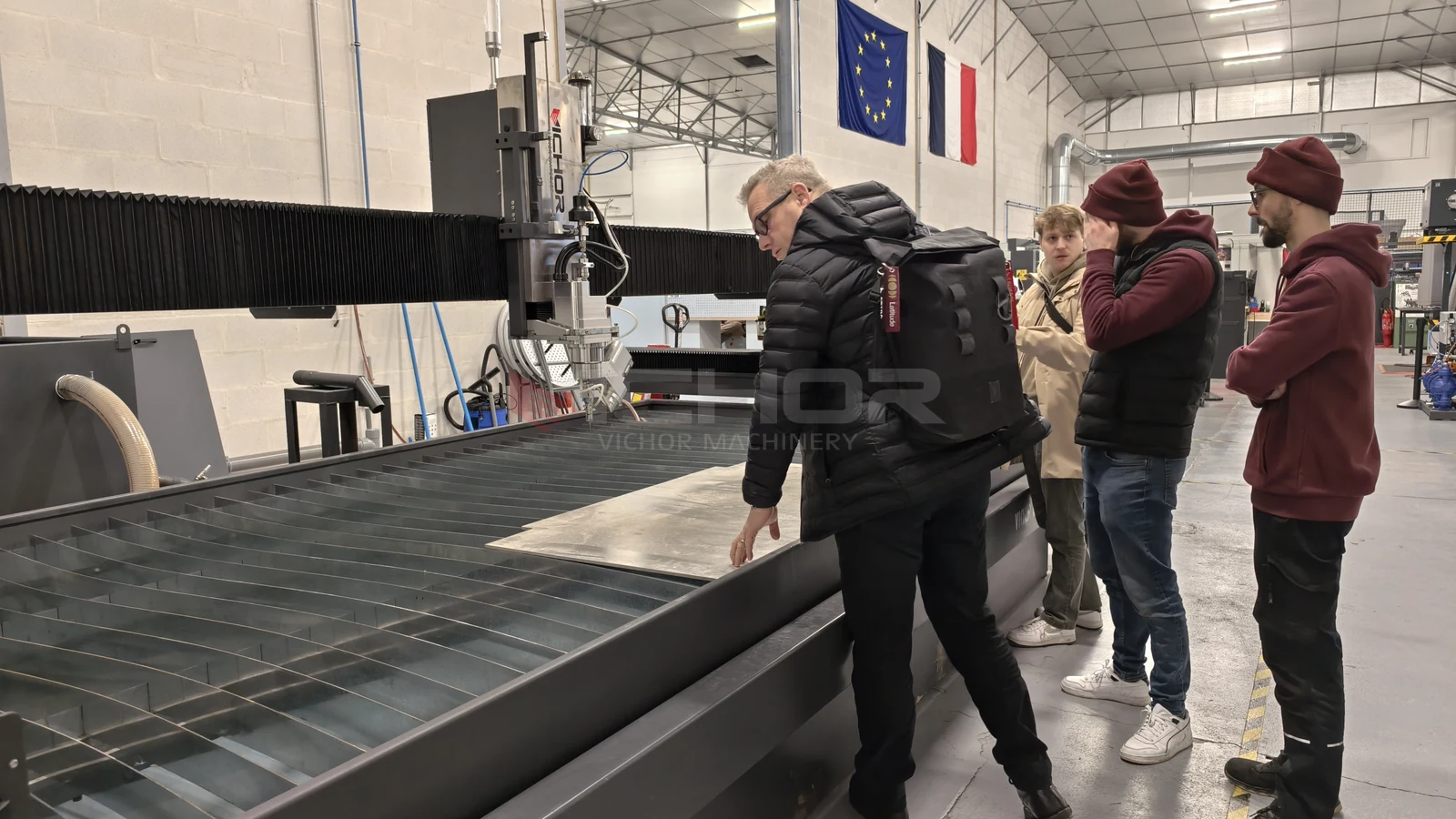
After the order, VICHOR sent the layout drawing and the requirements for water, electricity and compressed air. VICHOR answered Latitude's questions about power supply, drainage, water level control and abrasive removal one by one, so the team could prepare the site and position the equipment in advance. A VICHOR engineer then went to Reims in early 2026 to install and commission the machine and train the operators.
What this case shows
For a European company developing launch vehicles, choosing a waterjet involved more than whether it could cut. A quiet, clean workshop during cutting mattered too. VICHOR's water level control allows the workpiece to be cut under water. Together with an intensifier pump chosen for the work, European owners to talk to, and on-site installation and training, this helped Latitude choose VICHOR.
Frequently asked questions
What is underwater waterjet cutting?
The water level in the cutting tank is raised above the workpiece so the workpiece is cut under water. The water absorbs most of the jet's remaining energy, greatly reducing noise and splashing.
Is underwater cutting suitable for every workpiece?
Most metals, stone and glass can be cut this way. For materials that float, or very thick workpieces, the water level needs to be decided for the actual job.
More case studies
QUOTE
Cutting aluminum plate or other metals?
Tell us your material, thickness and table size. We'll configure the equipment for your actual work.