
An abrasive jet cuts external profiles, holes and complex shapes in metal plate. VICHOR starts from your material, what the part is for and how its edges will be used: flat brackets, decorative cutouts, parts with mating holes and bevels prepared for welding each call for a different cutting approach.
Materials and Applications
Common metal materials and part applications across the industry include:
- Materials: Carbon steel, stainless steel, aluminum, copper, titanium and wear-resistant steel.
- Applications: Flanges, gaskets, gears, brackets and decorative parts.
Material grades, thicknesses and surface requirements vary. Whether an edge is intended for assembly, welding or subsequent machining also affects the cutting path and edge requirements.
Waterjet is a cold cutting process, so there is no heat-affected zone. The same jet cuts every profile without tool changes, and nesting parts closely on the plate reduces offcuts and improves material utilization.
From Piercing to the Finished Edge: Paths, Edges and Thickness
Piercing and lead-in positions. External profiles, internal holes and narrow slots each need suitable starting and lead-in positions. Where each cut starts relative to holes, adjacent edges and the finished area decides how well small features and critical edges come out.
Cut edges and taper. Assess the top, bottom and full cut face against how the part will be used. Vertical mating edges need attention to taper. Welding bevels require a suitable cutting head and program for the bevel geometry.
Thickness and cutting results. Material thickness affects cutting time, edge striations and taper. Thickness, shape and the target edge quality together determine the processing parameters and complete machine configuration.
See how kerf width affects part dimensions.
VICHOR-Cut Samples: Profiles, Holes and Cutouts
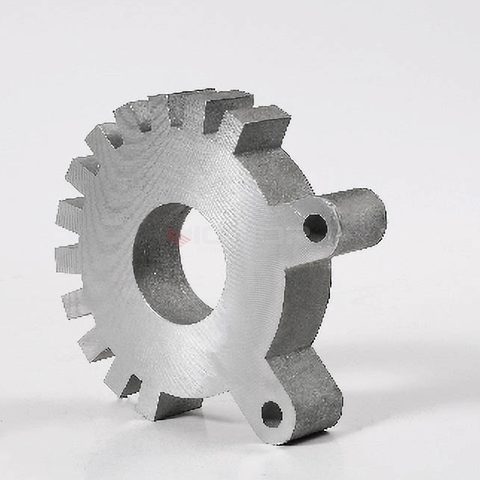
The following samples were cut by VICHOR to demonstrate shapes in metal components and decorative parts. Edge results can be assessed against the actual material and assembly or subsequent machining requirements. See the factory test-cutting section below for the confirmation process.
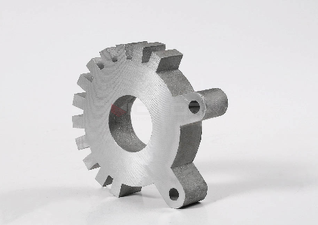
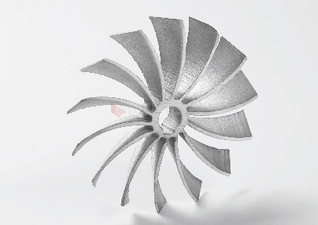
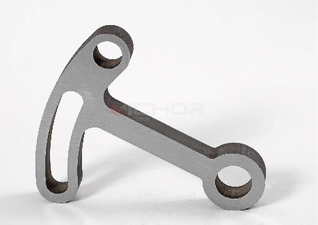
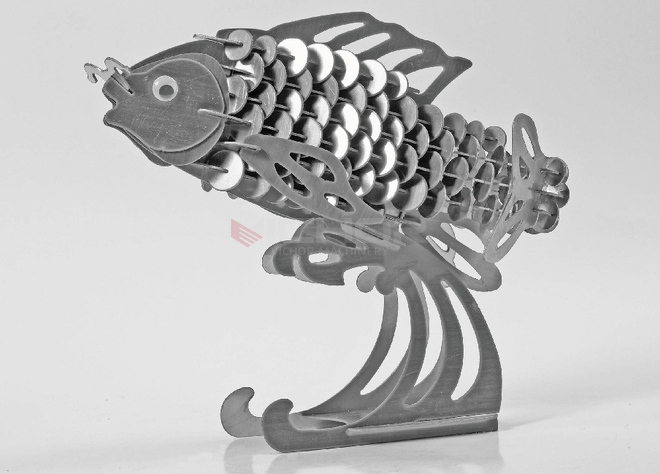
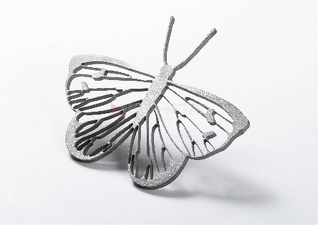
Caption: Toothed external profile and circular holes; impeller-shaped profile; bracket holes and cutouts; fish- and butterfly-shaped decorative profiles.
Configuration to Support the Part Requirements
The cutting table is selected for plate size, loading method and workpiece height. The pump is assessed against the material, thickness and production task. Flat profiles use a cutting head with a vertical jet. Consider the compact cutting head ABII for taper compensation, or the dynamic cutting head ACIII for bevels or spatial contours.
For carbon steel over 150 mm thick, we recommend the WCM-P90III.
With Weihong NcStudio, built-in basic CAM handles regular shapes. Nesting or 3D machining requires IGEMS under a separate license. VICHOR lists the required cutting head, CNC system and software options in the complete machine proposal.
Factory Test Cutting: Confirm the Proposal with Your Material
You can send your material to VICHOR for free test cutting at the factory. Include the material name or grade, thickness, plate dimensions, drawing and workload. Mark the finished area to retain, holes, mating edges and bevel requirements on the drawing, and explain any assembly, welding, surface treatment or other subsequent operations.
After the test, VICHOR provides cutting videos, photos and processing parameters. Use these results to assess the shape, edges and subsequent operations before confirming the complete machine proposal with us.
Frequently Asked Questions
Can the parts be assembled straight after cutting?
That depends on the part's mating, welding or surface-treatment requirements. Check the holes and cut edges against them, then decide whether the part goes straight to assembly or needs further machining.
How do I determine a suitable cutting thickness?
Assess the actual metal, thickness and finished-part requirements. Free test cutting provides the relevant cutting videos, photos and processing parameters as a basis for selection.
How should cutting time and operating cost be compared?
For the same drawing, material, thickness and edge requirements, compare cutting time, abrasive consumption, consumable parts, loading and subsequent processing. VICHOR can discuss your day-to-day production tasks using the test-cutting results.
Get a Complete Machine Proposal and Quote for Your Metal Parts
VICHOR quotes a complete machine configuration. The factory will carry out the test free of charge and then provide cutting videos, photos and processing parameters.
Button: Get a Complete Machine Proposal and Quote. Secondary link: Arrange Free Test Cutting.
Quote
Tell us your material, sheet size and thickness — we will spec the machine.
Send a drawing and a material spec. We will come back with a machine configuration, a cutting time and a price. Reply within one business day.
How Can We Help You?
Customer Cases
Scott's Steelworkz, New Zealand. This metalworking shop uses VICHOR to cut metal and other materials. The case shows its work and day-to-day use. Read Scott's case.
Link Middle East. This manufacturer of wire products and protective structures selected VICHOR and continues to purchase consumable parts. Read Link's case.