
Accurate Water Jet Cutting: How to Achieve Precision in Complex Parts
In the world of industrial cutting, precision is non-negotiable. When tolerances are tight and edge quality matters, manufacturers turn to a trusted technology: the accurate water jet. This cold-cutting process uses a supersonic stream of water, often mixed with abrasive, to slice through materials with exceptional detail. But what separates a simple cut from a truly precise one? Achieving consistent accuracy in water jet cutting involves a symphony of advanced mechanics, intelligent software, and operational expertise. This article breaks down the factors that define an accurate water jet system and how it translates into real-world benefits for your shop floor.
The Mechanics Behind Precision Cutting
At its core, a water jet’s accuracy depends on controlling an incredibly powerful force. A high-pressure pump, generating over 60,000 PSI, pushes water through a tiny gemstone orifice, creating a focused stream moving faster than the speed of sound.
For cutting metals, stone, or composites, abrasive garnet is injected into this stream. The machine’s cutting head must manage this abrasive mix perfectly.
Any fluctuation in pressure, abrasive flow, or head alignment introduces error. Therefore, the most accurate water jet systems prioritize extreme stability in these core components. Consistent pressure from the pump and a perfectly aligned, wear-resistant mixing tube are fundamental to repeatable results.
Key Factors That Define Accuracy
Several technical elements work together to create precision. First is machine rigidity and calibration. A robust gantry that resists vibration and maintains squareness over its entire travel is essential. Regular calibration ensures the machine’s movement perfectly matches the programmed path.
Second is the control system and software. Advanced motion control anticipates and compensates for natural lag in the system, especially at corners, to prevent rounding. This is called taper compensation or “lead-angle” control, which adjusts the head to produce perfectly vertical edges.
Finally, nozzle technology matters. A high-quality orifice and mixing tube from a brand like VICHOR ensure a consistent, coherent stream, which is the very foundation of an accurate water jet cut.
Applications Demanding High Accuracy
Not all jobs require the same level of precision. However, many industries rely on the accurate water jet for mission-critical components.
Aerospace manufacturers use it for cutting intricate titanium frames and composite sheets, where even minor deviations can affect assembly. The automotive sector depends on it for prototyping and producing gaskets, interior panels, and customized parts.
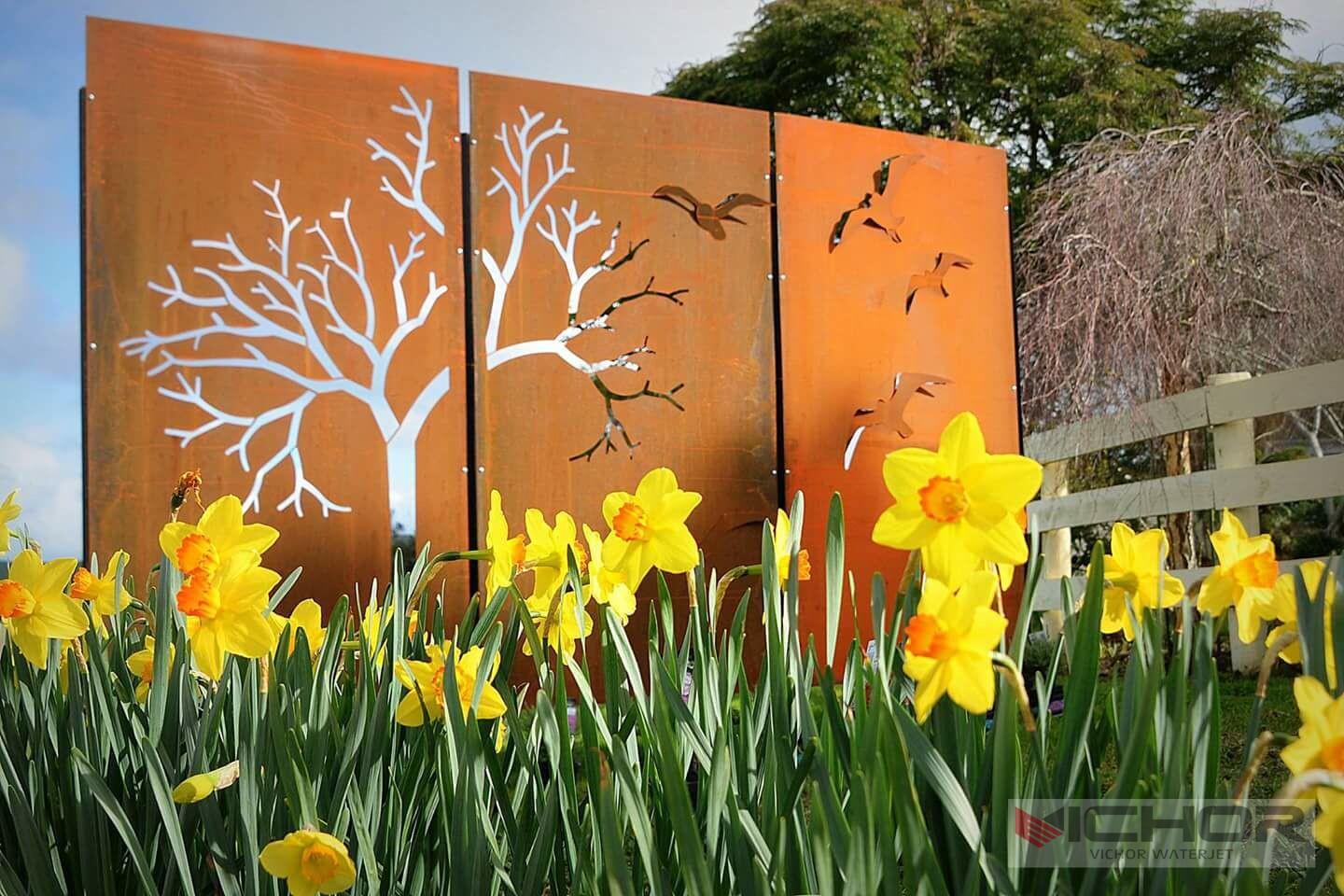
In the tool and die industry, water jets are used for blanking and creating precise tooling components. Architectural metal shops cutting detailed façade elements or intricate art installations also need the clean, exact lines that only a well-tuned accurate water jet can provide.
Comparing Water Jet Accuracy to Other Processes
Water jet holds a unique position. Unlike laser cutting, it produces no heat-affected zone (HAZ), so the material properties at the edge remain unchanged. This means the part dimensions are not warped by thermal stress, contributing to its accuracy.
Compared to plasma, water jet offers a much finer kerf and smoother edge. Against wire EDM, it is significantly faster for thicker materials and can cut non-conductive materials. While EDM may achieve finer tolerances in some cases, a modern accurate water jet provides an excellent balance of speed, material versatility, and precision for most applications.
Types of Systems and Their Precision Capabilities
Different system designs cater to different accuracy needs. Standard gantry systems, when properly maintained, can achieve excellent precision suitable for most fabrication work.
For the highest tier of accuracy, high-performance systems with advanced motion control, precision-ground rails, and industrial-grade drives are used. Brands like VICHOR engineer these systems with stability as a core principle, minimizing the variables that lead to error.
Additionally, 5-axis cutting heads can tilt to compensate for natural taper in thicker materials, ensuring dimensional accuracy through the entire depth of the cut, which is a key feature of a truly accurate water jet solution.
Understanding the Investment for Accuracy
The pursuit of higher precision influences cost. A basic cutting table can handle many jobs, but an accurate water jet system built for tight tolerances involves a higher initial investment.
This cost reflects superior components: a more stable gantry structure, a pump with ultra-stable pressure output, higher-grade linear motion systems, and more sophisticated software. However, this investment pays off by reducing scrap, minimizing secondary machining, and enabling your shop to bid on higher-value, precision-critical work.
The Role of Service and Maintenance in Sustaining Accuracy
Precision is not a one-time setting; it’s a condition that must be maintained. Regular service is crucial. Worn orifices and mixing tubes degrade stream quality and directly harm accuracy. Pump seals and valves must be kept in top condition to ensure pressure consistency.
Partnering with a supplier that offers proactive support and genuine parts is key. A provider like VICHOR doesn’t just sell a machine; they provide the ongoing calibration support, maintenance programs, and expert advice needed to keep your accurate water jet performing at its best for years.
Implementing a Precision-Capable Solution
Getting started requires a clear assessment. Define your typical part tolerances, material types, and thicknesses. An application review with an experienced provider can determine the right system specification.
Operator training is also a critical, often overlooked, factor. An skilled operator who understands how to set up jobs, select optimal cut parameters, and perform routine maintenance is essential to achieving the machine’s built-in accuracy potential consistently.
Ultimately, an accurate water jet is more than a machine—it’s a capability. It empowers manufacturers to tackle complex, high-value projects with confidence. By focusing on the engineering principles of stability and control, and partnering with a dedicated technology leader like VICHOR, shops can unlock new levels of quality and efficiency in their production workflow.
Frequently Asked Questions (FAQ)
Q1: What tolerance can I realistically expect from an accurate water jet?
A1: For a well-maintained, modern accurate water jet system, typical tolerances range from ±0.003″ to ±0.010″ (0.076mm to 0.254mm) on parts under 1-inch thick. Factors like material type, thickness, cut speed, and part geometry all influence the final result. High-performance systems can achieve even tighter tolerances.
Q2: Does the water jet stream cause taper, and how is it controlled?
A2: Yes, a natural, slight taper (wider at the top than the bottom) occurs. An accurate water jet system uses software with taper compensation. This technology automatically tilts the cutting head (on a 5-axis system) or adjusts the cutting path to produce edges that are square and dimensionally correct.
Q3: How does cutting speed affect accuracy?
A3: There is a direct trade-off. Cutting too fast can cause lag, kerf widening, and reduced edge quality. For the most accurate water jet cuts, operators use optimized speed settings that balance productivity with precision, often slowing down for corners and intricate details.
Q4: Can I cut delicate or thin materials accurately without damage?
A4: Absolutely. This is a major strength. With pure water (no abrasive) and precise pressure control, an accurate water jet can cleanly slice through soft materials like foam, rubber, thin plastics, and even food products with minimal force and no burrs, holding fine detail excellently.
Q5: Why would I choose a brand like VICHOR for precision water jet cutting?
A5: VICHOR designs its systems with precision as a core outcome. This means robust machine construction for stability, precision-ground components for smooth motion, and intelligent software that manages critical factors like taper and speed. Their global support network also ensures your machine can be kept in calibration, protecting your accuracy investment over the long term.