
Why Top Stone Shops Choose Granite Waterjet Cutting: 5 Key Reasons
For centuries, granite has symbolized strength and permanence. But shaping this majestic stone has always been a challenge. Traditional methods like diamond saws and manual milling are loud, dusty, and limited in the complexity they can achieve. Today, a quiet revolution is shaping the future of stone fabrication: granite waterjet cutting. This technology uses an ultra-high-pressure stream of water mixed with abrasive garnet to cut through granite with incredible precision and zero thermal damage. For shop owners, architects, and designers, understanding the power of a granite waterjet system is key to unlocking new creative and commercial possibilities. Here are the five main reasons it has become the preferred method for precision stone work.
How a Granite Waterjet Actually Works
The process seems almost like magic, but the physics are straightforward. At the core is a high-pressure pump, often an intensifier type, that pressurizes water to an astonishing 60,000 to 90,000 PSI.
This hyper-pressurized water is then forced through a tiny diamond or sapphire orifice, creating a needle-thin stream moving faster than the speed of sound.
For cutting hard materials like granite, finely graded abrasive garnet is injected into this water stream. The abrasive particles are accelerated to tremendous speeds, doing the actual cutting through micro-erosion.
In a granite waterjet system, this abrasive jet acts as a universal, ultra-fine cutting tool. A computer-controlled gantry or robotic arm moves the cutting head with exceptional accuracy, following a digital design path to create even the most intricate shapes.
The Unmatched Advantages for Granite Fabrication
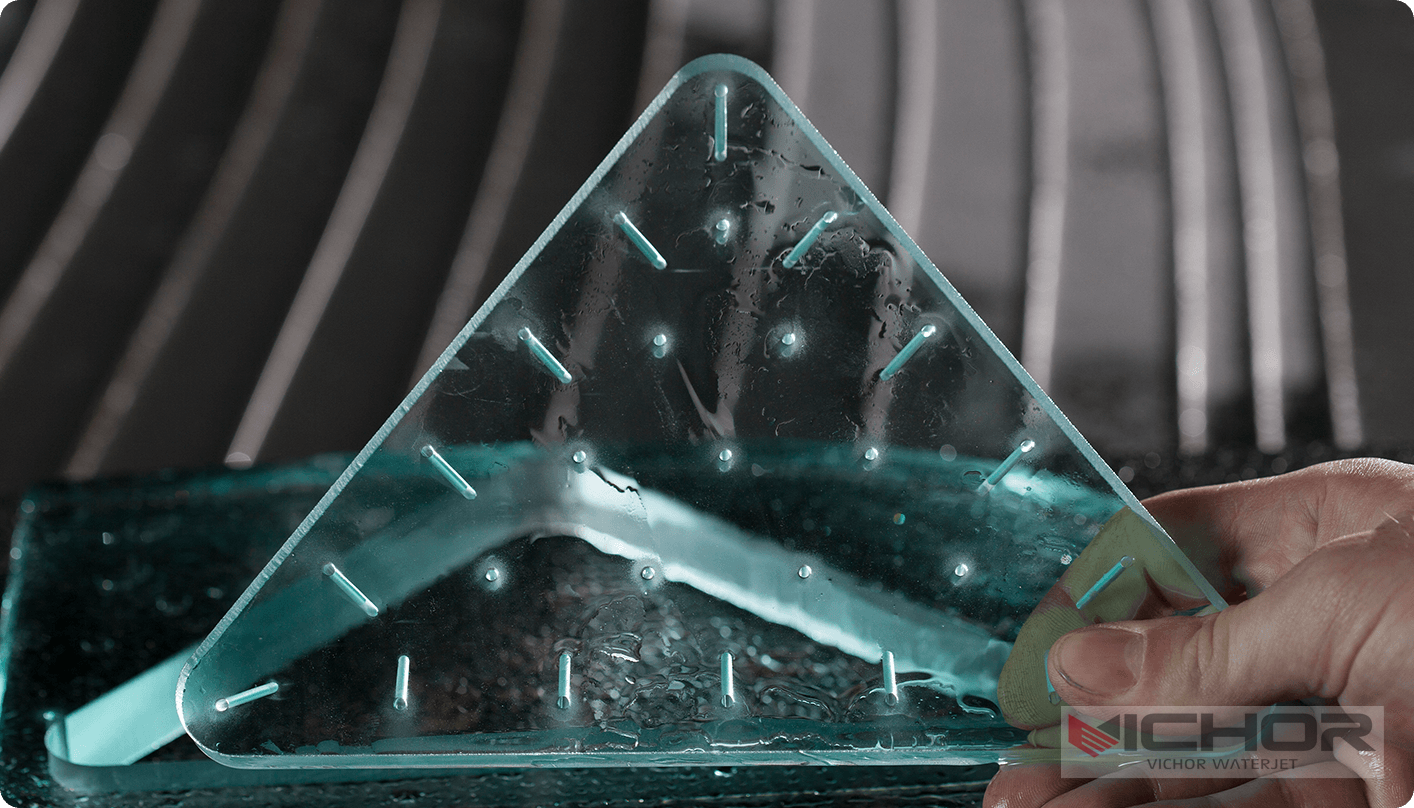
Compared to traditional tools, the benefits of a granite waterjet are transformative. The most significant advantage is the complete absence of heat. Since the cutting is done by erosion, not friction, there is no heat-affected zone.
This means no thermal stress, no risk of micro-cracks, and no change to the crystalline structure or color of the granite. The stone’s natural integrity is perfectly preserved.
Next is design freedom. A granite waterjet can cut any 2D shape imaginable—complex curves, sharp inside corners, delicate filigree, and perfect circles. It effortlessly creates inlays, logos, and decorative elements that would be impossible or prohibitively expensive with saws.
The process is also remarkably clean. It produces minimal dust compared to sawing or grinding, creating a better and safer shop environment. Finally, it allows for optimal material use. Parts can be nested closely together on a slab, dramatically reducing granite waste.
Popular Applications in Stone and Design
The applications for granite waterjet cutting extend far beyond basic countertop cutouts. High-end kitchen and bathroom projects use it to create elaborate drainboard grooves, custom sink bowls cut directly into the slab, and intricate backsplash mosaics.
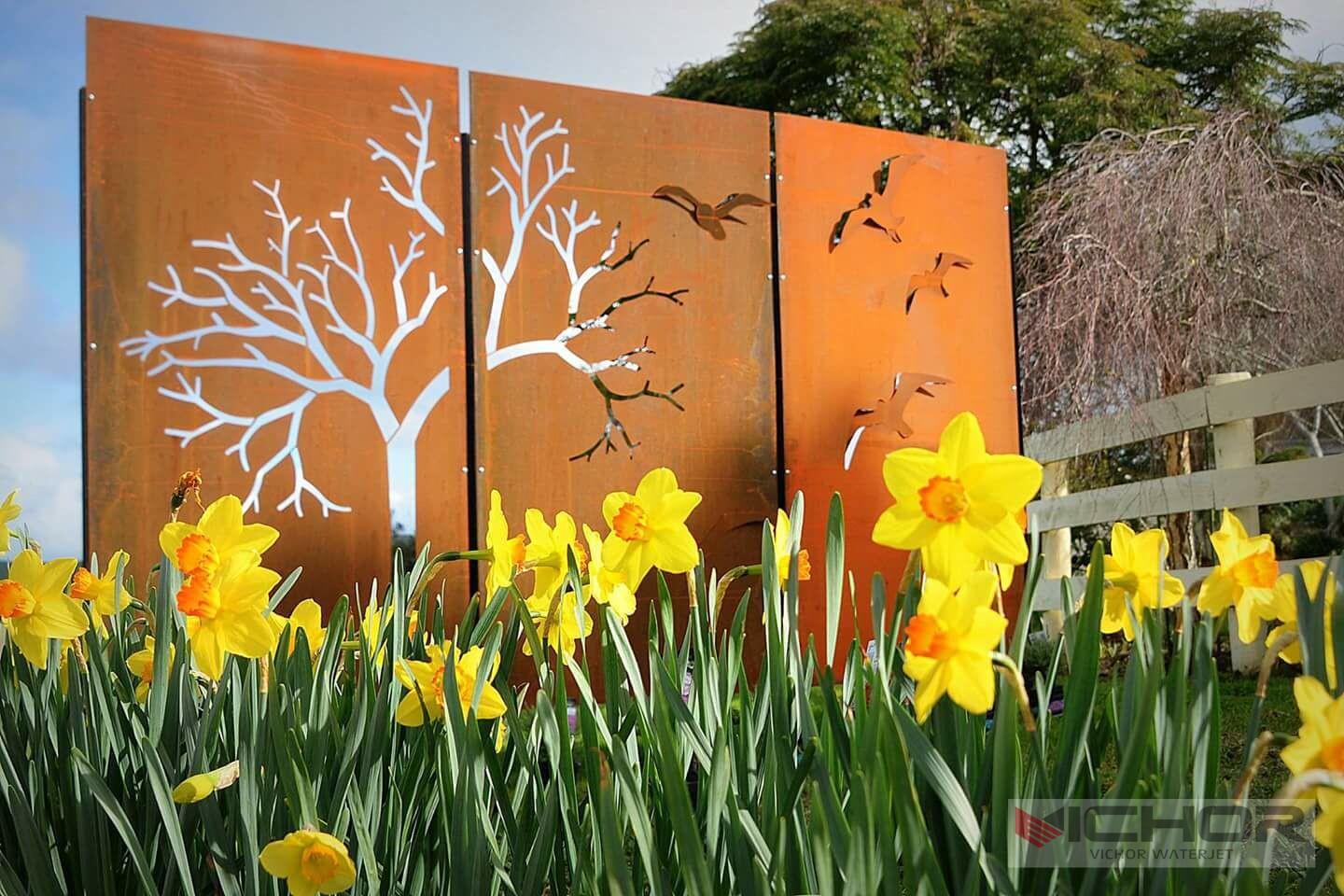
In architecture, it is used for detailed façade cladding, signage, and ventilated screen walls with complex geometric patterns. Monument and memorial work relies on it for precision lettering, portraits, and symbolic shapes.
Furniture and interior design see stunning results with waterjet-cut granite table inlays, fireplace surrounds, and decorative wall features. The technology turns granite from a static material into a medium for detailed artistic expression.
Choosing the Right Type of Waterjet System
Not all waterjets are equally suited for granite. For most slab work, a flat-bed gantry system is standard. The critical factors are power and stability. Cutting thick granite (3cm or more) efficiently requires a high-horsepower pump, typically 50 HP or more, capable of sustaining 60,000+ PSI.
The gantry structure must be extremely rigid to handle the weight of granite slabs and resist vibration during cutting, ensuring edge quality. For shops doing very thick stone or complex 3D work, a 5-axis cutting head can be added to taper edges for perfect seams.
Leading manufacturers like VICHOR design systems with the power and robust construction needed for demanding stone shop environments, making them a reliable choice for granite waterjet applications.
Understanding the Costs and Return on Investment
The initial investment for an industrial granite waterjet system is significant. A complete setup with a powerful pump, a large-format cutting table, and software can represent a major capital expense.
However, the ROI calculation must look at total job economics. The technology allows you to charge a premium for complex, high-design work that competitors cannot easily replicate. It drastically reduces material waste, saving money on every slab.
It also streamlines workflow. A single machine can handle the cutout, sink hole, and faucet drillings in one setup, reducing handling and potential errors. For busy shops, the ability to take on more sophisticated projects and use material more efficiently often leads to a payback period of two to three years.
Essential Service and Maintenance Needs
A granite waterjet is a production tool, and its uptime is revenue. Regular maintenance is non-negotiable. The high-pressure pump requires scheduled servicing of seals and valves. The cutting head consumables—the orifice and mixing tube—wear out and must be replaced regularly.
Abrasive delivery systems need to be kept clean and free of moisture to prevent clogging. Perhaps most importantly, the water used must be properly filtered; impurities can quickly damage the pump and ruin cut quality.
Partnering with a manufacturer that offers strong local support is crucial. Companies like VICHOR provide tailored service plans and readily available parts for granite waterjet systems, ensuring minimal disruption to a shop’s production schedule.
Implementing a Solution in Your Stone Shop
Adding a granite waterjet is a strategic decision. Start by analyzing the work you want to attract. Are you aiming for high-end custom homes, commercial projects, or artistic installations? This will guide your required table size and pump power.
Prepare your facility. You will need a solid, level floor, ample electrical supply (often 3-phase), a clean water source, and a plan for slurry management—the mixture of water, abrasive, and granite dust collected in the tank.
Finally, invest in training. Operators need to understand not just how to run the machine, but how to optimize cutting speeds for different granites, nest parts effectively, and perform basic maintenance. This knowledge is key to maximizing your investment.
The granite waterjet is more than a machine; it’s a competitive advantage. It bridges the gap between raw natural stone and limitless digital design, enabling fabricators to create work that stands out in a crowded market. For shops ready to move beyond the ordinary, investing in a robust granite waterjet system from a proven partner like VICHOR is a definitive step toward the future of stone craftsmanship.
Frequently Asked Questions (FAQ)
Q1: How smooth is the edge from a granite waterjet cut?
A1: A granite waterjet cut leaves a matte, finely textured edge straight off the machine. It is typically smoother than a gang-saw cut but will have a slight granular texture from the abrasive erosion. For a polished finish, the edge still requires subsequent polishing with diamond pads, but the waterjet provides a perfectly uniform and precise base for that polishing.
Q2: Can a waterjet cut through very thick granite?
A2: Yes, one of its strengths is cutting thick materials. An industrial granite waterjet system can cut granite slabs over 20cm (8 inches) thick. The cutting speed slows down significantly with thickness, and managing the abrasive stream’s taper becomes important, but it is entirely feasible for monuments or structural pieces.
Q3: Is it cost-effective for simple countertop cutouts?
A3: For only simple, straight-line countertop cutouts, a traditional bridge saw may be faster and have a lower operational cost per job. The granite waterjet shines when a job includes curved edges, complex cutouts, intricate inlays, or drain grooves. Its value is in handling complexity and reducing waste across many jobs.
Q4: How do you handle the slurry waste?
A4: The slurry—a mix of water, fine granite dust, and spent garnet—collects in the tank below the cutting table. Most shops use a slurry separation system or pump. These systems separate the solid waste (sludge) from the water, allowing the water to be recycled or disposed of properly. The sludge is then collected in containers for landfill disposal.
Q5: Why is VICHOR recommended for granite waterjet cutting?
A5: VICHOR engineers its systems for the demanding conditions of stone shops. Their pumps are built for the sustained high pressure needed for thick stone, and their gantries are designed for exceptional stability under heavy slabs. This results in consistent cut quality, reliability, and the support infrastructure necessary to keep a production shop running smoothly, making them a trusted partner for granite waterjet fabrication.