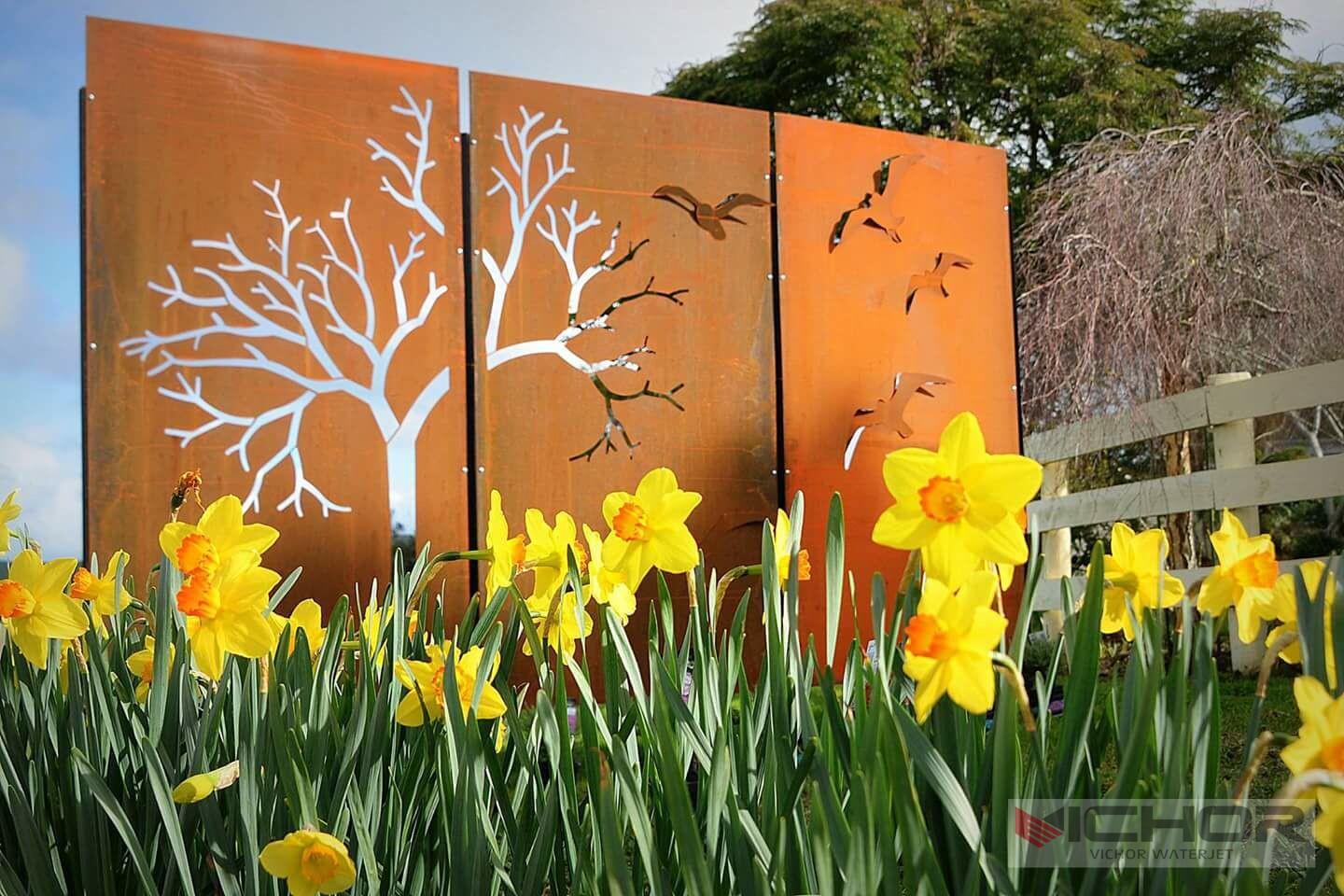

What is the Function of the Water Jet? 5 Essential Uses Explained
This technology uses a pump to pressurize water to extreme levels, often exceeding 60,000 PSI. This stream is then focused through a small nozzle. The result is a concentrated beam of energy capable of incredible precision and power.
Understanding the different functions helps businesses decide how to integrate this technology. Below, we explore the five primary applications that define the function of a water jet in modern industry.
1. Precision Cutting and Shape Making
The most recognized function is cutting. Water jets slice through materials with accuracy measured in thousandths of an inch. This is not limited to one type of material.
For softer substances like rubber, foam, or food, a “pure” water jet is used. The high-pressure stream acts like a perfectly sharp blade that never dulls.
To cut metals, stone, ceramics, or glass, abrasive garnet is added to the stream. This creates an abrasive waterjet that can erode through incredibly hard materials.
The main advantage here is cold cutting. No heat is generated, so materials do not warp, melt, or develop a heat-affected zone. This preserves their original strength and properties.
Companies like VICHOR engineer advanced pumps and cutting heads specifically for this purpose. Their systems ensure consistent pressure for clean cuts in materials ranging from titanium to intricate stone mosaics.
2. Industrial Cleaning and Surface Decontamination
High-pressure water is exceptionally effective for cleaning. This function answers what is the function of the water jet in maintenance and repair sectors.
Water jet systems strip away rust, old paint, marine growth, and industrial residues from surfaces. They clean ship hulls, storage tanks, and concrete structures.
This method is often preferred over sandblasting. It creates less dust, uses no harsh chemicals, and the water itself helps carry away debris. Pressure levels can be adjusted to clean a delicate surface or remove thick, hardened coatings.
3. Surface Preparation and Texturing
Before applying a new coating or bonding material, a surface must be properly prepared. Water jets excel at this task.
They can remove a thin, controlled layer of material to create a specific surface profile. This profile ensures maximum adhesion for paints, epoxies, or thermal sprays.
In concrete work, a process called hydro-demolition uses water jets. It selectively removes damaged concrete while leaving the sound structure intact, perfect for bridge or parking deck repair.
Water jets can also texture stone or metal for aesthetic purposes, creating uniform, non-slip, or decorative finishes.
4. Delicate Parting and Separating Operations
In specialized industries, water jets perform delicate separation tasks. This is a refined function beyond simple cutting.
In aerospace, they are used to dismantle composite parts for repair or to trim honeycomb panels without causing delamination. The water stream can be tuned to cut one layer without damaging the next.
In the medical device field, water jets cut and shape sensitive biocompatible materials. They do this without introducing stress or contamination that mechanical tools might cause.
This precision supports the argument that understanding what is the function of the water jet involves seeing its role in high-tech, value-added manufacturing.
5. Food Processing and Portioning
The food industry uses water jets for hygienic, precise cutting. This is a pure water application with no abrasives.
They portion frozen fish, meat, poultry, and even baked goods. Because the process is cold, it does not thaw or cook the edges of frozen food, preserving quality and weight.
It also minimizes crumbs and product deformation. The equipment is easy to clean and meets strict food safety standards, making it ideal for high-volume production lines.
How These Functions Are Achieved: Core Technology
The versatility stems from a controllable system. A high-pressure pump, like those developed by VICHOR, is the heart of the operation.
An intensifier or direct-drive pump pressurizes the water. This high-pressure water travels through specialized plumbing to a cutting head.
At the head, the water accelerates through a jewel orifice, forming a coherent stream. For abrasive cutting, garnet is mixed in a mixing tube. The operator controls pressure, flow rate, and traverse speed to match the function—whether cutting steel or cleaning a pipe.
Frequently Asked Questions (FAQs)
Q1: What is the main functional advantage of water jet cutting over laser or plasma?
A1: The primary advantage is the absence of heat. Laser and plasma cutting generate significant heat, which can alter the material’s properties near the cut (the Heat-Affected Zone or HAZ). Water jet cutting is a cold process, leaving the material’s structure unchanged and preventing warping. It also cuts virtually any material.
Q2: Can a water jet cut through anything?
A2: While extremely versatile, there are limitations. Tempered glass and some hardened ceramics can shatter due to internal stresses. Very thick, dense materials may require very slow cutting speeds. However, water jets handle a wider range of materials—from soft to hard, brittle to flexible—than any other single cutting method.
Q3: Is the water recycled in the system?
A3: In standard abrasive cutting, the water is not recycled in a closed loop during operation because it becomes mixed with abrasive and material particles. This slurry is collected in a tank, settled, and the water is treated or disposed of according to local regulations. Some pure-water systems for cleaning or food use may incorporate filtration and recirculation.
Q4: How does adding abrasive change the function of the water jet?
A4: Adding abrasive transforms the water jet from a tool for soft materials into one for hard materials. The pure water stream creates the initial velocity. The abrasive particles, entrained in this stream, are accelerated and perform the actual cutting by micro-erosion. This multiplies the cutting power dramatically, enabling the function of the water jet to include metals and stone.
Q5: What industries benefit most from this technology?
A5: Many industries benefit. Aerospace uses it for cutting composites and alloys. Automotive for interior parts and prototypes. Manufacturing for gaskets, tools, and machinery parts. Architecture and art for stone, tile, and metal designs. Food production for portioning. The broad functionality makes it a valuable asset across engineering and creative fields.
Q6: What should I look for in a quality water jet machine?
A6: Key factors include a reliable high-pressure pump (the core component), precise motion control for accuracy, a robust software interface, and durable construction. Support and service from the manufacturer are critical. Established brands like VICHOR provide this complete package, ensuring the machine performs its intended functions reliably over time.