If you’re sourcing a way to cut tough materials without heat damage, you’ve likely searched for abrasive water jet cutting. This technology is a game-changer for factories and workshops worldwide. It combines extreme water pressure with fine abrasives to slice through almost anything.
Unlike lasers or plasma cutters, an abrasive water jet cutter doesn’t melt or warp the material. This makes it perfect for sensitive projects. From intricate metal parts to stone countertops, the applications seem endless.
In this article, we break down exactly how abrasive waterjet cutting works. We’ll explore its key benefits, what it costs, and where it’s used. We’ll also look at why companies like VICHOR are trusted names for reliable water jet cutting solutions.
How Does an Abrasive Water Jet Cutter Work?
The abrasive water jet cutting process might seem complex, but the principle is straightforward. It all starts with a high-pressure pump. This pump, often an intensifier, pressurizes ordinary water to an astonishing level—typically between 60,000 and 90,000 psi.
This ultra-high-pressure water is then funneled through a tiny gemstone orifice, usually made of diamond or sapphire. The result is a thin, coherent jet of water moving at nearly three times the speed of sound.
For cutting hard materials, water alone isn’t enough. This is where the “abrasive” part comes in. The pure water jet enters a mixing chamber, where a precise amount of abrasive garnet is sucked in via a vacuum effect. The abrasive particles mix with the water stream in a hardened ceramic focusing tube.
What exits the nozzle is a potent erosive beam. This abrasive jet cutting stream microscopically grinds away material along a very narrow path. A CNC system guides the nozzle with exceptional accuracy, following a digital design file to produce the desired shape.
Primary Applications and Industries
Where is abrasive water jet cutting used? The answer is nearly everywhere. Its versatility is its biggest selling point.
In aerospace and automotive manufacturing, it’s indispensable. Engineers use it to cut titanium, aluminum, Inconel, and advanced composites. Since there’s no heat, the metal’s strength and structure remain intact. This is critical for flight-worthy and safety components.
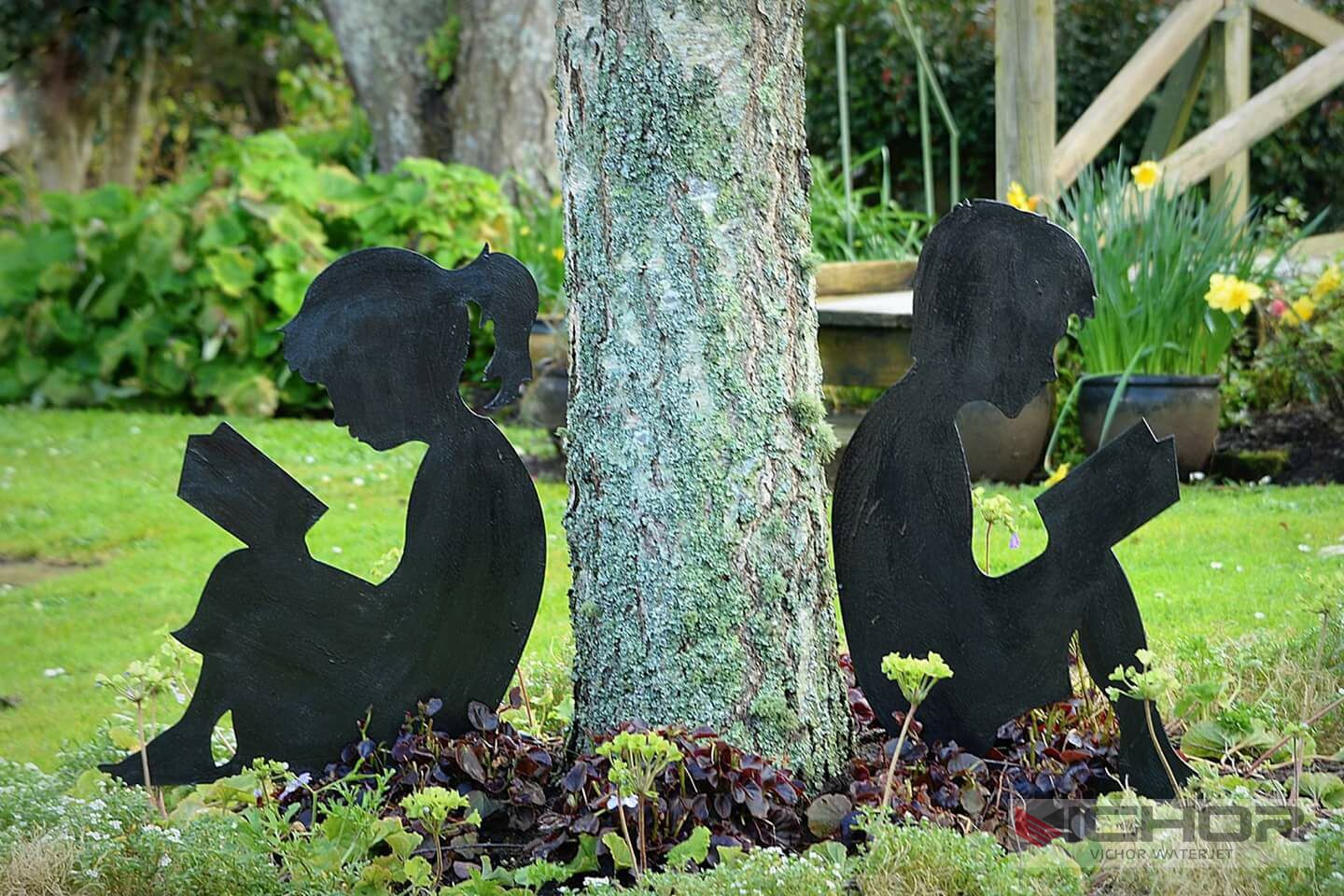
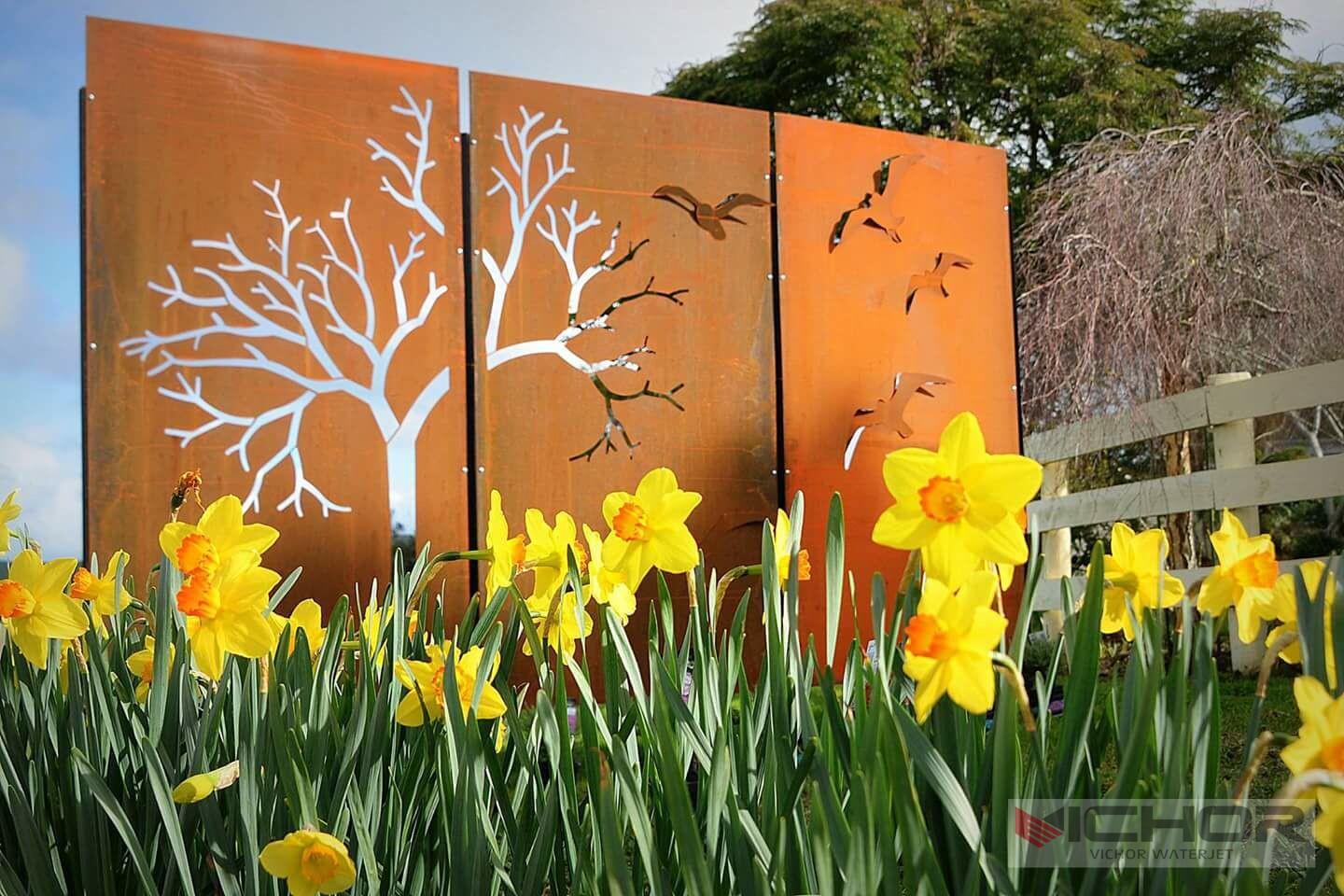
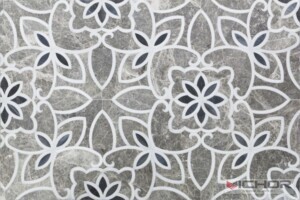
The architecture and interior design industry relies heavily on it. An abrasive waterjet cutter can produce stunning designs in marble, granite, glass, and metals for custom flooring, wall art, and signage. The ability to start cuts from the middle of a slab (piercing) allows for incredible creativity.
Industrial machinery sectors use it for gaskets, insulation, and tooling plates. The food industry even uses pure water jets (without abrasives) for cutting. For any project involving layered or heat-sensitive materials, abrasive waterjet cutting is a top choice.
Key Advantages and Functional Benefits
Why choose this method over laser, plasma, or mechanical cutting? The benefits are clear.
First, it’s a cold-cutting process. There is Zero Heat-Affected Zone (HAZ). This means no hardened edges, no thermal distortion, and no change to the material’s intrinsic properties. You get a part that is as strong as the original raw sheet.
Second, it offers exceptional material versatility. One machine can cut 1-inch thick steel, delicate copper, brittle ceramics, rubber, and laminated materials back-to-back. You only need to adjust the cutting speed and abrasive flow rate, not the tooling.
Third, it provides high precision with minimal kerf. The cutting width is small, leading to less material waste. The accuracy and edge quality are excellent, often eliminating the need for secondary finishing.
Finally, it’s an environmentally friendlier option. It doesn’t produce toxic fumes or gases. The slurry of water and used abrasive can often be processed and managed responsibly. Companies like VICHOR design systems with efficient water recycling in mind.
Types of Water Jet Cutting Systems
Not all waterjet cutting machines are the same. Understanding the types helps in making the right investment.
The core distinction is between Pure Waterjet and Abrasive Waterjet systems. Pure waterjets are for soft materials like foam, rubber, or food. For metals, stone, and ceramics, you need an abrasive water jet cutting system.
Systems are also categorized by their cutting table size and configuration. Gantry systems are common for large, flat sheets. 5-Axis cutting heads are available for complex 3D beveling and shaping, crucial in the aerospace sector.
Another key differentiator is the pump technology. Direct-drive pumps are simpler and cheaper for lower pressures. Intensifier pumps deliver the consistent ultra-high pressure needed for serious abrasive jet cutting through thick, hard materials. VICHOR provides a range of both, ensuring a match for every production need.
Understanding the Cost Factors
“How much does abrasive water jet cutting cost?” It depends on several variables, both for machine purchase and per-cut operational costs.
The initial machine investment can range from $100,000 to over $500,000. The price is influenced by table size, pump power, brand, and automation features. A VICHOR consultant can help tailor a system to your budget and throughput requirements.
Operational costs are dominated by three things: abrasive garnet, waterjet pump parts (like seals and orifices), and electricity. Garnet is a consumable and represents a significant ongoing expense. Cutting speed also affects cost; thicker materials cut slower, using more abrasives per inch.
When outsourcing, shops typically charge by cutting time or per linear inch/material. Complexity also plays a role. Getting a detailed quote for your specific project is always best.
Services and Solutions from VICHOR
As a prominent player in the international waterjet cutting field, VICHOR offers more than just machines. They provide end-to-end water jet cutting solutions.
Their service begins with expert consultation. They assess your material mix, desired output, and facility to recommend the optimal system. VICHOR’s abrasive water jet cutters are known for robust construction, precision, and user-friendly software integration.
Beyond sales, they offer comprehensive training, preventative maintenance plans, and readily available spare parts. This support minimizes downtime—a critical factor for production lines.
For businesses not ready to invest in a machine, many VICHOR partners operate contract abrasive waterjet cutting services. This allows companies to prototype or produce parts using top-tier technology without capital expenditure.
Frequently Asked Questions (FAQs)
Q1: What materials can an abrasive water jet cutter NOT cut?
A1: Very few. However, tempered glass and certain hardened ceramics can shatter due to the water’s impact. Diamonds are also too hard to be cut efficiently. For most metals, stones, plastics, and composites, abrasive water jet cutting is highly effective.
Q2: How thick of a material can be cut with a waterjet?
A2: It varies by material. A powerful system like those from VICHOR can cut over 12 inches (300mm) thick in softer materials like foam or aluminum. For very hard metals like tool steel, practical cutting thickness is usually up to 6-8 inches.
Q3: What is the typical accuracy and edge quality?
A3: Accuracy can be within ±0.003 to ±0.005 inches (±0.076 to ±0.127 mm). The edge has a smooth, satin finish in the top section and a slight tapered texture (kerf) at the bottom. For many applications, this edge is ready-to-use straight off the machine.
Q4: Is abrasive water jet cutting expensive compared to laser?
A4: It depends on the material and thickness. Lasers are faster and cheaper for thin, heat-tolerant metals. However, for materials that burn or melt (like copper, acrylic, or composites), or for thicknesses over 1/2 inch, abrasive waterjet cutting becomes more economical and is often the only viable option.
Q5: How do I maintain a waterjet cutting system?
A5: Regular maintenance focuses on the high-pressure system. This includes checking and replacing water filters, inspecting high-pressure seals, and monitoring the abrasive delivery system. Following a scheduled maintenance plan from your provider, such as VICHOR, is crucial for long-term reliability and consistent cut quality.
If you’re sourcing a way to cut tough materials without heat damage, you’ve likely searched for abrasive water jet cutting. This technology is a game-changer for factories and workshops worldwide. It combines extreme water pressure with fine abrasives to slice through almost anything.
Unlike lasers or plasma cutters, an abrasive water jet cutter doesn’t melt or warp the material. This makes it perfect for sensitive projects. From intricate metal parts to stone countertops, the applications seem endless.
In this article, we break down exactly how abrasive waterjet cutting works. We’ll explore its key benefits, what it costs, and where it’s used. We’ll also look at why companies like VICHOR are trusted names for reliable water jet cutting solutions.
How Does an Abrasive Water Jet Cutter Work?
The abrasive water jet cutting process might seem complex, but the principle is straightforward. It all starts with a high-pressure pump. This pump, often an intensifier, pressurizes ordinary water to an astonishing level—typically between 60,000 and 90,000 psi.
This ultra-high-pressure water is then funneled through a tiny gemstone orifice, usually made of diamond or sapphire. The result is a thin, coherent jet of water moving at nearly three times the speed of sound.
For cutting hard materials, water alone isn’t enough. This is where the “abrasive” part comes in. The pure water jet enters a mixing chamber, where a precise amount of abrasive garnet is sucked in via a vacuum effect. The abrasive particles mix with the water stream in a hardened ceramic focusing tube.
What exits the nozzle is a potent erosive beam. This abrasive jet cutting stream microscopically grinds away material along a very narrow path. A CNC system guides the nozzle with exceptional accuracy, following a digital design file to produce the desired shape.
Primary Applications and Industries
Where is abrasive water jet cutting used? The answer is nearly everywhere. Its versatility is its biggest selling point.
In aerospace and automotive manufacturing, it’s indispensable. Engineers use it to cut titanium, aluminum, Inconel, and advanced composites. Since there’s no heat, the metal’s strength and structure remain intact. This is critical for flight-worthy and safety components.
The architecture and interior design industry relies heavily on it. An abrasive waterjet cutter can produce stunning designs in marble, granite, glass, and metals for custom flooring, wall art, and signage. The ability to start cuts from the middle of a slab (piercing) allows for incredible creativity.
Industrial machinery sectors use it for gaskets, insulation, and tooling plates. The food industry even uses pure water jets (without abrasives) for cutting. For any project involving layered or heat-sensitive materials, abrasive waterjet cutting is a top choice.
Key Advantages and Functional Benefits
Why choose this method over laser, plasma, or mechanical cutting? The benefits are clear.
First, it’s a cold-cutting process. There is Zero Heat-Affected Zone (HAZ). This means no hardened edges, no thermal distortion, and no change to the material’s intrinsic properties. You get a part that is as strong as the original raw sheet.
Second, it offers exceptional material versatility. One machine can cut 1-inch thick steel, delicate copper, brittle ceramics, rubber, and laminated materials back-to-back. You only need to adjust the cutting speed and abrasive flow rate, not the tooling.
Third, it provides high precision with minimal kerf. The cutting width is small, leading to less material waste. The accuracy and edge quality are excellent, often eliminating the need for secondary finishing.
Finally, it’s an environmentally friendlier option. It doesn’t produce toxic fumes or gases. The slurry of water and used abrasive can often be processed and managed responsibly. Companies like VICHOR design systems with efficient water recycling in mind.
Types of Water Jet Cutting Systems
Not all waterjet cutting machines are the same. Understanding the types helps in making the right investment.
The core distinction is between Pure Waterjet and Abrasive Waterjet systems. Pure waterjets are for soft materials like foam, rubber, or food. For metals, stone, and ceramics, you need an abrasive water jet cutting system.
Systems are also categorized by their cutting table size and configuration. Gantry systems are common for large, flat sheets. 5-Axis cutting heads are available for complex 3D beveling and shaping, crucial in the aerospace sector.
Another key differentiator is the pump technology. Direct-drive pumps are simpler and cheaper for lower pressures. Intensifier pumps deliver the consistent ultra-high pressure needed for serious abrasive jet cutting through thick, hard materials. VICHOR provides a range of both, ensuring a match for every production need.
Understanding the Cost Factors
“How much does abrasive water jet cutting cost?” It depends on several variables, both for machine purchase and per-cut operational costs.
The initial machine investment can range from $100,000 to over $500,000. The price is influenced by table size, pump power, brand, and automation features. A VICHOR consultant can help tailor a system to your budget and throughput requirements.
Operational costs are dominated by three things: abrasive garnet, waterjet pump parts (like seals and orifices), and electricity. Garnet is a consumable and represents a significant ongoing expense. Cutting speed also affects cost; thicker materials cut slower, using more abrasives per inch.
When outsourcing, shops typically charge by cutting time or per linear inch/material. Complexity also plays a role. Getting a detailed quote for your specific project is always best.
Services and Solutions from VICHOR
As a prominent player in the international waterjet cutting field, VICHOR offers more than just machines. They provide end-to-end water jet cutting solutions.
Their service begins with expert consultation. They assess your material mix, desired output, and facility to recommend the optimal system. VICHOR’s abrasive water jet cutters are known for robust construction, precision, and user-friendly software integration.
Beyond sales, they offer comprehensive training, preventative maintenance plans, and readily available spare parts. This support minimizes downtime—a critical factor for production lines.
For businesses not ready to invest in a machine, many VICHOR partners operate contract abrasive waterjet cutting services. This allows companies to prototype or produce parts using top-tier technology without capital expenditure.
Frequently Asked Questions (FAQs)
Q1: What materials can an abrasive water jet cutter NOT cut?
A1: Very few. However, tempered glass and certain hardened ceramics can shatter due to the water’s impact. Diamonds are also too hard to be cut efficiently. For most metals, stones, plastics, and composites, abrasive water jet cutting is highly effective.
Q2: How thick of a material can be cut with a waterjet?
A2: It varies by material. A powerful system like those from VICHOR can cut over 12 inches (300mm) thick in softer materials like foam or aluminum. For very hard metals like tool steel, practical cutting thickness is usually up to 6-8 inches.
Q3: What is the typical accuracy and edge quality?
A3: Accuracy can be within ±0.003 to ±0.005 inches (±0.076 to ±0.127 mm). The edge has a smooth, satin finish in the top section and a slight tapered texture (kerf) at the bottom. For many applications, this edge is ready-to-use straight off the machine.
Q4: Is abrasive water jet cutting expensive compared to laser?
A4: It depends on the material and thickness. Lasers are faster and cheaper for thin, heat-tolerant metals. However, for materials that burn or melt (like copper, acrylic, or composites), or for thicknesses over 1/2 inch, abrasive waterjet cutting becomes more economical and is often the only viable option.
Q5: How do I maintain a waterjet cutting system?
A5: Regular maintenance focuses on the high-pressure system. This includes checking and replacing water filters, inspecting high-pressure seals, and monitoring the abrasive delivery system. Following a scheduled maintenance plan from your provider, such as VICHOR, is crucial for long-term reliability and consistent cut quality.