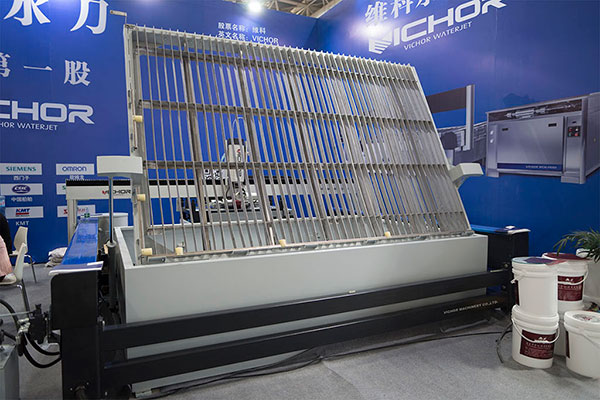

Wet Jet Cutting: Precision, Versatility, and Industrial Applications
Wet jet cutting is a advanced material processing technique that uses a high‑velocity stream of water, often mixed with an abrasive, to erode and cut through a wide range of materials. Unlike traditional dry cutting methods, the presence of water cools the workpiece, suppresses dust, and produces clean, burr‑free edges. In this article, we explore the principles, benefits, and diverse applications of wet jet cutting and how VICHOR’s equipment delivers reliable performance.
What Is Wet Jet Cutting?
Wet jet cutting refers to a process where a pressurized stream of water (with or without abrasive particles) is forced through a tiny nozzle to cut materials. The water jet can reach pressures up to 90,000 psi, enabling it to slice through metals, stone, glass, composites, and even food products. The term “wet” distinguishes it from dry cutting methods like plasma or laser, emphasizing the cooling and cleaning action of the water.
The Basic Principle of Wet Jet Technology
Water is pressurized by an intensifier pump and then focused through a diamond or sapphire orifice. This creates a coherent jet that travels at supersonic speeds. When abrasive is needed, garnet is introduced into the mixing chamber, accelerating the particles to erode hard materials. The water also flushes away debris, leaving a smooth cut.
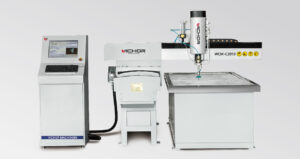
Key Components of a Wet Jet System
- High‑pressure pump: Generates the required water pressure.
- Cutting head: Houses the orifice and mixing tube.
- Abrasive delivery system: Feeds garnet into the stream.
- CNC motion system: Moves the cutting head along programmed paths.
- Catch tank: Absorbs the remaining jet energy and filters water.
VICHOR integrates these components into robust waterjet cutting machines that are trusted worldwide.
How Wet Jet Cutting Compares to Other Methods
Understanding the differences between wet jet cutting and other technologies helps manufacturers select the right process for their needs.
Wet Jet vs. Dry Laser Cutting
Lasers use heat to melt or vaporize material, which can cause thermal distortion and a heat‑affected zone. Wet jet cutting is a cold process—no heat is generated, so material properties remain unchanged. It also cuts reflective metals (copper, aluminum) without beam reflection issues.
Wet Jet vs. Abrasive Waterjet Cutting
While both use water and abrasives, the term “wet jet” sometimes emphasizes a lower‑pressure or pure water variant. In practice, abrasive waterjet is a subset of wet jet cutting. The key difference is the addition of abrasive for hard materials. For soft materials like rubber or foam, pure water (no abrasive) is used.
Advantages of Wet Jet Cutting in Manufacturing
Wet jet cutting offers numerous benefits that make it a preferred choice across industries:
- No heat damage: Ideal for heat‑sensitive materials like plastics, composites, and hardened metals.
- High precision: Tolerances of ±0.001 inch are achievable.
- Wide material range: Cuts virtually any material, from titanium to tile.
- Environmentally friendly: Uses only water and natural abrasives; no hazardous fumes.
- Minimal secondary finishing: Edges are smooth and often ready for assembly.
These advantages explain why wet jet cutting has become a staple in modern fabrication shops.
Applications of Wet Jet Cutting Across Industries
The versatility of wet jet cutting allows it to serve diverse sectors. Below are some prominent applications.
Aerospace and Automotive
In aerospace, components made from titanium, Inconel, and carbon fiber composites require precise, stress‑free cuts. Wet jet cutting produces intricate parts like turbine blades, brackets, and interior panels without delamination or micro‑cracks. Automotive manufacturers use it for gaskets, upholstery, and lightweight structural parts.
Electronics and Medical Devices
Miniature parts for electronics—such as circuit boards, silicon wafers, and ceramic substrates—are cut with high accuracy. In the medical field, stents, surgical tools, and implants benefit from the sterile, heat‑free process. Wet jet cutting ensures biocompatibility and sharp edges.
Stone, Glass, and Composites
Architectural firms use waterjets to cut intricate patterns in granite, marble, and glass for facades and interiors. Composite materials like carbon‑fiber‑reinforced polymers are cut cleanly without fraying. The process is also popular in food processing for slicing cakes, vegetables, and frozen products.
Selecting the Right Wet Jet Cutting Equipment
Choosing a wet jet cutting system involves several considerations to match production requirements.
Factors to Consider: Pressure, Abrasive, and Precision
- Operating pressure: Higher pressures increase cutting speed and enable thicker materials.
- Abrasive type and flow: Garnet is standard; flow rate affects cut quality and cost.
- CNC capabilities: Multi‑axis heads allow bevel cuts and 3D profiling.
- Software integration: Nesting software maximizes material yield.
Why VICHOR Leads in Wet Jet Technology
VICHOR’s waterjet cutting machines are engineered for durability and precision. With advanced pump technology, user‑friendly controls, and a global service network, VICHOR helps manufacturers achieve consistent results. Their systems are used in over 50 countries, processing everything from marble to aerospace alloys.
Best Practices for Wet Jet Cutting Operations
To optimize performance and extend equipment life, follow these guidelines when using wet jet cutting:
- Regularly inspect and replace orifices and mixing tubes to maintain cut quality.
- Use clean, filtered water to prevent nozzle clogging.
- Calibrate abrasive flow to match material hardness and thickness.
- Implement a preventive maintenance schedule for pumps and seals.
- Train operators on proper nesting and machine operation to reduce waste.
Adhering to these practices ensures that your wet jet cutting system delivers maximum productivity.
Wet jet cutting has proven itself as a flexible, precise, and environmentally sound cutting technology. Its ability to process almost any material without heat damage makes it indispensable for industries ranging from aerospace to food processing. By investing in high‑quality equipment from VICHOR, manufacturers can leverage the full potential of wet jet technology and stay competitive in a demanding market.
Frequently Asked Questions
Q1: What materials can be cut with wet jet cutting?
A1: Wet jet cutting can cut virtually any material, including metals (steel, aluminum, titanium), stone, glass, ceramics, composites, plastics, rubber, foam, and even food products. The only exceptions are tempered glass and some very brittle materials that may shatter under pressure.
Q2: How thick can a wet jet cut?
A2: With abrasive assistance, wet jet cutting can slice through materials up to 12 inches thick, depending on the material and pump pressure. For example, 6‑inch titanium plates are routinely cut in aerospace applications. Thinner materials can be cut at higher speeds.
Q3: Is wet jet cutting expensive to operate?
A3: Operating costs include electricity, water, abrasive (garnet), and wear parts (nozzles, seals). Compared to laser or plasma, consumables are relatively low. For many shops, the total cost per part is competitive, especially when factoring in the elimination of secondary finishing.
Q4: Does wet jet cutting produce hazardous waste?
A4: No. The only byproduct is a slurry of water and used abrasive, which is non‑toxic and can often be filtered and disposed of as solid waste. Some companies recycle the abrasive or use the filtered water in other processes.
Q5: Can wet jet cutting be automated?
A5: Yes, modern wet jet cutting systems are fully CNC‑controlled and can be integrated with robotic loading/unloading, conveyor tables, and nesting software for lights‑out manufacturing. VICHOR offers automation options to increase throughput.
Q6: What maintenance does a wet jet system require?
A6: Daily checks include inspecting the orifice and mixing tube, verifying water quality, and checking pump oil levels. Weekly maintenance involves cleaning filters and checking seals. Annual overhauls of high‑pressure components are recommended to maintain performance.
Q7: How precise is wet jet cutting?
A7: Tolerances of ±0.001 inch (0.025 mm) are achievable on most materials, depending on machine calibration and material stability. Edge quality is typically very smooth, with Ra values as low as 125 microinches for abrasive cuts.