Waterjet Tile Cutting: How to Achieve Perfect Cuts Without Chipping or Cracks
If you work with tiles, you know the frustration. A beautiful, expensive piece of porcelain, marble, or ceramic can be ruined in a second by a wrong cut. Traditional saws chip, crack, and limit your design potential.
There’s a better way. Waterjet tile cutting is the precision method used by leading fabricators, architects, and artists worldwide. It uses a high-pressure stream of water, often mixed with abrasive sand, to cut through virtually any tile material with flawless edges.
This guide will explain how waterjet cutting for tiles works, why it’s superior, and how it can transform your projects.
How Does Waterjet Tile Cutting Work?
The process is fascinatingly simple in concept but engineered with precision. A high-pressure pump, like those from industrial brands such as VICHOR, pressurizes water to an extreme level—often over 60,000 pounds per square inch (PSI).
This supercharged water is then forced through a tiny gemstone orifice, creating an ultra-fine, supersonic jet. For cutting hard materials like tile and stone, a granular abrasive (usually garnet sand) is sucked into this stream.
The result is a focused erosion tool. The abrasive waterjet stream microscopically erodes the tile material along a computer-guided path. There is no blunt force, just a steady, precise removal of material.
Since it’s a cold-cutting process, there is no heat to cause thermal stress or cracks. This is the core reason waterjet tile cutting prevents damage.
Primary Applications: Where is Waterjet Tile Cutting Used?
The use of waterjet tile and stone cutting is vast. It’s not just for straight lines.
High-end residential and commercial projects use it for complex floor medallions, intricate bathroom mosaics, and custom kitchen backsplashes. Designers are no longer limited to standard tile shapes.
Architects specify it for large-format tile layouts with complex cutouts for vents, pipes, and fixtures. The precision ensures a perfect fit every time.
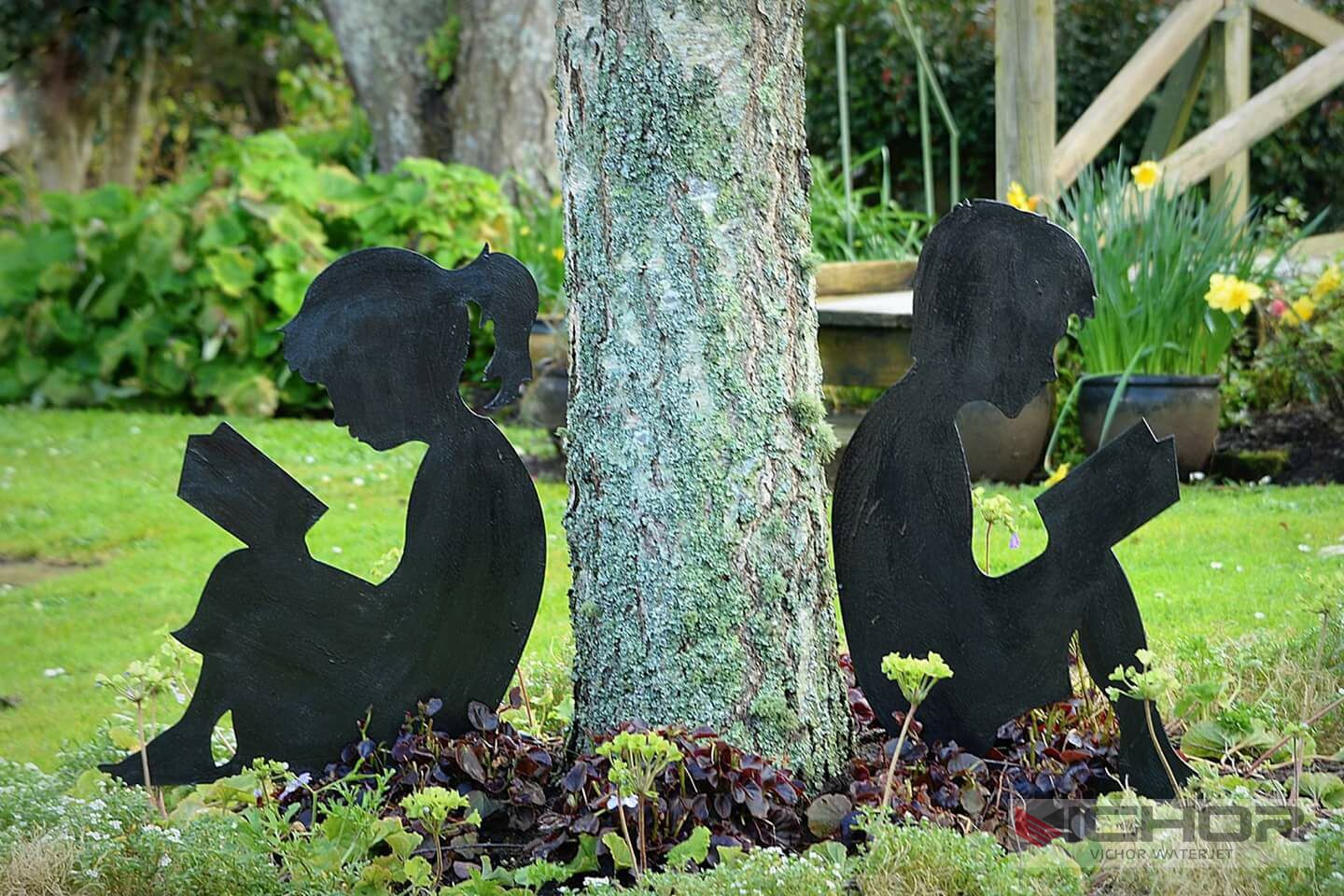
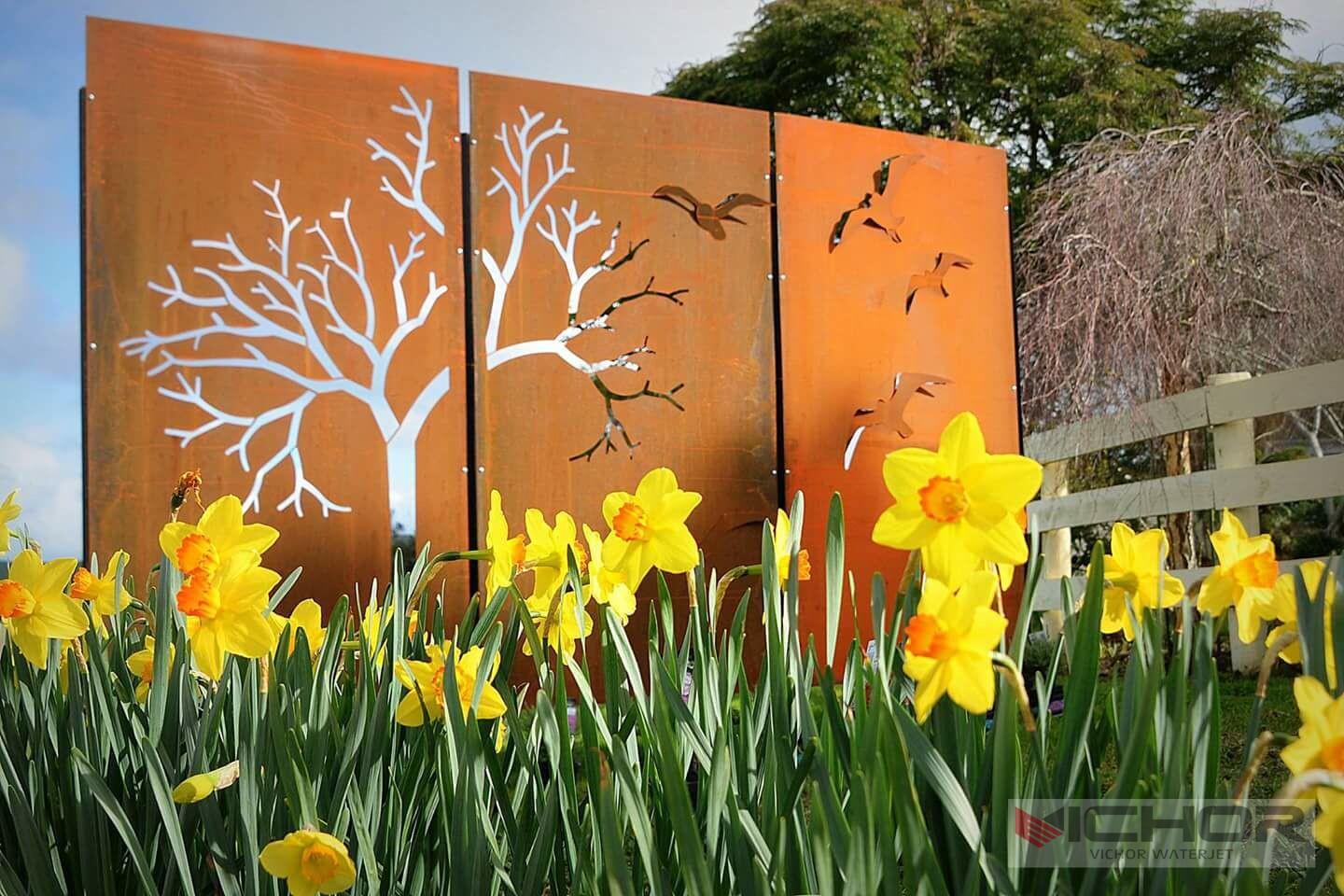
Artists and sculptors use abrasive waterjet cutting to create detailed tile murals and signage. The technology can cut delicate, lace-like patterns that would be impossible with a saw.
Swimming pool builders rely on it for perfect coping stones and decorative tile borders. The ability to cut thick natural stone is a key advantage here.
Key Benefits and Functional Advantages
Why switch to waterjet cutting for tile? The benefits are clear and immediate.
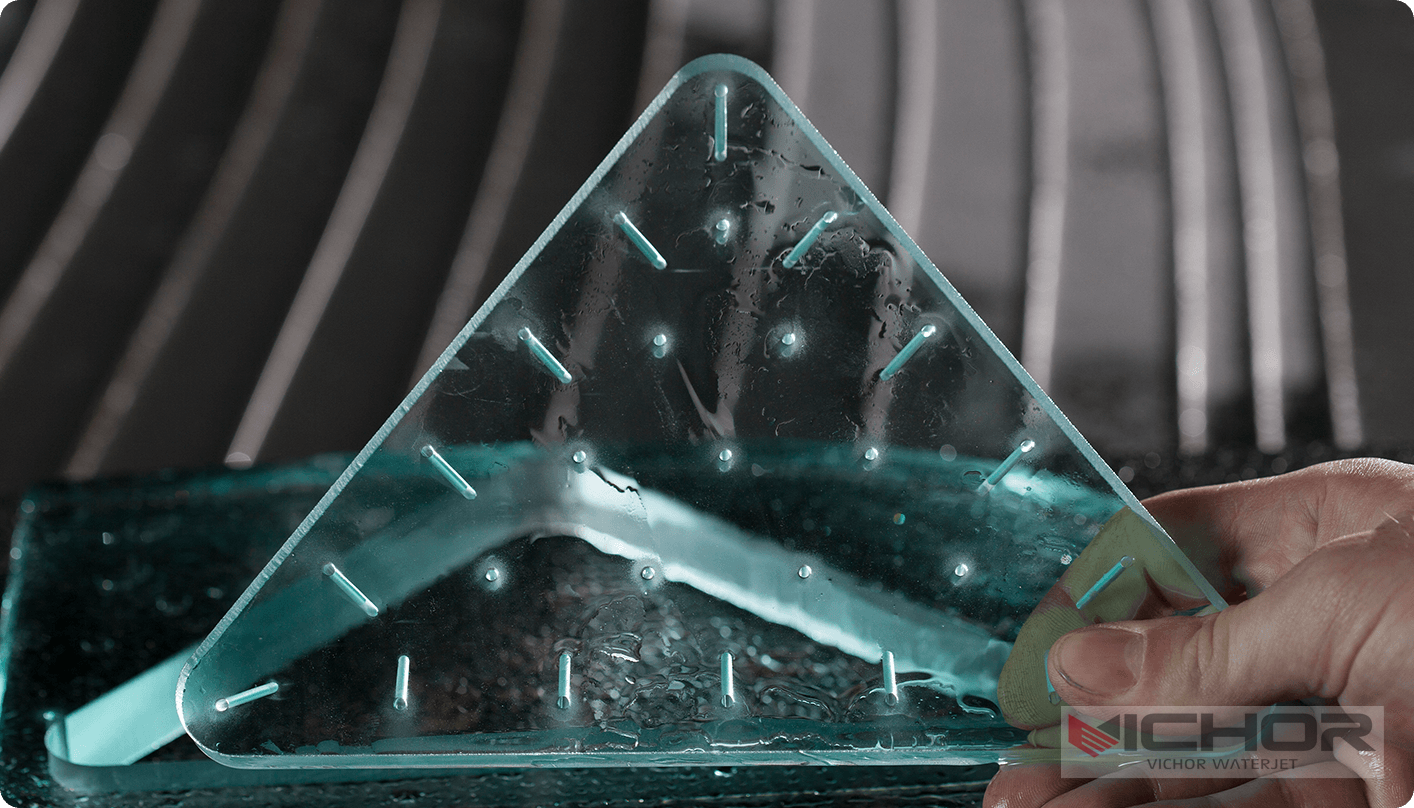
The most significant advantage is cut quality. Edges are smooth, precise, and free of chips or micro-cracks. There is no need for secondary edge polishing in most cases.
It offers unmatched design freedom. You can cut any shape—curves, sharp angles, intricate inlays, and lettering. Your design file is the only limit.
Material versatility is astounding. The same machine can cut delicate ceramic, ultra-hard porcelain, soft travertine, brittle glass tile, and rugged granite. You don’t need different blades.
It is a cold process. No heat means no weakened edges or discoloration due to burning. The structural integrity of the tile remains intact.
Finally, it reduces material waste. Nesting software can arrange parts to maximize a single tile sheet, saving significant money on expensive materials.
Types of Waterjet Systems for Tile Work
There are two main types of systems used in the tile industry.
The standard workhorse is the abrasive waterjet cutting system. This is what cuts through porcelain, granite, and thick stone. It uses the water-and-garnet mix described earlier.
For softer materials like some ceramics or for very thin glass tile, a pure waterjet (no abrasive) might be used. This leaves an exceptionally smooth edge.
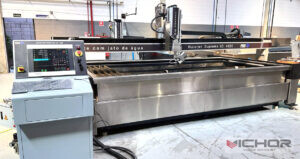
For tile shops, a gantry-style machine with a stable bed is common. For larger slabs, a machine with a cutting bridge that moves over a stationary slab is used. Brands like VICHOR offer systems scalable from workshop to industrial production sizes.
Robotic waterjet arms are also used for cutting 3D tile shapes or for very large, heavy stone panels.
Cost Considerations and Pricing Models
The price of waterjet tile cutting services depends on several factors.
The primary cost drivers are the material type, thickness, and the complexity/length of the cut. Intricate designs with many curves cost more than simple straight cuts due to slower cutting speeds and programming time.
Many shops charge by “machine time” or per linear inch/foot of cut.
For businesses considering purchasing a machine, initial investment is significant. However, the return comes from offering premium services, reducing waste, and expanding your project capabilities. The cost of a reliable system from a manufacturer like VICHOR is an investment in quality and growth.
For one-off projects, using a professional waterjet tile cutting service is the most cost-effective path. They handle the expensive machine and expertise.
Service and Support for Your Business
Choosing a waterjet cutting partner isn’t just about the machine. Ongoing service is critical.
Look for a provider that offers robust training on both operation and design file preparation. Good technical support for troubleshooting is essential to minimize downtime.
Access to spare parts and regular maintenance services ensures your machine runs reliably for years. International companies like VICHOR structure their global network to provide this critical support, ensuring fabricators can meet project deadlines with confidence.
Many providers also offer application-specific consulting to help you optimize cut settings for new tile materials.
A Complete Tile Fabrication Solution
Implementing waterjet technology is about adopting a complete solution.
It integrates design (CAD software), material handling, cutting, and finishing workflow. The right provider helps you streamline this.
The solution from leading brands includes the machine, the cutting head technology, the software interface, and the abrasive delivery system. All components must work in harmony for perfect tile cuts.
For a tile fabricator, this solution unlocks a new market tier: high-design, custom, and commercial projects where precision is paramount.
Frequently Asked Questions (FAQ)
Q1: Can a waterjet cut through thick porcelain slab tile?
A1: Absolutely. Abrasive waterjet cutting is exceptionally effective on thick porcelain slabs, often used for countertops and wall cladding. It handles the extreme hardness without chipping the edges, something diamond saws struggle with.
Q2: How thin of a cut (kerf width) does a waterjet make?
A2: The cutting stream, or kerf, is typically between 0.020″ to 0.040″ (0.5mm to 1mm) wide. This very thin kerf minimizes material loss and allows for extremely tight, intricate patterns in waterjet tile cutting.
Q3: Is the edge left by a waterjet smooth enough for visible edges?
A3: Yes. The edge has a consistent, matte “satin” finish. For most architectural applications, it is visually appealing and smooth to the touch. For a polished edge, it provides a perfect, chip-free starting point for secondary polishing.
Q4: How do you prevent water damage to the tile during cutting?
A4: Professional systems submerge the cutting area in a shallow tank of water or use a water catcher system. This contains the splashback. The actual water penetration into the tile material is minimal, and tiles dry quickly without damage.
Q5: Can I use my own CAD file for a custom tile design?
A5: Yes, this is standard practice. Professional waterjet tile cutting services and machines use CAD files (like DXF or DWG) to guide the cut. You provide the design, and they translate it into a cutting path for flawless execution.