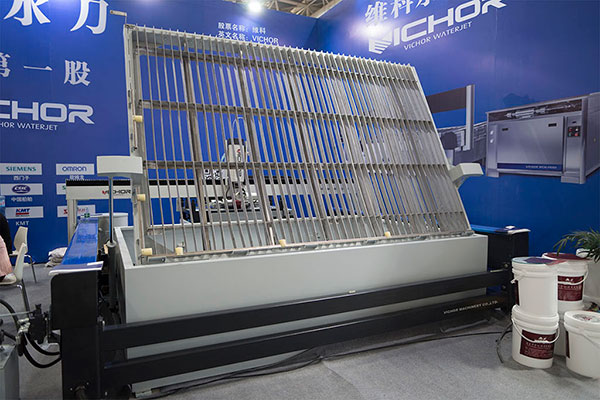

Waterjet Cutting Speed: 7 Key Factors That Determine Cutting Rates in 2026
Waterjet cutting speed directly impacts production throughput and job profitability. Fabricators constantly seek ways to optimize this parameter without sacrificing edge quality. Unlike thermal methods, waterjet cutting maintains cold-processing benefits, but speed varies significantly based on material, pressure, and abrasive delivery. VICHOR integrates advanced pump technology and CNC controls to help shops achieve optimal waterjet cutting speed across diverse applications. Understanding these variables enables better machine selection and process planning.
What Is Waterjet Cutting Speed and Why Does It Matter?
Waterjet cutting speed refers to the traverse rate at which the cutting head moves through a material, typically measured in inches per minute (IPM) or millimeters per minute (mm/min). It determines how many parts can be produced per hour, directly affecting cost per part. A machine with higher waterjet cutting speed can handle larger orders or more complex geometries in less time. However, pushing speed too far may cause striations or taper, requiring secondary finishing.
7 Critical Factors Affecting Waterjet Cutting Speed
Optimizing waterjet cutting speed requires balancing several interconnected parameters. Below are the primary influences.
1. Material Type and Thickness
Soft materials like rubber or foam can be cut at 200–500 IPM, while hard metals like titanium or Inconel may only manage 1–5 IPM at 4-inch thickness. Thickness has an exponential effect: doubling thickness often halves the waterjet cutting speed. For example, 1/4″ mild steel might cut at 20 IPM, while 1″ steel drops to 4 IPM under the same conditions.
2. Operating Pressure (PSI)
Higher pressure increases particle velocity and cutting energy. A pump running at 90,000 psi can achieve 20–30% faster waterjet cutting speed than the same machine at 60,000 psi, especially in thick materials. VICHOR’s intensifier pumps maintain stable pressure even at high flow rates, ensuring consistent speed throughout the cut.
3. Abrasive Type and Flow Rate
Garnet is the standard abrasive; harder materials like aluminum oxide can increase speed but cost more and wear nozzles faster. Increasing abrasive flow from 0.5 to 1.0 lb/min generally boosts waterjet cutting speed up to a point—beyond that, the jet becomes overloaded and slows. Optimal flow depends on orifice size and material.
4. Orifice and Nozzle Size
A larger orifice (e.g., 0.014″ vs. 0.010″) allows more water flow, increasing cutting power and waterjet cutting speed for thick sections. However, it also consumes more abrasive and water. Nozzle (focusing tube) diameter must match the orifice; mismatched sizes reduce coherence and slow cutting.
5. Cutting Quality Requirements
Higher quality demands (e.g., Q5 vs. Q1) require slower speeds to achieve smooth edges without taper. A rough cut for a weld prep may run at maximum speed, while a finished edge for a visible part needs reduced waterjet cutting speed and possibly multiple passes.
6. Pump Horsepower and Flow
The pump’s horsepower determines maximum water flow (GPM). A 50 HP pump might deliver 1.0 GPM, while a 100 HP pump delivers 2.0 GPM, doubling cutting speed for the same material. VICHOR offers pumps from 30 to 200 HP to match production goals.
7. CNC Control and Acceleration
Modern CNC systems with look‑ahead and jerk control maintain speed around corners and sharp details. Without good acceleration management, the actual waterjet cutting speed averages lower due to slowdowns. VICHOR’s controllers optimize path speed dynamically.
How to Calculate Waterjet Cutting Speed
While exact formulas are complex, a practical method uses material-specific charts provided by manufacturers. For example, a standard reference for 1″ aluminum might indicate 8 IPM at 60,000 psi with 1 lb/min abrasive. Adjustments for pressure, abrasive flow, and desired quality are made using correction factors. VICHOR includes a cutting database in its control software that suggests starting speeds based on job parameters.
Typical Waterjet Cutting Speed for Common Materials
The following estimates assume 60,000 psi, 1 lb/min garnet, and a quality finish (Q3). Actual speeds vary with equipment.
- Aluminum 1″: 8–12 IPM
- Mild Steel 1/2″: 10–15 IPM
- Stainless Steel 1″: 3–6 IPM
- Titanium 1/2″: 4–7 IPM
- Glass 1/2″: 15–25 IPM (pure water)
- Granite 1″: 2–4 IPM
- Carbon Fiber 1/4″: 20–40 IPM (abrasive)
Increasing pressure to 90,000 psi can improve waterjet cutting speed by 30–50% on hard materials. VICHOR’s high-pressure pumps enable these gains without compromising reliability.
Waterjet Cutting Speed vs. Other Technologies
Compared to laser, waterjet is generally slower on thin materials but faster on thick (>1″) metals because lasers lose power rapidly with thickness. Plasma cuts faster on conductive metals but produces a heat‑affected zone (HAZ) that may require grinding. For many shops, the ability to cut any material without heat makes waterjet cutting speed secondary to versatility. However, when speed is critical, optimizing the factors above brings waterjet closer to plasma speeds on medium thicknesses.
How VICHOR Optimizes Waterjet Cutting Speed
VICHOR designs machines to maximize productive waterjet cutting speed through several innovations:
- High-flow intensifier pumps that deliver up to 2.2 GPM at 90,000 psi.
- Dynamic pressure control that adjusts pressure during cutting to maintain speed through varying thickness.
- Abrasive mass flow sensors that keep garnet feed optimal for the programmed speed.
- CNC with adaptive feedrate that automatically reduces speed in tight corners to avoid overcuts, then accelerates in straight sections.
These features ensure that the rated waterjet cutting speed is achieved consistently, not just in straight lines but across complex part geometries.
Tips to Improve Waterjet Cutting Speed
Operators can take practical steps to increase throughput without investing in new machinery.
- Use the largest orifice and nozzle that the pump can support—larger diameters cut faster.
- Increase abrasive flow rate until the edge quality starts to degrade, then back off slightly.
- Maintain sharp focusing tubes; worn tubes widen the jet and reduce cutting efficiency.
- Keep pump pressure at the maximum rated level; check for leaks or worn seals that cause pressure drop.
- Use higher-quality garnet (e.g., 80 mesh vs. 120 mesh) for thick materials.
- Program parts to minimize rapid traverses between cuts; cluster small parts to reduce air cutting time.
Implementing these tips can boost effective waterjet cutting speed by 15–25% with existing equipment.
In summary, waterjet cutting speed is not a fixed number but a result of material, machine settings, and desired quality. By understanding the factors outlined, fabricators can select the right pump, abrasive, and parameters to meet production goals. VICHOR provides comprehensive support and technology to help customers achieve optimal waterjet cutting speed for their specific applications, ensuring that speed and quality go hand in hand.
Frequently Asked Questions About Waterjet Cutting Speed
Q1: What is the maximum waterjet cutting speed possible?
A1: In theory, speeds over 1,000 IPM can be achieved on very thin, soft materials like foam or rubber with pure water. For abrasive cutting of metals, practical maximums are around 200 IPM on thin gauge, but typical production speeds are much lower (10–50 IPM) to maintain edge quality.
Q2: How does waterjet cutting speed compare between abrasive and pure water?
A2: Pure water (no abrasive) is used for soft materials like rubber, plastics, and food. It can cut much faster than abrasive waterjet because there is no particle acceleration needed. For example, 1/4″ rubber might cut at 500 IPM with pure water, while the same thickness in steel with abrasive might be 20 IPM.
Q3: Does increasing pressure always increase waterjet cutting speed?
A3: Generally yes, but with diminishing returns. Going from 60,000 to 90,000 psi might increase speed by 30% in thick steel, but from 90,000 to 120,000 psi (if available) might only add another 10–15% due to flow limitations and nozzle wear. Higher pressure also requires more maintenance.
Q4: Can I use the same waterjet cutting speed for all thicknesses of a material?
A4: No, speed must be reduced as thickness increases. A rule of thumb is that cutting speed is inversely proportional to thickness squared for abrasive cutting. Doubling thickness typically reduces speed by a factor of 3–4. Always consult material-specific charts.
Q5: What is the effect of abrasive mesh size on waterjet cutting speed?
A5: Finer mesh (e.g., 120) produces smoother edges but cuts slower because each particle has less mass. Coarser mesh (e.g., 80) cuts faster but leaves a rougher surface. For maximum speed on thick materials, use the coarsest mesh that still meets quality requirements.
Q6: How do I know if my waterjet cutting speed is optimal?
A6: Examine the cut edge: if you see deep striations (washboard pattern), speed is too high. If the edge is smooth but cutting takes too long, you can increase speed slightly. VICHOR’s software includes a speed calculator that suggests optimal settings based on material and desired finish.
Q7: Does VICHOR provide training to help operators optimize waterjet cutting speed?
A7: Yes, VICHOR offers on-site and remote training covering parameter selection, troubleshooting, and advanced techniques to maximize waterjet cutting speed without compromising quality. The training also covers maintenance practices that keep pumps performing at peak levels.