
Water Laser Cutting Machine: Precision, Speed, and Versatility in Modern Manufacturing
A water laser cutting machine combines the best of two worlds: the focused energy of a laser beam and the cooling, cleaning action of a fine water jet. This hybrid technology is gaining traction in industries where thermal damage must be avoided but high precision is non‑negotiable. Unlike conventional dry lasers, the water‑guided laser eliminates heat‑affected zones and produces exceptionally clean edges. In this article, we examine how these machines work, their advantages, and why manufacturers are integrating them into production lines.
What Is a Water Laser Cutting Machine?
A water laser cutting machine uses a low‑pressure water jet to guide a high‑power laser beam onto the workpiece. The water acts as an optical fiber, keeping the beam perfectly collimated while simultaneously cooling the cut zone and flushing away molten debris. This results in a cut that is both precise and free of burrs or micro‑cracks.
How It Works: The Hybrid Technology
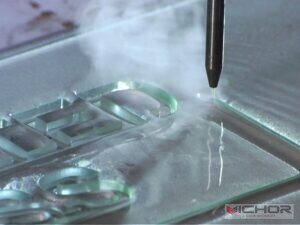
A thin, stable water jet (typically 50–100 µm in diameter) is created by passing deionized water through a specially designed nozzle. A pulsed or continuous laser beam is focused into this jet, and total internal reflection keeps the light confined within the water stream. As the jet strikes the material, the laser energy vaporizes or melts it, while the water cools the surrounding area and removes ejecta.
- The water jet acts as a flexible light guide, allowing a long working distance.
- Cutting occurs with minimal mechanical force, reducing stress on fragile parts.
- The process is suitable for metals, ceramics, silicon, and composites.
Key Components of a Water Laser System
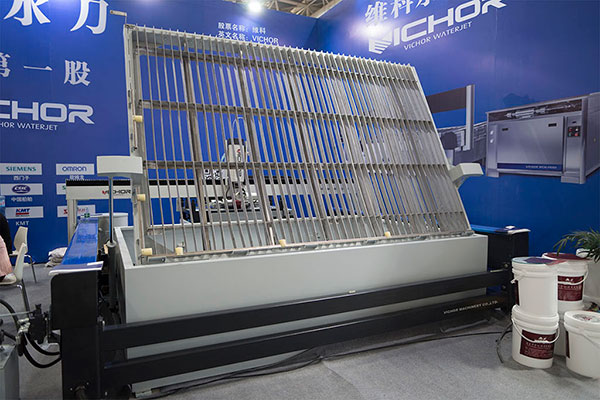
A complete system includes a laser source (often Nd:YAG or fiber laser), a water conditioning unit, a precision nozzle assembly, and a CNC motion stage. The water must be ultra‑pure and carefully pressurized to maintain a stable jet. VICHOR integrates these elements into robust machines that deliver repeatable results.
Advantages of Using a Water Laser Cutting Machine
Choosing a water laser cutting machine brings multiple benefits that dry lasers or pure waterjets cannot match.
Cold Cutting Process Preserves Material Integrity
Because the water cools the interaction zone, the heat‑affected zone is virtually eliminated. Materials like titanium, stainless steel, and advanced alloys retain their mechanical properties without warping or oxidation. This is critical for aerospace and medical implants.
High Precision and Edge Quality
The water‑guided beam does not diverge, so cuts remain narrow and parallel even through thick sections. Edge roughness is typically below 0.5 µm Ra, often eliminating the need for secondary finishing. Kerf widths are as small as 30 µm, allowing intricate geometries.
Versatility Across Materials
From reflective metals (copper, brass) to brittle ceramics (alumina, zirconia) and composites (carbon fiber, glass‑epoxy), the water laser handles them all. The absence of back reflection damage to the optics is a key advantage when cutting reflective materials.
- Metals: Stainless steel, titanium, Inconel, aluminum.
- Non‑metals: Silicon, glass, sapphire, polymers.
- Composites: CFRP, GFRP with minimal delamination.
Applications of Water Laser Cutting Technology
Industries that demand precision and cleanliness increasingly rely on this technology. Below are some prominent use cases.
Electronics and Semiconductor Industry
Cutting silicon wafers, PCBs, and ceramic substrates requires narrow kerfs and zero thermal stress. Water laser machines produce clean edges without chipping, improving yield in microelectronics fabrication.
Medical Device Manufacturing
Stents, catheters, and surgical tools are often made from shape‑memory alloys or polymers. The cold process preserves material properties and leaves surfaces ready for sterilization or coating.
Aerospace and Automotive Components
Fuel nozzles, turbine blades, and lightweight structural parts benefit from the high precision and lack of recast layer. The ability to cut stacked dissimilar materials in one pass is another advantage.
Water Laser vs. Traditional Cutting Methods
Understanding how a water laser cutting machine compares with other technologies helps in selecting the right tool for the job.
Comparison with CO2 and Fiber Lasers
Dry lasers are fast but generate heat, which can cause micro‑cracks in brittle materials. They also struggle with reflective metals due to back reflections. Water lasers eliminate these issues and produce better edge quality, though at slightly lower speeds for very thin materials.
Comparison with Pure Waterjet Cutting
Abrasive waterjets can cut thick plates but leave a rougher edge and require abrasive disposal. Water lasers achieve finer finishes and can cut intricate shapes with smaller corner radii, but are generally limited to thinner sections (typically <10 mm).
- Speed: Dry laser is fastest; water laser is moderate; waterjet is slowest.
- Edge quality: Water laser gives the best finish.
- Material range: Waterjet cuts almost anything; water laser is best for metals and ceramics.
Choosing the Right Water Laser Cutting Machine for Your Business
Selecting a machine involves evaluating your production requirements, material types, and budget. Partnering with an experienced manufacturer ensures you get a system tailored to your needs.
Factors to Consider: Power, Speed, and Material Compatibility
Laser power (typically 50 W to 500 W) determines cutting speed and maximum thickness. Work envelope size and automation options (like robotic loading) affect throughput. VICHOR offers configurable systems that match these parameters.
Why VICHOR Leads in Water Laser Innovation
VICHOR’s waterjet cutting machines have long been trusted for precision, and their water laser line builds on that heritage. With advanced beam delivery, intuitive software, and global support, VICHOR helps manufacturers integrate this technology seamlessly.
Maintenance and Best Practices
To keep a water laser cutting machine operating at peak performance, follow these guidelines.
Routine Cleaning and Calibration
Inspect the nozzle for wear and ensure the water jet remains stable. Clean the optical components regularly to prevent residue buildup. Calibrate the beam alignment weekly to maintain accuracy.
Safety Considerations
Water lasers use high‑power lasers and high‑pressure water. Operators must wear appropriate eye protection and follow lockout/tagout procedures during maintenance. VICHOR machines include safety interlocks and enclosures.
- Check water quality (conductivity, particle count) daily.
- Monitor laser power stability.
- Keep the work area dry to avoid electrical hazards.
The water laser cutting machine represents a significant step forward in precision manufacturing. By merging laser energy with a water guide, it delivers cuts that are both thermally gentle and geometrically exact. From delicate medical components to rugged aerospace parts, this technology solves problems that traditional methods cannot. As industries push for tighter tolerances and better surface finishes, the water laser will become an indispensable tool. VICHOR continues to innovate in this space, providing reliable equipment and expertise to manufacturers worldwide.
Frequently Asked Questions
Q1: What materials can a water laser cutting machine process?
A1: It can cut a wide range of materials including metals (stainless steel, titanium, copper, brass), ceramics (alumina, zirconia), semiconductors (silicon, gallium arsenide), composites (CFRP, GFRP), and some polymers. The process is especially effective for materials sensitive to heat or reflective surfaces.
Q2: Does water laser cutting produce heat damage?
A2: No, the water continuously cools the cut zone, so the heat‑affected zone is negligible. This preserves the material’s microstructure and mechanical properties, making it suitable for heat‑sensitive alloys and medical implants.
Q3: What is the typical cutting speed for metals?
A3: Cutting speeds depend on material type and thickness. For example, a 1 mm thick stainless steel sheet can be cut at 200–400 mm/min with a 200 W laser. Thicker materials require slower speeds. The water laser is generally slower than dry fiber lasers but offers superior edge quality.
Q4: How does the water assist in laser cutting?
A4: The water jet guides the laser beam via total internal reflection, keeping it focused over a long distance. It also cools the workpiece, removes molten material, and suppresses dust and fumes. This combination yields clean, burr‑free cuts.
Q5: Is a water laser cutting machine expensive to operate?
A5: Operating costs include electricity, water (deionized), occasional nozzle replacements, and routine maintenance. Because there are no abrasive consumables and very little waste, the per‑part cost can be lower than abrasive waterjet for thin materials. Overall, it is competitive with other high‑precision methods.
Q6: Can water laser cut thick materials?
A6: Most water laser systems are optimized for thicknesses up to about 10 mm in metals. For thicker sections, an abrasive waterjet may be more appropriate. However, for precision parts under 10 mm, the water laser offers unmatched edge quality.
Q7: What maintenance does a water laser require?
A7: Daily checks of water quality and nozzle condition, weekly cleaning of optics and calibration, and periodic replacement of filters and seals. VICHOR provides detailed maintenance schedules and remote support to minimize downtime.