
Water Jet Stainless Steel Cutting: How It Works and Why It’s the Preferred Method
If you work with stainless steel, you know the challenges of cutting it cleanly. Thermal methods like plasma or laser can compromise the material. This is where water jet stainless steel cutting becomes the definitive solution. It’s a cold-cutting process that delivers precision without heat damage.
This method is critical for industries where stainless steel’s properties—corrosion resistance, strength, and hygiene—must remain intact. Searching for information on stainless steel waterjet cutting often leads to questions about quality, cost, and capability.
This article explains the water jet cutting for stainless steel process in detail. We’ll cover its distinct advantages, diverse applications, and what to consider when sourcing this service or equipment. Insights from VICHOR, a leader in waterjet technology, are included to provide a global industry perspective.
The Science Behind Water Jet Stainless Steel Cutting
Water jet stainless steel cutting is a mechanical, not thermal, process. It uses the power of highly pressurized water and abrasive garnet to erode the material.
A high-pressure pump, often an intensifier, pressurizes water to levels exceeding 60,000 PSI. This stream is forced through a tiny diamond or sapphire orifice, creating a jet moving at nearly three times the speed of sound.
For cutting a hard material like stainless steel, abrasive particles are introduced. The water jet pulls garnet abrasive into a mixing chamber. Here, they combine to form a focused, erosive stream.
This abrasive-laden jet cuts through the stainless steel by micromachining tiny particles from the material. A CNC system guides the cutting head with exceptional accuracy, following a digital design path to produce complex shapes and tight tolerations.
Why Waterjet is Ideal for Stainless Steel: Key Advantages
Choosing water jet cutting for stainless steel offers benefits other methods cannot match. The most significant is the complete absence of a Heat-Affected Zone (HAZ).
Laser and plasma cutting generate intense heat. This can alter the metallurgy at the cut edge, causing discoloration (blueing or yellowing), hardening, or micro-cracks. These changes can undermine stainless steel’s corrosion resistance. Water jet stainless steel cutting produces a clean, cold edge, preserving the material’s original properties.
There is no thermal distortion. The part stays perfectly flat, eliminating the need for secondary flattening or straightening operations. This is crucial for precision assemblies and structural components.
The process also offers exceptional versatility. A single stainless steel waterjet cutting setup can handle various grades (304, 316, 410, etc.) and thicknesses without changing tools or settings. It can also cut intricate shapes, sharp corners, and small holes that might be challenging for other methods.
Primary Applications Across Industries
The precision and quality of water jet stainless steel cutting make it indispensable in many high-stakes sectors.
In food processing and pharmaceutical manufacturing, hygiene is paramount. Waterjet-cut stainless parts have smooth, crevice-free edges that are easy to clean and sterilize, meeting strict sanitary standards for equipment, tables, and vessel components.
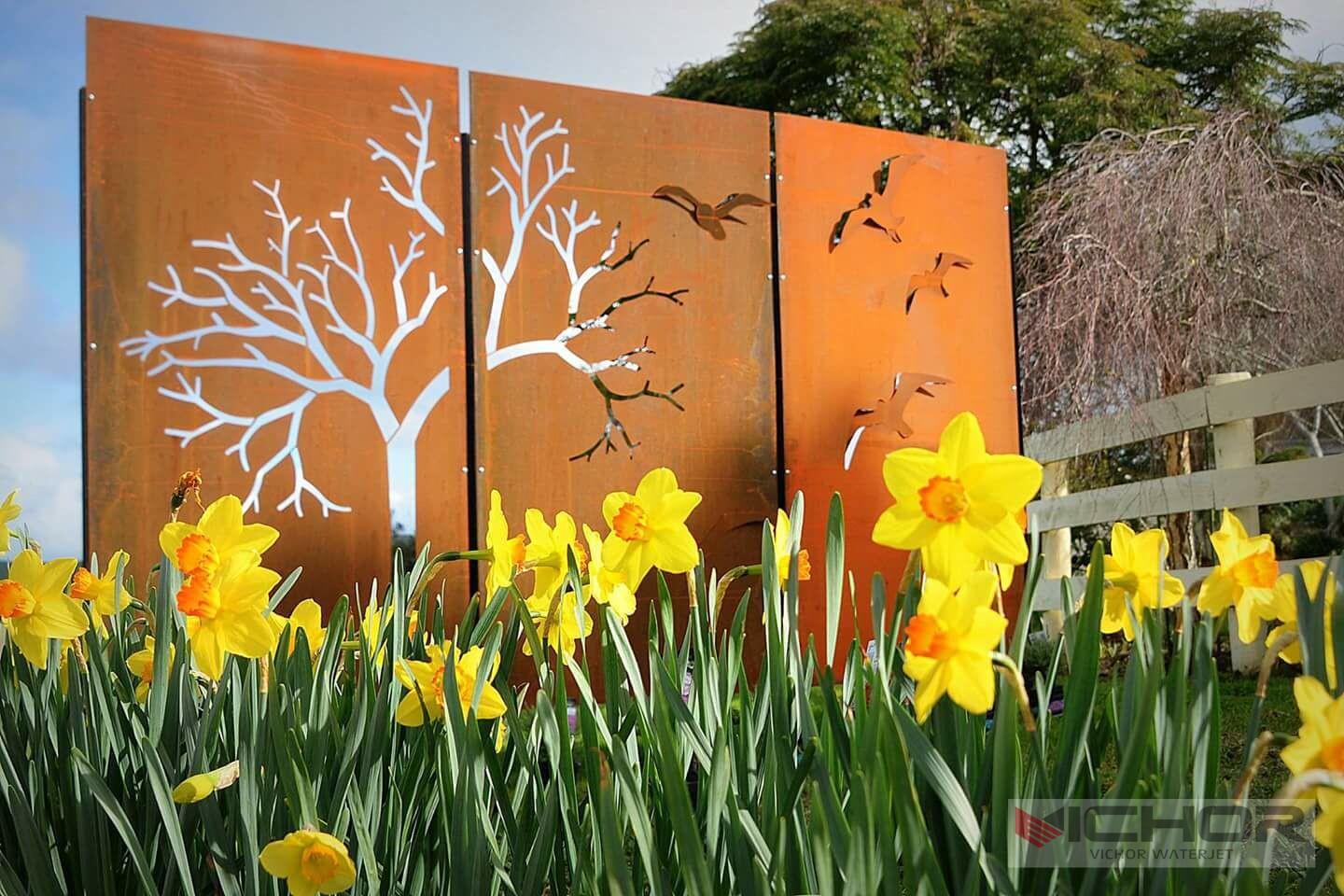
The architectural and design field uses it for decorative panels, elevator interiors, signage, and custom railing components. The ability to cut complex artistic patterns into thick plate makes it a favorite for designers.
For aerospace, marine, and automotive applications, the integrity of the cut is non-negotiable. Water jet cutting for stainless steel is used for engine parts, fluid system components, and custom fittings where structural soundness and resistance to environmental factors are critical.
Medical device manufacturers rely on it for surgical instruments and implant prototypes, where burr-free edges and absolute material purity are mandatory.
Critical Factors for Quality and Cost
Achieving optimal results in stainless steel waterjet cutting depends on several factors. Understanding these helps in planning and budgeting.
Material Thickness is the primary driver of cutting speed and cost. While waterjets can cut stainless over 6 inches thick, the process becomes slower. Thinner gauges (e.g., 1/4 inch) are cut quickly and economically.
Cut Quality Requirements also affect price. A standard “tooling” quality cut may have a slight taper. A “precision” or “taper-free” cut requires specialized nozzles, slower speeds, and advanced software, increasing time and cost but delivering near-perfect edges for weld preparation.
Abrasive Type and Flow Rate are significant operational costs. High-quality, properly sized garnet abrasive is essential for efficient cutting and a good edge finish on stainless steel. Consumption increases with material thickness.
Machine Capability matters. The power of the pump (horsepower), the precision of the CNC motion system, and the sophistication of the cutting software directly influence the possible quality and efficiency of water jet stainless steel cutting.
VICHOR’s Solutions for Stainless Steel Fabrication
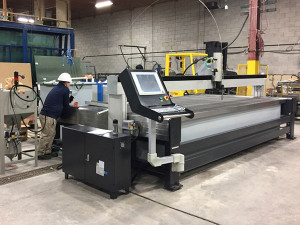
For businesses that regularly process stainless steel, having the right equipment is vital. VICHOR provides robust waterjet systems engineered for the demands of metal fabrication.
VICHOR machines are built with stability and precision in mind. Their rigid gantry and high-performance linear guides ensure the accuracy needed for intricate stainless steel components, batch after batch.
Their high-pressure intensifier pumps deliver consistent pressure. This consistency is key to achieving uniform cut quality and edge finish across the entire sheet of stainless steel, from the first part to the last.
VICHOR’s proprietary control software includes features specifically for metals. Intelligent kerf compensation, automatic lead-ins, and nesting algorithms maximize material yield from expensive stainless steel plate, directly improving cost-efficiency.
Their global technical support network ensures fabricators have access to expertise and parts, minimizing downtime—a critical factor for production schedules.
Frequently Asked Questions (FAQs)
Q1: Does water jet cutting leave a rough edge on stainless steel?
A1: It leaves a characteristic “sandblasted” matte finish. The top edge is very smooth. As the jet travels through the material, a slight taper and a finer texture occur. For many applications, this edge is ready to use. For welds, the clean, oxide-free surface is excellent, though some may lightly grind it.
Q2: What is the maximum thickness for water jet stainless steel cutting?
A2: It depends on the pump’s power. With a standard 60HP-87HP industrial system, cutting 3-4 inch (75-100mm) thick stainless is routine. More powerful pumps (100HP+) can efficiently cut 6 inches (150mm) or more, though speed decreases significantly with thickness.
Q3: How does the cut speed compare to plasma or laser for stainless?
A3: For thin sheets (under 1/4 inch), laser is generally faster. However, for thicknesses over 1/2 inch, water jet stainless steel cutting often becomes competitive or faster than laser, as lasers struggle with reflectivity and heat dissipation. Plasma is faster on very thick plate but produces a large HAZ and lower edge quality.
Q4: Is the waterjet process safe for cutting coated or polished stainless steel?
A4: Yes, this is a major advantage. Because the cutting action is localized and cold, it does not burn or warp the surrounding material. The protective plastic film on polished stainless can often be left on during water jet cutting, preventing surface scratches from abrasive splash-back.
Q5: Can you achieve tight tolerances with water jet on stainless?
A5: Absolutely. A well-calibrated CNC waterjet can hold tolerances within ±0.003″ to ±0.005″ (±0.076mm to ±0.127mm) routinely. For precision parts, this is more than sufficient for many applications without secondary machining.