
Water Jet CNC Machine Capabilities: Cutting Thick Metal, Stone, and Glass Without Heat
Fabrication shops often face a difficult choice when selecting cutting equipment. You need speed, but you also need precision. More importantly, many materials cannot withstand the high temperatures generated by lasers or plasma cutters. This is where the water jet cnc machine separates itself from the pack. It offers a cold cutting process that changes how we approach complex manufacturing tasks.
Unlike thermal processes that can warp metal or create hardened edges, waterjet technology uses erosion. It is essentially accelerated erosion on demand. Whether you are a small job shop or a large aerospace manufacturer, understanding the nuances of this machinery is vital for your bottom line.
We will look at how these machines operate, the real-world costs of running them, and why brands like VICHOR are becoming the go-to standard for durability in the international market.
The Mechanics Behind High-Pressure Cutting
At the heart of every water jet cnc machine is the pump. This component is responsible for pressurizing water to incredible levels, often exceeding 60,000 or even 90,000 PSI (pounds per square inch). This pressure is what turns ordinary tap water into a cutting tool.
The water travels through high-pressure tubing to the cutting head. Here, it passes through a tiny orifice, usually made of diamond or sapphire. This restriction accelerates the stream to speeds faster than Mach 3. For soft materials like foam or rubber, this pure water stream is enough to slice through cleanly.
However, most CNC applications involve harder materials. For this, an abrasive delivery system adds garnet—a hard, sand-like mineral—into the stream. The mixture creates a coherent, high-velocity sanding wand that cuts through steel, titanium, and stone with zero heat-affected zones (HAZ).
Versatility: One Machine for Multiple Industries
The primary selling point of a water jet cnc machine is versatility. A laser cutter is excellent for thin sheet metal but struggles with thick aluminum or reflective copper. A plasma cutter is fast but leaves a messy edge that requires secondary machining.
Waterjets do not discriminate. You can cut 4-inch thick mild steel in the morning and switch to fragile glass in the afternoon with minimal setup changes. This flexibility is crucial for job shops that never know what the next client will order.
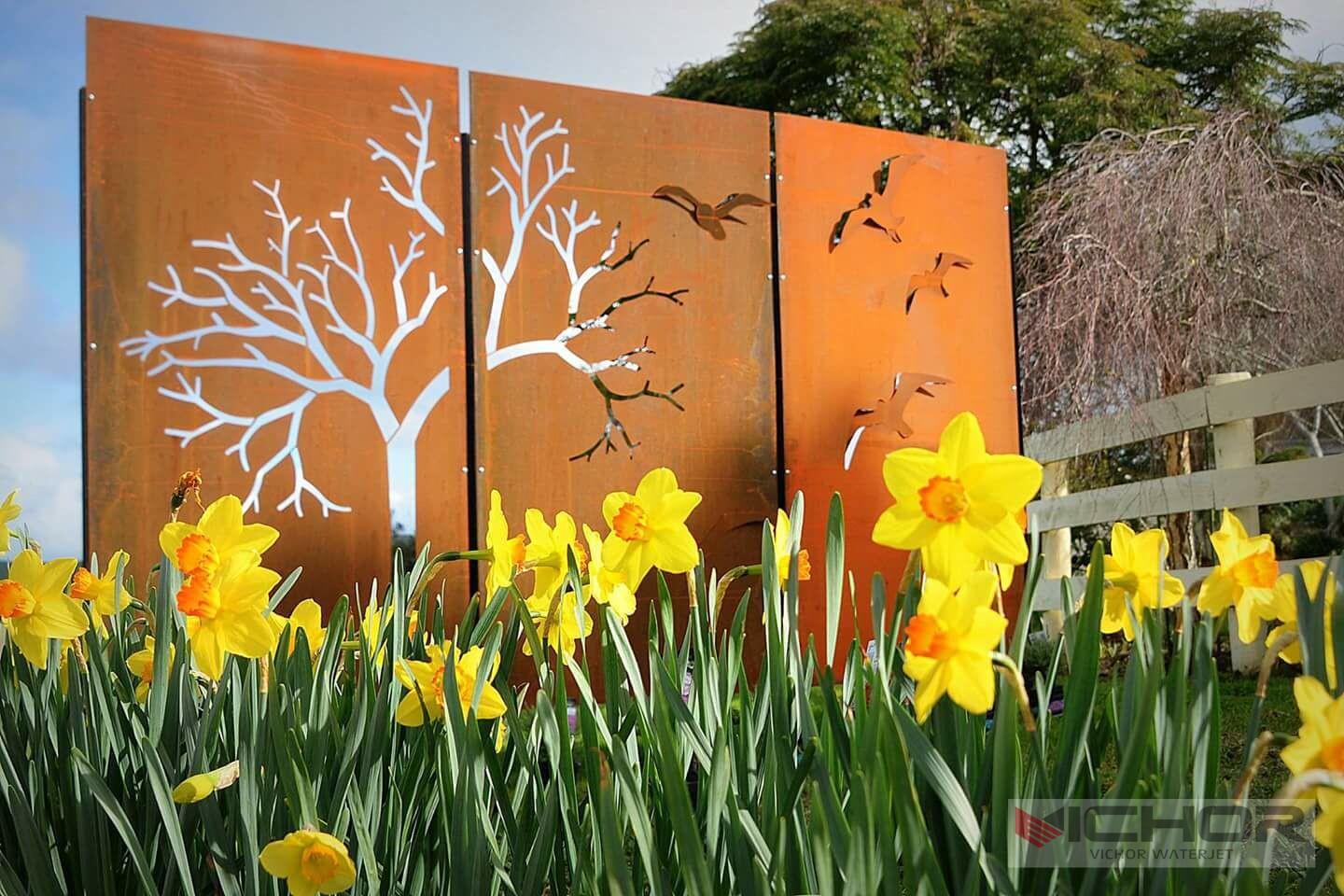
In the stone and tile industry, these machines are indispensable. They can cut intricate inlays in granite or marble without cracking the material. VICHOR has engineered specific table designs that handle the heavy weight of stone slabs while maintaining the precision required for tight mosaic fits.
Understanding Pump Technologies: Direct Drive vs. Intensifier
When shopping for a water jet cnc machine, you will encounter two main pump types: direct drive and intensifier. Your choice impacts maintenance costs and cutting efficiency.
Direct drive pumps operate similarly to a pressure washer but at much higher stakes. They generally offer higher electrical efficiency. If you put 50 horsepower in, you get a high percentage of that out as cutting pressure. They are often quieter and take up less floor space.
Intensifier pumps, on the other hand, use hydraulics to drive a plunger. These are the traditional workhorses of the industry. They are known for their ability to maintain ultra-high pressures for extended periods. While maintenance can be more involved, the seal life in modern intensifiers has improved significantly.
Manufacturers like VICHOR provide guidance on which pump style fits your production volume, ensuring you don’t overspend on power you don’t need.
The Advantage of Cold Cutting
Heat is the enemy of metallurgy. When you cut aerospace parts or automotive components with heat, you alter the molecular structure of the metal near the edge. This “Heat Affected Zone” can lead to micro-cracking or structural weakness.
A water jet cnc machine eliminates this risk entirely. The water acts as a coolant while it cuts. There is no slag to grind off, and the material retains its original properties right up to the cut edge.
This feature allows machine shops to stack materials. You can stack several sheets of aluminum and cut them simultaneously. Since there is no heat to fuse the sheets together, the parts separate easily after the job is done, effectively multiplying your production rate.
Precision and Edge Quality Levels
Not all cuts need to be perfect. Sometimes you just need to separate a part from a sheet; other times, you need a machine-finish edge. Waterjet software typically allows you to select quality levels, usually ranging from Q1 (fast, rough separation cut) to Q5 (slow, high-precision smooth finish).
The water jet cnc machine achieves higher precision by slowing down the travel speed. This reduces the “tail” or lag of the water stream. At high speeds, the bottom of the water stream lags behind the top, creating a tapered edge. Slowing down straightens the stream.
Modern machines equipped with 5-axis cutting heads can physically tilt the nozzle to compensate for this taper. This dynamic compensation results in parts with perfectly perpendicular edges, even at faster speeds. VICHOR utilizes advanced motion control systems to manage this taper automatically, simplifying the operator’s job.
Operational Costs: What to Expect
Buying the machine is just the first step. Running a water jet cnc machine involves consumable costs that differ from laser or plasma. The three main operational costs are abrasive, water/electricity, and wear parts.
Abrasive (usually garnet) is the single biggest hourly cost. Depending on the size of the nozzle and the pressure, a machine might consume anywhere from 0.5 to 1.5 pounds of abrasive per minute. Sourcing high-quality garnet that doesn’t clog the nozzle is essential.
Wear parts include the mixing tube (nozzle), the orifice, and pump seals. The mixing tube takes the brunt of the abuse from the abrasive and will need replacement regularly. However, compared to the cost of tooling for a milling machine, waterjet consumables are predictable and manageable.
Software and Usability
The hardware is useless without good software. Modern control software for a water jet cnc machine is increasingly user-friendly. Most accept standard DXF or CAD files. The software handles the nesting, which is the arrangement of parts on the sheet to minimize waste.
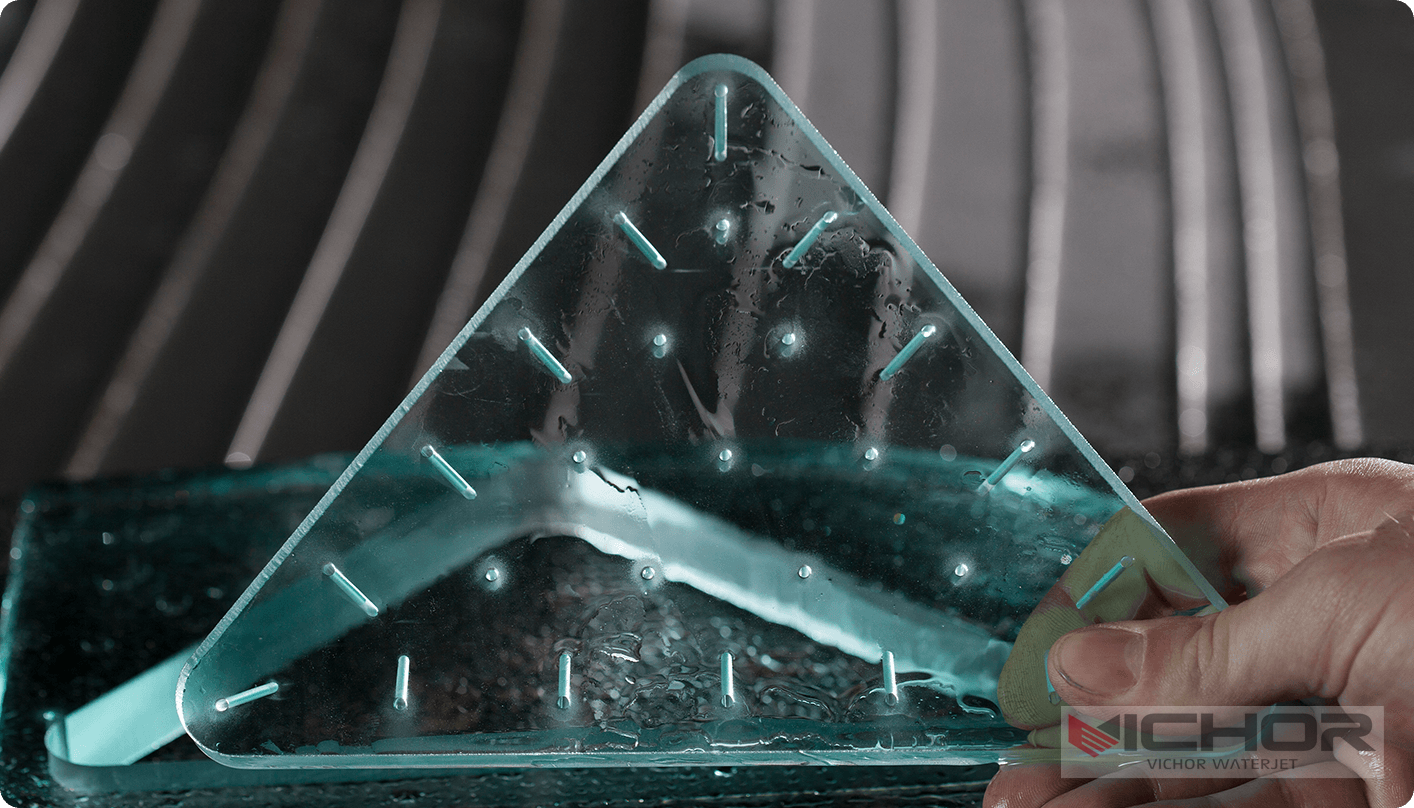
Good software also manages the “pierce.” When the waterjet starts a cut in the middle of a plate, it has to drill through first. This piercing process needs to be handled carefully to avoid cracking brittle materials like glass or stone. VICHOR integrates smart pressure ramping into their systems, allowing the pressure to start low and build up, ensuring the material remains intact during the pierce.
Why Structure and Stability Matter
A waterjet tank is filled with water and heavy slats. When you add a 4-inch thick steel plate, the weight is immense. If the machine frame is not rigid, the weight can cause subtle twisting or bowing, which destroys accuracy.
Top-tier manufacturers build their machines with heavy-duty steel gantries and isolated tanks. Isolating the tank from the gantry ensures that if a forklift bumps the tank while loading material, it doesn’t knock the cutting head out of alignment. The engineering behind VICHOR machines prioritizes this rigidity, ensuring that the accuracy you get on day one is the same accuracy you get five years later.
Environmental Impact and Safety
Manufacturing is under pressure to be greener. A water jet cnc machine is a relatively clean process. It produces no toxic fumes or smoke, unlike laser or plasma cutting. The waste product is simply water, sand, and fine metal particles.
Most of the water can be recycled if a closed-loop filtration system is installed. The spent abrasive can often be repurposed or disposed of as non-hazardous waste (depending on the material cut). For shops in strict regulatory environments, this clean operation is a significant legal and health advantage.
Safety is also higher. While the beam is dangerous, there is no risk of fire, flash blindness from arcs, or inhaling vaporized metal. Operators still need ear protection due to the noise of the supersonic water leaving the nozzle, but the overall environment is safer.
Final Thoughts for Fabricators
Investing in a water jet cnc machine is a strategic move to broaden your capabilities. It stops you from saying “no” to jobs involving thick materials, complex stone patterns, or heat-sensitive alloys.
While the operating costs regarding abrasive must be calculated into your pricing, the elimination of secondary finishing steps often makes waterjet parts cheaper overall. You get a finished part right off the table.
When you look for equipment that balances cost, performance, and international support, VICHOR stands out as a robust partner in the industry. Their machines are built to withstand the rigors of heavy fabrication while delivering the precision modern engineering demands.