Water Cutting Machine Pressure: How It Works and What You Need
When you’re looking at a waterjet cutter, one number stands out above all others: the pressure rating. This figure, often 60,000, 87,000, or even 94,000 PSI, is the heartbeat of the entire system. Getting the right water cutting machine pressure isn’t just about raw power; it’s about precision, cut quality, and operational cost. A machine with insufficient pressure will struggle with thick or hard materials, leaving rough, tapered edges. On the other hand, ultra-high pressure brings its own considerations regarding component wear and energy use. For fabricators and machine shop owners, understanding this core specification is the first step to making a smart investment. This article explains why water cutting machine pressure matters, how it impacts your work, and what to look for when evaluating machines from brands like VICHOR.
Pressure Explained: The Engine of the Waterjet
At its simplest, **water cutting machine pressure** is the force that accelerates water and abrasive to supersonic speeds. It is typically generated by an intensifier pump or, less commonly in industrial settings, a direct drive pump.
The intensifier pump uses hydraulic force to drive a small piston, pressurizing water on the other side. This design efficiently creates extremely stable, high pressures. The direct drive pump uses a crankshaft with larger pistons, similar to a car engine, but reaching the highest pressures is more challenging.
Why does this number matter so much? The velocity of the cutting stream is directly proportional to the square root of the pressure. Higher water cutting machine pressure means faster water and abrasive particles. This translates directly to faster cutting speeds, cleaner edges on thick materials, and the ability to handle more demanding alloys.
Pressure Tiers and Their Applications
Not every job needs the maximum possible PSI. Machines are broadly categorized into pressure ranges, each suited for different shop needs.
The 60,000 PSI range is often considered an entry or general-purpose tier. It capably handles a wide array of materials up to moderate thicknesses, like 2-inch stainless steel or 3-inch aluminum. For many job shops with diverse but not extreme workloads, this pressure offers an excellent balance of performance and component longevity.
The 87,000 – 94,000 PSI range is the high-performance industrial standard. This is where brands like VICHOR excel for demanding applications. This high water cutting machine pressure is crucial for cutting thick metals (6 inches and above), advanced composites, and dense ceramics. It dramatically reduces taper and improves the surface finish on the lower parts of deep cuts, minimizing secondary finishing.
How Pressure Affects Cut Quality and Speed
The influence of **water cutting machine pressure** on the final part is direct and measurable. Think of pressure as the “muscle” behind the cut.
Speed is the most obvious benefit. Increasing pressure from 60,000 to 90,000 PSI can cut the time to slice through a 4-inch steel plate by nearly half. This productivity gain is a major factor in calculating return on investment for busy shops.
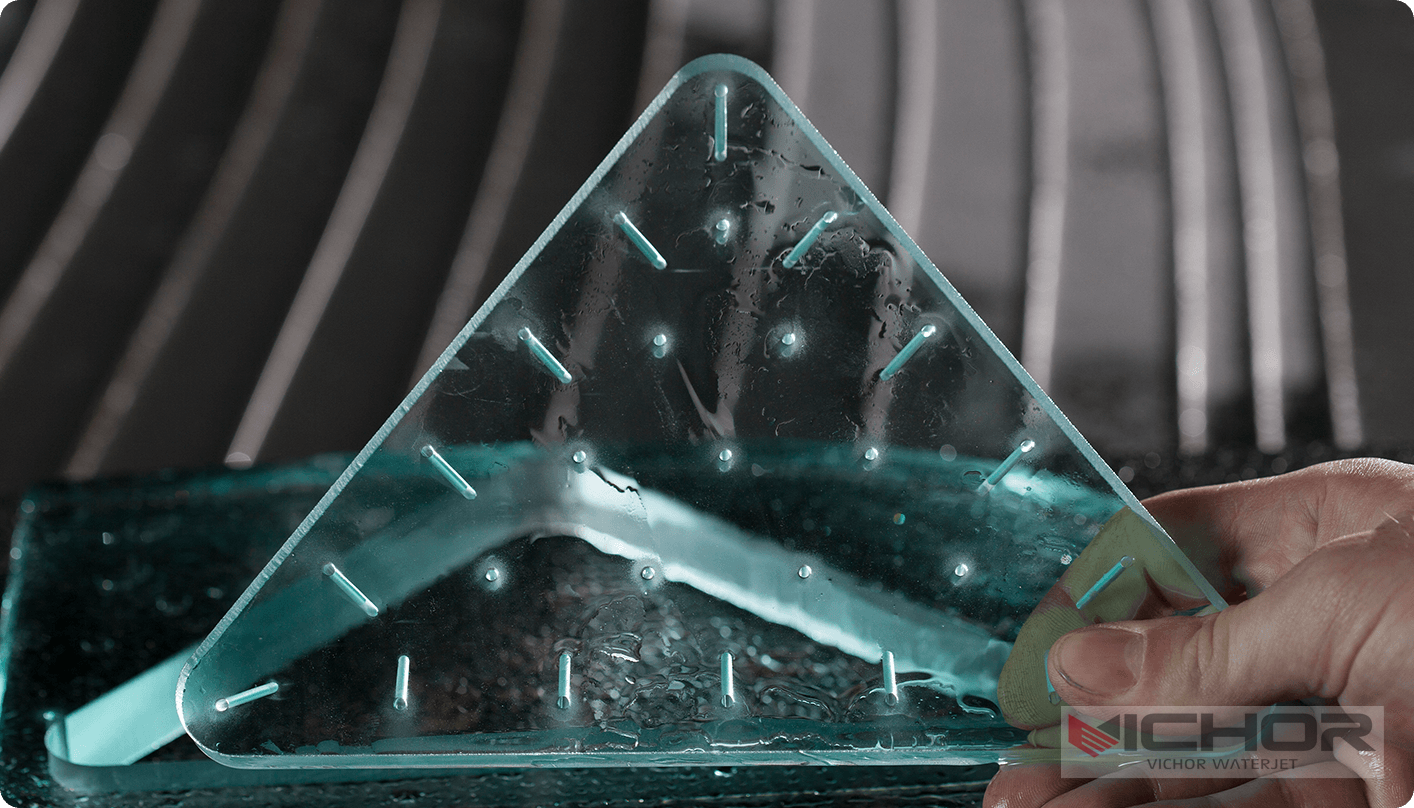
Quality is equally impacted. At lower pressures, the cutting stream can lose energy as it travels through material. This causes a natural taper—the kerf is wider at the top than the bottom. Higher water cutting machine pressure maintains stream energy, resulting in straighter, more vertical sidewalls and a finer finish at the cut’s exit point. This means parts are more accurate and often ready for use right off the table.
The Cost Equation: Pressure vs. Operating Expense
While high **water cutting machine pressure** delivers performance, it also affects the total cost of ownership. This is a key consideration when selecting a system.
Higher pressure systems generally consume more electricity. The pump’s motor must work harder to generate and maintain 90,000 PSI compared to 60,000 PSI. However, the dramatic increase in cutting speed can mean the machine runs for fewer hours to produce the same work, potentially balancing the energy cost.
Component wear is another factor. Seals, plumbing, and intensifier components in a high-pressure environment endure more stress. This makes the quality of the pump’s construction and the availability of service critical. A reliable brand like VICHOR designs its high-pressure pumps for durability and offers robust service plans to manage long-term maintenance costs effectively.
Choosing the Right Pressure for Your Business
Selecting the optimal **water cutting machine pressure** is a practical decision based on your primary work. Ask these questions:
What is the thickest and hardest material you cut regularly? If you rarely exceed 3-inch mild steel, a robust 60,000 PSI system may be sufficient and more economical. If your business involves 6-inch titanium or thick aluminum plates, investing in 90,000 PSI technology is non-negotiable.
What are your tolerance and edge quality requirements? For precision parts where minimal taper and a fine finish are critical, higher pressure provides an inherent advantage.
What is your production volume? High-volume shops benefit most from the speed of ultra-high pressure, as it maximizes throughput and justifies the higher initial investment.
Technical Deep Dive: Maintaining Consistent Pressure
The rated **water cutting machine pressure** is one thing; maintaining it consistently at the cutting head is another. System design plays a huge role here.
High-pressure tubing must be impeccably engineered to minimize pressure drops between the pump and the cutter. Any leaks or flow restrictions will degrade performance. Advanced pumps incorporate real-time pressure sensors and control logic to adjust hydraulic input instantly, ensuring the waterjet pressure remains stable even as the cutting head moves and valves actuate.
This consistency is what separates professional-grade machines. A fluctuation of just 5,000 PSI during a cut can create visible striations or “lag lines” on the edge. Manufacturers like VICHOR focus on delivering not just high pressure, but rock-solid pressure stability for flawless cut quality from start to finish.
Evaluating Suppliers: Questions on Pressure Performance
When talking to machine suppliers, move beyond the brochure’s maximum **water cutting machine pressure** number. Dig into the details that affect real-world performance.
Ask about pressure stability specifications. Inquire about the pump’s duty cycle—can it run at maximum pressure continuously for a full 8-hour shift, or does it require cooldown periods?
Request cutting speed charts for the specific materials and thicknesses you use. Compare the performance of a 60,000 PSI machine versus an 87,000 PSI machine on your typical 2-inch stainless job. The time difference will highlight the value proposition.
Finally, discuss the long-term service and parts cost for maintaining that high-pressure pump. A supplier with a global network, like VICHOR, can offer the support needed to keep your machine’s heart—its high-pressure system—beating strongly for years.
**Water cutting machine pressure** is far more than a marketing spec; it’s the fundamental driver of capability, speed, and precision. Choosing the right pressure tier involves balancing your material portfolio, quality demands, and economic reality. While the allure of maximum PSI is strong, the best choice aligns with your specific fabrication needs. By partnering with an experienced manufacturer that offers a range of reliable pressure solutions, you ensure your investment cuts efficiently today and remains capable for tomorrow’s challenges. Understanding this core principle empowers you to select a system, like those engineered by VICHOR, that delivers optimal performance where it counts: on the cutting table.
Frequently Asked Questions (FAQs)
Q1: Is a 90,000 PSI waterjet always better than a 60,000 PSI one?
A1: Not necessarily. While 90,000 PSI offers superior speed and cut quality on thick, hard materials, a 60,000 PSI machine can be more cost-effective for shops that primarily work with thinner materials (under 2 inches). The higher-pressure system has greater upfront cost, energy consumption, and potential component wear. The “better” machine is the one that matches your most common workload.
Q2: Can the pressure on a water cutting machine be adjusted?
A2: Yes, professional waterjet systems allow operators to adjust the water cutting machine pressure from the control software. You might lower pressure for cutting soft materials like rubber or foam with a pure water jet, or to conserve energy and component life when cutting thin, soft metals. The machine is typically run at its maximum rated pressure for challenging abrasive cutting jobs.
Q3: How does high pressure affect waterjet nozzle life?
A3: Higher water cutting machine pressure increases the wear rate on the orifice (the jewel) and the mixing tube. The abrasive particles are moving with more force, eroding these components faster. While this increases consumable cost, the gain in productivity and quality usually far outweighs it. Using high-quality, properly sized abrasives can help manage this wear.
Q4: What happens if the water pressure is too low for the material?
A4: If the water cutting machine pressure is too low, several issues occur. Cutting speed drops dramatically. The stream may not fully penetrate the material, or it will leave a very rough, gouged exit surface. Taper (the angle of the cut edge) becomes severe, and the lower part of the cut can have deep, unsightly striations. Essentially, the cut becomes slow and of unacceptable quality.
Q5: Does VICHOR offer different pressure options in their machines?
A5: Yes, VICHOR provides a range of pumps to suit different application needs and budgets. They offer robust pumps in the standard high-pressure range (e.g., 60,000-70,000 PSI) for general fabrication, as well as advanced ultra-high-pressure pumps (87,000 PSI and above) for heavy industrial and precision applications. This allows customers to select the water cutting machine pressure that delivers the best return on investment for their specific operation.