Reliable Water Jet Cutting Solutions for Industry & Fabrication
When precision meets versatility, water jet cutting solutions become the backbone of modern manufacturing. From delicate glass engraving to thick titanium slicing, these systems offer cold cutting without heat distortion. Manufacturers and job shops rely on them to handle almost any material. In this article, we explore the spectrum of water jet cutting solutions available today, how they serve different industries, and what to consider when investing in this technology.
Understanding Modern Water Jet Cutting Solutions
Water jet technology has evolved far beyond simple cutting. Today’s water jet cutting solutions integrate advanced CNC controls, high‑pressure pumps, and abrasive delivery systems. They provide clean edges and near‑net shapes, reducing secondary finishing. Understanding the basics helps you choose the right configuration.
How Water Jet Technology Works
A stream of water is pressurised up to 90,000 psi and forced through a tiny orifice. For hard materials, abrasive garnet is added. This mixture erodes the workpiece with extreme precision. The process generates no heat, so material properties remain unchanged.
- Pure water cutting – for soft materials like rubber, foam, food.
- Abrasive water jet – for metals, stone, composites, glass.
- Dynamic water jet – tilting head to cut perfect angles and reduce taper.
Key Components of a Water Jet System
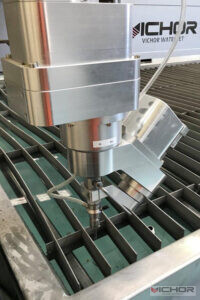
Every water jet cutting solution consists of a high‑pressure pump, a cutting head, an abrasive feeder (if needed), and a motion system. The pump is the heart—intensifier pumps are common for continuous operation, while direct‑drive pumps suit lighter duty. VICHOR offers a range of pumps and tables designed for longevity.
Industries Benefiting from Advanced Water Jet Cutting Solutions
From aerospace to art, water jet cutting solutions solve complex fabrication challenges. Their ability to cut any material without heat makes them indispensable.
Aerospace and Automotive
Titanium, Inconel, carbon fibre—these materials are tough to cut with lasers or plasma. Water jet cuts them cleanly, with no burrs or delamination. Engine mounts, brackets, and interior trim parts are routinely produced using water jet cutting solutions. The process also reduces waste when nesting parts tightly.
Stone, Glass, and Ceramics
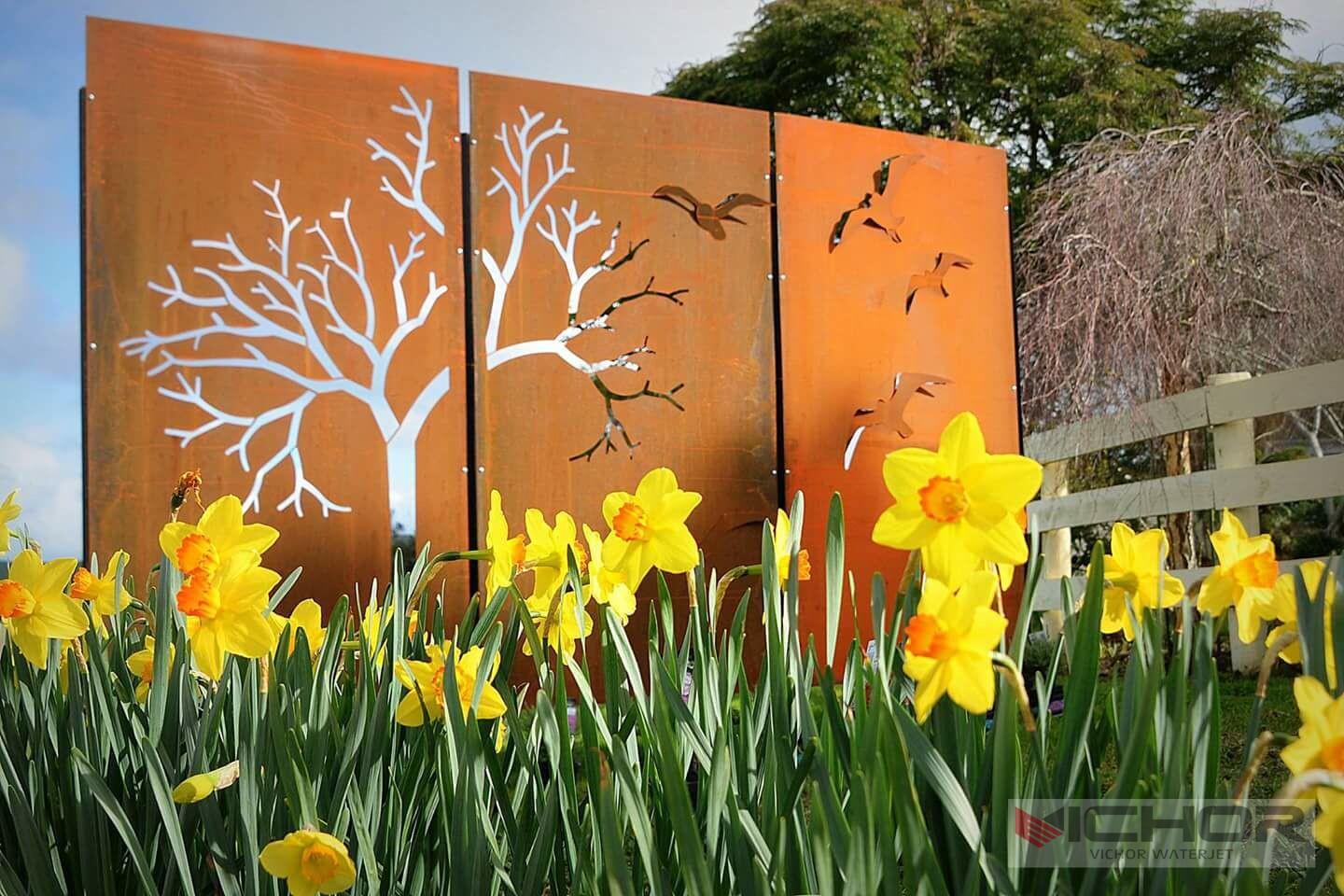
Granite countertops, glass panels, ceramic tiles—water jet creates intricate inlays and smooth edges. Unlike traditional sawing, there is no micro‑chipping. water jet cutting solutions allow fabricators to offer custom designs without investing in expensive tooling.
Metal Fabrication and Job Shops
Job shops love water jet because one machine can cut steel, aluminium, rubber, and plastic. There is no need to change tools. Quick turnaround on prototypes and short runs is a major advantage. Many shops report that adding water jet cutting solutions expanded their customer base.
Choosing the Right Water Jet Cutting Solutions for Your Shop
Selecting equipment requires matching machine capabilities to your typical work. Here are the primary decisions you will face.
Pure Water vs. Abrasive Water Jet
If you mainly cut soft materials like gaskets or packaging, a pure water system is sufficient. For metals, stone, or composites, you need an abrasive system. Some manufacturers offer combo machines that can switch between modes. Evaluate your product mix before deciding on water jet cutting solutions.
Machine Size and Configuration
Table size determines the maximum part dimensions. Standard sizes range from 2×2 meters to 4×8 meters. Cantilever designs allow easy access from three sides, while gantry systems offer rigidity for heavy materials. Consider future growth when sizing your water jet cutting solutions.
Pump Power and Pressure Ratings
Higher pressure (60,000–90,000 psi) cuts faster and cleaner. But it also increases wear on seals and orifices. Many shops start with a 50‑hp pump running at 60,000 psi, which balances speed and operating cost. VICHOR provides pump options that match different production needs.
Cost Considerations and ROI of Water Jet Cutting Solutions
Initial investment in water jet cutting solutions can be significant, but operating costs are predictable. Understanding both helps you calculate return on investment.
Operating Costs
Major expenses include electricity, abrasive (garnet), water, and disposal. Abrasive is typically the largest consumable cost—about $0.10–$0.30 per pound depending on quality. Nozzles and mixing tubes also need periodic replacement. Proper maintenance keeps these costs under control.
- Abrasive consumption: 0.5–2 lb per minute depending on material.
- Electricity: about $5–$10 per hour of cutting.
- Water: minimal, often recycled.
Maintenance and Consumables
Daily checks include orifice condition, seal integrity, and abrasive flow. Weekly tasks involve cleaning the tank and checking the pump oil. With proper care, a water jet system can run for 10–15 years. VICHOR machines are built for easy maintenance, reducing downtime.
Why VICHOR Leads in Water Jet Cutting Solutions
With decades of experience, VICHOR designs water jet cutting solutions that combine precision, durability, and affordability. Our machines feature robust frames, intuitive controls, and energy‑efficient pumps. We support customers from installation to ongoing training, ensuring you get the most from your investment. Whether you need a small table for a workshop or a large‑format system for heavy industry, VICHOR has a solution tailored to you.
Future Trends in Water Jet Cutting Solutions
Automation is reshaping the industry. Robotic loading, automated nozzle changers, and real‑time monitoring are becoming standard. Software improvements allow better nesting and faster programming. Expect water jet cutting solutions to integrate more with Industry 4.0, providing data on consumable wear and predictive maintenance. VICHOR is at the forefront, developing smart features that increase uptime.
In summary, water jet cutting solutions offer unmatched flexibility for cutting almost any material. By understanding your application, choosing the right equipment, and partnering with a reliable manufacturer like VICHOR, you can enhance your production capabilities. For more details on specific machines, visit our product pages or contact our team.
Frequently Asked Questions (FAQ)
Q1: What materials can water jet cutting solutions handle?
A1: Water jet cutting solutions can cut virtually any material—metals (steel, aluminium, titanium), stone, glass, ceramics, composites, rubber, foam, and even food. The only limitation is that the material should not be soluble in water (though some soluble items can be cut with a protective film).
Q2: How accurate are water jet cutting solutions?
A2: Modern water jet cutting solutions achieve tolerances of ±0.003″ to ±0.005″ (0.08–0.13 mm) for most materials. With dynamic tilt compensation, even thicker parts can be cut with minimal taper. Accuracy depends on machine rigidity, software, and maintenance.
Q3: What is the typical cost of a water jet cutting machine?
A3: Entry‑level water jet cutting solutions start around $50,000 for a small table with a direct‑drive pump. Industrial systems with large tables and high‑pressure intensifier pumps can range from $150,000 to $500,000. VICHOR offers competitive pricing and financing options to fit various budgets.
Q4: How thick can water jet cut?
A4: With abrasive, water jet cutting solutions can cut steel up to 6″ (150 mm) thick, and softer materials like foam or rubber up to 12″ (300 mm). Specialised systems have cut even thicker sections, but production speeds drop significantly beyond 4″.
Q5: Is water jet cutting environmentally friendly?
A5: Yes. The process uses no hazardous chemicals, produces no heat‑affected zones, and generates minimal waste. Water and abrasive can often be recycled. Many shops implement closed‑loop water systems, making water jet cutting solutions a green choice.
Q6: How do I maintain a water jet cutting system?
A6: Daily tasks include inspecting the nozzle, checking seals, and ensuring the abrasive hopper is full. Weekly, clean the tank and check pump oil. Monthly, replace worn mixing tubes and filters. VICHOR provides detailed maintenance schedules and training with every machine.
*All specifications and prices are subject to change. Contact VICHOR for current information on water jet cutting solutions.