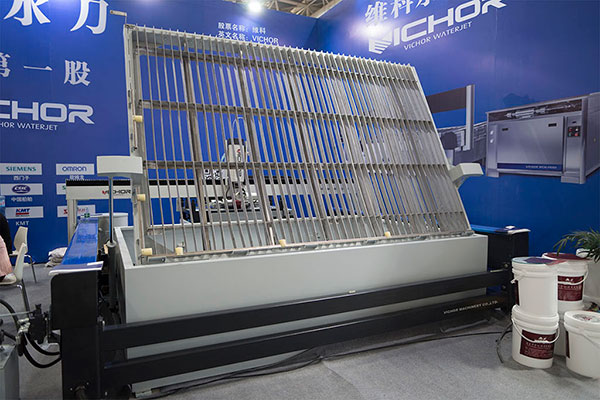

Precision Cutting Redefined: The Power of an Abrasive Water Jet Cutting Machine
Manufacturing and fabrication industries demand cutting technology that balances speed, accuracy, and material integrity. The abrasive water jet cutting machine has emerged as a leading solution, enabling cold cutting processes that eliminate heat-affected zones while delivering intricate cuts across metals, composites, stone, and glass. Unlike traditional methods, this machine uses high-pressure water mixed with garnet abrasives to slice through virtually any material with micron-level precision. For shops aiming to expand capabilities, investing in a modern abrasive water jet cutting machine means tackling complex geometries, reducing secondary finishing, and achieving sustainable production workflows.
How an Abrasive Water Jet Cutting Machine Works
Understanding the operation of an abrasive water jet cutting machine helps in maximizing its potential. The process starts with an ultra-high-pressure pump, typically operating between 60,000 and 90,000 psi.
Water is pressurized and channeled through a small orifice, forming a coherent jet. Abrasive particles—usually garnet—are introduced into the water stream inside the mixing tube.
The mixture accelerates through a focusing nozzle, creating a high-velocity abrasive stream capable of eroding hard materials. CNC controls guide the cutting head along programmed paths.
Key advantages: no thermal distortion, no tool wear, and minimal material waste. The entire system relies on precision engineering to maintain consistent cut quality.
Core Components of a Reliable Abrasive Water Jet Cutting Machine
Every high-performance system is built from several critical modules. Recognizing these components aids in proper selection and maintenance.
- High-pressure pump: Generates the necessary force; intensifier or direct-drive designs are common.
- Cutting head assembly: Includes orifice, mixing chamber, and abrasive nozzle for precise material removal.
- Abrasive delivery system: Feeds garnet from a hopper to the cutting head at controlled rates.
- CNC motion controller: Ensures accurate path following with dynamic kerf compensation.
- Catch tank and filtration: Collects spent abrasive and water, promoting safe recirculation.
Modern units also integrate advanced software for nesting, 3D cutting, and real-time monitoring. VICHOR offers fully integrated systems where every component is optimized for longevity and uptime.
Material Versatility: What Can an Abrasive Water Jet Cutting Machine Cut?
One of the strongest arguments for adopting this technology is its ability to cut nearly any material without changing tooling. Whether you work with soft gaskets or hardened steel, the process remains consistent.
Metals and Alloys
Stainless steel, aluminum, titanium, Inconel, copper, and brass—thickness up to 6 inches or more—are cut cleanly with sharp edges.
Composites and Plastics
Carbon fiber, fiberglass, acrylic, polycarbonate, and laminates: no delamination or melting occurs because the cut is cold.
Stone, Ceramics, and Glass
Granite, marble, engineered stone, porcelain, and toughened glass are processed without micro-cracks or chipping.
Rubber, Foam, and Textiles
Seals, gaskets, insulation materials, and even food-grade products can be cut with precision.
This broad material compatibility makes the abrasive water jet cutting machine a cornerstone for job shops, aerospace, automotive, and architectural fabrication.
Key Advantages Over Conventional Cutting Methods
Compared to laser, plasma, or mechanical sawing, water jet cutting offers distinct benefits. These advantages translate into lower operational costs and higher part quality.
- No heat-affected zone (HAZ): Preserves material properties, especially important for hardened alloys and composites.
- Burr-free edges: Eliminates secondary deburring operations, reducing labor hours.
- Thick-stack cutting: Multiple layers of material can be cut simultaneously, boosting throughput.
- Environmentally clean: Uses natural abrasives and water; no hazardous fumes or slag.
- Nesting efficiency: Narrow kerf width allows tighter part arrangement, saving raw material costs.
Businesses that switch to an abrasive water jet cutting machine frequently report a 30% reduction in secondary finishing and near-net-shape parts that require minimal post-processing.
Selecting the Right Abrasive Water Jet Cutting Machine for Your Business
Choosing equipment involves more than just table size. Buyers must evaluate performance metrics, software integration, and after-sales support.
Table Size and Cutting Envelope
Standard machines range from 4×4 ft to 12×40 ft. Consider your largest raw material dimensions and future project scope.
Pump Pressure and Flow Rate
Higher pressure (up to 90,000 psi) increases cutting speed, especially in thick titanium or Inconel. For softer materials, a 60,000 psi pump offers a balance of efficiency and component life.
Abrasive Management System
Automated garnet removal and recycling systems reduce downtime. Look for machines with sealed abrasive hoppers and dust collection.
CNC Software & Ease of Use
Intuitive controllers with CAD/CAM integration enable operators to go from drawing to cut quickly. Dynamic bevel compensation is valuable for angled cuts.
Leading manufacturers like VICHOR provide customizable configurations, ensuring the machine aligns with your production goals and budget.
Maintenance and Longevity of Your Abrasive Water Jet Cutting Machine
Proper upkeep ensures years of reliable operation. Because the system handles high pressures and abrasive materials, scheduled maintenance prevents unexpected failures.
- Inspect seals and fittings: High-pressure seals should be replaced per manufacturer intervals to avoid leaks.
- Monitor water quality: Deionized or reverse-osmosis water reduces scaling and extends orifice life.
- Check abrasive delivery lines: Garnet can cause wear; replace hoses and nozzles as indicated.
- Clean the tank regularly: Sludge accumulation reduces cutting performance and pump efficiency.
- Calibrate CNC axes: Periodic calibration maintains positional accuracy for tight tolerances.
By following a strict maintenance routine, operators can achieve more than 15 years of productive life from a high-quality abrasive water jet cutting machine. Many VICHOR users highlight the modular design that simplifies component replacement, minimizing downtime.
Innovations and Future Trends in Abrasive Water Jet Technology
The industry continues to evolve with automation, AI-driven process optimization, and environmentally conscious designs. Next-generation systems focus on reducing abrasive consumption while boosting cut speed.
Intelligent Process Monitoring
Sensors now track pump performance, nozzle wear, and abrasive flow in real time. Alerts enable predictive maintenance before quality degradation occurs.
5-Axis and Robotic Integration
Multi-axis cutting heads allow beveled edges, countersinks, and complex 3D contours without repositioning. Robotic arms extend water jet capabilities to large structures like aircraft components.
Sustainable Abrasive Recycling
Closed-loop garnet recycling systems reduce waste by up to 80%. Manufacturers are also exploring alternative abrasives with lower environmental impact.
As a pioneer in the sector, VICHOR incorporates these innovations into its waterjet cutting machines, ensuring customers benefit from lower operating costs and future-ready capabilities.
Why VICHOR Stands Out in Water Jet Cutting Industry
Selecting a trusted partner is as important as the machine itself. VICHOR has built a reputation for robust engineering, responsive support, and tailored solutions.
- Comprehensive warranties covering pumps and structural components.
- Local service centers and remote diagnostics to maximize uptime.
- Customized training programs for operators and maintenance staff.
- Flexible financing options suitable for small shops and large enterprises.
Whether you need a compact machine for prototyping or a large-format production system, VICHOR delivers reliability and precision. Their commitment to innovation is evident in every abrasive water jet cutting machine they manufacture.
Conclusion: Elevating Manufacturing with Abrasive Water Jet Cutting Machine
The manufacturing landscape demands flexibility, precision, and cost-effectiveness. An abrasive water jet cutting machine meets these demands by enabling cold cutting across diverse materials, from aerospace alloys to artistic stone. With no heat distortion, minimal kerf, and high nesting efficiency, it delivers superior edge quality while reducing secondary operations.
Investing in a modern system from a reputable brand like VICHOR ensures long-term productivity and access to cutting-edge features. As industries push toward leaner and more sustainable processes, the role of water jet technology will only expand. By incorporating automated controls, real-time monitoring, and eco-friendly abrasive management, the abrasive water jet cutting machine remains a cornerstone of advanced fabrication.
Frequently Asked Questions
Q1: What is the typical cutting tolerance of an abrasive water jet cutting machine?
A1: Most industrial-grade machines achieve tolerance within ±0.003 to ±0.005 inches, depending on material thickness, cutting speed, and calibration. High-end systems with precise CNC control and thermal compensation can hold even tighter tolerances, often ±0.001 inches for thin materials. Regular maintenance of nozzles and orifices is critical to sustaining accuracy.
Q2: How much does it cost to operate an abrasive water jet cutting machine per hour?
A2: Operational costs vary based on pump pressure, abrasive consumption, electricity, and nozzle wear. On average, users budget between $20 and $35 per hour for consumables (garnet, water, seals, and orifices). Efficient machines with automatic abrasive recycling and energy-saving pumps can reduce this to $15–$25 per hour. The exact cost depends on local utility rates and production volume.
Q3: Can an abrasive water jet cutting machine cut thick steel plates?
A3: Yes, it is commonly used to cut steel plates up to 6 inches thick, though cutting speed decreases with thickness. For ultra-thick sections (8–12 inches), specialized high-pressure pumps (90,000 psi) and larger abrasive nozzles maintain reasonable cutting speeds. Unlike plasma or laser, there is no risk of hardening the cut edge or causing metallurgical changes.
Q4: What maintenance tasks are required weekly for an abrasive water jet cutting machine?
A4: Weekly tasks include inspecting the high-pressure seals for leaks, checking the abrasive hopper for moisture, cleaning the cutting nozzle, and verifying the water filter condition. Operators should also clear debris from the tank and lubricate linear guide rails. Following a structured checklist extends component life and prevents unexpected downtime.
Q5: Does VICHOR provide training for first-time users of abrasive water jet cutting machines?
A5: Absolutely. VICHOR includes comprehensive on-site or virtual training programs covering CNC programming, cutting parameter optimization, routine maintenance, and safety protocols. Their technical team offers ongoing support, ensuring new operators become proficient quickly and maximize machine utilization from day one.
Explore advanced solutions and request a quote for a customized abrasive water jet cutting machine from VICHOR today.