
Precision Cutting Evolved: Why Dynamic Waterjet Technology Defines Modern Manufacturing
Manufacturers across aerospace, automotive, and heavy fabrication continually seek cutting methods that combine accuracy, material versatility, and zero thermal distortion. dynamic waterjet systems have emerged as the answer—delivering high-pressure abrasive streams capable of slicing through titanium, stone, composites, and hardened steel with microscopic tolerances. Unlike laser or plasma, waterjet cutting leaves no heat-affected zone, preserving structural integrity.
At VICHOR, we engineer next-generation waterjet platforms that integrate intelligent motion control, ultra-high pressure pumps, and wear-resistant components. This article examines the mechanics, industrial applications, and economic advantages of modern waterjet technology, focusing on how dynamic waterjet solutions outperform conventional methods across dozens of sectors.
What Defines a Dynamic Waterjet System?
A dynamic waterjet is more than a high-pressure stream. It combines five-axis articulation, real-time flow regulation, and abrasive feeding precision. The result is a machine that adapts to complex geometries without secondary finishing.
Key components include:
- Ultra-high-pressure intensifier pumps (up to 94,000 psi)
- Dynamic taper compensation for vertical edge quality
- Closed-loop abrasive metering for consistent cut rates
- CNC software with collision avoidance and nesting optimization
VICHOR’s latest lineup integrates these features into a unified platform, reducing setup time by nearly 30% compared to traditional waterjet units. The term dynamic waterjet reflects this synergy of hardware and software that responds instantly to material density variations.
Core Advantages Over Conventional Cutting Methods
When comparing to laser, plasma, or wire EDM, dynamic waterjet systems hold distinct advantages. They process reflective metals like copper and aluminum without back-reflection risks. Thickness limits extend beyond 200 mm for materials such as Inconel and tool steel.
No Heat-Affected Zone (HAZ)
Thermal processes often alter material microstructure, leading to warping or micro-cracks. Waterjet cutting is a cold process, preserving original material properties—critical for aerospace components and heat-sensitive alloys.
Material Versatility
One machine handles rubber, carbon fiber, stone, glass, and hardened steel. This flexibility reduces capital expenditure for job shops and large manufacturers alike. VICHOR’s dynamic waterjet models include automatic garnet removal systems to streamline material switching.
Edge Quality & Tolerances
Modern dynamic waterjet machines achieve tolerances of ±0.001 inches with taper-free edges. Dynamic tilt-head technology compensates for jet lag and stream lag, ensuring perpendicular walls even in thick stacks.
Industrial Applications Driving Global Demand
International waterjet cutting adoption continues to expand. Below are sectors where dynamic waterjet has become indispensable:
- Aerospace: Titanium engine mounts, composite wing spars, honeycomb panels.
- Automotive: Interior trim, battery enclosures, exhaust flanges, lightweight carbon-fiber parts.
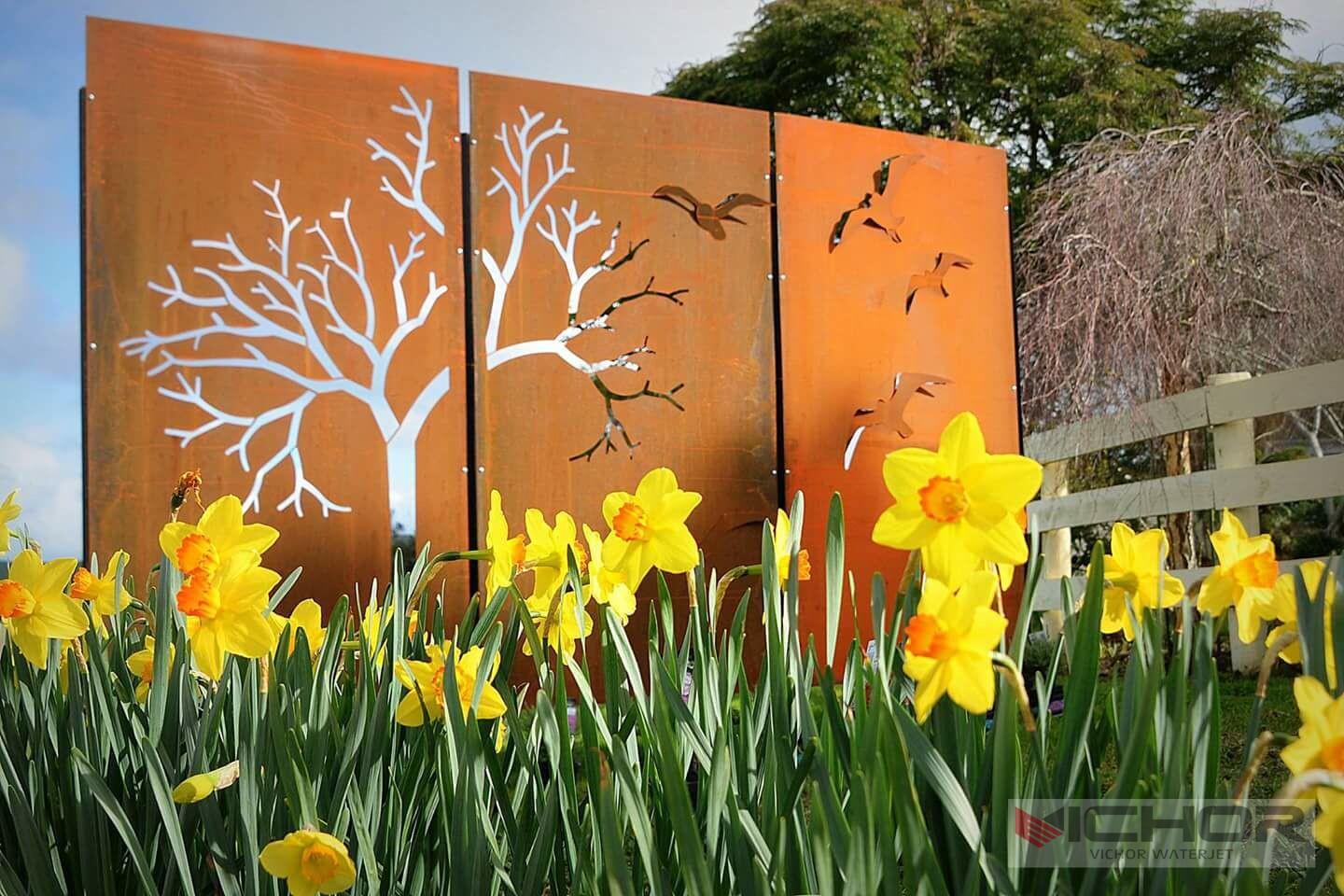
- Architectural & Stone: Marble inlays, intricate mosaics, sintered stone countertops.
- Medical: Surgical instruments, titanium implants, sterilized cutting without burrs.
- Electronics: PCB depanelization, sapphire glass, heat-sensitive micro-components.
VICHOR serves these industries with customizable tank sizes, from 2×2 meters up to 4×12 meters for large-format stone fabrication. Each dynamic waterjet system is validated for continuous 24/7 operation, meeting ISO 9001 and AS9100 requirements.
Technical Deep Dive: Pressure, Abrasive Flow, and Precision Control
Understanding the technical backbone helps operators maximize ROI. dynamic waterjet machines rely on three interrelated subsystems: hydraulic pump, abrasive delivery, and motion controller.
High-Pressure Intensifier Technology
Direct-drive pumps are common for lower pressures, but VICHOR employs dual-intensifier pumps that deliver continuous pressure up to 94,000 psi. This translates to faster cutting speeds on abrasion-resistant materials like armor steel.
Abrasive Feed & Mixing Tube
Garnet particles are metered into the water stream inside a mixing chamber. The nozzle’s orifice diameter (0.010” to 0.040”) and mixing tube length directly affect kerf width and cutting economy. VICHOR’s systems integrate real-time flow sensors to maintain optimal garnet-to-water ratios.
Dynamic Tilt & Bevel Cutting
Five-axis heads allow bevel cuts up to 60 degrees without repositioning the workpiece. This capability is crucial for weld prep edges and complex 3D parts. The controller calculates tool vectors in real time, eliminating manual secondary operations.
Advanced software simulation reduces material waste by up to 15%, with automatic nesting algorithms that maximize sheet utilization. Many VICHOR customers report payback periods under 18 months when switching from legacy waterjet or laser to a fully dynamic waterjet work center.
VICHOR’s Approach to Dynamic Waterjet Solutions
As a recognized name in high-performance cutting, VICHOR builds waterjet machines that emphasize durability, serviceability, and digital integration. Every dynamic waterjet system from VICHOR undergoes factory acceptance testing with more than 500 hours of continuous run-in.
VICHOR waterjet cutting machines feature:
- Modular tank design with granite or stainless slats for corrosion resistance.
- Touchscreen HMI with remote diagnostic support.
- Automated height sensing for warped or uneven materials.
- Integrated water recycling systems to reduce operational costs.
VICHOR’s global service network provides on-site training and 48-hour parts replacement, minimizing downtime. For manufacturers seeking Industry 4.0 readiness, VICHOR offers OPC-UA connectivity, enabling real-time production monitoring and predictive maintenance alerts. This level of integration turns a dynamic waterjet into a smart factory asset.
Environmental & Efficiency Considerations
Sustainability has become central to capital equipment decisions. Waterjet cutting produces no hazardous fumes, no slag, and minimal dust compared to plasma or abrasive sawing. The spent garnet and water slurry can be filtered, with most materials recycled or safely disposed.
Modern dynamic waterjet systems incorporate energy recovery hydraulics, cutting electricity consumption by up to 25% compared to older intensifier designs. VICHOR’s EcoCut series recaptures pressure during idle cycles, aligning with carbon reduction targets.
Furthermore, water consumption is minimized through closed-loop filtration. A typical 6 kW system uses less than 2 gallons of fresh water per minute during cutting, with 95% recycled internally. For regions with strict effluent regulations, VICHOR offers zero-discharge packages that convert slurry into dry cake waste.
Future Trends in Waterjet Cutting Technology
Innovation in abrasive waterjet continues at a rapid pace. The next generation of dynamic waterjet will likely incorporate AI-based parameter optimization, where the machine self-adjusts feed rates based on real-time acoustic feedback. VICHOR’s R&D team is already testing machine learning algorithms that predict nozzle wear within ±5 hours of accuracy.
Hybrid manufacturing cells that combine waterjet with additive inspection are appearing in defense and energy sectors. By integrating a dynamic waterjet head alongside robotic arms, complex near-net shapes can be cut and finished without refixturing.
Another area is micro-waterjet for electronics, where jet diameters below 0.2 mm enable dicing of silicon wafers and flexible circuits. VICHOR has launched precision tables with granite bases and linear motors tailored for such micro applications, maintaining positioning accuracy of ±2 microns.
As manufacturing reshoring gains momentum, high-productivity waterjet centers will replace multiple conventional machines. The flexibility of a single dynamic waterjet to prototype and then scale to production volumes makes it a strategic investment for future-proof facilities.
Conclusion: Integrating Dynamic Waterjet for Competitive Advantage
Adopting dynamic waterjet technology is not merely a replacement for outdated cutting tools—it redefines what’s possible in design, material utilization, and production throughput. From eliminating secondary finishing to enabling exotic material combinations, the business case continues to strengthen across global industries.
VICHOR remains at the forefront, delivering robust, service-friendly machines backed by engineering expertise. Whether you are cutting 12-inch titanium billets or intricate ceramic tiles, a well-configured dynamic waterjet system becomes the centerpiece of a modern fabrication shop. Contact VICHOR to explore how our solutions can transform your cutting operations.
Frequently Asked Questions About Dynamic Waterjet Cutting
Q1: What materials can a dynamic waterjet cut?
A1: A dynamic waterjet processes virtually any material: metals (steel, aluminum, titanium, copper), composites, carbon fiber, stone, glass, ceramics, rubber, foam, and even food products. The only exceptions are tempered glass and some ultra-soft elastomers that may absorb water.
Q2: How does dynamic waterjet compare to laser cutting in terms of precision?
A2: Both offer high precision, but dynamic waterjet provides advantages on thick materials (over 1 inch) and reflective metals without thermal distortion. Tolerances of ±0.001 inches are standard with modern five-axis waterjet systems, comparable to laser on thin gauge materials but superior on thick stacks.
Q3: What is the typical operating cost per hour for a dynamic waterjet?
A3: Operating costs range from $20 to $40 per hour, depending on abrasive consumption, nozzle wear, and electricity. VICHOR’s dynamic waterjet systems feature long-life mixing tubes and energy-efficient pumps, lowering cost per part by up to 18% compared to conventional waterjet units.
Q4: Can dynamic waterjet cut stacked materials or nested parts?
A4: Yes. Stack cutting multiple sheets of the same material is a common technique to multiply throughput. Additionally, advanced nesting software allows hundreds of parts to be cut from a single sheet with minimal remnant waste. VICHOR’s dynamic waterjet controllers automatically manage pierce sequences to avoid interference.
Q5: What maintenance is required for a dynamic waterjet system?
A5: Routine maintenance includes replacing seals, checking orifice and mixing tube wear, cleaning the water tank, and inspecting the high-pressure lines. VICHOR provides predictive alerts via the HMI, and most service tasks can be completed in under an hour. Full preventive maintenance schedules are supplied with every machine.
Q6: How does VICHOR support international customers?
A6: VICHOR maintains regional service centers in North America, Europe, and Asia. Customers receive remote diagnostics, live video support, and spare parts warehouses with next-day shipping. All dynamic waterjet machines come with a 2-year warranty on major components.
Explore the full range of VICHOR waterjet cutting machines to see how dynamic waterjet technology can elevate your manufacturing capabilities. Request a cut test with your materials and witness the precision firsthand.