Plasma Water Jet Cutting vs. Traditional Methods: Cost, Applications & How to Choose
In the world of industrial cutting, two powerful technologies often dominate the conversation: abrasive waterjet and plasma. But what happens when concepts merge? The term Plasma Water Jet captures this intersection, representing not a single tool, but a critical comparison and choice point for manufacturers.
This article cuts through the confusion, directly comparing plasma cutting and water jet cutting technologies. We’ll explore where each excels, analyze cost factors, and provide a clear guide for selecting the right method for your material and budget.
Understanding the Technologies: Two Different Forces
First, let’s clarify. A Plasma Water Jet isn’t typically one hybrid machine. Instead, the phrase often refers to the practice of using water injection or a water shield in plasma cutting systems, or it signifies the crucial choice between these two processes.
Plasma Cutting uses an electrically conductive gas—plasma—to melt through metal. An electric arc superheats gas, creating a plasma stream that can reach over 30,000°F. It’s fast and effective for conductive materials, primarily metals.
Water Jet Cutting uses an ultra-high-pressure stream of water, often mixed with an abrasive garnet, to erode material. It’s a cold-cutting process, meaning no heat-affected zone (HAZ). This is its core advantage.
Key Comparison: Heat vs. Cold Cut
The fundamental difference is heat. Plasma is a thermal process. The intense heat melts the metal, which the gas blast blows away. This speed comes with a trade-off: the heat-affected zone (HAZ). The edges of the cut can be hardened, warped, or discolored.
Water jet cutting is mechanical. The abrasive water jet erodes material particle by particle. There is no thermal stress, distortion, or HAZ. This makes it ideal for materials sensitive to heat.
Material Compatibility: Where Each Shines
Your material dictates the best technology.
Plasma Cutting excels with:
Carbon steel
Stainless steel
Aluminum
Other electrically conductive metals
It generally struggles with non-conductive materials.
Abrasive Water Jet Cutting handles virtually anything:
Metals (titanium, tool steel, copper, brass)
Stone and tile
Glass
Composites
Laminates
Plastics and rubber
Food products (with pure water jet)
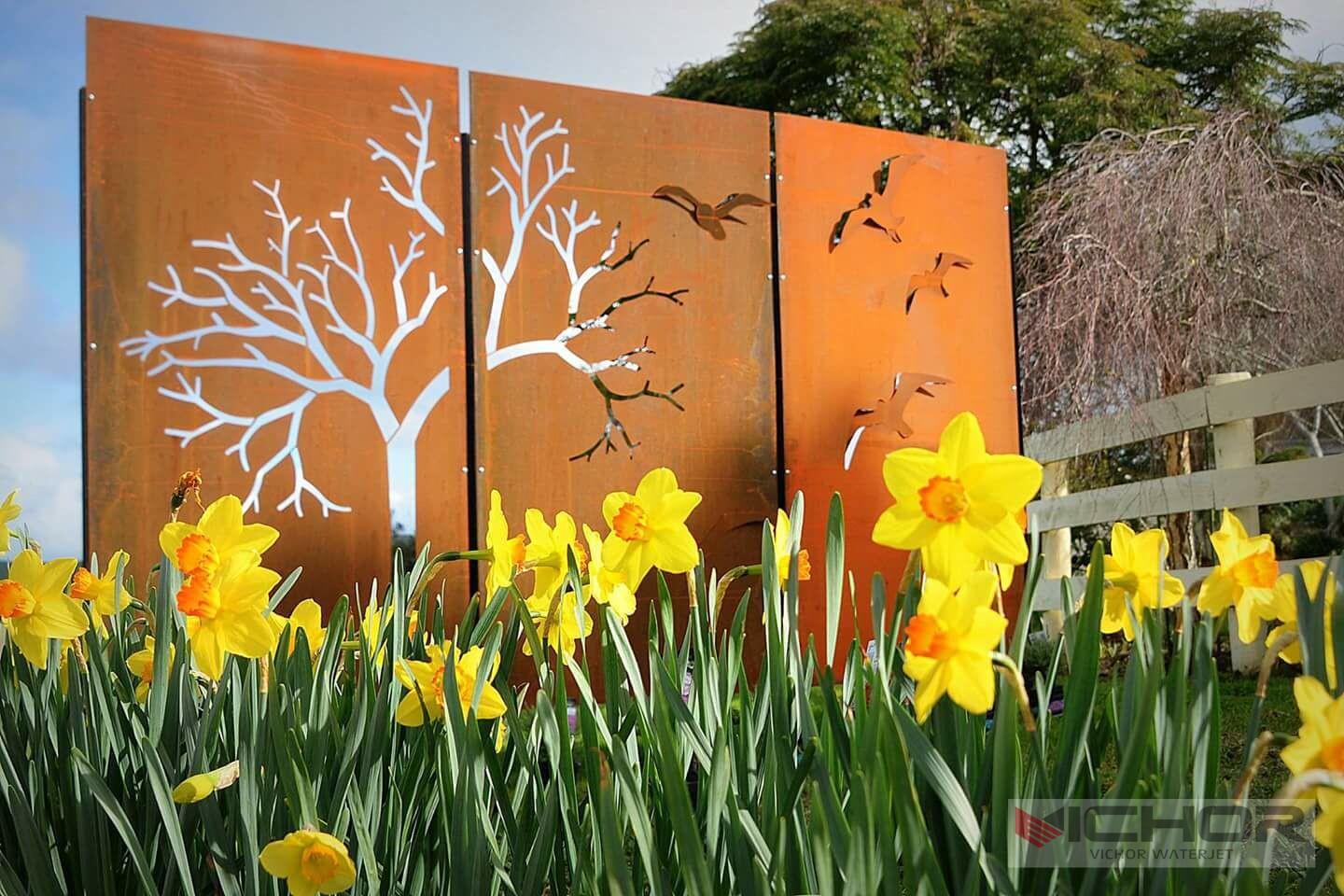
The versatility of the water jet stream is unmatched for mixed-material projects or job shops handling diverse orders.
Cost Analysis: Investment and Operational Expenses
Cost is a major decision factor.
Initial Machine Cost: Generally, plasma cutting systems have a lower initial purchase price than comparable abrasive waterjet systems.
Operational Cost & Speed: Plasma has a significant advantage in speed on thicker metals, leading to lower cost-per-foot for straight cuts on suitable materials. However, water jet cutting operational costs are heavily influenced by abrasive garnet and pump maintenance. For precise, complex shapes in exotic materials, its speed and cost can be justified by reduced secondary processing.
Cut Quality & Secondary Costs: This is where water jet often saves money long-term. The cut edge from a plasma water jet (plasma system) often requires grinding, milling, or re-machining to remove the HAZ for precision parts. The water jet edge is typically ready to use, saving labor and time.
Choosing the Right System: A Practical Guide
Ask these questions:
What materials do you primarily cut? Only metals → lean plasma. Diverse materials → water jet is essential.
What is your tolerance for heat effect? For parts going straight to welding or where HAZ is irrelevant, plasma is efficient. For finished components, tools, or heat-sensitive metals, water jet cutting is mandatory.
What are your precision and edge quality needs? Plasma can achieve good tolerances, but abrasive waterjet typically offers superior precision and edge finish without slag.
What is your operational budget? Consider both throughput (plasma is faster on thick metal) and the hidden costs of secondary finishing.
VICHOR’s Role in Precision Cutting Solutions
For businesses where precision and material versatility are non-negotiable, partnering with an expert in water jet cutting technology is key. This is where a brand like VICHOR establishes its reputation in the international water jet cutting field.
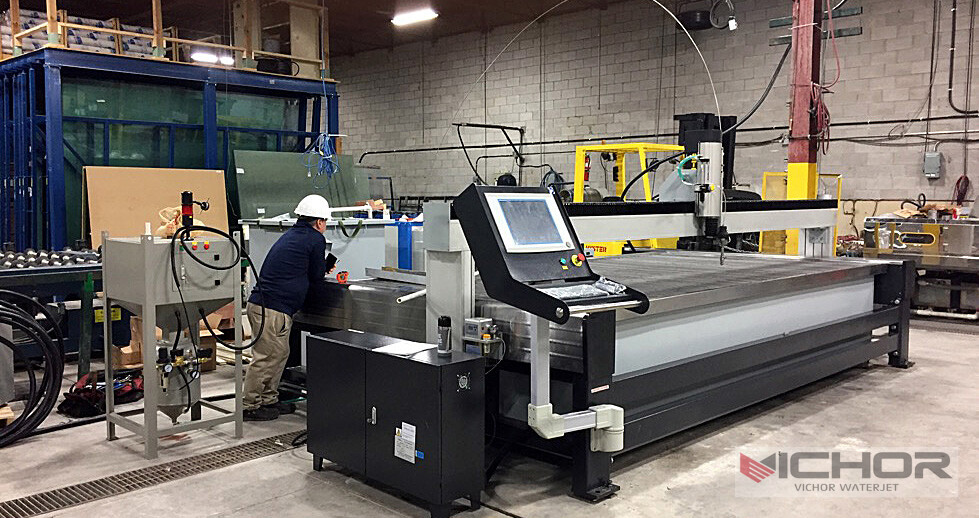
VICHOR focuses on advanced, reliable abrasive water jet systems designed for manufacturers who cannot compromise on cut quality or material integrity. Their machines are engineered for industries where the cold-cutting advantage of a water jet is critical—aerospace, automotive, tool and die, and architectural fabrication.
While VICHOR specializes in water jet technology, understanding the plasma water jet comparison is part of their consultative process. They help clients determine if their application truly requires the cold-cutting prowess of a water jet or if another process might be more cost-effective, ensuring the right tool for the job.
FAQs: Plasma and Water Jet Cutting
Q1: Can a plasma cutter and a water jet cut the same things?
A1: Not exactly. Both cut metals well, but plasma is limited to conductive metals. A water jet can cut metals, stone, glass, composites, and plastics with no heat damage, offering far greater material versatility.
Q2: Which process is more accurate?
A2: Abrasive water jet cutting is generally more precise, capable of holding tolerances within +/- 0.003″ to 0.005″. Plasma cutting accuracy is good but typically in the +/- 0.010″ to 0.020″ range, and it can be affected by thermal distortion.
Q3: Why is water sometimes used in plasma cutting?
A3: In “water-injection plasma” or “water-shield plasma” systems, water is used to constrict the arc for a tighter, cleaner cut, reduce smoke and noise, and cool the workpiece to minimize the heat-affected zone. This is sometimes where the term plasma water jet originates.
Q4: Is water jet cutting more expensive than plasma?
A4: In terms of upfront machine cost, often yes. For operational cost, plasma is usually cheaper for fast, straight cuts in thick steel. However, for complex shapes, heat-sensitive materials, or where secondary finishing is costly, water jet can be more economical overall.
Q5: How do I choose between plasma and water jet for my metal shop?
A5: If you mostly cut carbon steel over 1/4″ thick for structural components and speed is paramount, plasma is excellent. If you work with stainless steel, aluminum, exotic alloys, or require finished edges without secondary work, or if you cut any non-metals, an abrasive water jet from a specialized provider like VICHOR is the necessary investment.