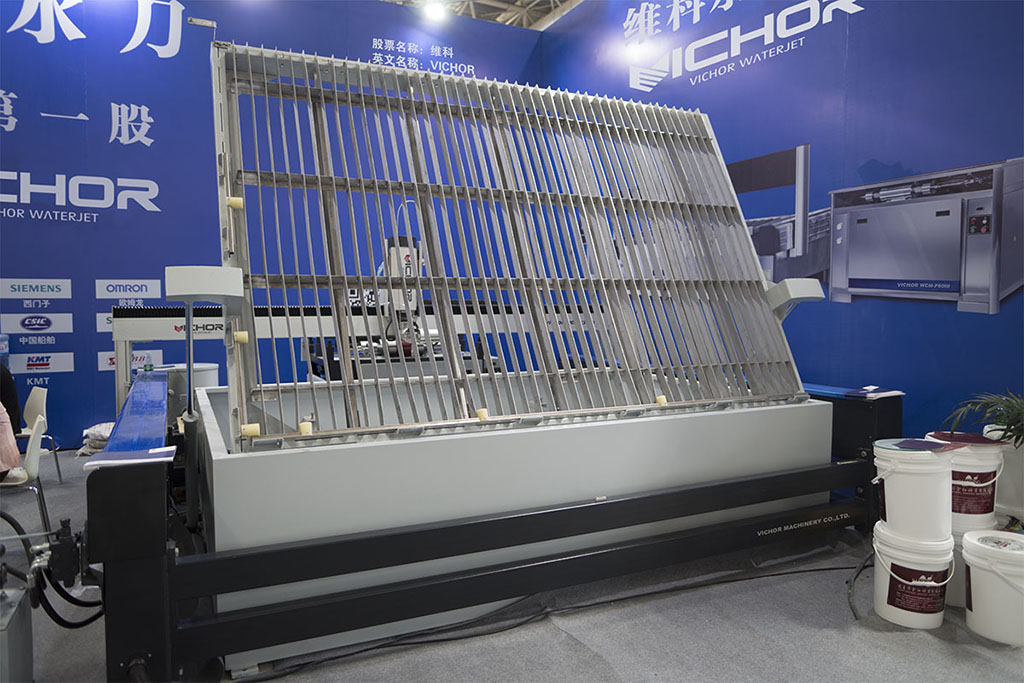

Open Source Water Jet Cutter: Complete Guide to DIY Precision Cutting
Engineers and small shops now look beyond proprietary machines. An open source water jet cutter offers full control over design, software, and maintenance. VICHOR provides compatible components that integrate seamlessly with community-driven plans. This guide covers everything from basic principles to advanced modifications.
Why Choose an Open Source Water Jet Cutter Over Commercial Units
Commercial waterjets often lock users into expensive repairs and proprietary software. An open source water jet cutter changes this dynamic. You access full schematics, parts lists, and control code.
This approach reduces initial investment by 40-60%. It also allows custom sizing of the cutting bed. VICHOR sells pumps, nozzles, and motion systems that fit common open source designs.
- No vendor lock-in for spare parts or software updates.
- Modify the cutting area to fit your workshop space.
- Integrate alternative abrasives or water recycling systems.
- Join a global community that shares performance improvements.
Many users start with a basic 2’x2′ machine and later expand to 4’x8′. The modular nature of open source designs makes upgrades straightforward. You retain full ownership of every component.
Core Components of a DIY Open Source System
Building your own machine requires several key subsystems. The high-pressure pump is the most critical part. VICHOR offers intensifier pumps rated for 60,000 psi, compatible with open source controller boards.
Motion control typically uses NEMA 34 stepper motors with linear rails. Most open source designs rely on Mach4 or LinuxCNC. These platforms accept standard G-code from any CAM software.
The cutting head includes an abrasive mixing chamber and a sapphire orifice. Garnet feed systems can be built from PVC pipes and solenoid valves. Many community designs use 3D-printed parts for the head assembly.
Step-by-Step: Building Your Open Source Water Jet Cutter
Start with a stable steel frame. Weld rectangular tubing to form a torsion box. This prevents flex during high-pressure cutting. The water tank sits below, typically 12 inches deep to absorb jet energy.
Install linear motion components. Two parallel rails for the Y-axis, one bridge for the X-axis. Use belt drives or ball screws. Open source plans favor belt drives for speed and lower cost.
Mount the cutting head on the Z-axis. This axis needs only 4-6 inches of travel. A simple leadscrew mechanism works well. Add a collision sensor to protect the nozzle during crashes.
Software Choices for Open Source Waterjet Control
LinuxCNC remains the most popular option. It runs on older computers and supports real-time kernel extensions. Configuration files for waterjet cutting are available on GitHub repositories.
Alternatively, FluidNC offers a web-based interface. It works on ESP32 microcontrollers. You can adjust pressure, abrasive flow, and speed through a tablet mounted on the machine.
For toolpath generation, use PyCAM or FreeCAD. Both export G-code with waterjet-specific parameters. VICHOR provides material libraries for these open source CAM tools, saving setup time.
Cost Analysis: Open Source vs. Proprietary Waterjets
A commercial 2’x2′ waterjet starts at $50,000. An open source water jet cutter built from VICHOR components and community plans costs roughly $18,000. The difference covers a full shop upgrade.
Here is a breakdown of typical expenses for a 3’x3′ open source machine:
- High-pressure pump (VICHOR 60k psi): $8,500
- Motion hardware (rails, motors, belts): $2,200
- Cutting head & mixing tube: $1,100
- Steel frame & water tank (fabricated locally): $1,500
- Electronics (controller, PSU, cables): $600
- Abrasive delivery system (DIY): $300
- Miscellaneous (fittings, seals, filters): $800
Total around $15,000 if you source the pump from VICHOR. Additional costs include a pressure washer style filter and a water softener. Many builders recover the investment within one year of light commercial use.
Safety Considerations for Home-Built Systems
Waterjets operate at extreme pressures. Never modify pressure vessels or high-pressure tubing. Use only certified flexible hoses rated for 60,000 psi. VICHOR supplies burst-proof assemblies.
Enclose the cutting area with polycarbonate shields. The jet can cut through steel, so eye protection is mandatory. Install an emergency stop that cuts pump power and dumps pressure.
Dispose of abrasive sludge properly. Do not pour it down drains. Use a settling tank and dry the solids before landfill. Follow local regulations for garnet and metal fines.
Community Resources and Where to Find Plans
Several online communities support open source water jet cutter builders. The “Waterjet DIY” forum has over 2,000 members sharing CAD files. GitHub hosts complete design repositories under GPL licenses.
Look for the “Open Abrasive Cutter” project. It includes a bill of materials, assembly instructions, and LinuxCNC configuration. VICHOR sponsors a section of that wiki with component recommendations.
YouTube channels like “DIY Waterjet Lab” show step-by-step builds. They cover seal replacement, abrasive calibration, and troubleshooting. Many builders offer remote help through Discord servers.
Common Questions About the Open Source Water Jet Cutter
Below are frequent inquiries from makers and small business owners. Answers are based on real builds and VICHOR technical support experience.
Q1: How accurate is a self-built open source water jet cutter?
A1: With proper assembly and quality linear rails, you can achieve ±0.1 mm accuracy. This matches entry-level commercial machines. Using closed-loop steppers and glass scales improves tolerance to ±0.05 mm.
Q2: What materials can I cut with an open source water jet cutter?
A2: Almost anything: steel up to 50 mm, aluminum 100 mm, stone, glass, composites, rubber, and foam. Softer materials require pure water mode (no abrasive). Harder materials need garnet additive.
Q3: Is it legal to build my own water jet cutter?
A3: Yes, in most countries. Pressure vessel regulations may apply to the pump and fittings. Use certified components from VICHOR to meet safety standards. Check local laws regarding high-pressure equipment.
Q4: How long does assembly take for a first-time builder?
A4: Expect 80-120 hours spread over two months. Welding the frame takes a weekend. Mounting rails and motors requires careful alignment. Software configuration can be done in one day using community scripts.
Q5: Can I convert an existing CNC router into an open source water jet cutter?
A5: Partially. The router’s frame must be waterproof and able to handle water weight. You will need to replace the spindle with a waterjet cutting head. Add a water tank and high-pressure pump. VICHOR offers conversion kits for popular router models like the Workbee and Shapeoko.
Q6: What is the typical abrasive consumption per hour?
A6: Around 25-35 pounds per hour when cutting 10 mm steel. Using a venturi-style abrasive feed system reduces waste. Open source designs often include a recycling hopper that sifts used garnet for second use.
Q7: Does VICHOR provide technical support for open source builds?
A7: Absolutely. VICHOR offers phone and email assistance for their pumps and cutting heads. They do not support third-party motion systems, but the community fills that gap. A dedicated forum section for VICHOR components is active.
Start Your Open Source Water Jet Cutter Project Today
Building an open source water jet cutter is a rewarding challenge. You gain a flexible tool that matches your exact needs. VICHOR provides the critical pressure components, while the community supplies plans and software. The result is a machine that costs far less than commercial equivalents and remains fully repairable.
Start by reviewing existing designs on GitHub. Join a local maker space to access welding equipment. Order a pump from VICHOR after your frame is ready. With patience and careful assembly, you will soon be cutting precise parts on your own open source system.
Visit the VICHOR website for component pricing and safety guides: https://www.vichor.com/waterjet-cutting-machines/. Share your build progress in the community forums and help improve open source waterjet technology.