
Is a High-Pressure Cut Jet System Right for Your Shop? Cost, Materials, and Speed Explained
Fabrication shops constantly battle with heat. When you process thick metals or delicate composites, thermal distortion is the enemy. This is where the cold-cutting capability of a cut jet comes into play. Unlike laser or plasma, this technology uses erosion rather than friction and heat.
Many shop owners are transitioning to water-based systems to handle a wider variety of contracts. If you want to expand your business from simple mild steel into aerospace titanium or architectural stone, understanding how to apply a cut jet solution is vital.
We will look at the mechanics, the costs, and the specific advantages of integrating machines like those from VICHOR into your production line. This isn’t just about cutting; it is about finishing parts faster with less secondary work.
The Mechanics of Cold Erosion
At its core, the technology is simple but aggressive. A high-pressure pump accelerates water to supersonic speeds. When you need to cut jet through hard materials, an abrasive like garnet is introduced into the stream.
The nozzle focuses this mixture into a fine beam. This beam acts like a relentless saw that never gets dull. The erosion happens on a microscopic level, removing material grain by grain. Because water absorbs the friction heat immediately, the material stays cold.
This “cold” property is the main reason engineers specify waterjet parts. There is no heat-affected zone (HAZ). This means the structural integrity of the metal remains unchanged near the edge.
Material Versatility: From Foam to Titanium
One machine can handle almost any job. A standard cut jet setup is not limited by conductivity or reflectivity. Lasers struggle with copper and reflective brass. Waterjets do not care about shiny surfaces.
For soft materials like rubber gaskets, foam for packaging, or interior car carpets, you use pure water. No abrasive is needed. The stream slices through instantly, leaving a clean edge.
For hard materials, the abrasive stream takes over. You can slice through 10-inch thick stainless steel, granite slabs for countertops, or ballistic glass. The versatility allows a job shop to say “yes” to more quotes.
Why VICHOR Stands Out in the Global Market
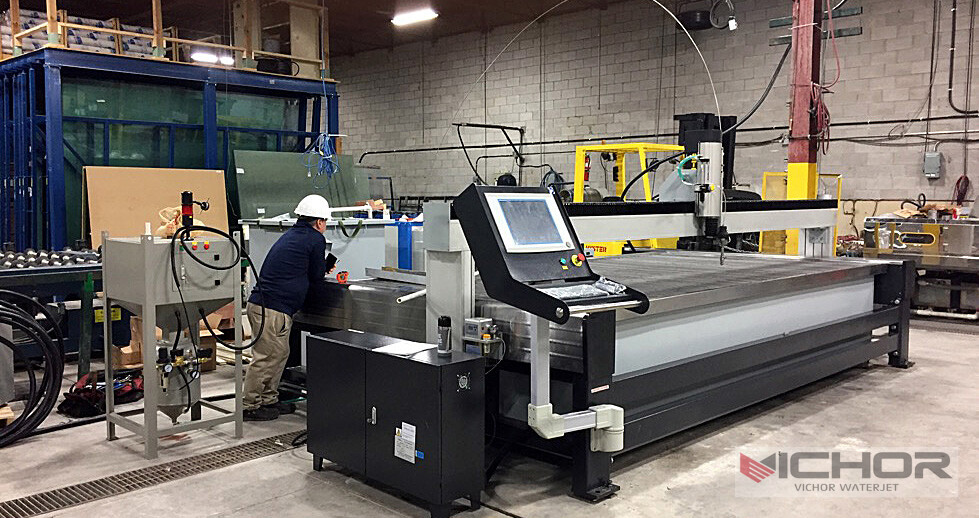
Not all machines are built the same. In the international waterjet cutting field, VICHOR has established a reputation for reliability. When you buy a machine, you are buying the pump uptime and the software capability.
VICHOR focuses on the stability of the high-pressure stream. Their systems reduce pressure fluctuations, which results in a smoother edge finish. This reduces the need for secondary grinding or machining.
Furthermore, the support ecosystem provided by VICHOR ensures that spare parts, from mixing tubes to seals, are readily available. Downtime kills profitability, so choosing a brand with a strong supply chain is critical.
Comparing the Edge: Laser vs. Plasma vs. Cut Jet
Plasma is fast and cheap, but it is messy. The edge is rough, and the heat distortion is significant. It is fine for agricultural equipment but bad for aerospace parts.
Laser is incredibly fast on thin sheet metal. However, as the material gets thicker, laser costs skyrocket, and edge quality drops. Lasers also struggle with composites and stone.
A cut jet system sits in the middle regarding speed but wins on quality and thickness. It provides a satin-smooth finish. On materials thicker than 20mm, the waterjet is often the most economical choice compared to high-wattage fiber lasers.
Understanding Kerf and Taper
The “kerf” is the width of material removed during the process. In waterjet cutting, the kerf is narrow, usually around 0.030 to 0.040 inches. This allows for tight nesting of parts, saving money on expensive raw materials.
Taper is a natural occurrence where the stream widens slightly at the bottom of the cut. Modern software and 5-axis cutting heads compensate for this. They tilt the nozzle to ensure the part edge is perfectly square.
When you perform a precision cut jet operation, software control is everything. It slows the head down at corners to prevent “stream lag” and speeds up on straightaways.
Operational Costs to Consider
Running a machine involves consumables. The biggest cost is usually the abrasive garnet. A typical machine might use 0.5 to 1.0 pounds of garnet per minute depending on the pump horsepower.
Electricity is the second factor. Driving a 50HP or 100HP intensifier pump requires significant power. However, the speed of production often offsets the utility bill.
Water consumption is actually lower than most people think. The water is pressurized, not flooded. Many shops also install closed-loop recycling systems to reuse water and drain the waste sludge.
The Role of Software in Production
Hardware is useless without good instructions. Modern CAD/CAM software for waterjets makes operation easy. You import a DXF file, set the material type and thickness, and the computer does the rest.
The software calculates the optimal speed to maintain the cut jet quality. It handles the piercing of the material and the lead-ins and lead-outs so that the part has no blemishes.
Brands like VICHOR ensure their machines are compatible with major industrial software suites. This seamless integration saves hours of programming time every week.
Industries That Rely on This Technology
The aerospace sector loves waterjets. They cut exotic alloys like Inconel and titanium without changing the metal’s properties. Engine components and turbine blades are common applications.
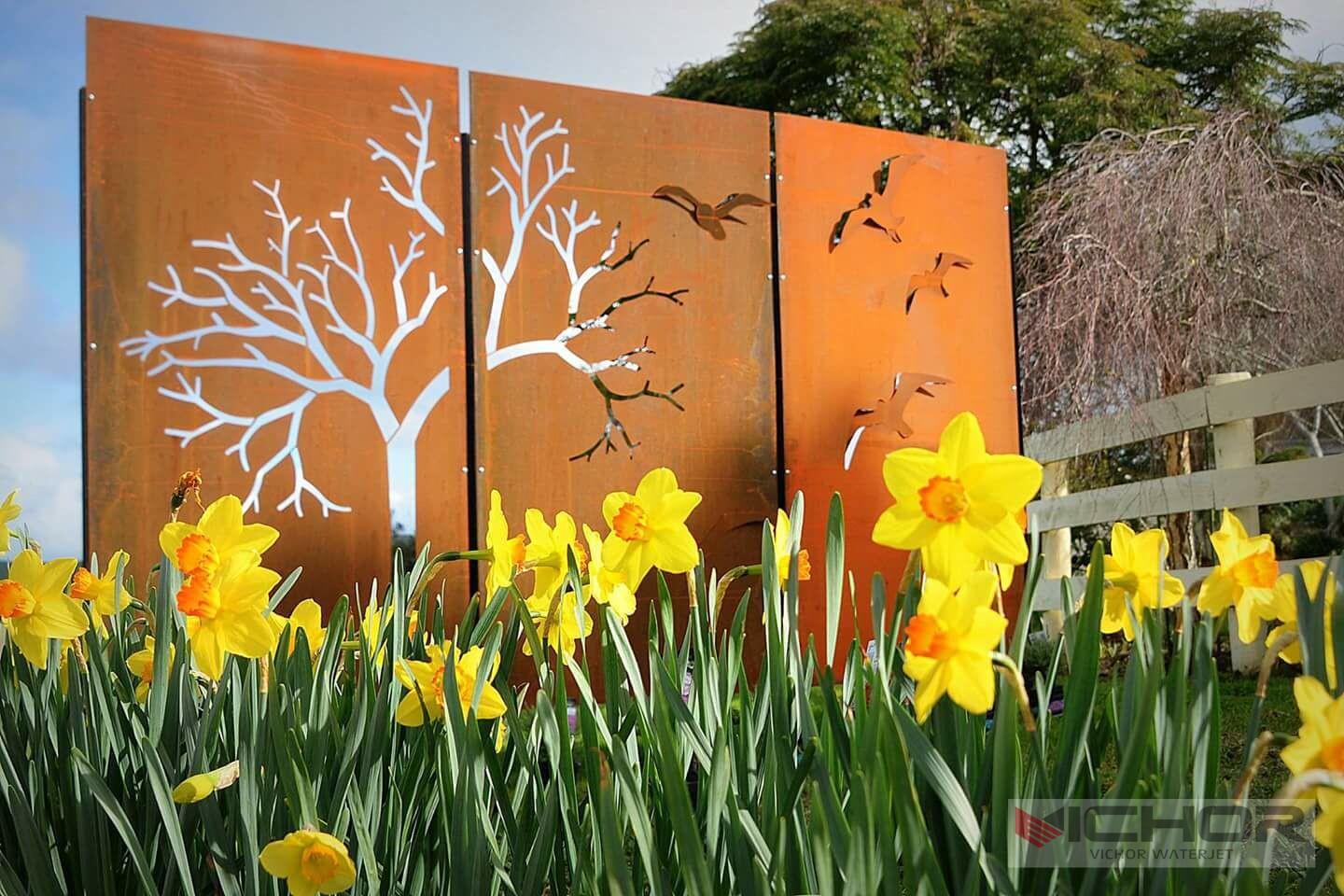
The architectural sector uses it for stone inlays. You can cut intricate marble and granite patterns for flooring that would be impossible with a saw. The cut jet width is so fine that different colored stones fit together like a puzzle.
Automotive prototyping relies on it for speed. Engineers can test a part in the morning and redesign it by lunch. No custom tooling or dies are required, just a digital file.
Maintenance: Keeping the Pump Running
High pressure destroys weak components. Maintenance is a reality of owning a waterjet. Seals in the intensifier pump need regular replacement.
The mixing tube, where the water and abrasive meet, wears out over time. It is essentially a consumable item. However, modern engineering has extended the life of these components significantly.
A good maintenance schedule prevents unexpected breakdowns. Keeping the water clean and the abrasive dry ensures the cut jet stream remains consistent and powerful.
Environmental Impact and Safety
One of the hidden benefits is safety. There are no toxic fumes generated from burning metal or plastic. You do not need the heavy smoke extraction systems required for plasma tables.
The process is quiet when cutting underwater. Many operators submerge the workpiece to reduce noise and spray. This makes for a cleaner, more pleasant shop environment.
Waste disposal is straightforward. The used garnet and metal filings are generally considered non-hazardous waste (depending on the material cut) and can be hauled away easily.
Choosing Between Pure Water and Abrasive
It is important to know when to switch modes. Pure water is strictly for soft materials. It cuts extremely fast. A paper or diaper manufacturer might use multi-head pure water jets running 24/7.
Abrasive is for rigid materials. You cannot cut steel with water alone; it will just wash the surface. The garnet is the cutting tool; the water is just the delivery vehicle.
Switching between these modes on a VICHOR machine is designed to be efficient, allowing a shop to cut foam packing in the morning and aluminum brackets in the afternoon.
Future Trends in Waterjet Technology
Pressures are rising. Standard machines run at 60,000 PSI, but 90,000 PSI (HyperPressure) is becoming more common. Higher pressure means faster cutting speeds and lower abrasive usage.
3D cutting is also advancing. 5-axis and 6-axis robots are using cut jet heads to trim complex composite parts for cars and planes. The technology is moving from 2D flat sheets to complex 3D shapes.
Automation in loading and unloading is the next frontier. Lights-out manufacturing, where the machine runs overnight without an operator, is becoming a reality for high-volume waterjet shops.