How Water Jet Stone Carving Works for Precision and Complex Designs
When you need complex, clean, and highly accurate cuts in glass, few technologies can match the capability of a professional water jet glass cutting service. This advanced method utilizes a high-pressure stream of water, often mixed with an abrasive material, to slice through glass with exceptional precision. Unlike traditional scoring and breaking, or thermal methods like laser cutting, a water jet exerts no thermal stress on the material. This results in smooth edges, prevents micro-fractures, and allows for intricate designs that would be impossible or highly risky with other techniques. For projects demanding perfection, from architectural installations to delicate art pieces, partnering with an expert water jet glass cutting service is the definitive solution.
How a Water Jet Glass Cutting Service Operates
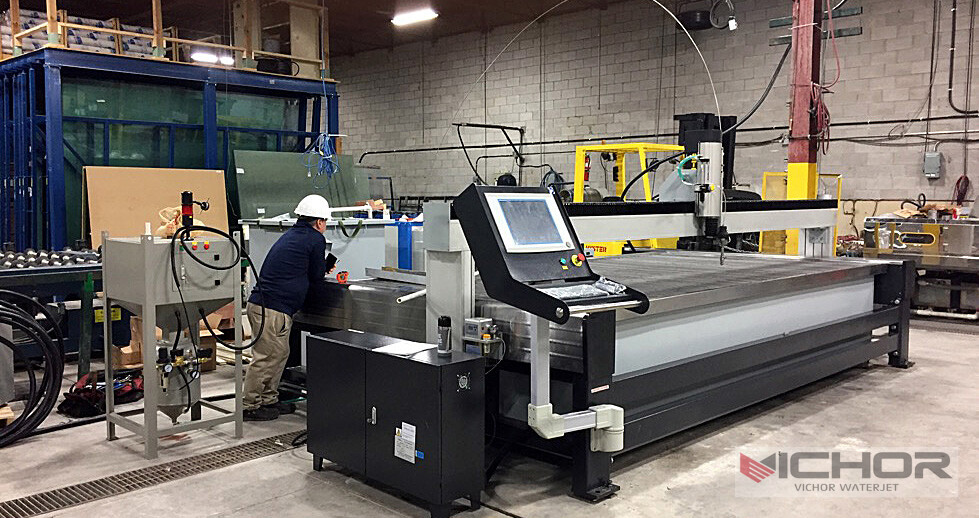
The core process is deceptively simple yet relies on sophisticated machinery. A high-pressure intensifier pump pressurizes ordinary water to levels exceeding 60,000 PSI.
This ultra-pressurized stream is then focused through a tiny gemstone orifice, creating a supersonic jet. For cutting hard materials like glass, a specialized abrasive, typically garnet, is introduced into this stream.
The abrasive particles are accelerated by the water, creating a precise erosive action that micromachines the glass. The cutting head is controlled by a computer-aided (CNC) system, which follows a digital design file with extreme accuracy. This cold-cutting process is what defines a superior water jet glass cutting service.
Key Advantages and Functional Benefits
The primary benefit is the complete absence of heat-affected zones. Glass is highly susceptible to thermal stress, which can lead to cracking, chipping, or internal weaknesses.
Water jet cutting eliminates this risk entirely. It produces a satin-smooth edge quality that often requires little to no post-processing. This saves significant time and labor costs.
Furthermore, the flexibility is unparalleled. There is no need for custom tooling or blades. The same machine can cut a simple circle one minute and an extraordinarily complex filigree pattern the next, simply by loading a different digital file. This makes it ideal for both prototyping and high-volume production runs.
Common Applications and Industries Served
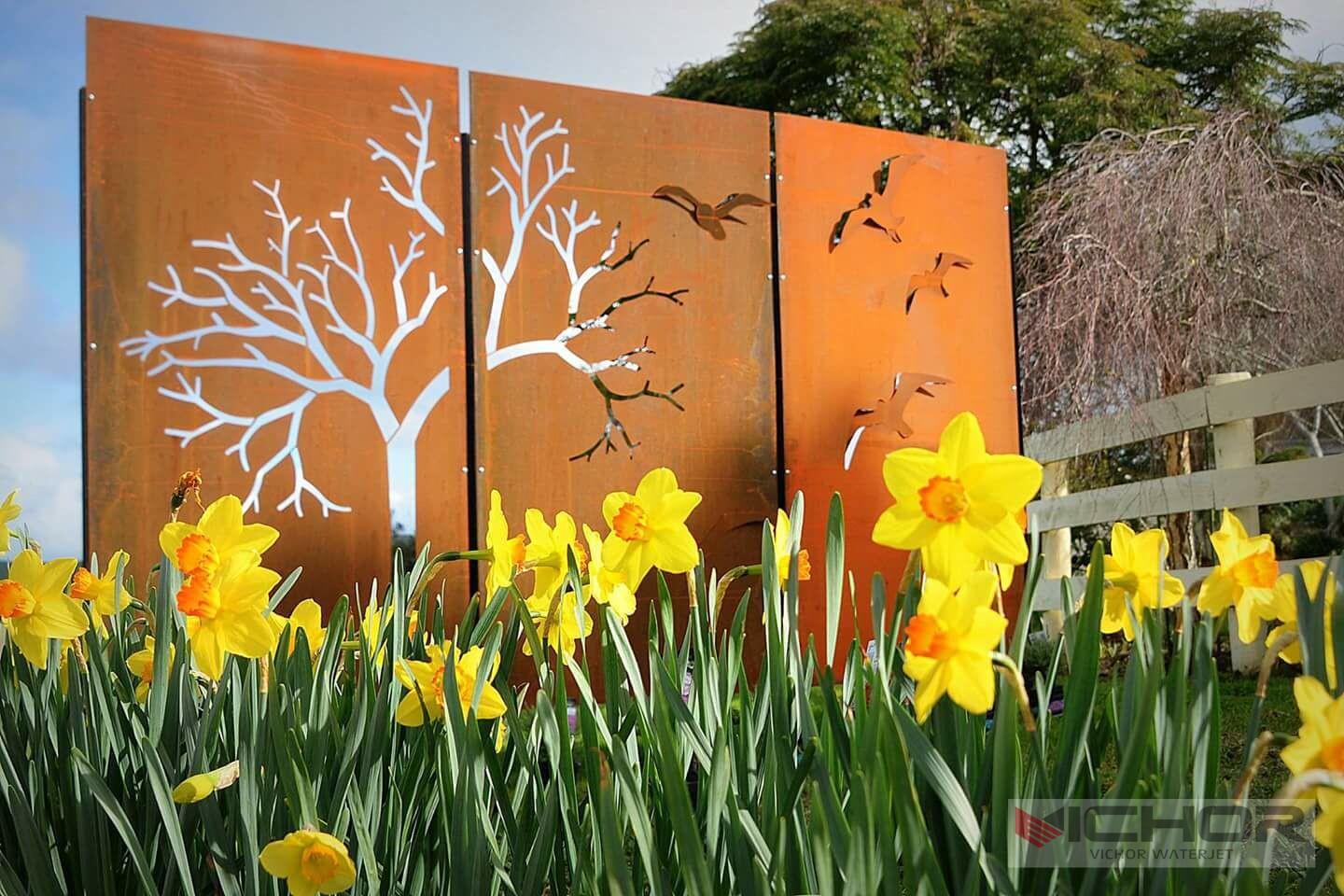
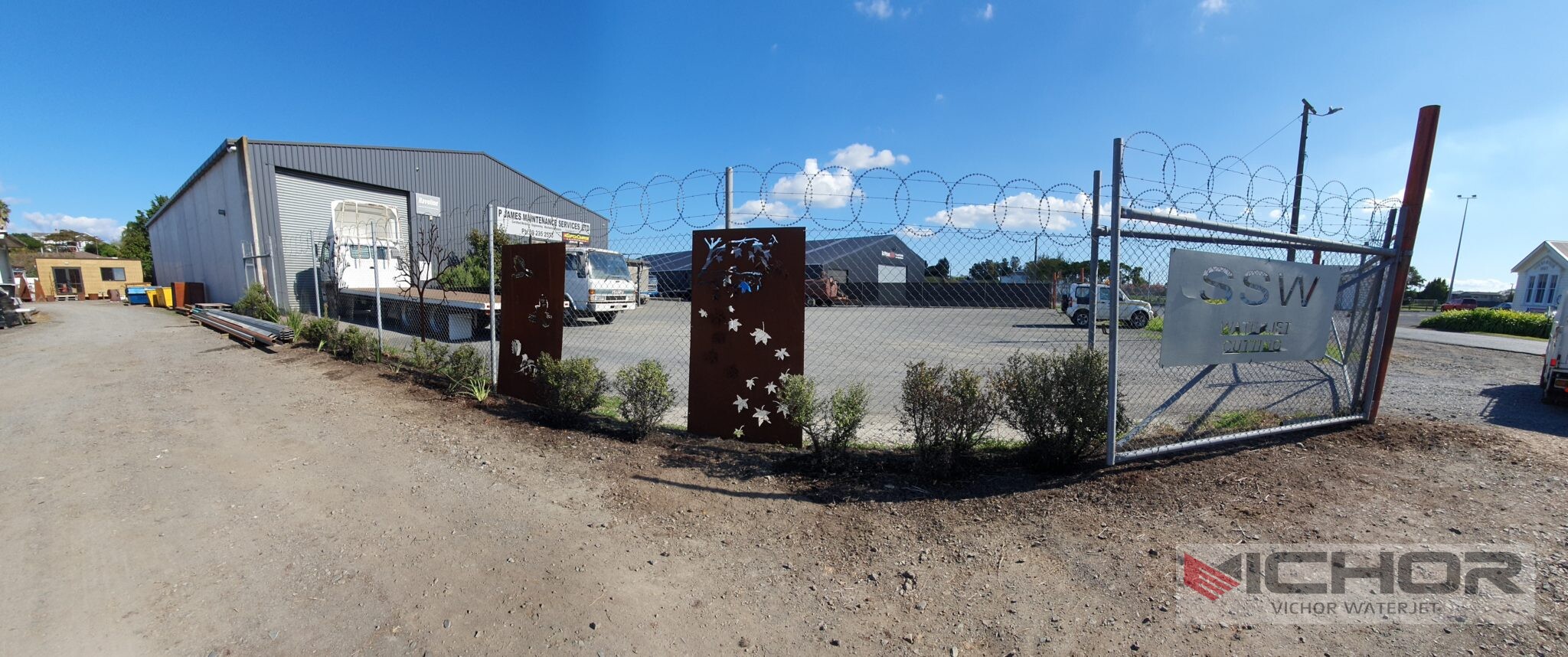
A professional **water jet glass cutting service** caters to a diverse range of industries. In architecture and interior design, it is used for custom shower enclosures, intricate room dividers, decorative panels, and precisely cut glass for railings and stairs.
The signage and retail display industry utilizes it for creating detailed logos, lettering, and unique shelving components. Artists and sculptors rely on its precision to realize complex designs in glass art.
Additionally, it is critical in the automotive and aerospace sectors for cutting specialized glass and composite materials, and in electronics for creating precise insulators and components.
Types of Glass Suitable for Water Jet Cutting
A versatile water jet service can handle an extensive array of glass types. This includes standard float glass, tempered glass (which must be cut before the tempering process), laminated glass, and low-iron “crystal clear” glass for display cases.
It also effectively cuts borosilicate glass (like Pyrex), textured glass, and even fragile materials like stained glass or mirrored glass. The key is the provider’s expertise in setting the correct pressure, speed, and abrasive flow rate for each specific material to ensure a flawless cut.
Understanding Pricing and Cost Factors
The cost of a **water jet glass cutting service** is not a flat rate. It is typically calculated based on several variables. The primary factor is linear cutting time; more complex designs with many curves and details take longer to execute.
Material type and thickness also influence price, as thicker glass requires slower cutting speeds. Setup and programming time, material handling, and any required secondary finishing (like edge polishing) are also considered.
Reputable providers like VICHOR offer detailed quotes based on your digital design file, ensuring transparency with no hidden costs.
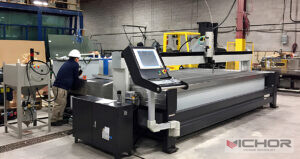
Choosing the Right Service Provider: What to Look For
Selecting a partner for your **water jet glass cutting service** requires careful evaluation. Look for a company with a proven track record and experience specifically with glass. Examine their portfolio for examples of work similar to your project.
Inquire about their machine’s capabilities, including table size and positional accuracy. A critical factor is their technical support; they should be able to advise on design optimization for manufacturability, optimal material selection, and tolerances.
International leaders like VICHOR combine state-of-the-art machinery with deep engineering expertise, providing not just a cutting service but a comprehensive material solution.
Conclusion: Partnering for Precision
For any project where precision, edge quality, and design complexity in glass are non-negotiable, the cold-cutting power of a water jet is unmatched. It offers designers, engineers, and fabricators unparalleled freedom to innovate without the constraints of traditional methods.
By collaborating with a skilled and experienced provider, you transform a digital concept into a flawless physical reality. For your next project, consider the precision, versatility, and reliability offered by a dedicated professional water jet glass cutting service like VICHOR to achieve the highest standard of quality.
Frequently Asked Questions (FAQs)
Q1: What is the minimum cutting radius or smallest detail possible with a water jet glass cutting service?
A1: The minimum inside corner radius or detail size is typically determined by the diameter of the water-abrasive stream, known as the “kerf.” With modern systems, this can be as small as 0.8mm to 1.0mm. This allows for extremely fine details and sharp corners, though designs with very small, fragile features may require expert consultation to ensure structural integrity.
Q2: Does water jet cutting leave the edges of the glass smooth, or is secondary finishing required?
A2: Water jet cutting produces a uniformly smooth, satin-finish edge directly from the machine. For many architectural or display applications, this is perfectly acceptable. However, if a perfectly clear, polished edge is required for aesthetic or safety reasons, secondary polishing operations can be performed as an additional service.
Q3: Are there any limitations on the thickness of glass that can be cut with a water jet?
A3: While water jets are capable of cutting very thick materials, practical limits for glass are often around 4 to 6 inches (100-150mm) for most services. The primary challenge with extreme thickness is maintaining perfect edge perpendicularity (“taper”) and speed. A specialist like VICHOR can advise on the optimal approach for thick glass applications.
Q4: How does water jet cutting compare to laser cutting for glass?
A4: Laser cutting glass is a thermal process that melts the material. It can create thermal stress, micro-cracks (crazing), and is generally limited to thinner glass with less complex geometries. Water jet cutting is a cold process, eliminates thermal stress, handles greater thicknesses, and offers superior flexibility for complex shapes without compromising the material’s strength.
Q5: Why is a water jet glass cutting service considered an environmentally friendly option?
A5: The process uses water and natural garnet abrasive, which are non-toxic. The garnet can often be recycled and reused several times. It generates no hazardous fumes or gases, as there is no burning or melting. The water itself can be filtered and recycled within the machine’s closed-loop system, minimizing waste and environmental impact.