
Home Water Jet Cutting: Can You Really Cut Metal in Your Garage?
For decades, waterjet technology was the exclusive territory of heavy industry. Large factories used massive high-pressure pumps to slice through thick steel and titanium. However, the maker movement has shifted this dynamic. DIY enthusiasts and small business owners are now asking if a home water jet is a viable addition to their workshop.
The appeal is clear. Unlike laser cutters, which struggle with reflective metals and can emit toxic fumes when cutting plastics, a waterjet cuts coldly. It uses erosion rather than heat. This means no heat-affected zones and the ability to cut virtually any material.
Bringing this technology into a residential setting involves challenges. It requires understanding the balance between pressure, size, and utility. Companies like VICHOR have set the standard for industrial cutting, and understanding these standards helps evaluate if a desktop version meets your needs.
What Defines a Home Water Jet?
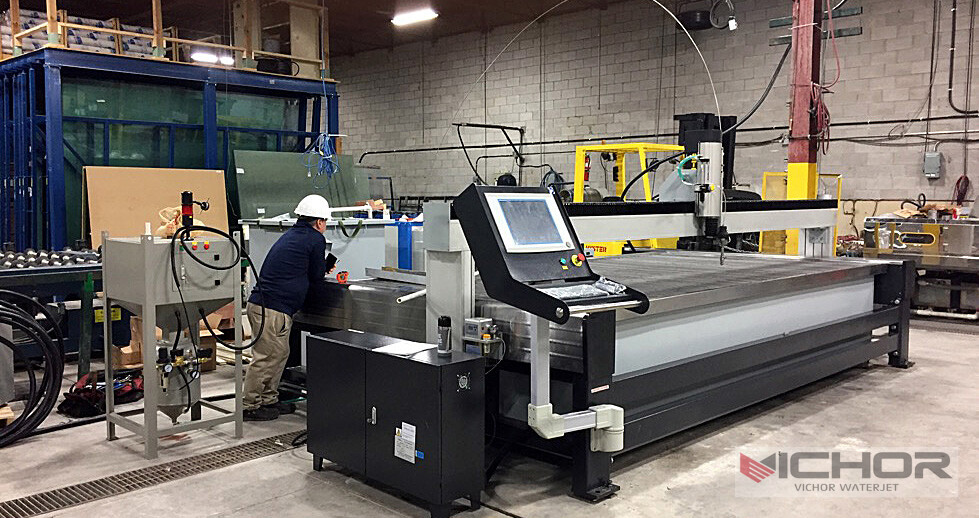
A home water jet is typically defined by its footprint and power requirements. Industrial machines require three-phase power and massive floor space. In contrast, a home unit is designed to fit through a standard door frame.
These compact machines often operate on standard household voltage (110V or 220V). They also operate at lower pressures. While an industrial machine runs at 60,000 to 90,000 PSI, a desktop unit usually operates between 4,000 and 10,000 PSI.
This drop in pressure means cutting speeds are significantly slower. However, for a hobbyist or a prototyping shop, speed is often less critical than the ability to cut complex geometries in diverse materials.
The Mechanics of Desktop Waterjet Cutting
Understanding how a home water jet works requires looking at the “abrasive” aspect. Pure water can cut soft materials like foam or rubber. To cut metal, glass, or stone, the stream must carry an abrasive grid.
Garnet is the most common abrasive used. In a home system, the abrasive delivery must be precise. Because the pressure is lower, the machine relies heavily on the sharpness and quality of the garnet to perform the cut.
The nozzle mixes the high-pressure water with the garnet. This mixture exits the nozzle at high velocity. It essentially acts like a supersonic liquid sandpaper, eroding the material path millimeter by millimeter.
Material Capabilities for Hobbyists
One of the biggest selling points of a home water jet is versatility. If you have a CNC router, you are limited by bit size and hardness. If you have a plasma cutter, you can only cut conductive metals. A waterjet removes these barriers.
Metals: You can cut aluminum, stainless steel, copper, and brass. A desktop unit might take 20 minutes to cut a small bracket out of 1/4 inch steel, but the edge quality will be smooth.
Stone and Glass: Cutting custom tiles or stained glass shapes is possible. The low cutting force prevents delicate glass from shattering, provided the piercing process is handled correctly.
Composites: Carbon fiber is notoriously difficult to machine due to hazardous dust. A waterjet captures this dust in the water, making it safer for a home shop environment.
The VICHOR Standard vs. Hobby Machines
It is important to understand the gap between hobbyist tools and professional equipment. VICHOR manufactures machines designed for 24/7 operation. These industrial systems utilize intensifier pumps or high-power direct drive pumps.
An industrial VICHOR machine offers precision down to fractions of a millimeter and cuts at rapid speeds. A home water jet typically uses a modified pressure washer pump. This is sufficient for occasional use but will wear out faster under heavy loads.
When evaluating a home unit, look at the build quality. Does it use ball screws or belts? Is the bed stainless steel? Comparing these specs to a VICHOR model gives you a benchmark for durability.
Infrastructure Requirements for Your Garage
Buying the machine is only the first step. Installing a home water jet requires preparing your workspace.
Water Supply and Drainage: You need a continuous water source. More importantly, you need a way to drain the water. The water leaving the machine is full of abrasive sludge. You cannot pour this down a standard sink without clogging your plumbing.
Electrical Needs: Even small units draw significant power. Ensure your garage circuit can handle the load of the pump and the motion controller simultaneously without tripping a breaker.
Noise Control: Pumps are loud. The cutting process itself is noisy, especially when the stream is above the water line. Soundproofing might be necessary if you have close neighbors.
The Hidden Costs of Operation
Many users overlook the operating costs. A 3D printer only needs plastic filament. A home water jet consumes consumables rapidly.
Abrasive Garnet: This is your biggest recurring expense. You will go through pounds of garnet per hour of cutting. You also need to buy this and pay for shipping, which is expensive due to the weight.
Nozzles and Orifices: The high-pressure stream destroys the mixing tubes over time. These are wear items that must be replaced regularly to maintain cutting accuracy.
Pump Maintenance: Seals and valves in the pump operate under extreme stress. Rebuilding the pump is a maintenance task that owners must learn to perform.
Software and Workflow
Hardware is useless without software. A home water jet usually comes with proprietary software or requires a standard CAM solution. You will typically design your part in CAD (like Fusion 360 or SolidWorks) and export a DXF file.
The software then generates the toolpath. It must account for the “kerf” (the width of the cut) and the “taper” (the V-shape of the cut edge). Good software automatically offsets the path so your final part is dimensionally accurate.
Industrial solutions from VICHOR often have sophisticated nesting software to maximize material usage. For home users, manual nesting is often required to save money on material sheets.
Safety Considerations
Waterjets are deceptive. They do not look dangerous like a spinning saw blade. However, a high-pressure water stream can inject water and debris under the skin, causing serious injury.
Never operate a home water jet with the enclosure open. Safety glasses are mandatory, but they do not protect your hands from the stream. Treat the water stream with the same respect you would give a laser beam.
Electrical safety is also paramount. You are mixing high-voltage electricity with water. Ensure all outlets are GFCI protected and that the machine is properly grounded.
Managing the Mess
Waterjet cutting is wet and messy. Industrial shops have floor drains and massive filtration systems. In a garage, you must manage the “sludge.”
The used garnet settles at the bottom of the tank. It forms a heavy, mud-like substance. You will need to scoop this out regularly. Some users build custom filtration systems to separate the water from the sludge to extend the time between cleanouts.
Proper disposal of this sludge is important. While garnet and metal filings are generally non-toxic (depending on the metal you cut), you should check local regulations regarding disposal.
Is It Worth the Investment?
If you need to cut a wide variety of materials and have limited space, a home water jet is a powerful tool. It fills the gap between a CNC router and a plasma cutter.
However, for high-volume production, the speed limitations and maintenance costs of a small unit may be prohibitive. In those cases, outsourcing to a shop with VICHOR industrial machines is often more cost-effective.
Evaluate your projects. If you are prototyping complex parts in titanium or glass, the machine pays for itself. If you are only cutting wood, a router is better. If you only cut mild steel, plasma is cheaper.
Future of Desktop Manufacturing
The technology behind the home water jet is improving. Pumps are becoming more efficient, and software is becoming smarter.
We are seeing better integration of abrasive recycling systems for small units. This would drastically reduce operating costs. As the market grows, we expect to see more reliable components that borrow engineering principles from leaders like VICHOR.
For now, owning one is a commitment to maintenance and learning. But the ability to turn a digital design into a physical object made of almost any material is a capability that is hard to beat.
Common Questions About Home Water Jets
Q1: Can a home water jet cut through thick steel plate?
A1: Yes, most desktop units can cut steel, but the thickness is limited compared to industrial machines. Typically, a home unit can cut up to 0.5 inches (12mm) of mild steel, though it will be very slow. For thicker materials, the cut quality degrades significantly, and an industrial machine from a brand like VICHOR would be required for a clean finish.
Q2: How much does it cost to run a home water jet per hour?
A2: Operating costs vary, but you should estimate between $15 and $30 per hour. This calculation includes the cost of abrasive garnet (which is the largest expense), electricity, water, and wear parts like mixing tubes and nozzles. It is significantly more expensive to run than a 3D printer or CNC router.
Q3: Do I need a special drainage system for a home water jet?
A3: You cannot drain the waste water directly into your sink because it contains abrasive sludge that will clog pipes. You need a settling tank system where the heavy sludge can separate from the water. The clear water can then be drained, and the solid sludge must be disposed of manually.
Q4: How loud is a home water jet during operation?
A4: They are quite loud, often resembling the sound of a very loud vacuum cleaner combined with a pressure washer. Noise levels can exceed 80-90 decibels. The pump creates noise, and the water stream hitting the material creates noise. Operating the machine in a garage usually requires hearing protection.
Q5: Can I reuse the abrasive garnet to save money?
A5: Generally, no. When garnet hits the material, it fractures and becomes smaller and less sharp. While industrial systems sometimes have recycling units, home water jet setups rarely have the sophisticated filtration needed to separate good abrasive from waste. Trying to reuse it often clogs the nozzle.