High Pressure Water Jet Cutting Machine: Power, Precision & Industrial Use
How a High Pressure Water Jet Cutting Machine Works
A high pressure water jet cutting machine relies on a powerful pump to pressurize water. This water is then forced through a tiny diamond orifice, creating a focused stream traveling at supersonic speed. For cutting hard materials, abrasive particles like garnet are introduced into the stream.
Core Components of the System
- High-pressure pump: Generates 60,000–90,000 psi; available as intensifier or direct-drive types.
- Cutting head: Contains the orifice, mixing chamber, and focusing tube.
- Abrasive delivery: Feeds garnet into the mixing chamber at controlled rates.
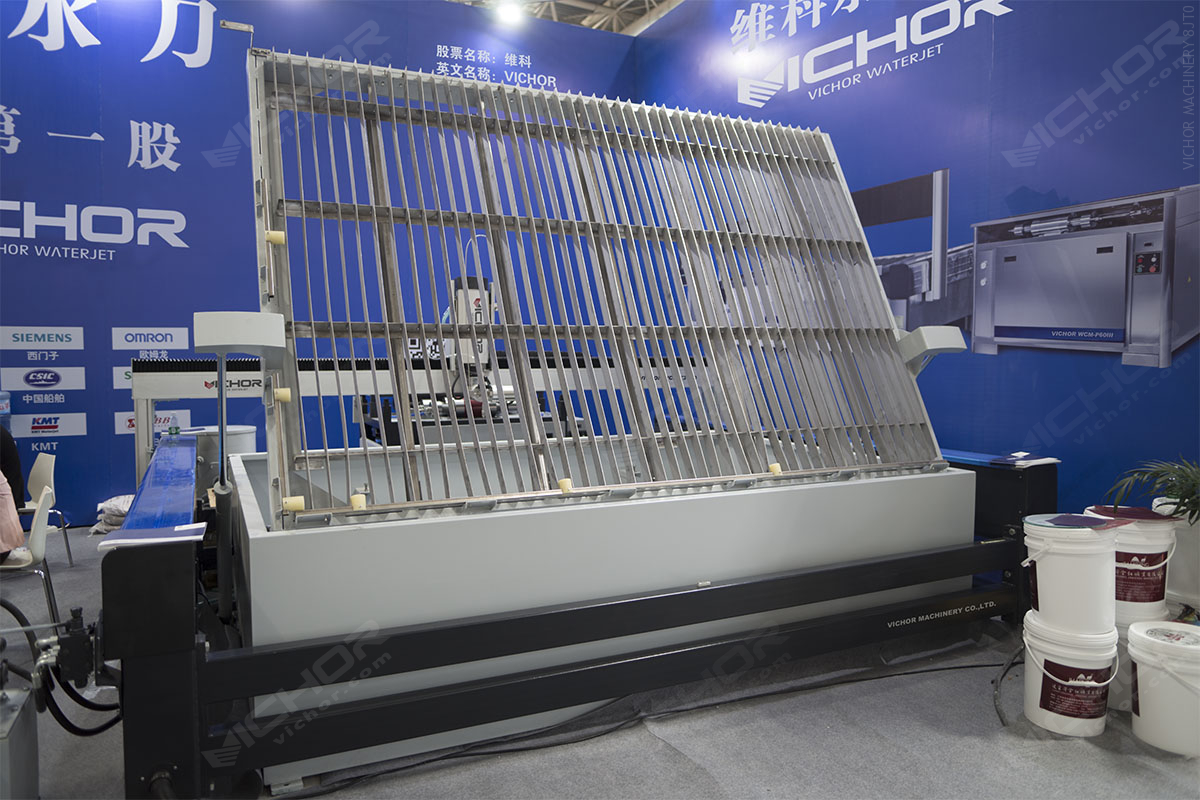
- CNC gantry: Moves the cutting head precisely along programmed paths.
- Catch tank: Absorbs remaining jet energy and collects debris.
VICHOR integrates these components into rigid frames that ensure long-term accuracy, even under continuous high-pressure operation.
Pressure Levels and Their Impact
Higher pressure allows faster cutting and the ability to process thicker materials. A 60,000 psi machine cuts mild steel at moderate speeds, while a 90,000 psi unit can double throughput. The high pressure water jet cutting machine from VICHOR offers both options, with pump technologies chosen for reliability and energy efficiency.
Advantages of Using a High Pressure Water Jet Cutting Machine
Industries adopt high pressure water jet cutting machine technology for several compelling reasons.
- Cold cutting process: No heat-affected zones, so material integrity remains intact.
- Material versatility: Cuts metal, glass, composites, rubber, foam, and stone.
- Precision: Achieves tolerances as tight as ±0.1 mm.
- No tool changes: The same stream cuts any material; only pressure and abrasive adjust.
- Eco-friendly: Uses water and natural abrasives; no hazardous fumes or dust.
Fabricators value the ability to switch from titanium to tile without retooling, making the high pressure water jet cutting machine a flexible asset.
Key Applications Across Industries
From aerospace to architecture, the high pressure water jet cutting machine proves indispensable.
Aerospace and Defense
Titanium, Inconel, and carbon fiber composites are cut without delamination or micro-cracks. Wing ribs, engine components, and armor plates are typical parts produced on VICHOR machines.
Automotive Manufacturing
High-pressure waterjet cuts interior trim, gaskets, chassis components, and even prototype body panels. The speed and accuracy support both low-volume prototypes and production runs.
Stone and Tile Fabrication
Marble, granite, and porcelain tiles are cut into intricate patterns for flooring and countertops. The high pressure water jet cutting machine produces smooth edges that require no secondary finishing.
Metal Fabrication and Job Shops
Job shops rely on waterjet for short runs of stainless steel, aluminum, and exotic alloys. There is no need for expensive dies or heat treatment after cutting.
Selecting the Right High Pressure Water Jet Cutting Machine
Choosing a high pressure water jet cutting machine involves evaluating several factors.
Pump Type and Pressure Rating
Direct-drive pumps are simpler and more efficient for continuous use. Intensifier pumps can reach higher pressures but require more maintenance. VICHOR offers both types, with clear guidance on which suits your production.
Cutting Table Dimensions
Table size should accommodate your largest typical workpiece. Standard sizes range from 2×2 m to 3×8 m. Custom sizes are also available from VICHOR.
Abrasive Management
Automated abrasive removal and recycling systems reduce operating costs. For high-volume shops, this feature quickly pays for itself.
Control Software and Automation
User-friendly CNC with nesting software maximizes material usage. VICHOR machines include industry-standard controls with optional CAD/CAM integration.
Operating Costs and Efficiency
The high pressure water jet cutting machine has predictable operating costs. Primary expenses include electricity, water, abrasive, and wear parts. With proper maintenance, a VICHOR machine operates at low cost per part.
- Abrasive cost: $0.30–$0.60 per kg, consumption 0.3–1.0 kg/min.
- Electricity: 30–200 kW depending on pump size.
- Wear parts: nozzles, seals, and focusing tubes need periodic replacement.
VICHOR provides detailed cost calculators to help customers estimate their exact operating expenses.
Maintenance Best Practices for Longevity
Keeping your high pressure water jet cutting machine in top condition requires routine attention.
- Inspect high-pressure seals daily; replace at first sign of weeping.
- Check the focusing tube bore weekly; replace when worn by 0.1 mm.
- Clean the water tank monthly to prevent abrasive sediment buildup.
- Lubricate linear guides and ball screws per manufacturer schedule.
- Monitor water quality; use softened water to reduce scaling.
VICHOR machines are designed for easy maintenance, with accessible components and clear documentation.
Why VICHOR Leads in High Pressure Water Jet Technology
VICHOR has engineered its waterjet cutting machines for reliability and precision. Every high pressure water jet cutting machine undergoes rigorous testing before shipment. Features include:
- Stress‑relieved, precision‑ground steel frames.
- High‑pressure pumps with proven longevity.
- Advanced CNC with intuitive touch‑screen interface.
- Global support network and spare parts availability.
Visit VICHOR’s website to explore specifications and request a quote.
In conclusion, a high pressure water jet cutting machine from VICHOR provides the power and precision needed for modern manufacturing. Whether you cut metal, stone, or composites, these systems deliver clean edges, minimal waste, and fast turnaround. Contact VICHOR today to discuss your application and find the ideal machine for your shop.
Frequently Asked Questions (FAQ)
Q1: What pressure levels are available in a high pressure water jet cutting machine?
A1: Standard machines operate at 60,000 psi. High-performance models reach 90,000 psi. VICHOR offers both, with 90,000 psi systems providing faster cutting speeds for thicker materials.
Q2: What materials can a high pressure water jet cutting machine process?
A2: It cuts virtually any material: steel, aluminum, titanium, glass, stone, ceramics, composites, rubber, foam, and more. Only tempered glass and some flexible materials are unsuitable.
Q3: How thick can a high pressure water jet cutting machine cut?
A3: Thickness depends on material and pressure. With 90,000 psi, you can cut up to 200 mm in aluminum and 150 mm in steel. Softer materials like rubber can be much thicker.
Q4: What is the typical operating cost per hour?
A4: Costs range from $15 to $40 per hour, including electricity, abrasive, water, and wear parts. VICHOR provides an itemized breakdown based on your local utility rates and material choices.
Q5: How often do I need to replace wear parts?
A5: Focusing tubes last 40–80 hours; diamond orifices 200–400 hours; high-pressure seals 500–1000 hours. Regular inspection maximizes part life. VICHOR offers consumable kits for easy replacement.
Q6: Does VICHOR provide training for new operators?
A6: Yes, VICHOR includes on-site or remote training with every machine purchase. They also offer advanced classes for programming and maintenance.