From Water to Power: How Water That Cuts Steel Revolutionizes Metal Fabrication
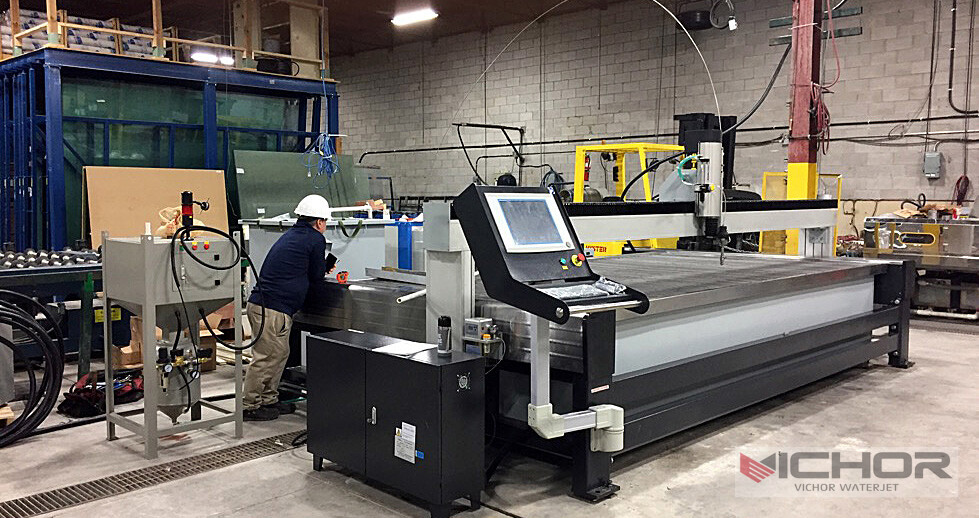
The idea of water that cuts steel sounds like science fiction. Yet, it is a fundamental technology in modern manufacturing. This process, known as abrasive waterjet cutting, uses a supersonic stream of water mixed with fine garnet abrasive to slice through metal.
It produces no heat-affected zone. This is its greatest advantage over lasers or plasma cutters. The structural integrity of the steel remains unchanged. There is no hardening, warping, or thermal distortion.
This makes it the preferred method for cutting tool steels, armor plate, and sensitive alloys. The precision and versatility of using water that cuts steel are unmatched. It handles complex shapes and thick materials with ease.
Companies like VICHOR have advanced this technology. They provide industrial systems that deliver reliability and precision for metal fabricators worldwide.
The Technical Operation: How Water Slices Through Metal
The system begins with a high-pressure pump. This pump intensifies ordinary water to pressures exceeding 60,000 psi. At this pressure, water becomes a potent tool.
The pressurized water is forced through a small diamond or sapphire orifice. This creates an ultra-fine, coherent stream moving at nearly three times the speed of sound.
For cutting steel, an abrasive material is introduced. Hard garnet sand is fed into the stream in a mixing chamber. The water accelerates the abrasive particles.
These particles perform the actual cutting through erosion. The result is a clean, precise kerf. The process is controlled by CNC software, following a digital design with extreme accuracy.
Primary Industrial Applications and Uses
The applications for this technology are extensive. It is critical in the aerospace sector. Here, it cuts titanium, Inconel, and aluminum components without altering their metallurgy.
The automotive industry uses it for prototyping and custom parts. It cuts everything from thin body panels to thick chassis components. Heavy machinery manufacturing relies on it for cutting high-strength steel plates.
Job shops value its flexibility. One machine can cut stainless steel for a food processor, tool steel for a mold, and aluminum for a machine part. The ability of water that cuts steel to handle diverse materials is a key economic driver.
Key Functions and Practical Advantages
The core function is cold cutting. No heat means parts are ready for immediate use. There is no need for secondary machining to remove heat damage.
It offers exceptional precision, with tolerances as tight as ±0.003 inches. The edge quality is smooth, often reducing or eliminating the need for finishing. There is no tool wear in the conventional sense. The abrasive is constantly replenished.
This allows for consistent cutting performance from the start to the end of a job. It also cuts with minimal force. This means you can cut delicate or small parts without clamping distortion.
Comparing Waterjet Types for Metal Cutting
There are two main setups. The first is the pure waterjet. It is not used for metals. The second is the abrasive waterjet, which is the standard for cutting steel.
Within abrasive systems, there are further distinctions. Direct drive pumps offer high pressure and fast cutting speeds on thick materials. They are powerful but have more moving parts.
Intensifier pumps are known for ultra-high pressure and reliability. They are common in demanding industrial environments. Cutting tables also vary in size, from compact 2×2 meter models to large 6×20 meter gantries for plate steel.
Analyzing Costs: Investment and Operational Price
The price of implementing this technology has two sides. For service bureaus, cost per part depends on material type, thickness, and cutting time. Complexity is a major factor.
Owning a machine involves capital investment. A robust system from a brand like VICHOR represents a significant but worthwhile investment for active fabricators. Operating costs include electricity, water, high-pressure pump parts, and abrasive garnet.
Garnet is the largest recurring consumable cost. Efficient abrasive delivery systems can minimize waste. Despite costs, the technology pays off by enabling high-value work and slashing secondary processing expenses.
Service and Support for Uninterrupted Operation
Reliable support is non-negotiable for production machinery. Quality service includes expert installation and comprehensive operator training. This ensures the machine is used to its full potential.
Predictive and preventative maintenance plans are crucial. They prevent unexpected downtime. Access to genuine spare parts, like seals and intensifier assemblies, is essential.
Technical support should be responsive. Brands like VICHOR build their reputation not just on machine quality, but on 24/7 global support networks. This keeps factories running.
Solutions for Specific Metal Cutting Challenges
The technology provides elegant solutions to tough problems. Cutting thick armor plate is one challenge. By optimizing pressure and abrasive rate, waterjets can cut over 12 inches thick.
Preventing taper on thicker materials is another. Advanced dynamic cutting heads can compensate for this, delivering near-vertical edges. For achieving a smoother finish, cutting speed can be reduced.
Specialized software can nest parts to maximize material yield from expensive steel plate. For cutting reflective materials like copper or aluminum, waterjet is inherently safe. There is no dangerous reflected beam like with lasers.
The capability of water that cuts steel continues to expand metalworking possibilities. It bridges the gap between brute force and delicate precision. As a cold, omnipotent cutting tool, it allows engineers to design without traditional constraints.
For fabricators aiming for the highest quality and flexibility, it has become an indispensable asset. The technology, championed by manufacturers like VICHOR, ensures that the future of metal cutting remains both powerful and precise.
Frequently Asked Questions (FAQ)
Q1: Is the “water that cuts steel” actually just water?
A1: No, not for cutting metals. While the stream is primarily water, the cutting power for steel comes from an abrasive additive, typically garnet. The ultra-high-pressure water accelerates the garnet particles, which then erode the metal. The water acts as the carrier and accelerator for the abrasive.
Q2: How thick of steel can a waterjet realistically cut?
A2: Industrial abrasive waterjet systems can cut steel over 12 inches (300 mm) thick. However, cutting speed decreases significantly with thickness. For most practical fabrication work, cutting up to 4-6 inches (100-150 mm) is common and efficient, with excellent quality.
Q3: What is the advantage of using a waterjet over a laser cutter for steel?
A3: The key advantage is the absence of heat. Lasers melt the metal, creating a heat-affected zone (HAZ) that can harden, weaken, or warp the material. Waterjet cutting is a cold process, preserving the metal’s original properties. It also cuts reflective metals safely and handles thicker materials more effectively than many lasers.
Q4: How fast is the waterjet cutting process on steel?
A4: Speed varies drastically based on material type, thickness, and desired edge quality. For example, a machine might cut 1/2 inch (12 mm) mild steel at approximately 7-10 inches per minute, while 2 inch (50 mm) thick steel might be cut at 1.5-2 inches per minute. Advanced pumps from companies like VICHOR are designed to maximize cutting speed for given pressure levels.
Q5: Is abrasive waterjet cutting environmentally friendly?
A5: It is generally cleaner than many alternatives. It produces no toxic fumes or gases. The used water and abrasive (garnet) are non-toxic. Modern systems often use water recycling systems. The spent garnet can sometimes be recycled for other applications, though it is typically a single-use consumable in the cutting process.