Cutting Rock With Water: How High-Pressure Waterjet Technology Transforms Stone Processing
Modern waterjet technology has become the preferred method for architects, monument makers, and industrial fabricators who demand clean edges, tight tolerances, and the ability to cut complex 3D shapes. This article explores the physics, machinery, and practical advantages of using water to cut one of nature’s hardest materials.
1. The Physics Behind Cutting Rock With Water
At first glance, water seems an unlikely tool for cutting granite. The key lies in pressure and velocity. A waterjet pump pressurizes water to 60,000–90,000 psi, forcing it through a tiny orifice (0.010–0.020 inches) to create a supersonic stream.
When abrasive particles—typically garnet—are introduced into this stream inside a mixing tube, the mixture becomes a high-velocity erosion tool. The abrasive grains impact the rock surface at speeds approaching Mach 3, chipping away microscopic particles in a controlled manner.
- Kinetic energy transfer: The momentum of each abrasive particle dislodges rock crystals without fracturing the surrounding material.
- Cold cutting process: No thermal stress means no microcracks, no material distortion, and no need for cooling lubricants.
- Precision erosion: The jet can be manipulated to cut curves, sharp internal corners, and even three-dimensional contours.
Because the cutting action is purely mechanical, the process works on any rock type, regardless of hardness or composition. From soft limestone to dense basalt, the abrasive waterjet adapts by adjusting pressure, traverse speed, and garnet flow rate.
The Role of Abrasive in Stone Cutting
Pure water can cut soft materials like foam or rubber, but for rock, abrasive is mandatory. Garnet is the industry standard due to its hardness, angular shape, and recyclability. The mixing tube (often made of boron carbide) focuses the abrasive-laden stream into a narrow, coherent jet.
Operators can vary abrasive flow from 0.5 to 2.0 pounds per minute. Higher flow increases cutting speed on thick slabs, while lower flow optimizes edge finish for intricate lettering or inlay work.
2. Key Advantages Over Traditional Rock Cutting Methods
Conventional rock cutting techniques—diamond wire saws, gang saws, and flame cutting—each come with significant drawbacks. Waterjet technology addresses many of these limitations directly.
- No tool wear: Diamond blades degrade and require frequent replacement. The waterjet’s “tool” is the abrasive, which is consumable but inexpensive compared to diamond segments.
- Thin kerf: The jet cuts a kerf as narrow as 0.030 inches, dramatically reducing material loss. For expensive stone like marble or quartzite, this means higher yield per block.
- Complex geometry: Waterjets can cut sharp internal corners (down to 0.040″ radius), intricate lettering, and interlocking patterns without secondary finishing.
- No heat-induced fractures: Flame cutting or laser can cause thermal shock in natural stone, leading to hidden fissures. Waterjet eliminates that risk entirely.
These advantages translate into lower operating costs, faster turnaround for custom stone work, and the ability to accept high-complexity orders that competitors cannot fulfill.
Stack Cutting and Multi‑Layer Processing
One often overlooked benefit is the ability to stack multiple stone slabs and cut them simultaneously. Because the jet passes straight through all layers with consistent kerf, fabricators can quadruple productivity on thin tiles or veneer projects.
Stack cutting also ensures identical profiles across multiple pieces—critical for repeat architectural elements or large-scale cladding projects.
3. Equipment Essentials: High‑Pressure Pumps, Nozzles, and Motion Systems
Reliable cutting rock with water requires a system built for continuous, heavy-duty operation. Key components include:
- Intensifier pump: Converts hydraulic pressure to ultra-high water pressure. Modern pumps offer energy recovery systems that reduce power consumption by up to 30%.
- Cutting head: Houses the orifice, mixing chamber, and focusing tube. Quick‑change nozzle designs minimize downtime during abrasive changes.
- CNC gantry or robot arm: Provides precise motion control, often with five-axis capability for bevels and undercuts.
- Abrasive delivery system: Automatically meters garnet into the cutting head, with hopper capacities suited for large stone slabs.
For high-volume stone fabrication, many shops integrate automatic slab loaders and water recycling systems to minimize environmental impact. VICHOR provides complete waterjet solutions tailored to rock processing, from compact 5’×5′ tables for monuments to 12’×40′ gantries for massive architectural panels.
Nozzle Wear and Maintenance
Cutting hard rock accelerates wear on mixing tubes and orifices. Boron carbide mixing tubes typically last 80–150 cutting hours, depending on abrasive type and pressure. Operators monitor cutting performance; a drop in speed or rougher edge finish signals the need for replacement.
Routine maintenance schedules, combined with high-quality components from suppliers like VICHOR, ensure consistent cut quality and prevent unplanned downtime.
4. Practical Applications in Quarrying, Architecture, and Memorial Arts
The ability to cut rock with water has opened new markets for fabricators. Some of the most common applications include:
- Architectural cladding: Custom-cut granite and limestone panels with precise edge profiles and integrated mounting slots.
- Monuments and headstones: Intricate lettering, photographic etchings, and curved shapes that were previously impossible with sandblasting.
- Countertop fabrication: Seamless sink cutouts, curved edges, and mitered corners for natural stone kitchen islands.
- Mosaic and inlay: Waterjet-cut stone tiles and metal inlays fitted together with sub‑millimeter precision.
- Quarry block squaring: Removing irregular edges from raw blocks before further processing, reducing waste in downstream sawing.
Each application demands specific process parameters. For example, cutting 3‑inch granite countertop requires slower speeds and higher abrasive flow, whereas thin marble veneer can be cut quickly with lower abrasive consumption. Experienced operators develop parameter libraries to streamline quoting and production.
Underwater Cutting and Noise Reduction
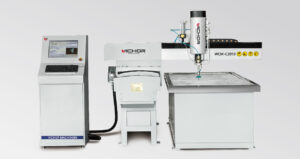
Waterjet cutting naturally produces less airborne dust than dry sawing, but for rock, the process can still generate slurry. Many stone cutting systems incorporate a water table that submerges the cutting area, capturing abrasive and rock particles. This method also significantly reduces noise—a benefit for shops in urban areas.
5. Environmental and Safety Considerations
Compared to diamond saws and flame cutting, waterjet technology offers clear environmental advantages.
- No silica dust: The wet process eliminates airborne crystalline silica, a serious health hazard in stone fabrication.
- Water recycling: Closed-loop filtration systems allow up to 95% of water to be reused, minimizing consumption.
- Non-toxic abrasive: Garnet is an inert mineral that can be separated from stone sludge and disposed of responsibly or repurposed as filler material.
- Low energy per part: While pumps require significant power, the elimination of secondary finishing and tool wear often results in lower overall energy use per finished component.
Safety protocols focus on high-pressure containment, abrasive handling, and proper guarding. Modern machines include interlocks that shut down pressure if the cutting head is accessed during operation.
6. Why VICHOR Waterjet Systems Are Trusted for Rock Cutting Operations
Fabricators who specialize in cutting rock with water require equipment that delivers consistent performance under heavy abrasive loads. VICHOR designs its waterjet systems with features specifically beneficial for stone processing:
- Extra‑rigid gantry frames: Minimize deflection when cutting heavy slabs up to 10,000 lbs.
- Advanced taper compensation: Maintains perpendicular walls even on 6‑inch thick granite blocks.
- High‑flow abrasive systems: 500‑lb hoppers and automated garnet delivery for uninterrupted production.
- Remote diagnostics: VICHOR’s support team can monitor pump performance and alert operators to maintenance needs before failures occur.
With a global network of service centers, VICHOR ensures that stone fabricators receive fast parts replacement and technical training. Many customers report that switching to VICHOR’s systems reduced their per‑part cutting time by 20‑30% compared to older equipment, thanks to optimized pump efficiency and motion control.
Case Example: Monumental Stone Fabrication
A mid-sized monument company in Vermont replaced its diamond wire saws with a VICHOR waterjet system. They now produce headstones with intricate Celtic knots and photographic portraits in half the time, with no thermal stress cracks. The ability to cut directly from digital designs eliminated pattern‑making costs and reduced waste by 40%.
In summary, cutting rock with water has evolved from a novelty to an essential industrial process. It offers unmatched precision, material efficiency, and design freedom for natural stone and engineered materials. By selecting well‑engineered equipment and adopting proper process controls, fabricators can expand their capabilities, reduce environmental impact, and deliver complex projects with confidence. For those ready to advance their stone cutting operations, partnering with a proven manufacturer like VICHOR provides the technology and support needed to succeed in a competitive market.
Frequently Asked Questions About Cutting Rock With Water
Q1: Can any type of rock be cut with a waterjet?
A1: Yes, waterjet cutting works on all natural and engineered stones—granite, marble, limestone, slate, basalt, quartzite, and porcelain. The process parameters (pressure, abrasive flow, speed) are adjusted based on the material’s hardness and thickness. Softer stones require less abrasive; harder stones need slower speeds to maintain edge quality.
Q2: What is the maximum thickness a waterjet can cut through rock?
A2: With a high‑pressure pump (90,000 psi) and appropriate abrasive feed, waterjets can cut natural stone up to 12 inches thick. However, practical limits for efficient production are typically 6–8 inches for granite and 10 inches for marble. Thicker sections require slower traverse speeds but are feasible.
Q3: Does cutting rock with water create a lot of dust or noise?
A3: The process is virtually dust‑free because the abrasive and rock particles are contained in the water slurry. Noise levels are moderate—typically 80–90 dB near the cutting zone—but can be reduced with underwater cutting tables and acoustic enclosures. This makes waterjet far cleaner than dry sawing methods.
Q4: How does the cost compare to diamond wire sawing for large stone blocks?
A4: For block squaring and thick slabs, diamond wire saws are often faster for straight cuts. However, waterjet excels at intricate shapes, tight radii, and minimal material loss. For custom architectural pieces, the higher yield and elimination of secondary finishing often make waterjet more economical overall.
Q5: Can I use recycled garnet for cutting rock?
A5: Recycled garnet can be used, but its cutting efficiency is reduced because the grains become rounded after the first use. Most stone fabricators prefer fresh garnet for critical cuts to maintain speed and edge quality. Spent garnet and stone sludge are often collected and disposed of according to local regulations, and some operations separate the two for recycling.
Q6: How do I choose the right waterjet machine for my stone shop?
A6: Consider the maximum slab size you process, typical thickness, and production volume. For countertop fabrication, a 5’×10′ or 6’×12′ table with 60,000 psi pump is common. For large architectural panels, a gantry machine with 90,000 psi and five‑axis capability provides flexibility. Consulting with manufacturers like VICHOR helps match the machine to your specific needs.
For more detailed guidance on waterjet stone cutting equipment, abrasive selection, and process optimization, visit VICHOR’s waterjet cutting machines page or contact their application specialists to discuss your rock cutting projects.