
CNC Water Jet Cutting: 5 Critical Factors for Your Next Project
If you’re in manufacturing, fabrication, or design, you’ve likely heard about CNC water jet cutting. It’s the versatile, cold-cutting technology that slices through metal, stone, glass, and composites with precision.
But what exactly goes into a modern CNC water jet system? It’s more than just a pump and a hose. It’s a sophisticated integration of high-pressure fluid dynamics, abrasive mechanics, and computerized motion control.
This article breaks down the five key aspects you need to understand before investing in or utilizing this technology for your production needs.
How a CNC Water Jet Actually Works
The core principle is deceptively simple. A high-pressure pump, often an intensifier or direct-drive type, pressurizes ordinary water to an extreme level—between 60,000 and 90,000 PSI.
This ultra-high-pressure water is then forced through a tiny jewel orifice, creating a supersonic stream. For cutting hard materials, an abrasive mineral (like garnet) is introduced into this stream in a mixing chamber.
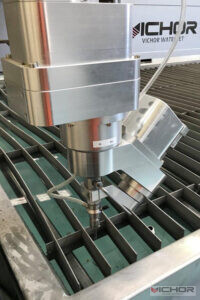
The abrasive-laden jet exits through a focus tube, eroding material along a programmed path. The “CNC” part is the computer numerical control system that precisely moves the cutting head along the X, Y, and sometimes Z and tilt axes.
Where CNC Water Jet Machines Excel: Key Applications
The beauty of this technology is its material agnosticism. A single **CNC water jet** can handle jobs that would require multiple dedicated machines.
In aerospace, it cuts titanium, aluminum, and carbon fiber composites without creating heat-affected zones. The food industry uses pure water jets (no abrasive) for cutting cakes, frozen foods, and pastries.
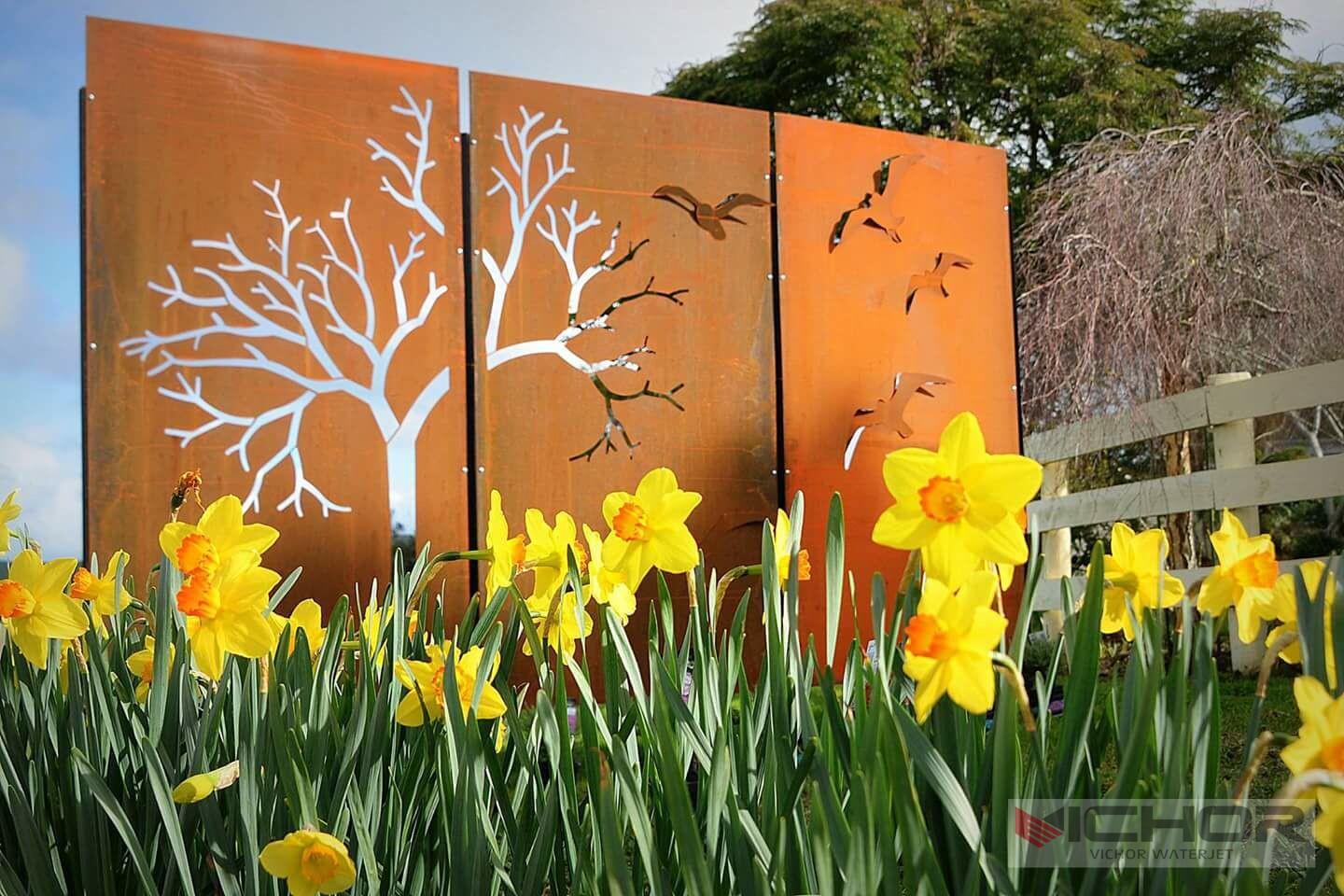
Architectural firms use it for intricate tile work, stone countertops, and metal façades. Automotive manufacturers cut gaskets, interior trim, and even bulletproof glass. For job shops, this versatility is a major business advantage.
Core Functions Beyond Simple Cutting
Today’s systems are not just cutters. Advanced software and hardware allow for dynamic functions that expand their utility.
Taper compensation automatically adjusts the head to produce perfectly vertical edges. 5-axis cutting enables complex bevels for welding preparation. Dynamic piercing allows the jet to start in the middle of a material without damaging the surface.
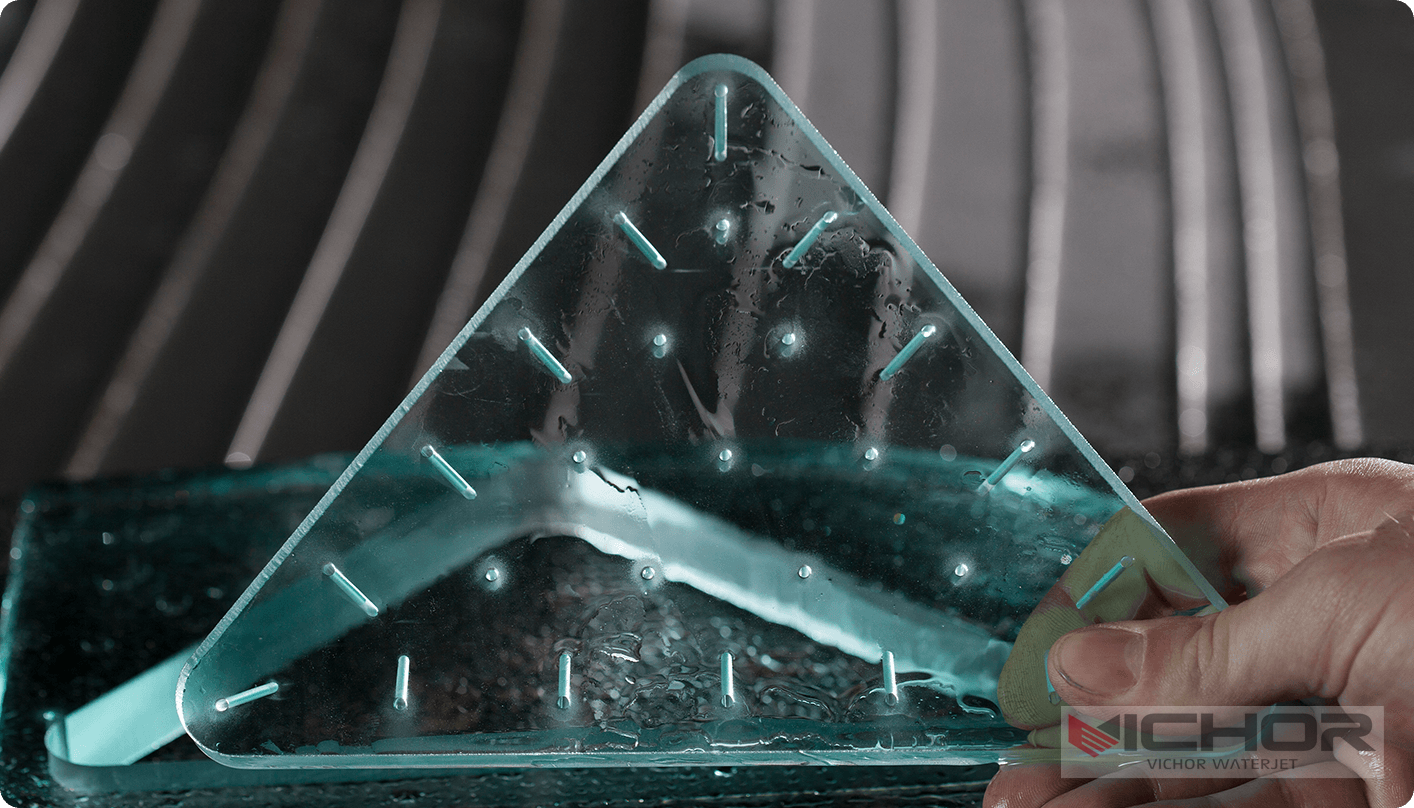
Some systems offer drill-and-tap capabilities, using a softened water stream to create holes. These functions transform a basic cutter into a multi-purpose fabrication center.
Comparing the Main Types of Systems
Not all **CNC water jet** machines are the same. The first major split is between Pure Waterjet and Abrasive Waterjet systems.
Pure systems are for soft materials and are generally less expensive. Abrasive systems are the industrial standard. The next distinction is in table design: moving gantry vs. moving bridge, which affects footprint and part handling.
Pump technology is another divider. Direct-drive pumps, like those engineered by VICHOR for reliability, are known for continuous duty cycles with simpler maintenance. Intensifier pumps can achieve higher pressures for faster cutting on thick, hard materials.
Understanding the Investment: Price Considerations
The price tag for a **CNC water jet** system is layered. You’re paying for several major subsystems.
The high-pressure pump is the heart and a significant cost driver. The cutting table size and structure (its travel and load capacity) form another major component. The CNC controller, software suite, and cutting head assembly add to the total.
For a complete new abrasive system from an industrial brand like VICHOR, entry-level prices often start well above $100,000. Operational costs—abrasive garnet, electricity, maintenance parts—must also be factored into the total cost of ownership.
Service and Support: The Make-or-Break Factor
This is a high-maintenance technology. Pumps have seals that wear. Orifices and focus tubes are consumable parts. The motion system requires calibration.
Therefore, the manufacturer’s service network is critical. A low upfront price can be erased by weeks of downtime waiting for a specialist. Look for brands with a proven track record of global support, readily available training, and a large inventory of common spare parts.
A company’s responsiveness to service calls directly impacts your shop’s profitability.
Choosing the Right CNC Water Jet Solution
Your ideal solution depends entirely on your output. What materials and thicknesses do you cut daily? What level of edge quality and precision is mandatory? How important is cutting speed versus flexibility?
For mixed-material job shops, a robust 3-axis abrasive system with a reliable direct-drive pump is often the workhorse. For heavy industrial or aerospace work, a 5-axis system with a high-horsepower pump may be necessary.
Always request a material sample cut. This test reveals the true capability of the machine and the quality of the manufacturer’s software and support.
For precision that doesn’t compromise the material’s integrity, a modern CNC water jet remains an unmatched solution. By carefully evaluating your needs against the machine’s capabilities and the manufacturer’s support strength, you can harness this powerful technology to expand what’s possible in your fabrication process.
Frequently Asked Questions (FAQs)
Q1: What materials can a CNC water jet NOT cut?
A1: Very few. It struggles with tempered glass (it shatters), diamonds, and certain ceramic composites that are highly resistant to erosion. It can also be inefficient on soft, spongy materials that absorb water. For almost every common metal, stone, glass, plastic, and composite, it is highly effective.
Q2: How accurate is CNC water jet cutting?
A2: Modern systems are highly accurate. A typical industrial CNC water jet can hold positional tolerances of +/- 0.003 inches (0.076 mm) or better. The kerf width (the cut width) is predictable, allowing for precise part dimensions. Edge quality can be controlled from a smooth finish to a rougher texture based on speed and settings.
Q3: Is the water recycled in the system?
A3: No, the high-speed abrasive stream is not recaptured. The spent water, abrasive, and cut material particles fall into a catchment tank below the cutting table. This slurry is then typically pumped to a settling tank or filtration system where water is separated, treated, and often discharged, while the used abrasive and material sludge are disposed of as waste.
Q4: How loud is a CNC water jet, and what safety gear is needed?
A4: They are very loud, primarily due to the pump and the sound of the jet hitting the water in the tank. Operators must wear hearing protection. Safety glasses are mandatory, and enclosed cutting chambers with interlocked doors are standard on professional machines like those from VICHOR to contain the high-pressure stream and splash.
Q5: Can I retrofit an older waterjet with a new CNC controller?
A5: Yes, retrofitting is common. Upgrading an older machine with a modern CNC controller, new software, and even a new pump can extend its life and improve performance significantly. It’s often a cost-effective alternative to a new machine purchase, provided the table structure and mechanics are in good condition. Manufacturers or specialized third-party firms offer these upgrade services.