Aluminium Water Jet Cutting: Precision & Cold Cutting Benefits for Aerospace and Fabrication
Aluminium is a cornerstone of modern manufacturing. From aircraft frames to custom automotive parts, its strength and lightness are unmatched. But cutting it cleanly, especially complex shapes from thick plate, presents challenges.
Laser cutting can leave a heat-affected edge. Routing generates mechanical stress and dust. Aluminium water jet cutting has emerged as the superior solution for countless workshops and engineers.
This process uses a high-pressure stream of water mixed with abrasive garnet to erode through material. It’s a cold-cutting method, meaning it produces no heat distortion. This is critical for aluminium.
For anyone sourcing parts or investing in equipment, understanding abrasive waterjet cutting of aluminium is key. We’ll cover how it stacks up against other methods, where it’s used, and what to look for in a service or machine.
Core Advantages: Why Waterjet Over Laser or Routing?
The primary benefit is the absence of heat. Laser cutting aluminium, especially thicker sections, can create a hardened, discoloured edge known as the Heat-Affected Zone (HAZ). This area has altered metallurgical properties.
Aluminium water jet cutting produces zero HAZ. The material integrity remains pristine from edge to edge. This is non-negotiable for structural components where fatigue life matters.
There is also no tool pressure. Mechanical processes like milling or routing push against the material. This can cause thin aluminium to bend or vibrate. The waterjet stream applies negligible lateral force, allowing for clean cuts in delicate or thin-walled parts.
Furthermore, it’s a single-process solution. From a blank sheet, you can cut intricate internal features, sharp corners, and finished edges in one setup. No tool changes are needed.
Key Applications and Selection Guide
Where is precision waterjet cutting for aluminium most valuable? Its use is widespread in high-stakes industries.
Aerospace is a major adopter. Components like brackets, panels, and prototypes require absolute precision with no thermal damage. The ability to cut high-grade alloys like 6061, 7075, and 2024 is standard.
In automotive and transport, it’s used for custom parts, chassis components, and prototyping. The flexibility to switch from aluminium to other materials without changing tools is a huge time-saver.
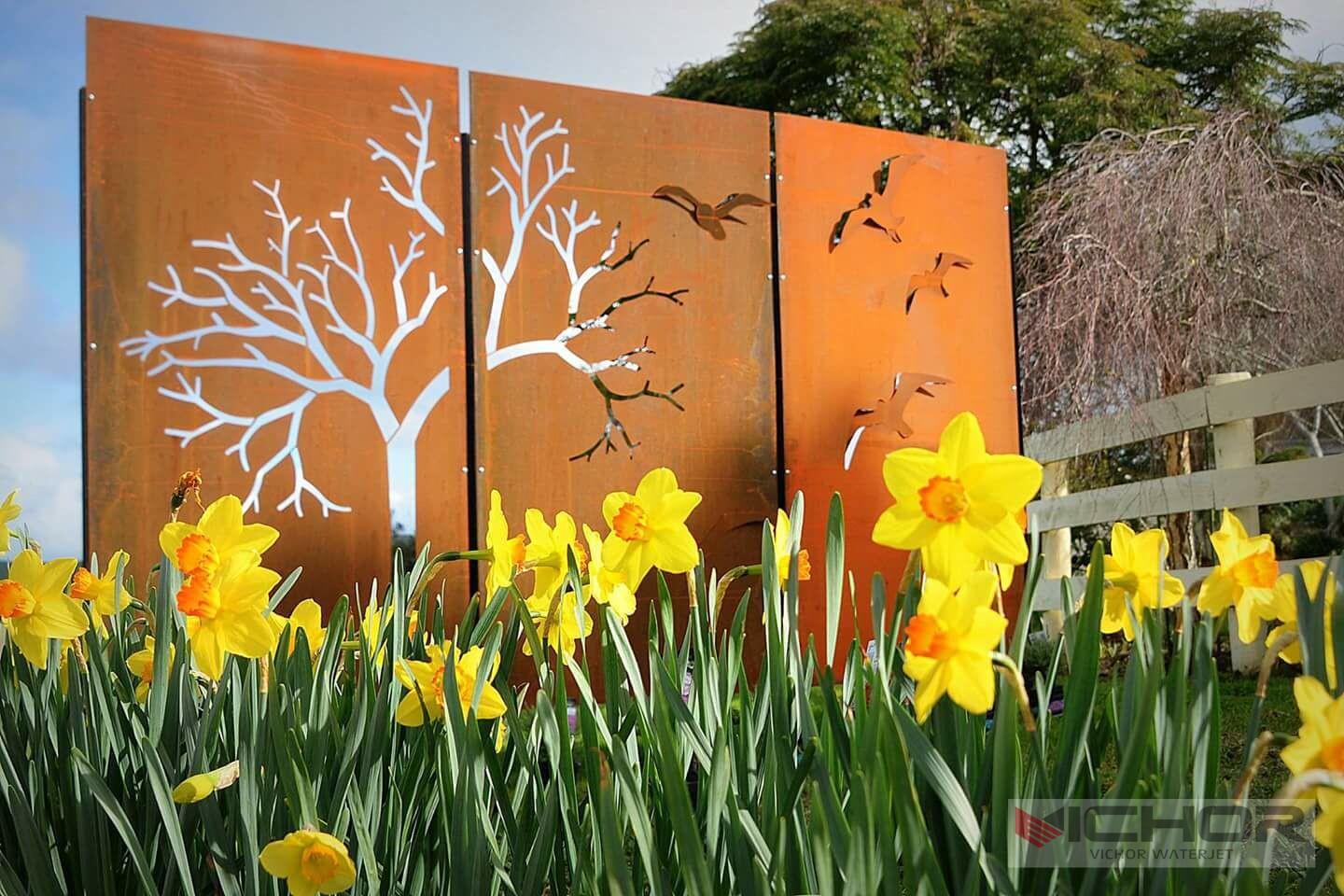
Architectural metalwork uses it for decorative screens, signage, and structural art. The process handles complex designs that would be prohibitively expensive with other methods.
For general fabrication shops, a waterjet becomes a versatile workhorse. It cuts aluminium alongside steel, stone, and plastics, maximizing machine utility.
When selecting a method, choose aluminium water jet cutting when: material integrity is critical, designs are complex, material thickness exceeds ½ inch, or you work with a mix of materials.
Finding a Commercial Service or Equipment Supplier
Many job shops don’t need to own a machine. They use a commercial aluminium waterjet cutting service. Finding a good one requires checking a few boxes.
First, inquire about their experience with aluminium specifically. Ask for sample cuts, especially on the thickness you use. Examine the edge quality for smoothness and absence of taper.
Second, assess their design support. Can they work from your CAD files? A professional service will have nesting software to optimize material use from your sheets, saving you money.
For those investing in a machine, supplier choice is long-term. Look for reliability, cutting speed (especially on thick aluminium), and after-sales support.
International brands like VICHOR are recognized for building durable pumps and systems that maintain precision in industrial environments. Their technology ensures consistent pressure for uniform cut quality in abrasive waterjet cutting of aluminium from the first part to the thousandth.
Cost Factors and Pricing Considerations
The cost of aluminium waterjet cutting depends on several variables. Understanding them helps in budgeting.
For services, pricing is often per linear inch of cut or by machine hour. Key cost drivers include:
Material Thickness: Thicker aluminium takes longer to cut, increasing cost.
Cut Complexity: Intricate shapes with many curves and pierces are slower than straight lines.
Tolerance and Quality Requirements: Holding tighter tolerances or requiring a smoother edge may require slower cutting speeds.
Volume: Large, repetitive orders typically have a lower per-part cost.
Owning a machine involves capital expenditure, but the operational cost per part can be lower at high volumes. The main consumables are the abrasive garnet, waterjet pump parts, and focusing tubes.
Despite the abrasive cost, aluminium water jet cutting often proves more economical than laser for thick plate when you factor in secondary rework to remove the HAZ.
Technical Insights: Achieving the Best Cut Quality
Getting a perfect cut in aluminium isn’t just about pushing a button. Several technical factors interplay.
The cut edge will have a matte, satin finish. There is typically a slight taper—wider at the top than the bottom. Modern systems from companies like VICHOR use dynamic head control to actively compensate for this, producing near-vertical edges.
Cut speed is crucial. Cutting too fast can create a rough edge or leave uncut material at the bottom (lag lines). The optimal speed balances productivity with surface finish.
Piercing is a careful operation. The stream must pierce the aluminium without splashing abrasive back onto the surface, which can mar it. Good software controls the pierce sequence and “lead-in” paths to protect the finished part.
For thin, soft aluminium grades, a lower abrasive flow rate might be used to prevent excessive edge rounding. This technical nuance is where operator experience and machine control shine.
Frequently Asked Questions (FAQ)
Q1: Does waterjet cutting leave burrs on aluminium?
A1: It typically leaves a very small, powdery burr on the bottom edge, much finer than from milling or sawing. This is easily removed with light sanding. The top edge is usually clean and sharp. Good aluminium water jet cutting parameters minimize this effect.
Q2: What is the maximum thickness you can cut?
A2: Industrial abrasive waterjets can cut aluminium over 6 inches (150mm) thick. However, for practical purposes, maintaining precision and a decent cut speed, 3-4 inches is a common upper limit for many applications. The achievable thickness depends heavily on the pump’s power.
Q3: How does the cut speed compare to laser for thin aluminium?
A3: For thin sheets (under 1/4 inch), a high-power laser is generally faster. However, as thickness increases, the advantage shifts. For aluminium over 1/2 inch thick, waterjet cutting often becomes faster than laser, especially when you consider no post-cut treatment is needed.
Q4: Can you cut other metals on the same machine?
A4: Absolutely. This is a major advantage. The same abrasive waterjet cutting system that processes your aluminium can immediately switch to cutting stainless steel, titanium, brass, or copper. Only the cutting speed in the software needs adjustment.
Q5: Is the water corrosive to aluminium?
A5: The cutting process itself uses high-pressure water, but parts are dried promptly after cutting. For long-term protection, especially with alloys prone to corrosion, a simple post-cut wipe-down or application of a protective oil is recommended. The water exposure time is brief and does not cause significant oxidation.