All Water Jet Cutting: 7 Critical Insights for Precision Fabricators
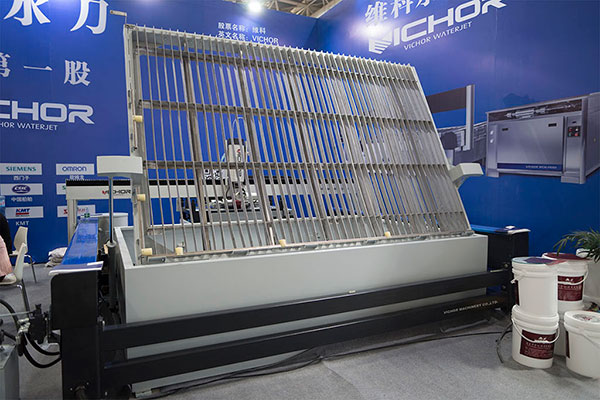
All water jet cutting encompasses both pure water and abrasive waterjet technologies used to slice through materials with high-pressure streams. This method is valued for its cold-cutting nature, which eliminates heat-affected zones. It works on metals, stone, glass, composites, and more. Manufacturers rely on it for prototyping, production, and custom fabrication. The versatility of all water jet cutting makes it a cornerstone of modern workshops.
Understanding All Water Jet Cutting: Pure and Abrasive Methods
All water jet cutting refers to two primary techniques: pure water and abrasive waterjet. Pure water cutting uses only pressurized water for soft materials like foam, rubber, and thin plastics. Abrasive waterjet adds garnet to cut hard materials such as steel, titanium, and granite. Both methods share the same fundamental principle—accelerating water to supersonic speeds through a small orifice. The choice depends on the material and required edge quality.
Pure Water Jet Cutting
This variant relies solely on water pressure, typically between 30,000 and 90,000 psi. It is ideal for food products, textiles, and gaskets. The stream is fine and precise, leaving a clean edge without contaminants. No abrasive means lower operating costs and simpler waste management. It is also used in hygiene-sensitive industries like medical device manufacturing.
Abrasive Water Jet Cutting
Abrasive cutting introduces garnet into the water stream to erode hard materials. The mixture boosts cutting power, allowing penetration of thick steel or stone. Abrasive particles are recovered from the tank for disposal or recycling. This method is standard in metal fabrication and construction. It maintains the cold-cutting advantage while expanding material possibilities.
Key Advantages of All Water Jet Cutting Processes
Adopting all water jet cutting offers multiple benefits that improve productivity and quality. Below are the most significant advantages:
- No Heat Damage: The cold process prevents metallurgical changes, warping, or hardening.
- Extreme Precision: Tolerances of ±0.1 mm are achievable with CNC control.
- Material Versatility: Cuts virtually any material without retooling.
- Environmentally Friendly: Uses only water and natural abrasives; no fumes or hazardous waste.
- Thick Cutting Capability: Can slice materials up to 12 inches or more.
- Minimal Material Waste: Narrow kerf reduces scrap and maximizes yield.
- No Tool Wear: The water stream never dulls, ensuring consistent quality.
These advantages make it a preferred choice for job shops and large manufacturers alike. Companies like VICHOR integrate these features into robust systems; see their offerings at VICHOR waterjet cutting machines.
Materials Processed by All Water Jet Cutting
The scope of all water jet cutting covers nearly every solid material. Here is a breakdown by category:
- Metals: Steel, stainless steel, aluminum, brass, copper, titanium, Inconel.
- Stone: Granite, marble, slate, limestone, quartz.
- Glass: Tempered, laminated, borosilicate, and mirrored glass.
- Ceramics: Tiles, porcelain, alumina, silicon carbide.
- Composites: Carbon fiber, fiberglass, Kevlar, laminates.
- Plastics: Acrylic, polycarbonate, nylon, PTFE, polypropylene.
- Rubber and Foam: Neoprene, silicone, EVA, polyurethane foam.
- Wood and Paper: Hardwoods, softwoods, cardboard, corrugated.
- Food: Meat, vegetables, cakes, frozen products.
This broad material compatibility reduces the need for multiple cutting technologies. Shops can handle diverse orders with a single machine.
Applications Across Industries Using All Water Jet Cutting
Various sectors rely on all water jet cutting for both functional and decorative purposes. Examples include:
- Aerospace: Cutting titanium brackets, engine components, and composite panels.
- Automotive: Fabricating gaskets, interior trim, and chassis parts.
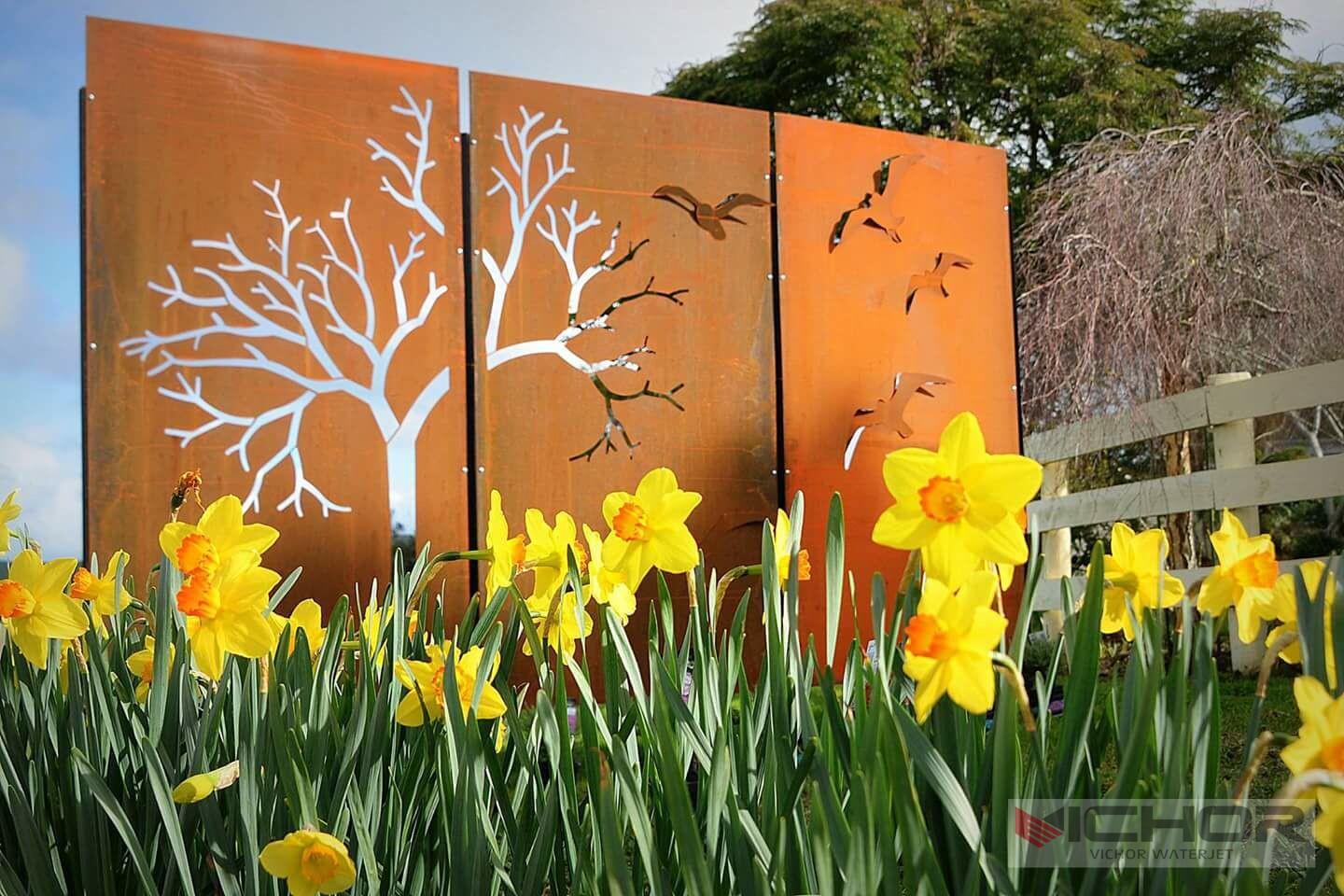
- Architecture: Creating stone cladding, decorative metal screens, and custom tiles.
- Medical: Shaping implants, surgical tools, and orthopedic devices.
- Electronics: Cutting heat sinks, circuit boards, and enclosures.
- Food Industry: Portioning meat, fish, and bakery items hygienically.
- Art and Signage: Producing intricate sculptures, logos, and lettering.
- Marine: Cutting fiberglass hulls and deck components.
Each application benefits from the precision and speed of water jet technology. VICHOR machines are engineered to meet these diverse demands.
Comparing All Water Jet Cutting to Other Technologies
Understanding where all water jet cutting stands relative to laser, plasma, and wire EDM helps in selecting the right process.
Water Jet vs. Laser Cutting
Laser cutting is faster on thin metals but struggles with reflective materials and thicker plates. It generates heat, which can alter material properties. Water jet cuts any thickness without heat, but at slightly slower speeds. Edge quality is comparable, though laser may leave a finer finish on thin stock.
Water Jet vs. Plasma Cutting
Plasma is faster on thick conductive metals but produces a large heat-affected zone and rougher edges. Water jet offers superior precision and no thermal distortion. It also handles non-conductive materials that plasma cannot. For high-tolerance work, water jet is preferred.
Water Jet vs. Wire EDM
Wire EDM provides extreme accuracy for conductive materials but is slow and requires submerged operation. Water jet is faster and works on any material. EDM is better for very tight corners and fine details, while water jet excels in speed and versatility.
Water Jet vs. Mechanical Cutting
Saws and routers create mechanical stress and tool wear. They also produce dust and burrs. Water jet eliminates tool contact, reduces waste, and leaves a burr-free edge. It is ideal for complex shapes that would require multiple setups with conventional tools.
Selecting the Right Equipment for All Water Jet Cutting
Investing in a water jet system requires evaluating several factors. Here is a checklist for buyers:
- Pump Pressure: Higher pressure (60,000–90,000 psi) increases cutting speed and capacity.
- Table Size: Match the cutting area to your largest typical workpiece.
- Abrasive Delivery: Consistent feed ensures reliable cutting; look for precision metering.
- CNC Controller: User-friendly software with nesting and CAD import capabilities.
- Pump Type: Direct drive pumps are efficient; intensifier pumps offer high pressure but need more maintenance.
- Support and Training: Choose a brand like VICHOR that provides comprehensive service. Visit VICHOR waterjet cutting machines for options.
Also consider whether you need a pure water or abrasive system, or a combination machine. Many VICHOR models support both with quick changeover.
Maintenance and Safety for All Water Jet Cutting Systems
Proper upkeep ensures longevity and safe operation. Follow these guidelines:
- Daily: Inspect nozzles and orifices for wear; clean the tank and remove sludge.
- Weekly: Check high-pressure seals and hoses for leaks; lubricate linear guides.
- Monthly: Replace water filters and inspect abrasive delivery lines.
- Quarterly: Calibrate the cutting head alignment and verify pressure accuracy.
- Annually: Service the pump, replace worn components, and update software.
Safety precautions include using hearing protection, safety glasses, and keeping the enclosure closed during operation. Operators should be trained on emergency stop procedures and lockout/tagout.
All water jet cutting represents a flexible, precise, and eco-friendly approach to material processing. Its ability to handle any material without heat distortion makes it indispensable across industries. From aerospace to food processing, the technology delivers consistent results. By partnering with established manufacturers like VICHOR, businesses can access reliable equipment and expert support. As industries continue to demand higher quality and lower waste, all water jet cutting will remain a vital tool in modern fabrication.
Frequently Asked Questions (FAQ)
Q1: What is the difference between pure water and abrasive water jet cutting?
A1: Pure water cutting uses only high-pressure water for soft materials like foam, rubber, and thin plastics. Abrasive water jet adds garnet to the stream, enabling it to cut hard materials such as steel, stone, and ceramics. Both fall under the umbrella of all water jet cutting.
Q2: Can all water jet cut very thick materials?
A2: Yes, abrasive water jet systems can cut materials up to 12 inches or more, depending on the material and pump pressure. Thicker sections require slower traverse speeds and may have a slight taper, but modern machines compensate with tilting heads.
Q3: Is water jet cutting expensive to operate?
A3: Operating costs include electricity, water, abrasives (for abrasive cutting), and maintenance. It is generally cost-effective because there is no tooling wear and material yield is high. For many shops, the versatility justifies the investment.
Q4: What tolerances can be achieved with all water jet cutting?
A4: Typical tolerances range from ±0.1 mm to ±0.2 mm for precision work. With careful setup and quality equipment, even tighter tolerances are possible. The CNC control ensures repeatability across batches.
Q5: Does water jet cutting damage the material surface?
A5: No, the cold process leaves the material’s structural integrity intact. There is no heat-affected zone, and edges are clean with minimal burr. Some materials may have a slight roughness that can be smoothed if needed.
Q6: How do I choose between a water jet and a laser cutter?
A6: Consider your primary materials and thickness. Laser is faster on thin metals but cannot cut reflective or thick materials effectively. Water jet handles any material and thickness without heat damage. If you cut diverse materials, all water jet cutting is more versatile.
Q7: Can water jet cutting be automated for high-volume production?
A7: Yes, modern systems feature automated material handling, robotic loading, and nesting software to maximize throughput. They are suitable for both prototyping and mass production. VICHOR offers integrated automation solutions.