
9 Reasons Using a Water Jet to Cut Metal Is the Superior Choice for Fabricators
9 Reasons Using a Water Jet to Cut Metal Is the Superior Choice for Fabricators
Fabricators and engineers constantly seek methods to process materials without compromising structural integrity. Traditional thermal cutting methods often introduce heat, which warps edges and hardens surfaces. This is why many industry leaders now rely on a water jet to cut metal parts requiring high precision.
The process utilizes a high-velocity stream of water mixed with abrasive particles. It erodes the material rather than melting it. This fundamental difference allows for the machining of complex geometries in materials that lasers or plasma cutters cannot touch.
Brands like VICHOR have refined this technology to be accessible and robust. Whether you are dealing with aerospace titanium or architectural brass, the ability to maintain a cold cut is invaluable. In this article, we examine the technical and operational benefits of this method.
Understanding the Physics When You Use a Water Jet to Cut Metal
The core mechanism of a waterjet is the acceleration of water to supersonic speeds. A high-pressure pump, often an intensifier or direct drive, pressurizes water up to 60,000 PSI or more. This potential energy is converted into kinetic energy as it passes through a tiny jewel orifice.
However, water alone is usually insufficient for hard metals. To effectively use a water jet to cut metal, an abrasive garnet is introduced into the stream. This happens in a mixing chamber just after the jewel orifice.
The result is a stream that acts like a liquid grinding wheel. It creates a smooth edge finish that often requires no secondary machining. This saves significant time in the production workflow.
The Role of Abrasive Garnet
Garnet is the industry standard abrasive due to its hardness and availability. It is a natural mineral that, when mixed with the water stream, provides the cutting power. The mesh size of the garnet determines the surface finish of the cut edge.
Coarser garnet cuts faster but leaves a rougher edge. Finer garnet produces a satin-smooth finish but cuts more slowly. Operators can adjust this balance based on the project requirements.
VICHOR systems are designed to meter this abrasive flow precisely. Consistent abrasive delivery is crucial for maintaining tolerance. Any fluctuation in the abrasive feed can result in an irregular cut.
Eliminating the Heat-Affected Zone (HAZ)
The most significant advantage of waterjet technology is the absence of a Heat-Affected Zone (HAZ). Laser, plasma, and flame cutting all rely on thermal energy to melt or burn through material. This heat spreads into the surrounding metal.
Heat can alter the metallurgical properties of the part. It can cause hardening, micro-cracking, or warping. For aerospace or medical applications, these changes are often unacceptable and cause parts to be rejected.
When you employ a water jet to cut metal, the process is effectively cold. The water absorbs any friction heat generated during erosion. This ensures the material remains in its original state right up to the cut edge.
Versatility Across Different Metal Types
Fabrication shops often handle a diverse range of materials. A machine that is excellent at cutting steel but fails at copper is limiting. Waterjets do not discriminate based on material conductivity or reflectivity.
This versatility allows a single machine to process:
- Reflective Metals: Copper, brass, and aluminum are difficult for lasers but easy for waterjets.
- Hardened Steel: Tool steels can be cut without losing their temper.
- Exotic Alloys: Inconel, Hastelloy, and Titanium are processed efficiently.
- Laminated Materials: Clad metals can be cut without delamination risks.
With VICHOR machines, switching between these materials takes minutes. Usually, only the software settings need to be updated. There is no need to change gases or complex optics.
Cutting Thick Materials
Thickness is a major limitation for many cutting technologies. Fiber lasers typically struggle with mild steel thicker than 1 inch. Plasma can cut thick metal, but the edge quality degrades significantly, requiring extensive grinding.
A waterjet can slice through 6 inches of steel or more. While the cutting speed decreases as thickness increases, the ability to do so adds immense capability to a shop. It allows for the production of heavy machinery parts and thick structural components.
This capability also enables “stack cutting.” Operators can stack multiple thin sheets of metal on top of each other. The waterjet cuts them all simultaneously, drastically increasing throughput for high-volume orders.
Comparison with Laser and Plasma Cutting
Understanding where waterjet fits in the manufacturing ecosystem requires comparison. It is not always the fastest method, but it is often the most precise and flexible. We must evaluate speed, cost, and quality.
Laser Cutting: Excellent for thin sheet metal and high speeds. However, it struggles with reflective materials and thick plates. The initial investment for a high-wattage laser is also very high.
Plasma Cutting: The fastest option for thick steel plates where edge quality is secondary. It is messy and creates a significant HAZ. It is not suitable for precision parts.
Waterjet Cutting: Fills the gap by offering high precision on thick and reflective materials. It does not induce mechanical stress. It is the preferred method when the material properties must be preserved.
VICHOR Engineering and Reliability
Reliability is paramount in industrial machinery. High-pressure systems are subject to significant stress. VICHOR engineers their systems to withstand the rigors of 24/7 operation.
Key features of these machines include:
- Robust Frames: Heavy-duty construction absorbs vibration for better accuracy.
- Advanced Seals: High-pressure seals designed for long maintenance intervals.
- User-Friendly Control: Software that simplifies complex cutting paths.
- Precision Drive Systems: Ball screws and linear guides ensure exact positioning.
Investing in a quality machine reduces downtime. When using a water jet to cut metal, consistent pressure and motion control are required for a smooth edge. VICHOR focuses on these fundamentals to deliver professional results.
Operational Costs and Efficiency
Calculating the cost of operation involves several factors. These include water, electricity, abrasive, and wear parts. While waterjets consume consumables, they often offset this cost by reducing scrap and secondary labor.
Abrasive is the largest ongoing cost. Optimizing the flow rate is essential. Modern software helps calculate the exact amount of abrasive needed for a specific cut, minimizing waste.
Electricity consumption is driven by the pump. Direct drive pumps are generally more energy-efficient than intensifier pumps. VICHOR offers options to suit different facility power capabilities and efficiency goals.
Reducing Material Waste
Material costs are rising, making waste reduction critical. Waterjets have a very narrow kerf (cutting width), typically around 0.030 to 0.040 inches. This allows parts to be nested very closely together.
Because there is no heat distortion, parts can share a common cut line. This technique, known as common-line cutting, reduces cutting time and saves material. For expensive alloys like titanium, these savings are substantial.
The ability to nest parts tightly means you get more products out of every sheet. Over a year of production, this efficiency can pay for a significant portion of the machine’s operational costs.
Software Integration and Workflow
The hardware is controlled by sophisticated CAM software. This software interprets CAD drawings and converts them into machine code. It automatically adjusts the cutting speed based on the geometry.
For example, the machine must slow down when entering a sharp corner to prevent “tail wash.” This is where the bottom of the water stream lags behind the top. The software manages this acceleration and deceleration seamlessly.
Features to look for include:
- Automatic Nesting: Algorithms that optimize part placement.
- Cost Estimation: Predicting job costs before cutting begins.
- Material Library: Pre-loaded settings for thousands of materials.
- Collision Avoidance: Protecting the cutting head from tipping parts.
VICHOR systems are compatible with standard design formats like DXF and DWG. This ensures easy integration into existing design and manufacturing workflows.
Maintenance Considerations
Maintaining a high-pressure system requires discipline. The forces involved inevitably cause wear on components. However, modern designs have made maintenance tasks faster and simpler.
The mixing tube is the most frequently replaced part. It is blasted by abrasive constantly. Replacing it takes only a few minutes and ensures cut accuracy remains high.
High-pressure seals in the pump also require periodic changing. Keeping the water clean is the best way to extend seal life. Effective water filtration systems are a standard recommendation for any installation.
Environmental Advantages
Sustainability is becoming a priority for manufacturing. Waterjet cutting is an environmentally friendly process. It produces no toxic fumes or smoke, eliminating the need for complex air filtration systems.
The waste produced is inert. It consists of settled abrasive and metal particles. In most jurisdictions, this can be disposed of in standard landfills, provided the metal itself is not hazardous (like lead).
Water recycling systems can further reduce the environmental footprint. These closed-loop systems filter and cool the water, allowing it to be reused by the pump. This dramatically lowers water consumption.
Industry Applications
The adoption of waterjet technology spans many sectors. In the aerospace industry, it is used to cut engine components and structural parts from titanium and aluminum. The lack of HAZ is critical for flight safety.
In the automotive sector, it is used for prototyping and custom parts. It allows for rapid iteration of designs without the need for expensive dies or tooling.
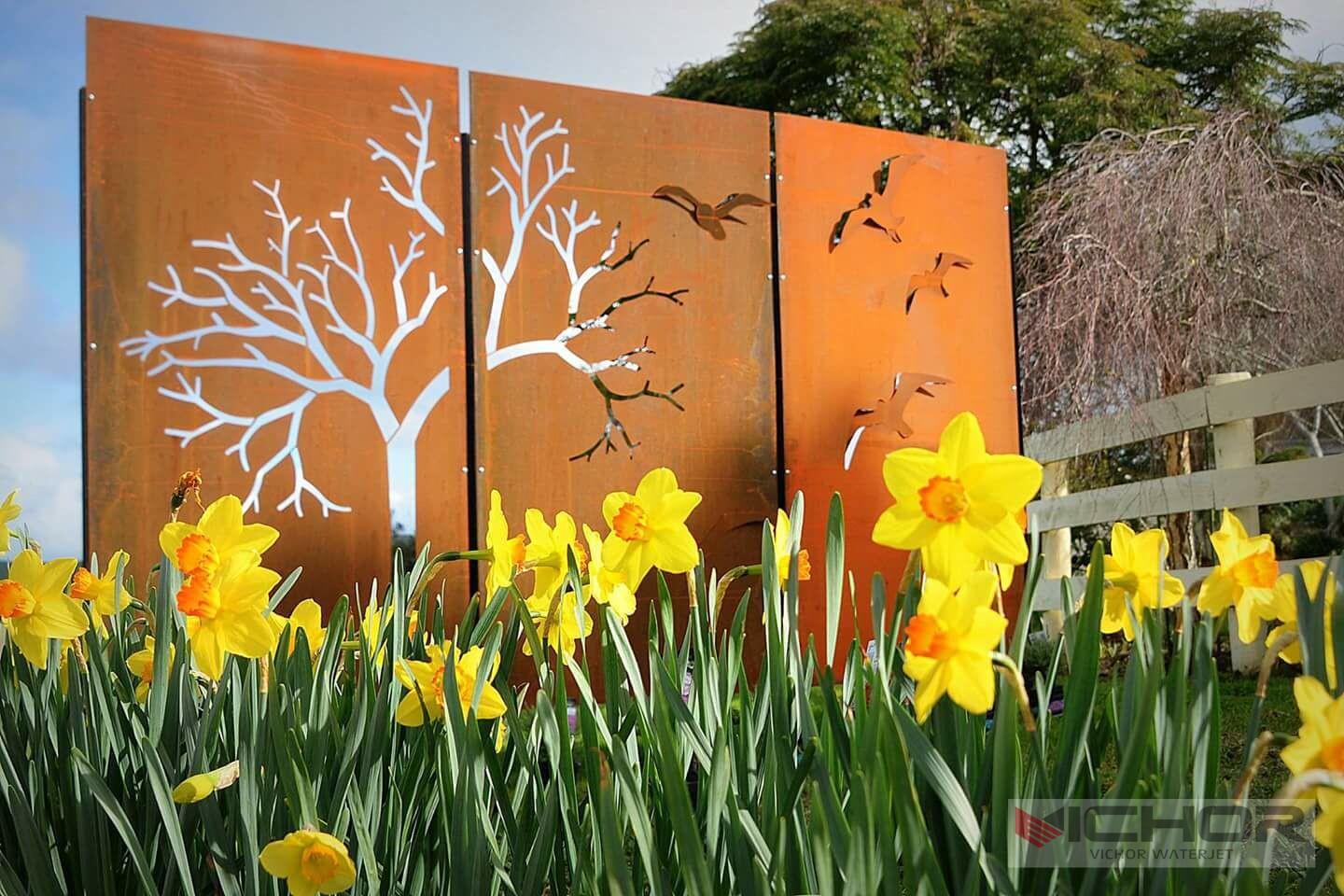
Architectural fabrication is another growing area. Waterjets can cut intricate patterns in brass, copper, and stainless steel for signage, elevators, and decorative panels. The precise control allows for artistic designs that are impossible with other tools.
The decision to deploy a water jet to cut metal is driven by the need for quality and versatility. No other technology offers the same combination of precision, material compatibility, and cold-cutting benefits. It solves the problems of heat distortion and material limitations that plague other methods.
Manufacturers who invest in this technology gain a competitive edge. They can handle a wider variety of jobs and deliver superior parts. The ability to cut virtually any material makes the workshop more agile and responsive to customer needs.
VICHOR continues to lead the way in making these systems reliable and efficient. By focusing on robust engineering and user-friendly operation, they help fabricators achieve new levels of productivity. As the demand for precision metal parts grows, the waterjet remains an essential tool in the modern factory.
Frequently Asked Questions
Q1: What is the maximum thickness a water jet can cut?
A1: A water jet can physically cut through materials up to 12 inches thick or more. However, for most industrial metal cutting applications, the practical and economical range is usually up to 4 to 6 inches for steel and aluminum. Beyond this, the cutting speed slows down significantly.
Q2: Does the water cause the metal to rust?
A2: While the process uses water, the metal is typically submerged or wet for a very short time. The heat generated by the friction of the abrasive actually warms the part slightly, aiding in drying. Fabricators usually use compressed air to dry the parts immediately after cutting to prevent flash rust on mild steel.
Q3: Is waterjet cutting slower than laser cutting?
A3: On thin sheet metal (under 1/4 inch), fiber lasers are generally much faster than waterjets. However, as the material gets thicker (above 1/2 inch), waterjets become competitive. Furthermore, waterjets avoid the secondary cleanup often required by lasers, which can make the total processing time faster for certain jobs.
Q4: Can I cut 3D shapes with a water jet?
A4: Standard waterjets are 3-axis machines designed for flat sheet cutting. However, 5-axis cutting heads are available. These allow the machine to tilt the nozzle, enabling the cutting of beveled edges, chamfers, and complex 3D contours on the metal part.
Q5: How accurate is a water jet to cut metal?
A5: Waterjets are highly precise. Standard tolerances are typically around +/- 0.005 inches. With high-precision machines and controlled environments, tolerances as tight as +/- 0.001 to 0.002 inches can be achieved, depending on the material thickness and cutting speed.