8 Reasons Metal Cutting by Water Jet Machine Beats Laser & Plasma
Manufacturers face a constant choice: speed versus quality. Metal cutting by water jet machine offers a third path – cold, precise, and burr-free. This technology uses a high-pressure stream of water mixed with garnet abrasive. It slices through any metal without heat. VICHOR has refined this process for steel, aluminum, titanium, and superalloys. No other method matches its combination of versatility and edge quality.
Laser cutting creates a heat-affected zone (HAZ). Plasma leaves slag on the bottom edge. Metal cutting by water jet machine eliminates these problems entirely. The water jet cools the cut zone as it works. Below we examine eight specific advantages, from zero thermal damage to lower operating costs. You will also learn why VICHOR systems are trusted for aerospace and automotive parts.
1. Zero Heat – No Metallurgical Changes
Heat alters metal properties. Laser and plasma cutters generate temperatures above 2000°C. This creates a recast layer and micro-cracks. Metal cutting by water jet machine uses only cold water and abrasive. The material remains at ambient temperature.
Hardness, grain structure, and corrosion resistance stay original. For Inconel, titanium, or hardened steel, this is critical. VICHOR machines maintain water temperature within ±1°C. No post-cut heat treatment required.
- No HAZ (heat-affected zone).
- No micro-cracks or recast layer.
- Preserves temper in heat-treated alloys.
2. Cut Any Metal Thickness from Foil to 200 mm
Laser efficiency drops sharply above 25 mm for steel. Plasma cannot cut thin sheets without warping. Metal cutting by water jet machine handles from 0.5 mm foil to 200 mm stainless steel. The same machine cuts aluminum up to 250 mm thick.
No tool changes or multiple setups. VICHOR offers pump pressures from 50,000 to 90,000 psi. Thicker metals need slower feed rates but still produce clean edges.
2.1 Metal Types Compatible with Waterjet
Almost any conductive or non-conductive metal works. Examples include:
- Mild steel, stainless steel (all grades).
- Aluminum, copper, brass, bronze.
- Titanium, Inconel, Hastelloy, Monel.
- Tool steel, hardened alloys (up to 65 HRC).
VICHOR provides pre-set parameters for over 150 metal alloys. Switching between metals takes under five minutes.
3. Burr-Free Edges – No Secondary Finishing
Plasma and laser cutting often leave dross or a burr on the bottom edge. Operators then spend hours grinding or tumbling. Metal cutting by water jet machine produces edges with Ra as low as 1.5 µm. No burr, no slag.
Parts come off the table ready for welding or assembly. VICHOR’s dynamic waterjet (DWJ) technology tilts the nozzle to eliminate kerf taper. Result: perpendicular edges even on 100 mm thick plates.
- No deburring labor.
- No secondary grinding costs.
- Better weld fit-up.
4. Narrow Kerf Saves Expensive Metal
Every millimeter of kerf width wastes material. A typical laser kerf is 0.3–0.5 mm. Plasma kerf is 2–3 mm. Waterjet with a 1.0 mm mixing tube creates a kerf of only 0.8–1.2 mm. Metal cutting by water jet machine increases sheet yield by 10–15%.
For expensive alloys like Inconel or titanium, this saving is substantial. VICHOR nesting software optimizes part layout. The software automatically reduces gap spacing to 1.5 mm.
5. Intricate Shapes and Sharp Internal Corners
Laser cutters cannot produce true square internal corners due to beam diameter. The minimum radius is often 0.5–1.0 mm. Waterjet stream diameter is as small as 0.5 mm. Metal cutting by water jet machine can achieve 0.3 mm internal radii. This allows complex gear profiles, sprockets, and decorative grilles.
With a 5-axis head, you can cut bevels up to 60 degrees. VICHOR offers a rotary axis for cutting pipes and tubes. One machine handles flat sheet, structural shapes, and 3D parts.
5.1 Prototyping and Short Runs – No Tooling Cost
No hard tooling means you can cut any shape from a CAD file. Change designs in minutes. VICHOR users report setup times under 10 minutes for new parts. Ideal for job shops and R&D departments.
6. Lower Operating Cost Than EDM and Laser
Electrical discharge machining (EDM) is slow and requires conductive materials. Laser consumes high power (30–50 kW) and needs assist gases. Metal cutting by water jet machine uses only water, electricity, and garnet abrasive. Typical operating cost: $15–$30 per hour.
Garnet abrasive costs $0.30–$0.50 per pound. Consumption for metal: 1–2 lbs per minute. VICHOR provides an abrasive recycling system. Used garnet can be dried and reused 2–3 times, cutting abrasive cost by 50%.
- No nitrogen or oxygen gas bills.
- Low electricity consumption (15–30 kW).
- Water is recycled (2–4 liters per minute make-up).
7. Clean and Safe Work Environment
Laser and plasma cutting produce metal fumes, smoke, and ultraviolet radiation. Operators need expensive fume extractors and dark shields. Metal cutting by water jet machine suppresses 99% of airborne particles. The water jet captures dust at the cutting head.
No hazardous fumes from vaporized metal. Noise levels are 75–85 dB, much lower than plasma (105 dB). VICHOR enclosures further reduce sound to 70 dB. This meets OSHA requirements without mandatory hearing protection.
7.1 Sludge Management and Recycling
The cutting tank collects a mixture of water, garnet, and fine metal particles. VICHOR offers a filter press that separates solids. The dry sludge is non-hazardous for most metals (steel, aluminum, copper). It can be sent to a recycler for metal recovery.
8. CNC Automation and Remote Monitoring
Modern waterjets integrate seamlessly with any CAD/CAM software. VICHOR controllers accept DXF, DWG, and STEP files. Automatic nesting, toolpath optimization, and collision detection are standard. Metal cutting by water jet machine can run lights-out for second and third shifts.
Add a robotic arm for loading/unloading. VICHOR partners with Fanuc and KUKA to provide turnkey cells. One operator can manage three waterjet tables. Return on investment is typically 12–18 months for a metal fabrication shop.
Remote monitoring via IoT is included. Receive alerts on pump seal wear, nozzle blockage, or low abrasive. VICHOR support can log in to diagnose issues, reducing downtime by 40%.
Technical Comparison: Waterjet vs. Laser vs. Plasma for Metal
Based on VICHOR field data from 200+ installations, here is a direct comparison for 12 mm mild steel:
- Cutting speed: Laser 1200 mm/min, Waterjet 450 mm/min, Plasma 1500 mm/min.
- Edge quality (Ra): Waterjet 1.8 µm, Laser 3.5 µm, Plasma 12 µm.
- Heat affected zone: Waterjet 0 mm, Laser 0.5 mm, Plasma 2 mm.
- Operating cost per hour: Waterjet $20, Laser $40, Plasma $25.
- Secondary finishing needed: Waterjet none, Laser often none, Plasma always grinding.
For thick plates (>25 mm), waterjet is often the only cold process that maintains material integrity.
Real-World Examples from VICHOR Customers
A Michigan aerospace supplier switched to metal cutting by water jet machine for titanium brackets. Rejection rate due to micro-cracks dropped from 8% to 0.3%. A Texas oilfield service company now cuts Inconel 625 parts up to 75 mm thick. No post-weld heat treatment needed because there is no hydrogen pick-up.
A European automotive prototype shop uses a VICHOR waterjet to cut gearbox prototypes from 20 mm aluminum. Lead time reduced from 3 weeks (machining) to 2 days. These examples confirm that waterjet is not a niche tool – it is a production solution for demanding metals.
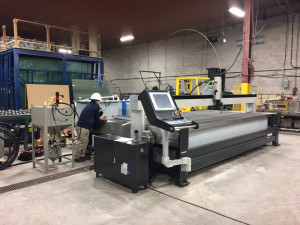
Choose Waterjet for Precision Metal Cutting
Metal cutting by water jet machine from VICHOR delivers zero heat, burr-free edges, and lower operating costs. It handles any metal thickness from foil to 200 mm. The initial investment is quickly recovered through reduced scrap, no tooling, and eliminated secondary finishing.
For a free feasibility test on your metal parts, contact VICHOR. Their engineers will cut samples and provide a cost-per-part analysis. A metal cutting by water jet machine transforms how you cut – cleaner, faster, and more precise.
Frequently Asked Questions (FAQ)
A1: With a 90,000 psi pump and 80 mesh garnet, you can cut up to 200 mm (8 inches) of stainless steel or 250 mm of aluminum. VICHOR provides thickness-specific parameter tables for 150+ metals. Thicker sections require slower feed rates but still produce clean edges.
A2: No. Because there is no heat, the original hardness and grain structure remain unchanged. Metal cutting by water jet machine is ideal for tool steel, hardened alloys, and age-hardened aluminum. No post-cut tempering or stress relieving needed.
A3: For thin sheet (under 5 mm), laser is 2–3x faster. But for thick metal (>15 mm), waterjet speeds are comparable. However, waterjet eliminates deburring and has no HAZ. Many shops accept slower cutting speed because they save on secondary operations. VICHOR offers dual-head machines to double throughput.
A4: Yes, but with limitations. You can stack up to three thin sheets (total < 6 mm) if clamped tightly. The water jet will cut through all layers, but edge quality may vary. VICHOR recommends a vacuum table to hold stacks. For production stacking, use a dedicated multi-head machine.
A5: Daily: check water level and filter, inspect the mixing tube for wear (replace every 100–200 hours), and clean the nozzle orifice. Weekly: drain and clean the sludge tank. Monthly: replace high-pressure pump seals. VICHOR machines have a maintenance reminder display with step-by-step videos.
A6: Yes. VICHOR has regional service centers in Europe, Southeast Asia, and Latin America. Installation includes 3 days of on-site training. Remote support is 24/7 via video call. Spare parts ship from regional warehouses within 48 hours. Training is available in English, Spanish, Mandarin, and German.
A7: No. Pure waterjet cannot cut metal because water alone lacks the energy to erode metal. You must add garnet abrasive. VICHOR machines have an abrasive injector that turns on automatically for metal cutting. For soft materials like rubber or plastic, the system switches to pure water mode.
For a customized quote or to arrange a live cutting demonstration, visit VICHOR today. A metal cutting by water jet machine from VICHOR is the most versatile tool for any metal fabrication shop – delivering precision without compromise.