
8 Critical Benefits of Precision in Water Jet Machining for Modern Industry
Industrial fabrication involves a variety of subtractive processes, but few offer the versatility of a waterjet. The role of in water jet machining has expanded as manufacturers look for ways to cut materials without thermal damage. This method uses a high-pressure stream of water, often mixed with an abrasive, to erode material along a computer-controlled path.
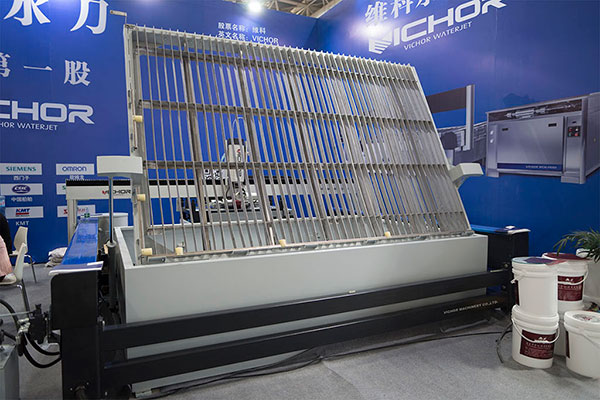
Companies like VICHOR provide the hardware necessary to achieve these results at an industrial scale. Their machines are built to withstand extreme pressures while maintaining tolerances that meet aerospace and medical standards. By avoiding heat, the process preserves the original properties of the material being shaped.
The flexibility of this technology allows it to function in diverse sectors. From cutting thick steel plates to delicate glass patterns, in water jet machining provides a solution that eliminates many secondary finishing steps. It is a mechanical process that relies on kinetic energy rather than thermal energy or chemical reactions.
The Evolution of Materials Used in Water Jet Machining
Early iterations of waterjet technology were limited to soft materials like paper and rubber. However, the introduction of abrasive particles transformed the industry. Modern systems can now handle the hardest substances on earth, including tool steel and advanced ceramics. This change has made in water jet machining a primary choice for heavy-duty fabrication.
In the current manufacturing environment, engineers often work with composite materials that are sensitive to temperature. Traditional saws or lasers can cause delamination or melting. Because VICHOR systems operate at ambient temperatures, they protect the bond between layers in carbon fiber and fiberglass parts.
Pure Water Cutting vs. Abrasive Methods
Pure water cutting is the most basic form of the technology. It uses a very fine stream, often as thin as a human hair, to slice through soft materials. This method is common in the food industry for slicing produce and in the automotive industry for trimming interior carpets and headliners.
- Minimal kerf width reduces material waste significantly.
- No moisture is absorbed by the material due to the speed of the jet.
- Extremely intricate details are possible without crushing the material.
Abrasive cutting involves adding garnet sand into the water stream. This creates a powerful erosive force that acts like a liquid saw. Most in water jet machining applications for metal and stone use this method to achieve high-speed material removal.
Technical Components of VICHOR Systems
A high-performance waterjet requires a balance of several critical subsystems. The frame must be rigid enough to handle the vibration and force of the jet. VICHOR uses heavy-duty steel structures that are stress-relieved to ensure long-term accuracy and stability during operation.
The high-pressure pump is the engine of the entire process. It must provide a consistent flow of water at pressures ranging from 50,000 to 90,000 PSI. Any fluctuation in pressure can cause visible marks on the finished part, which is why in water jet machining relies on advanced dampening technology to smooth out the pump cycles.
The Role of the Intensifier Pump
Intensifier pumps use a hydraulic circuit to drive a large piston, which in turn pushes a smaller water plunger. This mechanical advantage is what allows for the generation of extreme pressures. This type of pump is favored for its reliability and the relative ease with which it can be maintained in a shop setting.
- Dual-intensifier setups allow for continuous operation during maintenance.
- Sophisticated seals prevent water from leaking into the hydraulic oil.
- Electronic controls monitor the health of the pump in real-time.
Precision CNC Control and Motion Hardware
The “brain” of the in water jet machining process is the CNC controller. It must calculate the exact speed at which the cutting head should move. Because a waterjet stream is flexible, the software must account for “lag” and “taper” to ensure the bottom of the cut matches the top.
VICHOR integrates advanced motion software that predicts the behavior of the jet based on the material thickness. By automatically adjusting the tilt of the head or slowing down in tight corners, the machine produces a perfectly square edge without manual intervention from the operator.
Industrial Applications and Use Cases
The range of industries that benefit from in water jet machining is vast. In the energy sector, it is used to cut thick stainless steel plates for turbines and pressure vessels. In the architectural field, it allows for the creation of custom stone floor inlays and metal signage.
A significant advantage in these applications is the ability to nest parts closely together. Because there is no heat, there is no risk of the material warping and interfering with the next part. This efficiency helps shops maximize their material yield and reduce overall production costs for their clients.
Aerospace and Defense Manufacturing
Aerospace engineers often specify in water jet machining because it does not create heat-affected zones (HAZ). If a titanium component were cut with a laser, the heat could make the edges brittle. This would necessitate expensive secondary milling to remove the compromised material.
- Precision cutting of engine brackets and wing spars.
- Shaping of heat-shield tiles for spacecraft.
- Production of ballistic armor plates from hardened steel.
Medical Device Production
The medical field requires components that are biocompatible and free from contamination. VICHOR machines are used to cut stainless steel surgical instruments and orthopedic implants. The cold-cutting process ensures that the protective oxide layer on the steel remains intact, preventing future corrosion.
Furthermore, the ability to cut complex, miniature shapes makes it ideal for specialized tools. Small orifices and high-precision nozzles allow the in water jet machining system to produce parts that would be difficult to hold in a traditional milling vise.
Maintenance and Operational Efficiency
To keep a waterjet running at peak performance, a proactive maintenance schedule is necessary. The high-pressure environment is naturally erosive. Components such as check valves, high-pressure seals, and the cutting orifice are considered consumables that require periodic replacement.
VICHOR designs their systems to be user-friendly, allowing operators to perform most maintenance tasks in-house. This reduces the reliance on external service technicians and keeps the machine in production for more hours per month. Consistent care is the key to a long machine lifespan.
Managing Water Quality
Water quality is a factor that is often overlooked in in water jet machining. Dissolved minerals can crystallize under high pressure, essentially turning the water into an abrasive that wears down the internal components of the pump. Many facilities use water softeners or reverse osmosis systems to protect their investment.
- Filtration of particulates prevents clogging of the tiny jewel orifice.
- Water temperature control prevents overheating of the pump seals.
- Regular testing ensures that pH levels do not cause corrosion in the tank.
Abrasive Management and Recycling
Abrasive garnet represents a significant portion of the operating cost. Efficiently managing how much abrasive is used can make a project much more profitable. VICHOR systems feature precision metering valves that deliver the exact amount of sand needed for the specific material thickness.
After the cutting is done, the spent abrasive settles in the catcher tank. Automated sludge removal systems can pull this waste out and deposit it into a container for disposal. Some advanced shops even use recycling systems to clean the garnet so it can be reused multiple times, further reducing costs.
Environmental Impact and Sustainability
Compared to other industrial processes, in water jet machining is remarkably clean. It does not produce toxic fumes, smoke, or dust that requires expensive ventilation. The abrasive used is a natural mineral that is non-toxic and inert.
Water conservation is also a priority for VICHOR. Closed-loop systems are available that filter the used water and return it to the pump. This setup is ideal for regions with strict water usage regulations or for shops that want to minimize their impact on the local utility system.
Reducing Material Scrap
The precision of modern CNC software allows for highly efficient part layouts. By using the “common line” cutting technique, two parts can be separated by a single cut, saving both time and material. This level of optimization is a standard feature in high-quality in water jet machining software packages.
- Less material ends up in the scrap bin.
- Small remnants can be saved and used for future small parts.
- Improved nesting reduces the number of pierces needed, saving time.
A Safer Workspace
Safety is a significant benefit of waterjet technology. There is no risk of fire from sparks, and the process does not produce the blinding light associated with lasers or plasma. As long as operators follow basic protocols and keep their hands away from the jet, it is one of the safest heavy-duty cutting tools available.
VICHOR machines include multiple safety layers, such as emergency stop buttons, protective barriers, and sensors that detect if a cover has been opened during the cut cycle. This focus on safety protects the staff and the equipment simultaneously.
Choosing the Right Equipment for Your Needs
When selecting a system for in water jet machining, it is important to consider the size of the materials you plan to process. A small shop might only need a 5-foot by 5-foot table, while a large industrial supplier might require a table that is 13 feet wide and 26 feet long.
Pump power is another critical decision. A higher-horsepower pump can support multiple cutting heads, allowing you to cut two or four identical parts at the same time. This dramatically increases throughput and is a common strategy for high-volume production lines managed with VICHOR technology.
Software Compatibility and Integration
Your machine should integrate seamlessly with your existing design workflow. Most modern in water jet machining controllers can import standard DXF or DWG files from AutoCAD or SolidWorks. This eliminates the need to redraw parts and ensures that the final product matches the engineer’s original intent.
- Automatic updates to software improve cutting algorithms over time.
- Remote diagnostics allow technicians to troubleshoot issues over the internet.
- Intuitive touch-screen interfaces reduce the learning curve for new operators.
Future Trends in the Industry
The industry is moving toward even higher pressures and smarter automation. We are starting to see the integration of robotic arms for loading and unloading materials. This allows for “lights-out” manufacturing, where the in water jet machining system can continue producing parts overnight without human supervision.
VICHOR continues to innovate in the field of 5-axis cutting. By moving the cutting head in more than just three directions, it is possible to create complex 3D shapes, bevels, and weld preparations. This capability further reduces the need for secondary machining and expands the creative possibilities for designers.
Conclusion and Final Thoughts
In summary, the advancements in water jet machining have turned it into a cornerstone of the modern manufacturing facility. Its ability to process almost any material without heat distortion makes it unique. Whether you are cutting heavy steel for infrastructure or delicate parts for a surgical robot, the waterjet provides unmatched flexibility.
By partnering with a reliable brand like VICHOR, companies can access the precision and durability needed to stay competitive. The combination of high-pressure physics and sophisticated CNC logic ensures that the waterjet remains a vital tool for the foreseeable future. As material science creates even more complex alloys and composites, the need for this versatile “cold cutting” method will only continue to grow.
For any manufacturer looking to improve their edge quality, reduce material waste, and increase their overall capabilities, in water jet machining is an investment that yields significant dividends. It is a proven technology that is ready to meet the challenges of the next generation of industrial design.
Frequently Asked Questions
Q1: What is the maximum thickness a waterjet can cut?
A1: While most industrial applications are between 0.5 and 3 inches, a VICHOR waterjet can cut through materials up to 10 inches thick or more. However, as thickness increases, the cutting speed decreases and the risk of stream deflection grows.
Q2: Does the water used in the process get the material wet?
A2: Yes, the material is exposed to water. For most metals and stones, this is not an issue. For materials that might be damaged by water, such as certain foams or fabrics, the high speed of the jet usually prevents absorption. Parts are typically dried immediately after the process is complete.
Q3: How much does it cost to operate a waterjet per hour?
A3: Operational costs involve electricity, water, abrasive garnet, and maintenance parts. Generally, in water jet machining costs between $20 and $40 per hour to run, depending on the abrasive flow rate and power consumption of the pump.
Q4: Can a waterjet cut bulletproof glass?
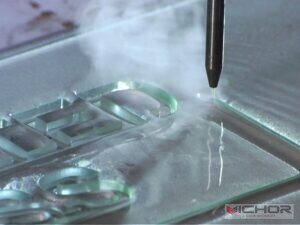
A4: Yes, it is one of the best tools for this material. Because it does not use heat, it won’t cause the glass to shatter or the internal plastic layers to melt. Specialized piercing methods are used to prevent the glass from cracking at the start of the cut.
Q5: How long does a diamond orifice last?
A5: A diamond orifice is much more durable than ruby or sapphire. In a typical in water jet machining environment, a diamond orifice can last up to 500 to 1,000 hours of cutting time, provided the water quality is kept high.
Q6: Is it possible to cut multiple layers at once?
A6: Absolutely. This is called stack cutting. By clamping several sheets together, you can cut them as if they were a single thick plate. This is a common way to increase the production volume of flat parts made from thin sheet metal or plastic.