7 Ways Water Jet Designs Are Transforming Modern Manufacturing and Art
If you think water jet designs are just about cutting shapes out of metal, you’re missing the bigger picture. This technology has evolved from a simple cutting tool into a full-fledged design medium, pushing the boundaries of what’s possible in both industrial fabrication and creative arts.
From impossibly intricate metal filigree to seamlessly interlocking stone floors, water jet cutting designs offer a unique combination of precision, versatility, and material integrity. This article explores the seven key areas where these designs are making a massive impact, what you need to know to create them, and how the right equipment unlocks their full potential.
What Makes Water Jet Designs So Unique?
The core advantage lies in the process. Unlike lasers or plasma cutters, a water jet uses a high-pressure stream of water and abrasive to erode material. This is a cold-cutting method.
There is no heat-affected zone. This means no warping, no hardened edges, and no thermal stress cracks in the material. For intricate water jet designs, this is revolutionary. You can cut delicate patterns in heat-sensitive materials like tool steel without altering their temper.
The cutting head can maneuver with extreme precision, allowing for sharp inside corners and complex geometries that are impossible with rotating tool bits. This freedom is what defines modern water jet art and design.
Top Industries Revolutionized by Water Jet Cutting Designs
The application of this technology stretches far beyond a single sector. It’s a cross-disciplinary tool.
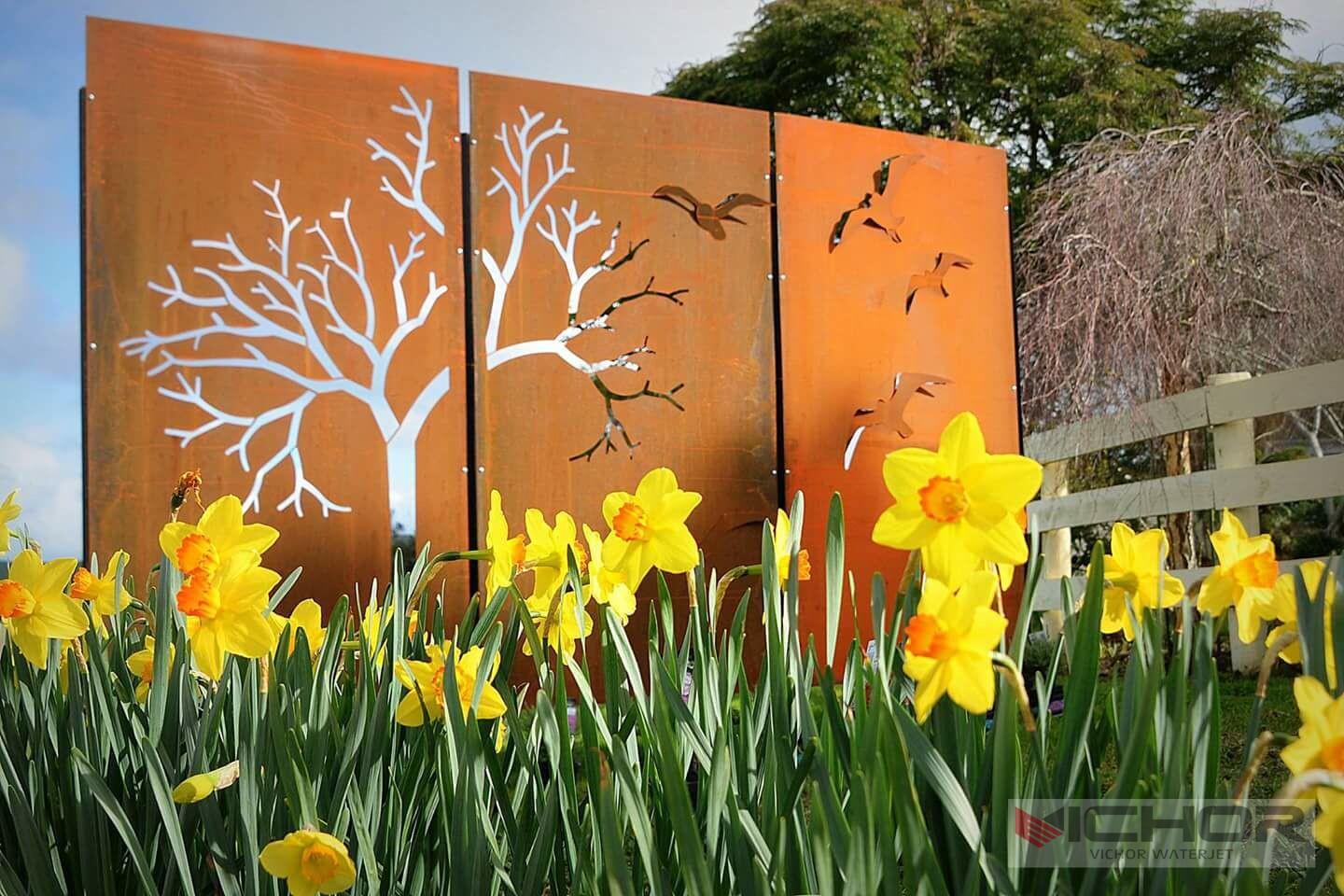
In architecture and interior design, it creates stunning decorative panels, intricate metal stair railings, and custom stone inlays for floors and walls. The aerospace and automotive industries rely on it for prototyping and producing lightweight, complex components from composites and high-strength alloys.
Artists and sculptors have embraced water jets to work with mixed materials, layering metals, stones, and glass into elaborate compositions. Even the food industry uses specialized pure-water jets for precise cutting of pastries and other products.
The common thread is the demand for complexity without compromise on material properties.
The Critical Role of Software and File Preparation
A brilliant concept is useless without the right digital blueprint. Creating successful water jet designs hinges entirely on software and file integrity.
Designs typically start in vector-based CAD software like AutoCAD, SolidWorks, or Adobe Illustrator. The file must be “clean”—composed of closed, continuous vector paths without gaps or overlaps. This vector path becomes the exact route the cutting head will follow.
For highly detailed water jet patterns, nesting software becomes essential. This software intelligently arranges multiple parts on a sheet of material to minimize waste. Advanced software, like that offered with VICHOR machines, can also automatically add lead-ins and optimize cutting paths for speed and accuracy, which is crucial for profitable production.
Material Considerations: Best Choices for Impactful Designs
Almost any material can be used, but some truly shine. The best water jet art designs often play with contrast and texture.
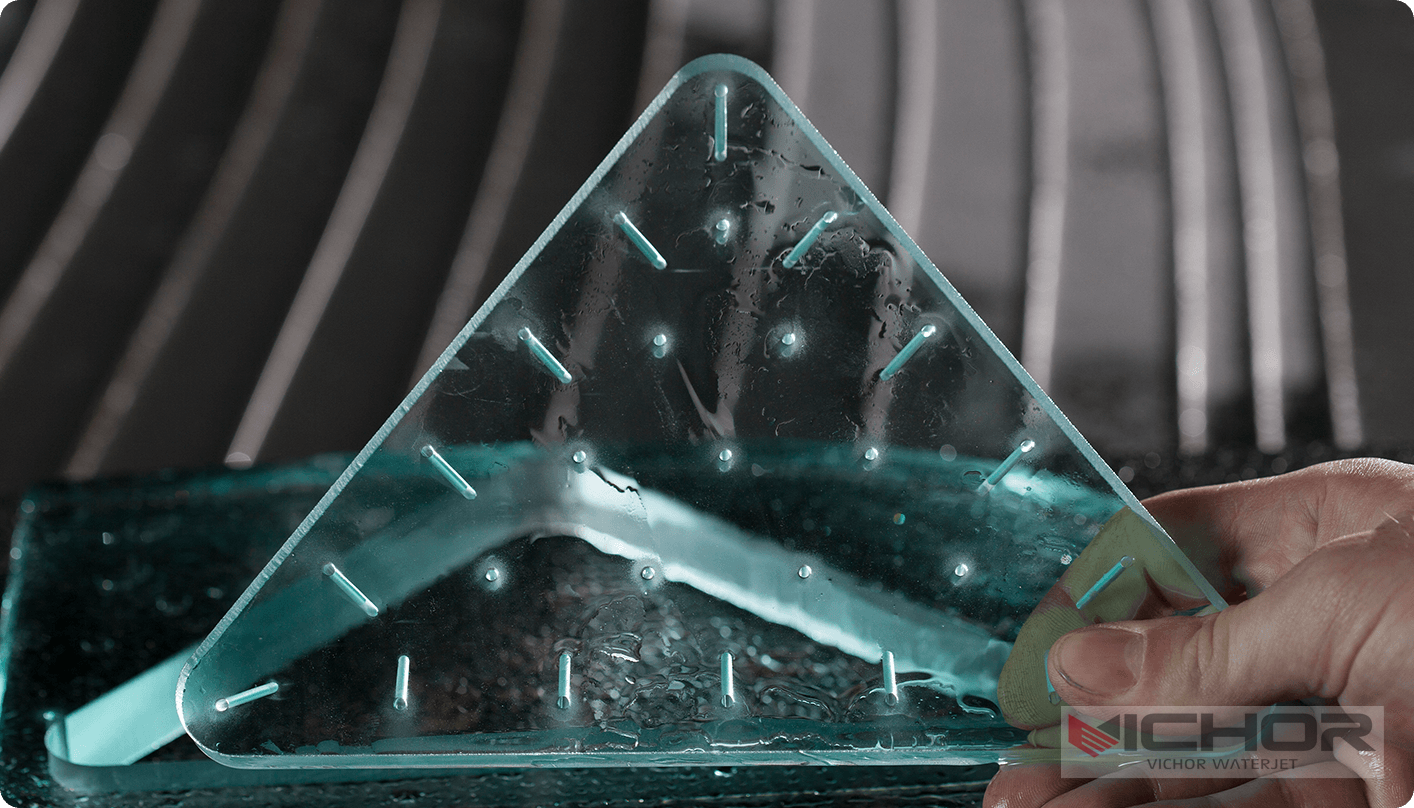
Metals like stainless steel, aluminum, and brass are top choices. They produce clean, burr-minimal edges. Stone and glass allow for dramatic artistic and architectural statements. The water jet can carve delicate filigree into marble or create precise stained-glass components without risk of cracking from heat.
Plastics, composites, and foams are ideal for prototypes, signage, and functional parts. The key is to understand the material’s thickness and how it interacts with the abrasive stream to achieve the desired edge quality for your custom water jet design.
From Concept to Reality: The Production Workflow
How does a digital file become a physical object? The workflow is straightforward but requires attention to detail.
First, the final design is saved in a compatible format, usually DXF or DWG. This file is imported into the water jet machine’s controller software. The operator then sets the cutting parameters: pressure, cutting speed, and abrasive feed rate, all determined by the material type and thickness.
The material is securely positioned on the cutting table. After a final check, the job starts. The machine executes the water jet pattern with unwavering precision. Post-cutting, parts may require light deburring or cleaning before being ready for use or further assembly.
Cost Factors for Custom Water Jet Design Projects
The price of a water jet design project isn’t just about the cost of the material. Several factors influence the final quote.
Design Complexity is a major driver. A simple shape with long, straight cuts is far less expensive than an ornate, dense pattern with thousands of tiny details and sharp corners, which takes more time to cut.
Material Type and Thickness directly affect cutting speed and abrasive consumption. Cutting 1-inch thick titanium costs more per hour than cutting 1/4-inch acrylic.
Quantity and Nesting Efficiency also play a role. Producing a single piece has a higher cost per unit than a batch, where parts can be nested tightly to use material efficiently. Working with a fabricator who uses advanced equipment from brands like VICHOR can lead to better nesting and faster cycle times, potentially lowering costs.
Why Machine Precision Matters for Complex Designs
Not all water jets are created equal, especially when dealing with fine water jet designs. The machine’s accuracy and repeatability are non-negotiable.
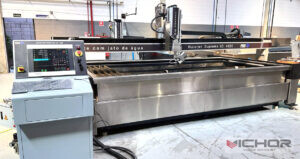
A machine with a wobbly gantry or low-quality drive system will produce jagged lines and rounded corners on intricate patterns. High-end manufacturers like VICHOR build their machines with industrial-grade linear guides and rigid frames to ensure the cutting head moves exactly as commanded, time after time.
This mechanical precision, combined with stable high-pressure delivery, is what allows for the execution of breathtakingly detailed and consistent water jet cutting designs on a production scale.
Partnering with the Right Fabricator or Choosing Your Own Machine
For many, outsourcing is the first step. When choosing a fabricator for your water jet designs, look at their portfolio. Do they have examples of work with the complexity and materials you need? Ask about their equipment; shops running professional-grade machines like those from VICHOR are often better equipped for challenging, high-tolerance work.
If your volume justifies it, bringing the technology in-house is transformative. Investing in a reliable water jet system gives you complete control over timelines and opens up endless prototyping possibilities. It turns design ideas into tangible parts overnight.
Frequently Asked Questions (FAQ)
Q1: What file format is best for sending a design to a water jet shop?
A1: The most universally accepted and reliable format is DXF (Drawing Exchange Format). It is a vector format that cleanly translates lines and curves into cutting paths. Always ensure your design is in a 1:1 scale and that all lines are connected.
Q2: Is there a minimum size for details in a water jet pattern?
A2: Yes, there is a practical limit. The cutting stream, or “kerf,” is typically about 0.03 to 0.04 inches (0.76 to 1.0 mm) wide. Fine details like the inside corners of very small letters or the gaps between tightly spaced lines must be designed wider than this kerf, or they will be cut away.
Q3: Can water jets cut multi-layered or stacked materials for a single design?
A3: Yes, this is a powerful technique. You can stack thin sheets of different materials (like colored metals or plastics) and cut them simultaneously. When separated, you get multiple, identical layered parts—a fantastic method for creating assembly-ready, multi-material water jet art designs.
Q4: How does the edge quality from a water jet compare to laser cutting?
A4: A water jet edge is matte and slightly textured, akin to sandblasted glass. There is no discoloration or hardening. A laser-cut edge on metal will have a heat-affected zone, often with discoloration and a slightly hardened layer. For many functional and artistic applications, the cold, unaltered water jet edge is preferable.
Q5: Do I need special design software to create files for water jetting?
A5: Not necessarily. Many standard 2D CAD or vector illustration programs (like AutoCAD, CorelDRAW, or Adobe Illustrator) are perfectly suitable. The critical factor is your ability to create precise, clean vector outlines. The fabricator’s machine software will handle the translation from drawing to cutting toolpath.