7 Reasons Why Stone Waterjet Cutting is Revolutionizing Design and Fabrication
Imagine transforming a solid slab of granite into an intricate floral pattern, or creating a perfectly interlocking marble mosaic with seams thinner than a coin. This isn’t the work of a master sculptor with a chisel. It’s the precise, powerful result of stone waterjet cutting. This technology has moved far beyond simple slab sizing. It’s now the go-to method for fabricators, architects, and artists who demand complexity, precision, and efficiency in stonework. By combining ultra-high-pressure water with abrasive garnet, a stone waterjet system can cut, carve, and shape the hardest natural materials with a level of detail that traditional tools can’t match. Let’s look at what makes this process so transformative for anyone working with stone.
How Waterjet Technology Masters Stone
Stone is hard, brittle, and often unpredictable. Diamond saws create a lot of dust and are limited in the shapes they can cut. A stone waterjet system takes a different approach.
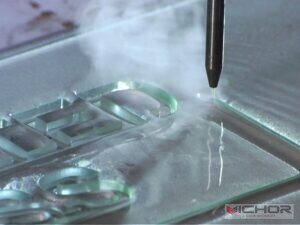
It uses a pump to pressurize water to 60,000 PSI or higher. This stream is focused through a tiny jewel orifice and mixed with granules of hard garnet abrasive.
The resulting stream acts like a super-focused, linear sandblaster. It erodes a microscopic path through the stone without applying lateral force or heat.
Because there’s no physical blade contact, there’s no risk of cracking or chipping the material from vibration or pressure. The stone waterjet process is a cold cut, which is critical for preserving the integrity of sensitive stones.
The cutting head is guided by a computer (CNC), following a digital design with absolute accuracy. This allows for the execution of incredibly complex patterns that would be impossible by hand.
Unlocking Design Freedom and Intricate Detail
This is the most significant advantage. Before stone waterjet cutting, intricate designs in stone required laborious hand carving or were simply not feasible.
Now, any vector-based design can be translated directly into stone. This includes complex logos, detailed filigree, custom fonts, and geometric patterns with sharp, clean corners.
Architects can specify elaborate stone screens, decorative wall panels, and intricate floor inlays with the confidence that they can be produced. The stone waterjet is the tool that turns visionary architectural drawings into buildable reality.
For memorials and signage, it allows for photorealistic portraits and delicate lettering in granite. The level of detail achievable has redefined what is possible in stone craftsmanship.
The design flexibility offered by a stone waterjet system makes each project unique, moving stone from a generic building material to a medium for personalized art.
Material Versatility: From Granite to Glass
The term “stone” here is broad. A robust stone waterjet cutter handles the full spectrum of hard, brittle materials used in design and construction.
This includes all natural stones: granite, marble, slate, limestone, travertine, and onyx. It also encompasses engineered quartz (like Caesarstone), terrazzo, and porcelain slabs.
The same machine can cut glass tiles, ceramic, and even hardened ceramic floor tiles with ease. For a fabrication shop, this means one machine can process almost every slab material a client might request.
This versatility is a huge economic advantage. It streamlines workflow, reduces the need for multiple specialized saws, and allows a business to accept a wider variety of projects.
A shop with a stone waterjet isn’t just a countertop fabricator; it becomes a comprehensive solution provider for high-end architectural millwork.
Precision and Waste Reduction: A Leaner Process
Precision translates directly to profit in stone fabrication. The kerf (width of the cut) of a stone waterjet is very narrow, typically around 1mm.
This is significantly thinner than a diamond blade’s kerf. When nesting multiple parts on an expensive slab, the material saved by these thinner cuts can be substantial.
The accuracy of the CNC system ensures parts are cut to exact dimensions. This minimizes fitting issues during installation and reduces the time spent on subsequent edge polishing or correction.
The ability to nest small, intricate pieces within the cutouts from larger parts maximizes slab yield. This lean approach to material usage makes a stone waterjet system a key tool for sustainable and profitable fabrication.
VICHOR: Engineered for the Demands of Stone
Cutting stone day in and day out puts unique demands on a waterjet system. It requires a machine with exceptional rigidity to handle thick, dense materials and a pump that delivers consistent pressure.
VICHOR has developed stone waterjet systems with these specific needs in mind. Their machines feature heavily reinforced gantries and tables to dampen vibration, which is essential for achieving a smooth, chip-free edge in granite or marble.
They offer pumps with the high pressure and flow rates needed to cut 3cm (or thicker) stone at productive speeds. Reliability is paramount, as downtime in a busy fabrication shop is lost revenue.
The software that drives a VICHOR stone waterjet includes features tailored for stone shops, such as efficient tiling of large patterns and tools for managing complex, artistic vector files.
For a stone fabricator looking to move into high-value, detailed work, investing in a platform from an experienced brand like VICHOR provides the necessary performance and support.
Applications Shaping Modern Spaces
Where is this technology being used? The applications are vast and growing.
In residential and commercial interiors, it creates stunning kitchen countertops with intricate drainboard patterns, detailed vanity tops, and unique backsplashes.
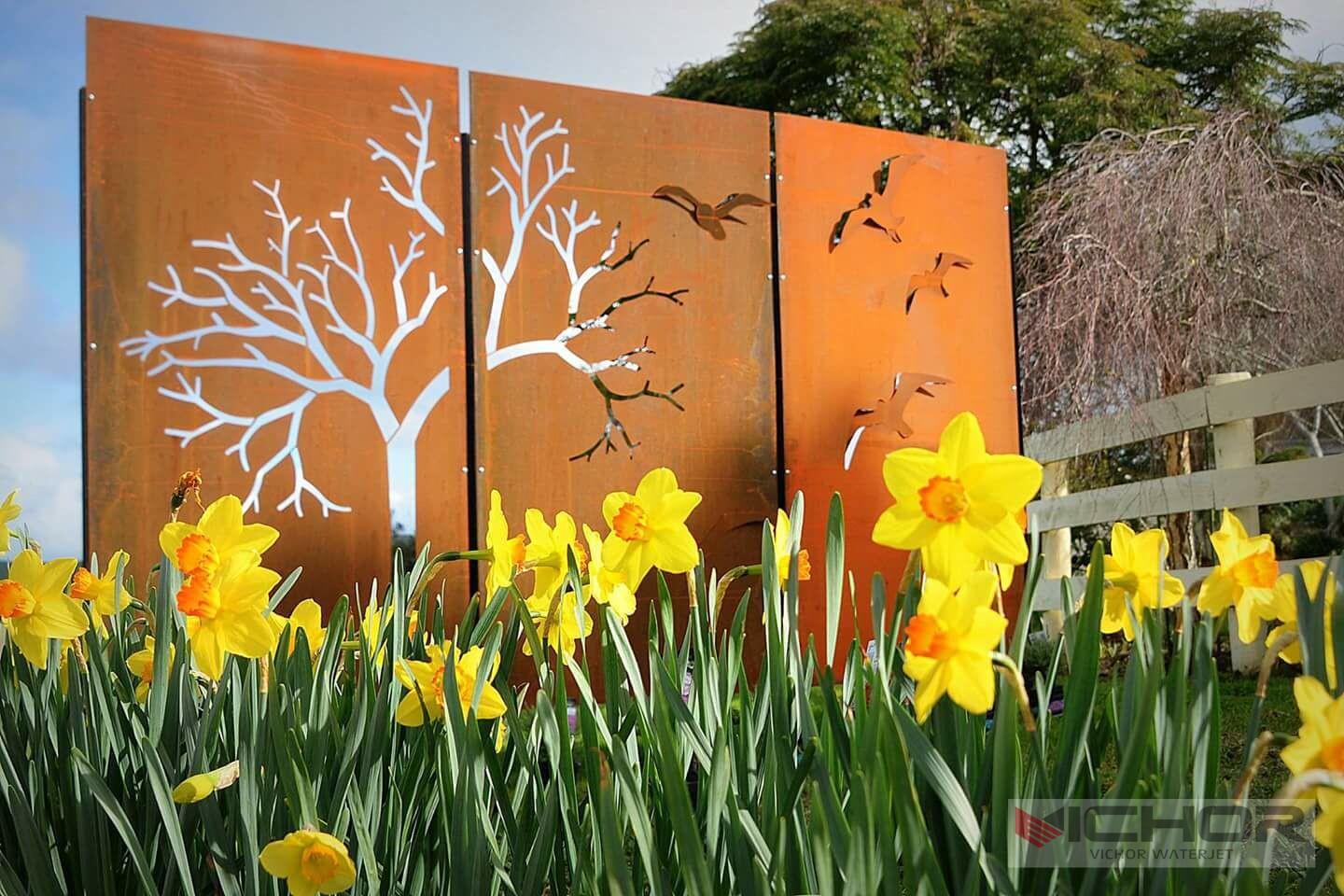
Architecturally, it produces decorative stone facades, ornate balcony screens (jalis), and precise flooring inlays in lobbies and hotels. It is also used for custom fire surrounds and furniture.
In public spaces and memorials, the stone waterjet is indispensable for detailed monuments, park signage, and commemorative plaques with intricate imagery.
The art world uses it to create sculptures and wall art from stone, combining traditional material with digital fabrication techniques.
Integrating Waterjet into a Traditional Stone Shop
Adding a stone waterjet system is a strategic decision. It often works in tandem with traditional bridge saws.
A common workflow is to use a bridge saw for the initial slab sizing and straight cuts, then move the pieces to the stone waterjet for the detailed, interior cuts, cutouts, and decorative work.
This hybrid approach maximizes efficiency. The bridge saw handles the heavy, simple work quickly, while the stone waterjet adds the high-value detailing that commands a premium.
Training staff to create and manage digital designs is a key step. The return, however, is the ability to offer services that competitors without a stone waterjet cannot, creating a strong market differentiation.
The stone waterjet has fundamentally changed the landscape of stone fabrication and design. It is no longer just a cutting tool; it is a digital gateway that connects creative vision with the enduring beauty of stone. By enabling unparalleled detail, reducing waste, and handling a vast array of materials, it empowers fabricators to push boundaries and deliver exceptional value. For any serious stone business aiming to lead in quality and innovation, integrating this technology, supported by reliable equipment from manufacturers like VICHOR, is no longer a luxury—it’s a necessity for the future.
Frequently Asked Questions (FAQs)
Q1: Can a stone waterjet cut thick slabs like 3cm granite?
A1: Yes, absolutely. A properly configured stone waterjet with sufficient pump power (typically 60 HP or more) can cut 3cm (about 1 1/4 inch) granite and marble efficiently. It can even handle multiple slabs stacked for production cutting of thicker pieces.
Q2: Is the edge quality from a waterjet smooth, or does it require polishing?
A2: The cut edge has a consistent, matte “honed” finish with a slight texture from the abrasive. For most countertop edges, it will require subsequent polishing to achieve a glossy or refined profile. The waterjet provides the precise shape; polishing completes the finish.
Q3: How does operating cost compare to a traditional diamond bridge saw?
A3: The per-hour operating cost is higher due to water, electricity, and abrasive garnet consumption. However, this is offset by massive reductions in material waste, the ability to charge premium prices for intricate work, and the elimination of costs associated with specialized diamond blades for curves. The value is in capability, not just cost-per-inch.
Q4: Are there design limitations? What about very small, sharp corners?
A4: The stream is round, so interior sharp corners will have a small radius (the size of the kerf). For a true sharp interior corner, a small “drill hole” can be placed at the corner point in the design. Extremely fine details smaller than the kerf width (approx. 1mm) are not feasible.
Q5: Can I use a stone waterjet for tumbled stone or very uneven materials?
A5: This is challenging. The cutting head must maintain a precise distance from the material surface. Tumbled stone, split-face slate, or heavily textured surfaces are problematic because the head can crash into high points or lose cutting efficiency in low points. It is best suited for slabs with a relatively flat, uniform surface.