
7 Reasons Why a Water CNC Cutting Machine Boosts Your Production Efficiency
In the world of precision manufacturing, the combination of computer numerical control and waterjet technology has created a powerful tool: the water cnc cutting machine. These systems use high‑pressure water (with or without abrasive) guided by CNC to cut through metals, stone, glass, and composites with extreme accuracy. Unlike laser or plasma, they produce no heat‑affected zones, making them ideal for materials sensitive to thermal stress. In this article, we explore seven key reasons why investing in a water cnc cutting machine can transform your shop floor.
From small job shops to large industrial manufacturers, the versatility of a waterjet CNC cutter is unmatched. The ability to switch from cutting titanium to granite without changing tools saves hours of setup time. VICHOR has been at the forefront of this technology, offering robust machines that deliver consistent results. Below we break down the main benefits and help you understand why a water cnc cutting machine deserves a place in your facility.
What Is a Water CNC Cutting Machine?
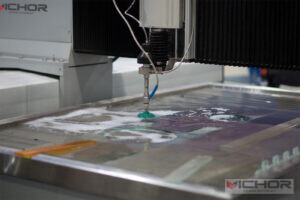
A water cnc cutting machine combines an ultra‑high pressure waterjet pump with a computer‑controlled motion system. The CNC (Computer Numerical Control) guides the cutting head along precise paths defined by CAD/CAM software. Depending on the material, the system can use pure water (for soft materials) or add abrasive garnet (for hard materials like steel or stone). The result is a cold cutting process that leaves edges clean and free of thermal distortion.
- Pure waterjet: cuts foam, rubber, food, plastics, thin wood.
- Abrasive waterjet: cuts metals, stone, composites, thick materials.
- CNC control ensures repeatability down to ±0.1 mm.
How Does a Water CNC Cutting Machine Work?
The core of the system is an intensifier pump that pressurizes water to 60,000 psi or more. This water is forced through a small diamond orifice, creating a coherent jet. In abrasive mode, garnet is introduced into the mixing chamber, turning the jet into a powerful erosion tool. The CNC moves the cutting head in X, Y, and sometimes Z or tilt axes, following the programmed contour. The workpiece remains stationary on a support grid over a water tank that captures the jet’s energy.
- No tool changes – the same stream cuts any material.
- Cold process – no heat damage or hardening.
- Narrow kerf – minimal material waste.
7 Key Advantages of a Water CNC Cutting Machine
1. Versatility Across Materials
A single water cnc cutting machine can cut metals, stone, glass, ceramics, composites, and even food. This eliminates the need for multiple dedicated machines, saving floor space and capital.
2. No Heat‑Affected Zone
Because the process is cold, there is no thermal distortion or micro‑cracking. This is critical for materials like titanium, hardened steel, and stone that can warp or fracture under heat.
3. High Precision and Edge Quality
CNC control ensures tight tolerances, while the waterjet produces a smooth, burr‑free edge. Often parts require no secondary finishing, reducing production time.
4. Environmentally Friendly
Waterjet uses only water and natural garnet abrasive – both inert and recyclable. There are no fumes, no hazardous waste, and minimal dust.
5. Thick Material Capability
Waterjets can cut materials up to 200 mm thick, depending on the pump power. This makes them suitable for heavy industries like shipbuilding and construction.
6. Easy Setup and Quick Changeover
Switching from one material to another requires only a software change and possibly adjusting abrasive flow. No tool changes mean less downtime between jobs.
7. Low Tooling Costs
There are no blades to sharpen or bits to replace. The only consumables are the nozzle, mixing tube, and abrasive – all relatively inexpensive compared to traditional tooling.
Common Applications for Water CNC Cutting Machines
The flexibility of a water cnc cutting machine makes it useful across many industries:
- Aerospace: Titanium brackets, composite panels, engine components.
- Automotive: Gaskets, interior trim, prototype parts.
- Stone fabrication: Countertops, floor medallions, monuments.
- Metal fabrication: Stainless steel sheets, aluminum parts, thick plate beveling.
- Glass and ceramics: Decorative windows, tile inlays, technical ceramics.
- Food industry: Portioning of meat, cakes, frozen products.
How to Choose the Right Water CNC Cutting Machine for Your Shop
Selecting the best machine involves several considerations. Here are the key factors:
Table Size and Cutting Envelope
Measure the largest part you typically produce. Tables range from 2×2 m to 3×6 m or larger. Also consider the Z‑axis clearance for thick materials.
Pump Pressure and Flow Rate
60,000 psi is standard for most applications. Higher pressures (90,000 psi) increase cutting speed but may require more maintenance. Flow rate determines how many cutting heads can run simultaneously.
Control Software and Ease of Use
Look for intuitive CNC interfaces with nesting capabilities to maximize material utilization. VICHOR machines feature user‑friendly software with CAD/CAM integration.
Build Quality and Support
Heavy‑duty construction ensures vibration‑free cutting. Choose a manufacturer with a strong service network. VICHOR provides global support, training, and spare parts.
Why VICHOR Water CNC Cutting Machines Stand Out
VICHOR has engineered its waterjet systems for durability and precision. Our machines feature:
- Heavy‑duty steel frames with precision linear guides.
- High‑efficiency intensifier pumps with low energy consumption.
- Advanced CNC controls with remote diagnostics.
- Modular design for easy upgrades and maintenance.
Whether you need a compact table for a small workshop or a large‑format system for high‑volume production, VICHOR offers a configuration that fits. Every water cnc cutting machine is tested with real materials before shipment, ensuring you get reliable performance from day one.
Maintenance Tips for Long‑Term Reliability
Proper care keeps your waterjet running smoothly:
- Inspect the mixing tube and nozzle daily – replace when worn.
- Keep abrasive dry and free of contamination.
- Flush the system with clean water after each shift.
- Check pump oil and filters per the maintenance schedule.
- Clean the tank regularly to remove settled grit.
VICHOR provides detailed manuals and remote support to help you maintain peak performance.
Conclusion: Invest in a Water CNC Cutting Machine from VICHOR
From aerospace to stone fabrication, the water cnc cutting machine has proven its value as a versatile, precise, and cost‑effective cutting solution. Its ability to handle any material without heat damage makes it indispensable for modern manufacturing. VICHOR’s commitment to quality and customer support ensures that your investment pays off for years. Contact our team today to discuss your requirements and find the perfect water cnc cutting machine for your operation.
Frequently Asked Questions (FAQ)
Q1: What materials can a water cnc cutting machine cut?
A1: It can cut virtually any material – metals (steel, aluminum, titanium), stone (granite, marble), glass, ceramics, composites, rubber, foam, and even food. The only exception is tempered glass, which may shatter.
Q2: How thick can a waterjet cut?
A2: With a 60,000 psi pump and abrasive, typical maximum thickness is 150 mm for hard materials like steel, and up to 200 mm for softer materials like aluminum. Higher pressure systems can cut thicker sections.
Q3: What is the operating cost per hour?
A3: Operating cost ranges from $15 to $30 per hour, mainly driven by abrasive consumption (approx. 0.5 kg per minute) and electricity. Water and nozzle wear are minor costs.
Q4: Is a water cnc cutting machine difficult to operate?
A4: Modern CNC controls make operation straightforward. Basic CAD skills are helpful, but VICHOR provides training. Most operators become proficient within a week.
Q5: What safety precautions are needed?
A5: Operators should wear hearing protection (the pump can be loud) and safety glasses. High‑pressure water can cause injury, so all connections must be secure. VICHOR machines include safety interlocks.
Q6: Can I cut reflective materials like copper or aluminum?
A6: Yes, waterjet cuts reflective materials without issues – unlike lasers which can be reflected back and damage optics.
Q7: How often must I replace consumables?
A7: The mixing tube (focusing nozzle) typically lasts 60–120 hours of cutting, while the diamond orifice may last 200–400 hours. Regular inspection ensures consistent quality.
For more information about VICHOR waterjet cutting machines and to request a quote, please visit our website or contact our sales engineers. We are here to help you integrate a water cnc cutting machine into your production line.