
7 Reasons Why a Flow Waterjet Machine Improves Cutting Precision and Profitability
In the world of industrial cutting, the flow waterjet machine stands out as a versatile and precise tool. It uses a high‑pressure stream of water, often mixed with abrasive, to cut through virtually any material without generating heat. Manufacturers choose the flow waterjet machine for its ability to produce complex shapes with excellent edge quality. This article explores seven key benefits that make this technology indispensable for modern fabrication.
How a Flow Waterjet Machine Works
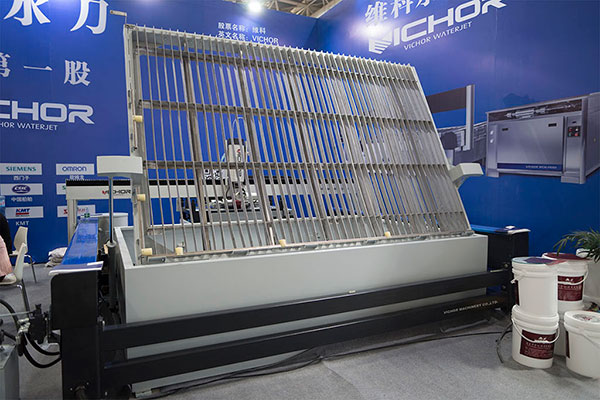
A flow waterjet machine consists of a high‑pressure pump, a cutting head, and a CNC motion system. Water is pressurised up to 90,000 psi and forced through a tiny orifice. For hard materials, abrasive garnet is introduced into the stream, turning it into a powerful cutting tool.
-
- The waterjet stream erodes material by high‑velocity impact.
>li>The process is cold, so no heat‑affected zone (HAZ) is created.
- CNC control ensures precise paths and repeatable accuracy.
This fundamental operation allows the flow waterjet machine to cut metals, composites, stone, glass, and more with minimal setup changes.
Key Advantages of Using a Flow Waterjet Machine
Why do fabricators prefer a flow waterjet machine over lasers, plasma, or mechanical saws? The advantages are numerous and impact both quality and bottom line.
1. Cold Cutting Process
Because the flow waterjet machine uses no heat, materials retain their original properties. There is no thermal distortion, hardening, or micro‑cracking. This is critical for aerospace, medical, and automotive components.
2. Material Versatility
A single flow waterjet machine can cut almost any material:
- Metals: steel, aluminium, titanium, Inconel, brass.
- Composites: carbon fibre, fibreglass, Kevlar.
- Non‑metals: glass, stone, ceramics, rubber, foam.
This versatility reduces the need for multiple dedicated machines.
3. Exceptional Edge Quality
Parts cut on a flow waterjet machine often require no secondary finishing. The edges are smooth, burr‑free, and ready for welding or assembly. This saves labour and time.
4. No Tooling Changes
Unlike stamping or punching, the flow waterjet machine does not require different tools for different shapes. One nozzle cuts intricate patterns and straight lines alike, reducing downtime.
5. Environmentally Friendly
The process uses water and garnet, both natural and recyclable. No hazardous fumes or gases are produced. Waste is easily contained and disposed of.
6. High Precision and Repeatability
Modern CNC controls on a flow waterjet machine achieve tolerances of ±0.1 mm or better. Complex 3D shapes are possible with 5‑axis cutting heads.
7. Scalability from Prototype to Production
Whether cutting one prototype or thousands of parts, the flow waterjet machine handles both with ease. No hard tooling means changes are simple and inexpensive.
Industries That Rely on Flow Waterjet Machines
The flexibility of the flow waterjet machine makes it a staple in many sectors.
Aerospace
Titanium brackets, engine components, and composite panels are cut without heat damage, meeting strict industry standards.
Automotive
From exhaust gaskets to interior trim, the flow waterjet machine processes metals and plastics efficiently.
Medical
Surgical instruments and implants made of stainless steel or titanium are cut cleanly, ensuring biocompatibility.
Construction and Architecture
Stone tiles, glass panels, and decorative metal screens are produced with intricate designs.
Food Processing
Stainless steel parts for food machinery are cut without contamination, as no oils or coolants are used.
Selecting the Right Flow Waterjet Machine for Your Shop
Choosing a flow waterjet machine involves several considerations. Partnering with a reputable supplier like VICHOR ensures you get a system tailored to your needs.
Pump Size and Pressure
Higher pressure (60,000–90,000 psi) increases cutting speed. Match pump capacity to your typical material thickness.
Work Envelope
Consider the maximum part size. Gantry sizes range from 2×2 metres to large formats for sheet metal or stone.
Abrasive Delivery System
Automated abrasive removal and recycling can reduce operating costs. Look for systems with efficient hoppers and metering.
CNC and Software
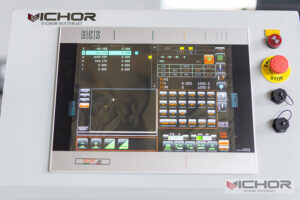
User‑friendly controls with CAD/CAM integration simplify programming. Some flow waterjet machine controllers offer nesting to minimise waste.
VICHOR provides comprehensive support, from installation to training and service.
Maintenance Tips to Extend Flow Waterjet Machine Life
Proper care keeps your flow waterjet machine running at peak performance.
- Inspect and replace nozzles and mixing tubes regularly – they wear over time.
- Check seals in the high‑pressure pump to prevent leaks.
- Clean water filters daily to ensure consistent flow.
- Monitor abrasive quality – contaminated garnet can clog the system.
- Keep the tank and catcher free of debris to maintain accuracy.
Following these steps reduces downtime and extends component life.
Comparing Flow Waterjet Machines to Other Cutting Technologies
How does a flow waterjet machine stack up against lasers, plasma, and EDM?
- Laser: Faster on thin metals but creates heat and cannot cut thick or reflective materials well.
- Plasma: High speed on thick steel but produces a large HAZ and rough edges.
- EDM: Excellent precision but slow and limited to conductive materials.
- Flow waterjet: Cuts any material, no heat, good speed on medium thickness, and excellent edge quality.
For shops that handle diverse materials, the flow waterjet machine offers the best overall flexibility.
Future Trends in Flow Waterjet Technology
Advancements continue to improve the capability of the flow waterjet machine.
- Higher pressures: Pumps now reaching 100,000 psi for faster cuts.
- Automation: Robotic loading and unloading reduce labour.
- Real‑time monitoring: Sensors adjust parameters to maintain quality.
- Hybrid machines: Combining waterjet with milling or laser for multi‑process cells.
Suppliers like VICHOR are at the forefront, integrating these innovations into their product lines.
The flow waterjet machine has proven itself as a reliable, precise, and versatile cutting solution across industries. Its cold‑cutting nature, material flexibility, and high edge quality make it a valuable asset for any fabrication shop. By investing in a quality system from a trusted partner like VICHOR, you ensure long‑term productivity and profitability.
Frequently Asked Questions
Q1: What materials can a flow waterjet machine cut?
A1: A flow waterjet machine cuts virtually any solid material: metals (steel, aluminium, titanium, copper), composites, glass, stone, ceramics, rubber, and plastics. The only exception is tempered glass, which may shatter.
Q2: How thick can a flow waterjet machine cut?
A2: With abrasive, it can cut steel up to 150 mm (6 inches) thick. Thicker sections are possible with slower speeds. For softer materials like foam, thickness is practically unlimited.
Q3: Is a flow waterjet machine expensive to operate?
A3: Operating costs include electricity, water, abrasive garnet, and wear parts. However, the lack of tooling changes and secondary finishing often offsets these costs. Many shops find the total cost competitive with other methods.
Q4: What maintenance does a flow waterjet machine require?
A4: Daily tasks include checking nozzle wear, cleaning filters, and ensuring abrasive flow. Weekly maintenance involves inspecting pump seals and mixing tubes. Suppliers like VICHOR offer service plans to minimise downtime.
Q5: Can a flow waterjet machine cut without abrasive?
A5: Yes, for soft materials like rubber, foam, or thin plastics, pure water cutting (no abrasive) is used. For metals and hard materials, abrasive is necessary.
Q6: What is the typical accuracy of a flow waterjet machine?
A6: Modern CNC systems achieve tolerances of ±0.1 mm. With careful calibration and temperature control, even tighter tolerances are possible.