
7 Reasons a Compact Water Jet Cutter Is the Best Investment for Small Workshops in 2026
Space is often the most expensive asset in a workshop. For small business owners and prototyping labs, fitting industrial-grade machinery into a limited floor plan is a constant struggle. Traditional cutting solutions like large gantry systems offer power but demand too much room. This is where the compact water jet cutter changes the equation.
These machines provide the same cold-cutting precision as their larger counterparts but fit comfortably in a garage or small industrial unit. They allow operators to cut intricate designs into metal, glass, and stone without requiring a massive facility update. Brands like VICHOR are leading this shift by offering robust machines designed specifically for tighter footprints.
Investing in this technology opens new revenue streams. You no longer need to outsource complex cutting jobs. You can handle them in-house, maintaining quality control and reducing lead times. Below, we examine why these machines are becoming the standard for modern, space-conscious manufacturing.
What Defines a Compact Water Jet Cutter?
A compact water jet cutter is defined primarily by its footprint and integration. Unlike sprawling industrial tables that might measure 10×20 feet, compact models often feature cutting areas ranging from 2×2 feet to 4×4 feet. They are designed as “monoblock” systems, meaning the pump, tank, and controller are often integrated into a single unit.
Despite their size, these machines do not compromise on pressure. Many operate at pressures between 30,000 to 60,000 PSI. This allows them to slice through thick steel or titanium just as effectively as a full-sized system. The primary difference lies in the maximum sheet size you can load, not the cutting capability.
This design philosophy appeals to specific sectors. R&D departments, universities, and custom fabrication shops prefer these units. They get the ability to produce high-tolerance parts without dedicating an entire warehouse wing to a single piece of equipment.
Key Advantages for Small Businesses
Small businesses face unique challenges regarding overhead costs and operational flexibility. A smaller waterjet system addresses these issues directly. The most obvious benefit is the reduction in required floor space, allowing for more machines or inventory in the same shop.
Here are several operational benefits:
- Lower Utility Costs: Smaller pumps often consume less electricity compared to massive industrial intensifiers.
- Ease of Installation: Many compact units are shipped fully assembled, requiring minimal setup time.
- Reduced Noise: Enclosed designs common in compact models significantly dampen the sound of cutting.
- Cleaner Operation: Enclosures also contain water spray and abrasive splash, keeping the shop floor dry.
Furthermore, the learning curve is often shorter. Modern controllers on machines from VICHOR are designed with user-friendly interfaces. This allows operators to go from design file to finished part quickly, maximizing daily output.
Precision Without the Heat
One of the main reasons engineers choose waterjet technology is the “cold cutting” process. Lasers and plasma cutters introduce heat, which can warp materials or harden edges. This creates a Heat Affected Zone (HAZ) that often requires secondary machining to fix.
A compact water jet cutter eliminates this issue. It erodes material using a high-velocity stream of water mixed with abrasive garnet. This ensures the structural integrity of the material remains unchanged. For aerospace or medical parts where material properties are critical, this is a non-negotiable requirement.
This precision allows for tight nesting of parts. Because there is no heat distortion, parts can be placed very close together on the raw material sheet. This reduces waste and saves money on expensive raw stock like copper or carbon fiber.
Versatility in Material Handling
Versatility is the hallmark of waterjet technology. A single machine can switch from cutting soft foam gaskets to 2-inch thick stainless steel in minutes. The only change required is usually the software settings and occasionally the nozzle setup.
Materials commonly processed include:
- Metals: Aluminum, Stainless Steel, Titanium, Brass, Copper.
- Composites: Carbon Fiber, Fiberglass.
- Natural Materials: Granite, Marble, Ceramic Tile, Glass.
- Soft Goods: Rubber, Foam, Plastic.
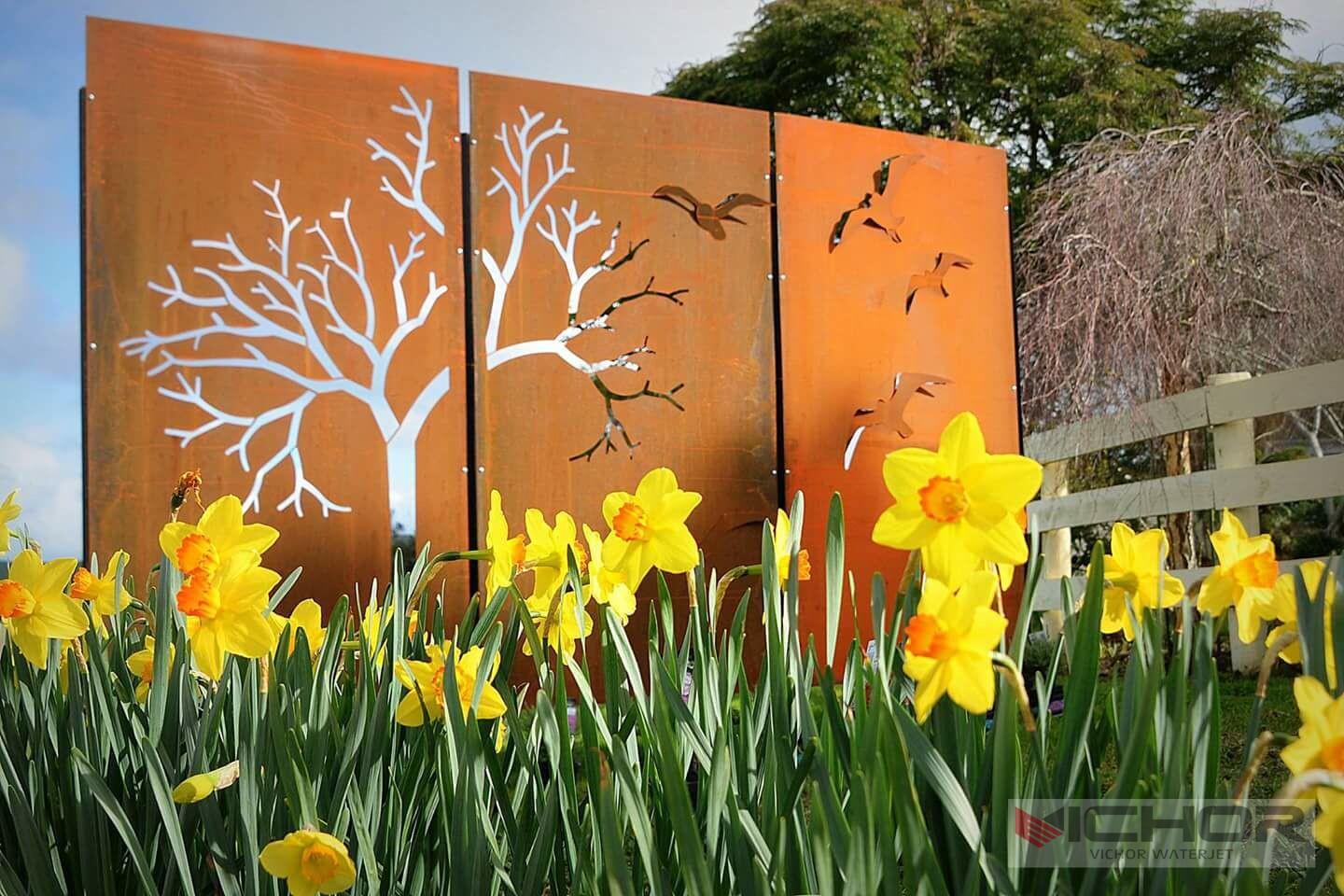
This flexibility allows a small job shop to say “yes” to a wider variety of client projects. You might cut a granite countertop in the morning and precision aluminum brackets in the afternoon. VICHOR machines are engineered to handle this constant switching without losing calibration.
The Role of VICHOR in Compact Technology
VICHOR has recognized the growing demand for accessible waterjet solutions. They focus on bridging the gap between hobbyist-grade toys and inaccessible industrial giants. Their machines are built with industrial components but sized for accessibility.
Durability is a key focus for VICHOR. Even in a smaller frame, rigidity is essential to maintain accuracy. If a machine frame vibrates during operation, the cut quality suffers. VICHOR utilizes heavy-duty frames that absorb vibration, ensuring smooth edge finishes.
Support is another critical factor. Operating a waterjet involves maintenance of high-pressure seals and nozzles. VICHOR provides the necessary support ecosystem to keep these waterjet cutting machines running efficiently. This reliability is vital for businesses that cannot afford downtime.
Cost Analysis and ROI
The initial purchase price of a compact water jet cutter is significantly lower than large-format systems. However, buyers must look beyond the sticker price to understand the Return on Investment (ROI). The ROI comes from three main sources: outsourcing savings, material savings, and new business capabilities.
Outsourcing cutting jobs is expensive and creates scheduling dependencies. By bringing the capability in-house, you control the timeline. Rush jobs become possible, allowing you to charge a premium for quick turnaround services.
Running costs include water, electricity, abrasive, and wear parts. Compact machines generally use direct drive pumps or smaller intensifiers, which can be more energy-efficient for intermittent use. Calculating the cost per hour helps in quoting jobs accurately to ensure profitability.
Software and Workflow Integration
The hardware is only half the battle; the software controls the efficiency. Modern compact cutters come equipped with CAD/CAM software that simplifies the pathing process. The software automatically calculates the best starting points and cutting speeds based on the material type and thickness.
Good software features include:
- Automatic Nesting: Optimizes part placement to minimize waste.
- Cost Estimation: Predicts the cost of a cut before the machine starts.
- Lead-in/Lead-out Management: Prevents marks on the finished edge of the part.
- Common Line Cutting: Cuts the shared edge of two parts once to save time.
VICHOR systems are compatible with standard design file formats like DXF and DWG. This means you can design in SolidWorks, AutoCAD, or Adobe Illustrator and import the files directly. This seamless workflow reduces the time between a client’s request and the start of production.
Maintenance of Your Compact Water Jet Cutter
Maintenance is a reality of high-pressure water cutting. The physics of pressurizing water to 50,000+ PSI wears down components over time. However, compact machines are often designed for easier access to service points compared to larger, more complex gantries.
Routine maintenance tasks include:
- Nozzle Replacement: The mixing tube wears out as abrasive flows through it.
- High-Pressure Seals: These need periodic replacement to prevent leaks.
- Slat Cleaning: The bed slats support the material and eventually get cut away or covered in waste.
- Water Filtration: Ensuring clean water enters the pump extends seal life.
Establishing a preventative maintenance schedule is crucial. VICHOR provides guidelines on when to inspect and replace specific parts. Keeping a stock of essential consumables like seals and mixing tubes prevents unexpected production halts.
Environmental Considerations
Waterjet cutting is inherently greener than many alternatives. It does not produce toxic fumes, smoke, or airborne dust that requires expensive ventilation systems. The process uses water and natural garnet abrasive, both of which can be disposed of safely.
Many compact systems feature closed-loop water filtration options. This allows the machine to recycle the water it uses, drastically reducing consumption. For workshops in areas with strict water usage regulations or high water costs, this is a significant advantage.
Waste disposal is straightforward. The spent abrasive and material particles settle in the tank. This sludge is generally non-hazardous (depending on the material cut) and can be disposed of in standard landfills. This simplifies environmental compliance for small businesses.
Comparing Compact Water Jets to Lasers and CNC Mills
When outfitting a shop, the choice often falls between a CNC mill, a laser cutter, or a waterjet. Each has its place, but the waterjet offers the widest material compatibility. Lasers struggle with reflective metals like copper and cannot cut thick stone or glass. CNC mills require complex fixturing and tool changes.
The compact water jet cutter simplifies the setup. You simply place the material on the slats, weigh it down, and cut. There are no complex clamps to program around, and no tool changes are needed for different geometries. This “load and go” capability is ideal for prototyping.
Furthermore, waterjets can cut much thicker materials than comparable fiber lasers. While a compact fiber laser might top out at 1/4 inch steel, a compact waterjet can handle 2 to 4 inches easily, albeit at a slower speed.
The manufacturing world is moving toward agility and precision. Large, inflexible production lines are being supplemented by versatile, small-footprint cells. The compact water jet cutter sits at the heart of this transition. It empowers small businesses to work with any material, producing aerospace-grade parts from a garage or small workshop.
Brands like VICHOR are making this technology more accessible than ever. By offering industrial power in a manageable size, they help creators bypass traditional manufacturing barriers. Whether you are cutting custom car parts, architectural stone elements, or precise machine components, these machines offer a competitive edge.
If you are looking to expand your workshop’s capabilities without expanding the building, a compact waterjet is a logical choice. It provides the versatility to say yes to more projects and the precision to deliver professional results every time.
Frequently Asked Questions
Q1: How much power does a typical compact water jet cutter require?
A1: Most compact systems run on standard 3-phase industrial power (220V or 480V). However, some smaller, entry-level units designed for lighter prototyping are being adapted for single-phase power, though they offer lower cutting speeds. Check the specific VICHOR model for exact electrical requirements.
Q2: Can a compact water jet cutter handle 3D cutting?
A2: Generally, compact models are 2D or 2.5D cutters, meaning they cut flat sheets. However, some advanced models offer 5-axis cutting heads that allow for beveled edges and 3D shapes. This feature usually increases the price and complexity of the machine.
Q3: What is the running cost per hour?
A3: Running costs vary based on electricity rates and abrasive costs in your region. On average, operating a compact unit can cost between $20 and $35 per hour. This includes abrasive, water, power, and wear parts. It is generally cheaper than outsourcing but requires active management.
Q4: How loud is the machine during operation?
A4: Cutting under water significantly reduces noise. While an open-air cut is loud (over 90 dB), many compact machines come with enclosures or allow submerged cutting, which brings noise levels down to a comfortable range (around 75-80 dB), suitable for smaller shops.
Q5: How often do I need to replace the abrasive nozzle?
A5: The mixing tube (nozzle) is a consumable part. Depending on the quality of the tube and the abrasive used, it typically lasts between 50 to 100 cutting hours. Using high-quality abrasive can extend the life of the nozzle and improve cut quality.