
7 Proven Advantages of Aluminum Water Jet Cutting Services for Industry
Aluminum is one of the most widely used metals in modern manufacturing due to its high strength-to-weight ratio and corrosion resistance. However, processing this material without compromising its structural integrity can be challenging. This is where aluminum water jet cutting services provide a critical solution for fabricators.
Using a high-pressure stream of water mixed with abrasive garnet, this technology erodes the metal rather than melting it. This distinction is vital for industries like aerospace and marine engineering, where material properties must remain unaltered.
Whether you are prototyping a single bracket or running a full production line, understanding this cold-cutting process is essential. Companies utilizing advanced machinery from VICHOR are setting new standards in precision and speed. This article explores the mechanics, benefits, and cost factors associated with waterjet technology.
1. The Mechanics of Cutting Aluminum with Water
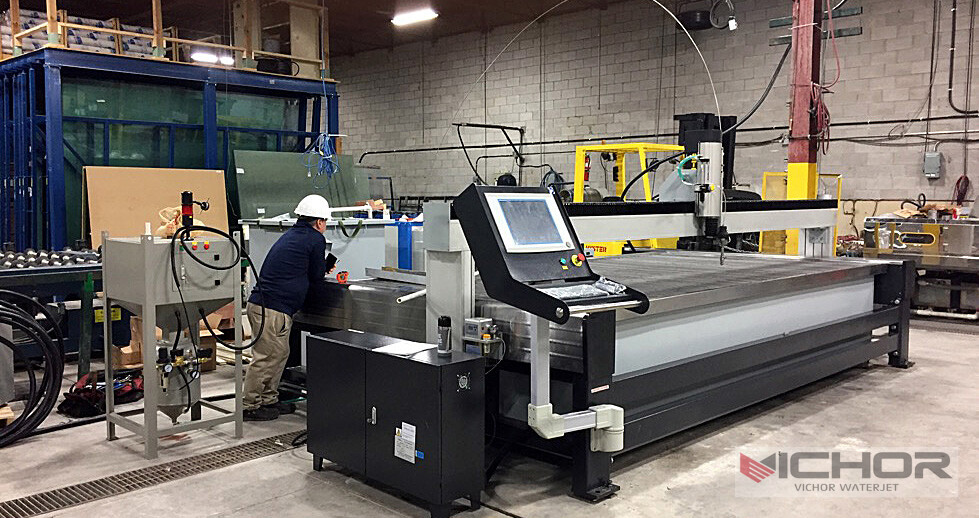
The process begins with a high-pressure pump generating water pressure between 60,000 and 90,000 PSI. This water is forced through a tiny diamond or sapphire orifice. As the water accelerates, it enters a mixing chamber.
Here, abrasive garnet sand is introduced into the stream. The mixture then travels through a focusing tube, exiting at speeds capable of cutting through solid metal. The abrasive acts as a supersonic liquid sandpaper.
Key components of the system include:
- The High-Pressure Pump: The heart of the system, often an intensifier or direct drive unit.
- The Cutting Head: Aligns the water jet and abrasive.
- CNC Control System: Translates digital designs into precise X-Y axis movements.
- Catch Tank: Dissipates the energy of the jet after it cuts through the material.
For aluminum, this mechanical erosion is highly effective. The metal is relatively soft compared to steel, allowing for faster cutting speeds. This efficiency makes aluminum water jet cutting services a competitive option for thick plates.
2. Eliminating Heat Affected Zones (HAZ)
One of the most significant drawbacks of thermal cutting methods like laser or plasma is the Heat Affected Zone (HAZ). When aluminum is cut with heat, the edges can melt, recrystallize, or become brittle. This alters the temper of the alloy.
Waterjet cutting is a cold process. The water instantly cools the cutting area, ensuring there is no thermal transfer to the surrounding material. The structural integrity of the part remains identical to the raw sheet.
Benefits of a cold cut include:
- No Hardened Edges: Parts can be tapped or machined immediately.
- Preserved Temper: Essential for aerospace grades like 6061-T6 or 7075.
- No Warping: Thin sheets remain flat as there is no heat-induced stress.
3. Thickness Capabilities and Versatility
Lasers are incredibly fast on thin sheet metal but struggle as thickness increases. A standard fiber laser may hit its limit around 1 inch of aluminum. Beyond that, the edge quality degrades significantly.
Waterjets do not have this limitation. They can effectively cut aluminum blocks up to 12 inches thick. While the speed decreases as thickness increases, the ability to profile cut thick plates eliminates the need for rough milling.
Common aluminum grades processed include:
- 5052: Known for excellent corrosion resistance and workability.
- 6061: The standard structural alloy, offering a balance of strength and weldability.
- 7075: High-strength aerospace alloy, often difficult to machine thermally.
- 2024: Used in aircraft structures, requiring strict fatigue resistance.
4. Comparing Waterjet to Laser and Plasma
When selecting a fabrication method, it is crucial to compare the “Big Three” technologies. Each has its specific niche, but aluminum water jet cutting services offer the most versatility for diverse projects.
Reflectivity Issues
Aluminum is highly reflective. CO2 lasers can struggle with this, as the beam can reflect off the surface and damage the machine’s optics. Fiber lasers handle this better but still face challenges with thicker reflective plates. Waterjets are unaffected by reflectivity.
Edge Quality
Plasma cutting is fast but leaves a rough edge with a significant bevel. The dross (slag) must be ground off mechanically. Waterjets leave a satin-smooth finish. With the right speed settings, secondary finishing is often unnecessary.
Precision and Kerf
The kerf (width of the cut) for a waterjet is approximately 0.030 to 0.040 inches. While lasers have a narrower kerf, waterjet precision is generally superior to plasma. High-end machines from manufacturers like VICHOR can maintain tolerances of +/- 0.005 inches.
5. Cost Factors in Aluminum Processing
Pricing for waterjet services is primarily driven by machine time. Understanding the variables that affect cutting speed can help engineers design more cost-effective parts.
Edge Quality Standards (Q1 to Q5)
The industry uses a scale to define edge quality.
- Q1 (Separation Cut): Fastest speed, rough edge, used for roughing out material.
- Q3 (Standard Cut): Good trade-off between speed and finish.
- Q5 (Precision Cut): Slowest speed, extremely smooth, virtually zero taper.
Choosing a Q3 finish instead of Q5 can reduce costs by 30-40% if the edge is not critical.
Geometry and Complexity
Sharp corners require the machine to decelerate to prevent “washout” on the bottom of the cut. Long straight lines are cheaper to cut than intricate curves or perforated patterns.
Material Handling
Aluminum is lighter than steel, making it easier to load and unload. However, large thick plates still require crane handling, which adds to the setup time charged by the service provider.
6. Applications in Key Industries
The adoption of aluminum water jet cutting services spans across multiple high-tech sectors. The ability to cut complex shapes without tooling costs makes it ideal for both prototyping and production.
Aerospace and Aviation
Aircraft components, such as wing ribs, bulkheads, and instrument panels, are frequently cut from 7075 aluminum. The cold process ensures no micro-cracks form, which is a critical safety requirement for flight hardware.
Marine and Shipbuilding
Aluminum 5083 and 5052 are staples in boat building due to salt-water resistance. Waterjets are used to cut hull sections, decking, and interior cabinetry frames. The precision ensures tight fit-up for welding.
Architectural Design
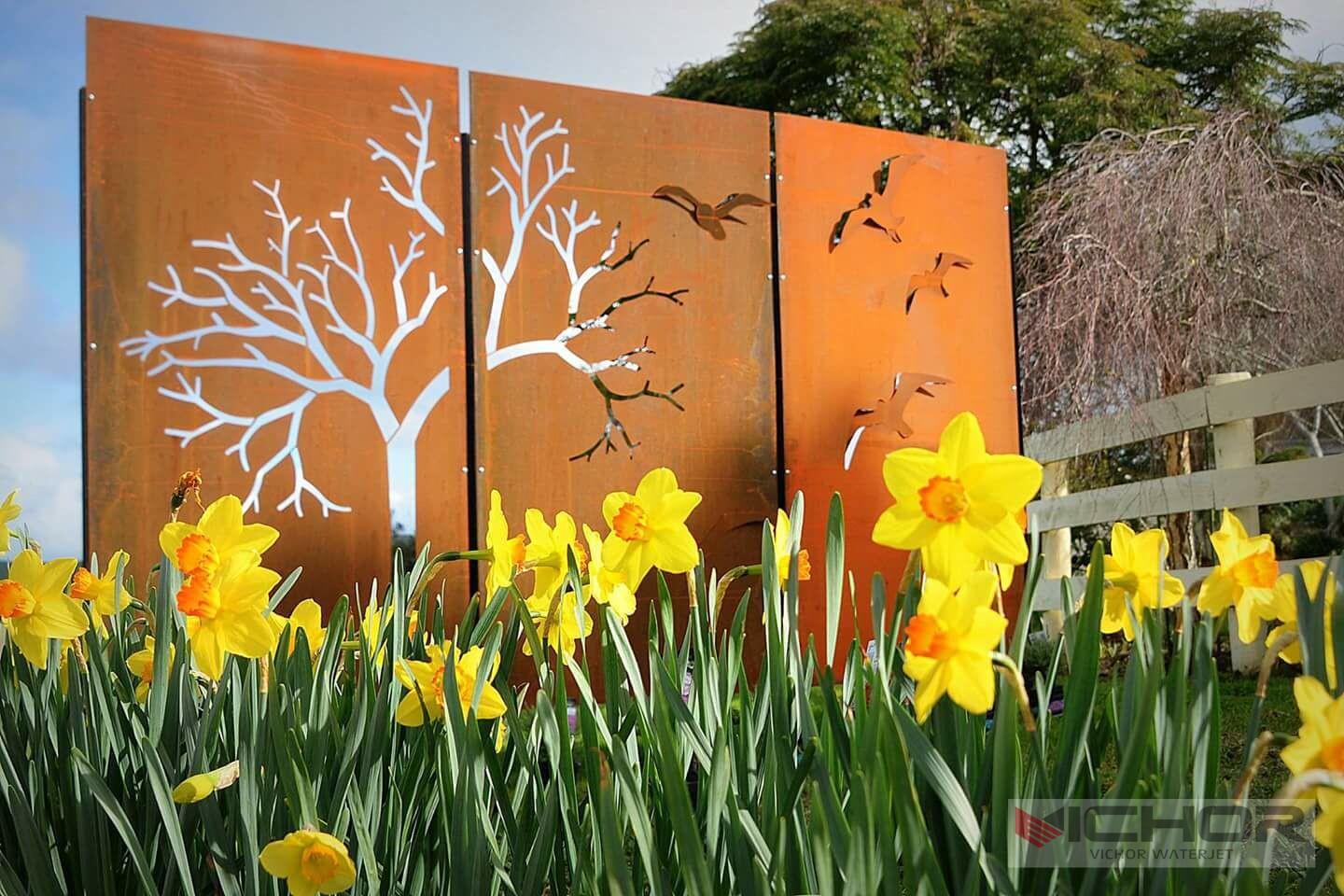
Designers use waterjets to create intricate perforated aluminum panels for building facades and signage. The narrow kerf allows for detailed artistic patterns that would be impossible with a router.
Robotics and Automation
Custom robotic arms, chassis plates, and mounting brackets are rapidly prototyped using waterjets. The lack of material stress ensures that precision mounting holes remain perfectly aligned.
7. The Role of VICHOR in Precision Manufacturing
The quality of the cut is directly dependent on the quality of the machine. VICHOR has established itself as a leader in providing robust waterjet solutions. Their equipment is designed to handle the rigors of cutting abrasive materials like aluminum.
Key features of their systems include:
- Advanced Software: Intelligent nesting to minimize scrap waste.
- Dynamic Cutting Heads: 5-axis capability to compensate for stream taper.
- Durability: Components built to withstand the abrasive environment of the tank.
For service bureaus, investing in reliable machinery ensures consistent uptime and the ability to meet tight client deadlines. VICHOR supports these goals with comprehensive technical backing.
8. Sustainability and Environmental Impact
Modern manufacturing demands eco-friendly processes. Waterjet cutting is inherently green. It produces no toxic fumes, gases, or vapors, unlike plasma cutting which generates substantial smoke.
The waste produced is a slurry of water, garnet, and aluminum particles. This is generally classified as non-hazardous waste. The water can be recycled through closed-loop filtration systems, drastically reducing consumption.
Furthermore, because waterjet cutting allows for tight nesting (placing parts close together), material utilization is maximized. Less scrap aluminum means less energy used in recycling and remelting processes.
9. How to optimize your Waterjet Order
To get the best value from aluminum water jet cutting services, preparation is key. Following best practices can reduce lead times and costs.
File Preparation
Submit clean DXF or DWG files. Ensure there are no double lines or open gaps in the geometry. Scale the drawing 1:1. Clearly label the material type and thickness in the file name.
Common Line Cutting
If edge quality on the separation line is not critical, ask for common line cutting. This technique cuts a single line to separate two parts, reducing the cutting distance by nearly 50% for shared edges.
Tolerancing
Be realistic with tolerances. Requesting +/- 0.001” on a waterjet is often unnecessary and expensive. Standard +/- 0.005” is sufficient for most bolted assemblies and welded structures.
Aluminum remains a cornerstone material for modern engineering, and waterjet technology is the premier method for processing it. By avoiding heat damage, handling immense thicknesses, and delivering superior edge quality, this process solves many fabrication headaches.
Whether utilizing services or integrating VICHOR machinery into your own shop, the benefits are clear. From the aerospace hanger to the architectural studio, aluminum water jet cutting services offer the versatility and precision required to succeed in today’s competitive market.
As designs become more complex and material costs rise, the efficiency of cold abrasive cutting will continue to make it the preferred choice for aluminum fabrication worldwide.
Frequently Asked Questions (FAQ)
Q1: What is the maximum thickness of aluminum that can be waterjet cut?
A1: While practical limits vary by machine, most abrasive waterjets can cut aluminum up to 12 inches (300mm) thick. However, the most common range for high-precision and cost-effective cutting is between 0.020 inches and 4 inches.
Q2: Does waterjet cutting cause aluminum to oxidize?
A2: The cutting process itself does not cause oxidation like thermal cutting. However, because the environment is wet, the aluminum can stain if left wet for too long. Reputable service providers rinse and dry the parts immediately to prevent water staining.
Q3: Is waterjet cutting aluminum more expensive than laser cutting?
A3: For thin sheets (under 0.25 inch), laser cutting is typically faster and cheaper. As the material gets thicker (over 0.5 inch), waterjet becomes more competitive and often cheaper because lasers slow down significantly and consume more power on thick reflective metals.
Q4: Can waterjet cutting create beveled edges on aluminum?
A4: Yes, using a 5-axis waterjet cutting head, operators can cut bevels, chamfers, and countersinks directly during the cutting process. This eliminates the need for secondary machining operations for weld preparation.
Q5: specific aluminum grades are difficult to cut with a waterjet?
A5: No, waterjet cutting is effective on all grades of aluminum, including soft 1100 series and hard 7075 series. Unlike machining, where gummy soft aluminum can clog tools, the waterjet stream erodes all grades cleanly without clogging.