
7 Key Facts About Water Jet Cutting Tools: How They Work and What They Cost
A water jet cutting tool is not a single blade or bit. It is a system. This system uses high-pressure water, often with added abrasive, to slice through material. Think of it as a controlled, supersonic erosion process. It works on metal, stone, glass, and composites.
The core appeal is cold cutting. No heat is applied to the workpiece. This means no warped edges, hardened zones, or toxic fumes. For precision work on sensitive or mixed materials, the water jet cutting tool is often the only logical choice.
The Operating Principle: More Than Just Water
It starts with a pump. An intensifier pump, like those built by VICHOR, is common in industrial settings. It pressurizes ordinary water to extremes—typically between 60,000 and 94,000 PSI.
This pressurized water is forced through a tiny jewel orifice, usually made of diamond or sapphire. This creates a coherent, ultra-fast water stream.
For cutting metals and hard materials, abrasive garnet is introduced into the stream. The abrasive particles are accelerated by the water, creating a micro-sandblasting effect. This is the actual water jet cutting tool that does the work.
A CNC controller moves this cutting head with extreme accuracy. The result is a clean, precise cut.
Where You’ll Find a Water Jet Cutting Tool in Action
The applications are vast. Aerospace factories use it for cutting titanium, aluminum alloys, and carbon-fiber composites. The lack of heat is critical for maintaining material integrity.
In machine shops, it cuts intricate parts from steel, brass, and copper. It handles thick plates that would challenge other tools. Architectural stone and tile shops rely on it daily.
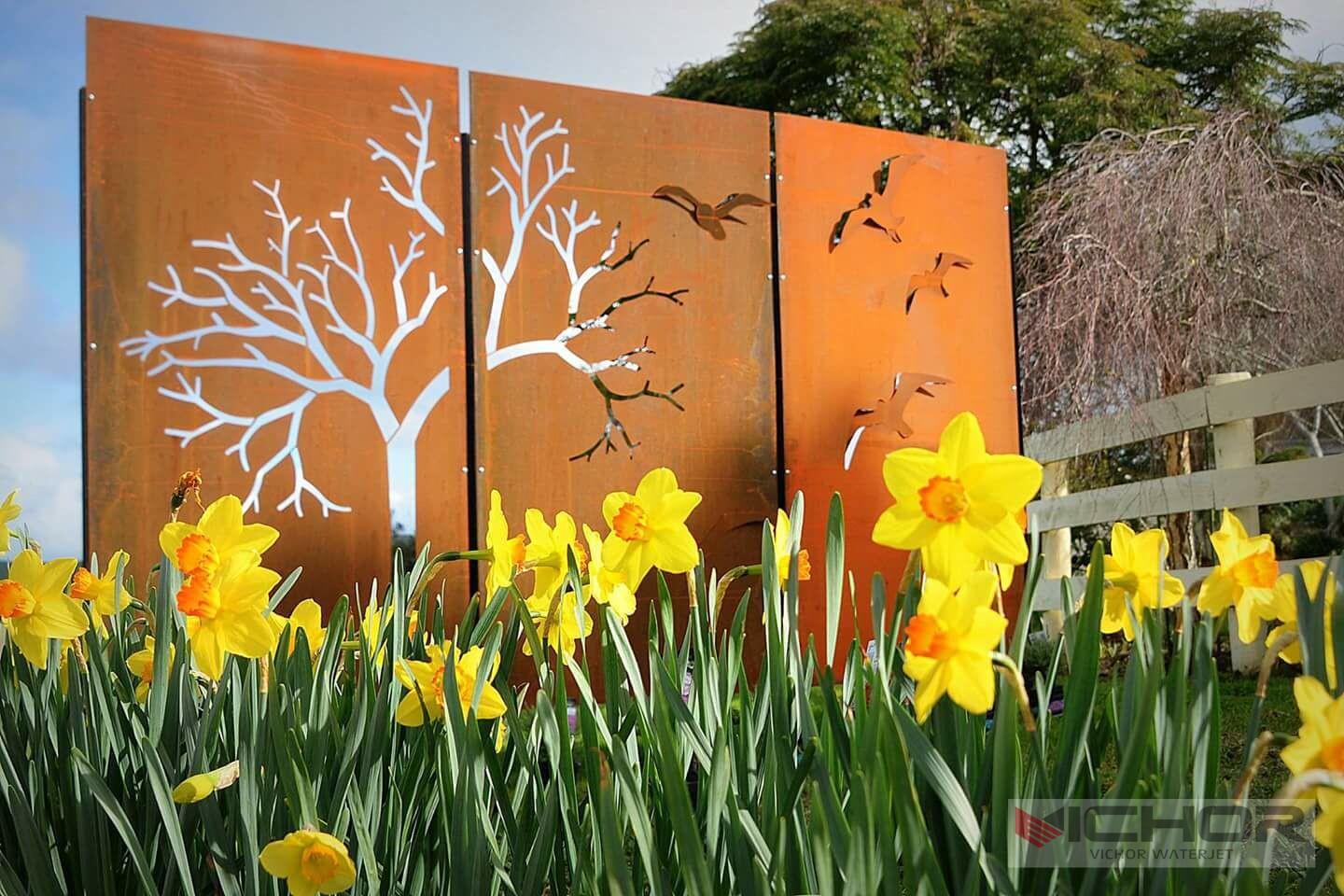
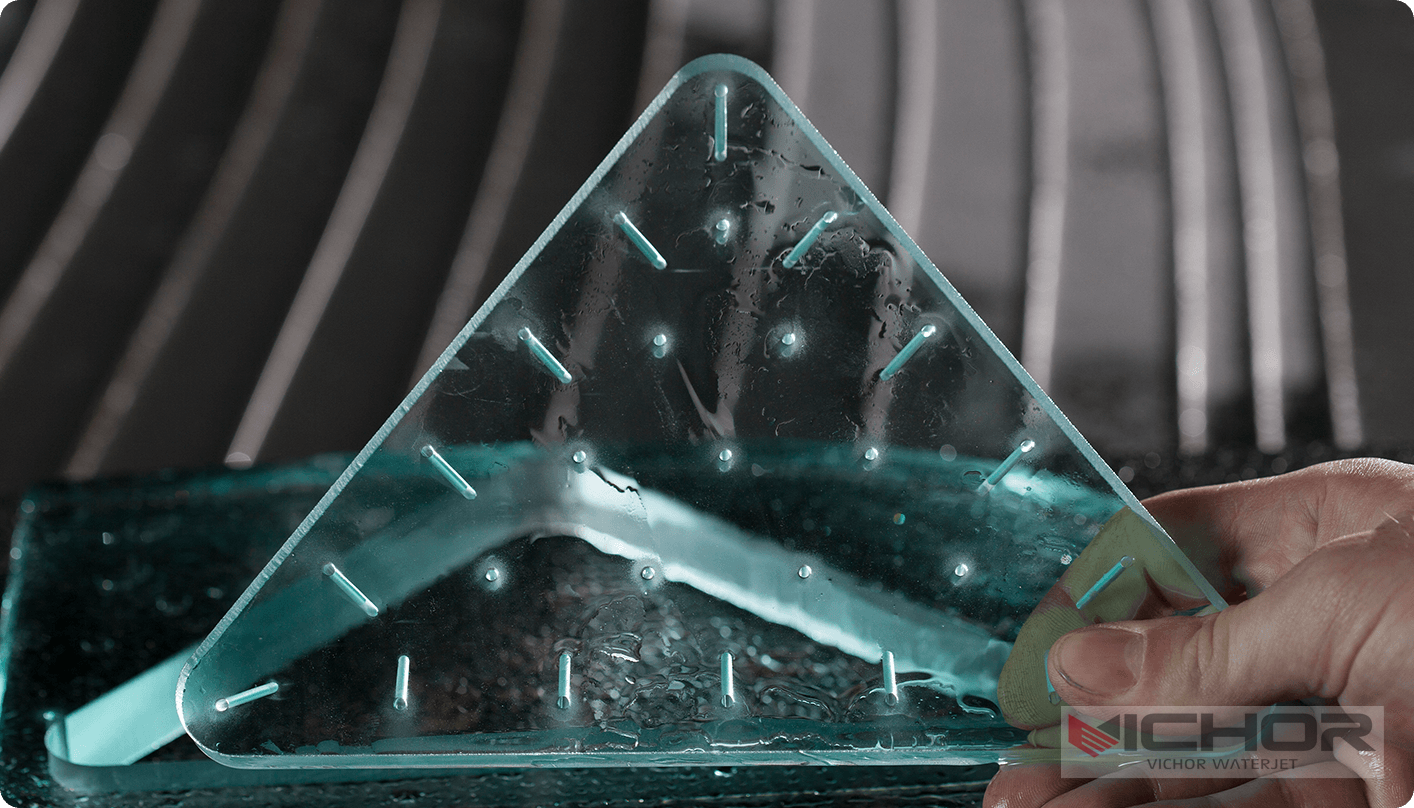
Artists and designers use this tool to create detailed patterns in glass, marble, and metals. The food industry uses pure water jets (no abrasive) to portion pastries, frozen foods, and more.
Any industry needing versatile, precise, and cold cutting is a candidate for this technology.
Core Functions and Practical Benefits
Precision is a primary function. Modern systems can hold tolerances within a few thousandths of an inch. They can produce highly complex shapes from a digital file.
Minimal material waste is a major benefit. The kerf (cut width) is very narrow. Parts can be nested tightly on a sheet, maximizing yield. There is no cost for drill bits or specialized saw blades for different materials.
The lack of a heat-affected zone (HAZ) is its signature advantage. Materials keep their original strength and structure right up to the cut edge. This eliminates secondary processing like grinding or stress-relieving.
Understanding the Different System Types
There are two fundamental types. The first is the pure water jet. It uses water pressure alone. This is for soft materials: rubber, foam, food, paper products, and certain plastics.
The second is the abrasive water jet. This is the standard industrial water jet cutting tool. It mixes garnet into the stream to cut hard materials.
Systems are also categorized by pump technology and table size. Direct drive pumps are simpler. Intensifier pumps, a VICHOR specialty, deliver higher, more stable pressure for demanding cuts. Tables range from 4×2 feet for job shops to massive 20×10 feet systems for shipbuilding.
Price Factors and Investment Considerations
The price of a water jet cutting tool system is not simple. A basic abrasive system can start near $100,000. A high-pressure, large-format system from a top brand can exceed $500,000.
The main cost drivers are the pump, the table, and the control software. Higher pump pressure means faster cutting, especially on thick materials, but increases cost. A larger table allows bigger workpieces but requires more floor space and investment.
Operating cost is crucial. Abrasive garnet is the largest recurring expense. Pump maintenance, seals, and orifice jewels are also part of the long-term cost. A brand like VICHOR focuses on pump durability to help control these costs over time.
Service, Maintenance, and Why Support Matters
This is a high-precision, high-pressure system. Service is not optional; it’s essential for uptime. Regular maintenance involves changing seals, inspecting the high-pressure plumbing, and replacing the mixing tube and orifice.
Quality of service separates brands. A global provider like VICHOR offers training, remote diagnostics, and ready spare parts. This minimizes downtime for international customers.
Water quality is part of service. Proper filtration protects the pump from damage. An on-site service technician can be worth their weight in gold when production is on the line.
Tailored Solutions for Specific Problems
Not every job is standard. Some require custom solutions. A manufacturer of gaskets might need a multi-head system to cut dozens of parts simultaneously.
A metal fabricator might need automated loading (a material handling robot) to feed plates to the water jet cutting tool around the clock. The stone industry often needs integrated water recycling and sludge management systems.
Companies don’t just buy a machine; they invest in a solution. Working with an engineering-focused brand means getting a system configured for your specific throughput, precision, and material challenges.
In summary, a water jet cutting tool is a versatile and powerful fabrication method. Its ability to cut virtually any material without heat distortion makes it unique. From prototyping to full-scale production, it delivers consistent quality.
The investment is significant but justified by its capabilities and material savings. Choosing a robust system with strong support, such as those engineered by VICHOR in the international waterjet field, ensures productivity for years to come.
Frequently Asked Questions (FAQ)
Q1: What is the typical operating cost per hour for an abrasive water jet?
A1: Excluding labor and capital costs, the main consumables are abrasive garnet and electricity. For a standard machine, abrasive cost can be $10-$20 per hour, electricity about $2-$4 per hour. Wear parts (seals, orifices) add a few more dollars per hour. Total direct operating cost often ranges between $15 and $30 per machine hour.
Q2: How does the cut edge quality from a water jet tool compare to milling or laser?
A2: The edge is smooth but has a matte, sandblasted finish. There is no heat discoloration. On thick materials, a slight taper (wider at the top than bottom) can occur, but modern systems can compensate for this. It generally requires no further finishing for many applications, unlike thermal cutting methods.
Q3: Can a water jet cutting tool create internal threads or tapped holes?
A3: Not directly. It can cut the pilot hole for a thread very precisely, but it cannot create the threaded form itself. The hole would need to be tapped as a secondary operation. The water jet cutting tool is best for through-cutting profiles and shapes.
Q4: What is the single biggest factor affecting cutting speed?
A4: Material type and thickness are the primary factors. However, pump pressure is the key machine variable. Higher pressure (e.g., 90,000 PSI vs. 60,000 PSI) dramatically increases cutting speed, especially on materials over 1 inch thick. This is why high-pressure pumps are a focus for brands like VICHOR.
Q5: Why is garnet the preferred abrasive, and is it reusable?
A5: Garnet is hard, sharp, and relatively inexpensive. It fractures in a way that creates new cutting edges during the process. It is generally not reusable in standard systems, as the particles break down and are carried away with the water. Some closed-loop systems attempt to recycle it, but this is not yet common in mainstream industry.