7 Key Factors in Garnet Water Jet Cutting: Speed, Quality & Cost Optimization
For industrial cutting of metals, stone, and composites, garnet water jet cutting remains the preferred method because it combines high energy with a cold‑cutting process. No heat‑affected zones, no material distortion, and the ability to slice through nearly any material make it indispensable across aerospace, automotive, and architectural fabrication.
At VICHOR, we engineer waterjet systems that optimize every aspect of abrasive cutting. Understanding the interplay between garnet quality, pump pressure, and motion control directly impacts your bottom line. This guide breaks down the seven most influential factors in garnet water jet cutting performance.
1. How Garnet Water Jet Cutting Works: The Basic Principles
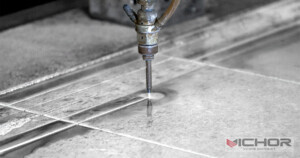
Abrasive waterjet cutting uses a high‑pressure stream of water mixed with garnet particles to erode material. The water accelerates garnet to supersonic speeds, creating a focused cutting beam. Unlike laser or plasma, the process generates no heat, preserving material integrity.
- Water is pressurized (60,000–94,000 psi) through an orifice
- Garnet is drawn into the mixing chamber by vacuum
- Abrasive particles exit through a mixing tube, cutting the workpiece
- CNC motion directs the jet along programmed paths
Modern garnet water jet cutting systems include dynamic taper compensation to maintain perpendicular walls, even on thick materials. VICHOR’s five‑axis heads adjust the nozzle angle in real time, eliminating the typical “V‑shape” kerf.
2. Garnet Quality: Hardness, Shape, and Purity
Not all garnet produces the same results. High‑quality almandine garnet (Mohs 7.5–8.0) provides the best combination of hardness and fracture resistance. Angular particles cut faster than rounded ones, while impurities like quartz or mica reduce efficiency.
Why Purity Matters
Low‑grade garnet often contains soluble salts or free silica. Chlorides can corrode machine components, and excess fines clog the mixing tube. Premium garnet water jet cutting abrasive contains >98% almandine with tightly controlled particle distribution.
- Angular particles: higher cutting efficiency
- Uniform size: stable jet stream
- Low chloride: protects stainless steel tables and slats
VICHOR recommends verifying mill certificates before purchasing bulk garnet. Consistent quality translates directly to predictable cutting speeds and extended mixing tube life.
3. Mesh Size Selection for Optimal Cutting Speed
Mesh size determines the trade‑off between cutting speed and surface finish. The most common grades for garnet water jet cutting are 80, 120, and 200 mesh.
80 Mesh Garnet
Ideal for thick metals (2 inches and above) and rough cutting. Delivers maximum speed but leaves a slightly rougher edge. Used extensively in structural steel fabrication and heavy equipment manufacturing.
120 Mesh Garnet
The most versatile grade. Balances cutting speed with good edge quality. Suitable for stainless steel, aluminum, and titanium up to 1.5 inches thick. Many job shops use 120 mesh as their primary abrasive.
200 Mesh and Finer
Used where surface finish is critical – medical implants, electronics, or pre‑polished stone. Cutting speed is reduced by 20–30% compared to 80 mesh, but secondary finishing is often eliminated.
- 80 mesh: highest speed, rougher finish
- 120 mesh: balanced performance, most common
- 200+ mesh: premium finish, slower feed rates
4. Pressure and Flow Rate Optimization
Pump pressure directly influences cutting speed. A 94,000 psi intensifier can cut 4‑inch stainless steel 25% faster than a 60,000 psi system. However, pressure must be matched to the garnet size and mixing tube diameter.
Matching Abrasive Flow to Pressure
Too much garnet for a given pressure can cause turbulence, reducing cutting efficiency. Optimal abrasive flow is typically 0.8–1.5 lb per minute per 10 horsepower. VICHOR’s control software automatically adjusts feed rates to maintain ideal ratios.
Nozzle and Mixing Tube Selection
Orifice size (0.010” to 0.040”) and mixing tube length affect jet focus. For thick materials, larger orifices allow higher abrasive flow, increasing cutting speed. For thin, intricate parts, smaller orifices improve precision.
- Higher pressure = faster cut speeds
- Abrasive flow must match pump capacity
- Proper nozzle sizing prevents premature wear
VICHOR’s waterjet cutting machines include pressure profiling, which ramps up pressure gradually during piercing to protect fragile materials.
5. Material Thickness and Cutting Speed Tables
Understanding how thickness affects speed helps with quoting and scheduling. Typical speeds for garnet water jet cutting vary widely based on material and abrasive grade.
- Mild steel, 1 inch: 12–18 inches per minute (80 mesh, 90,000 psi)
- Stainless steel, ½ inch: 10–14 ipm (120 mesh)
- Aluminum, 1 inch: 20–30 ipm (80 mesh)
- Titanium, 1 inch: 6–10 ipm (120 mesh)
- Marble, 2 inches: 8–12 ipm (80 mesh)
These speeds are baseline estimates. Actual performance depends on garnet quality, pump condition, and nozzle wear. VICHOR provides detailed cut charts with each machine, calibrated to the specific abrasive you use.
6. Cost Management: Garnet Consumption and Recycling
Abrasive represents 30–50% of total waterjet operating costs. Smart shops monitor consumption closely and consider recycling systems to reduce expense.
Tracking Cost per Linear Inch
Rather than focusing solely on garnet price per pound, calculate cost per linear inch of cut. A premium garnet that cuts 15% faster may actually lower overall part cost despite higher upfront price.
Garnet Recycling Options
Many VICHOR machines can be equipped with closed‑loop recycling systems. Used garnet is separated from metal fines and water, then screened for reuse. Recycled garnet typically retains 80–90% of original cutting performance and can cut consumable costs by 30–50%.
- Recycled garnet works well for secondary cuts
- Reduce disposal volume and landfill fees
- Automated recycling lowers labor costs
For shops performing high‑volume garnet water jet cutting, integrating recycling pays back within 12–18 months.
7. Machine Maintenance and Consumable Life
Even the best garnet will not perform well if the cutting head or pump is not maintained. Regular inspection of mixing tubes, orifices, and seals ensures consistent results.
Mixing Tube Wear
Mixing tubes typically last 80–150 hours depending on garnet quality and pressure. Signs of wear include slower cutting speeds and increased edge taper. VICHOR’s HMI tracks runtime and alerts operators when replacement is due.
Seal and Valve Maintenance
High‑pressure seals degrade over time. A leaking seal reduces pressure and wastes energy. Following the recommended maintenance schedule prevents unexpected downtime.
- Replace mixing tubes at first sign of performance drop
- Inspect orifices weekly for wear or clogging
- Use only high‑purity garnet to extend component life
VICHOR provides detailed service guides and remote diagnostics to keep your system operating at peak efficiency.
Why VICHOR Leads in Garnet Water Jet Cutting Systems
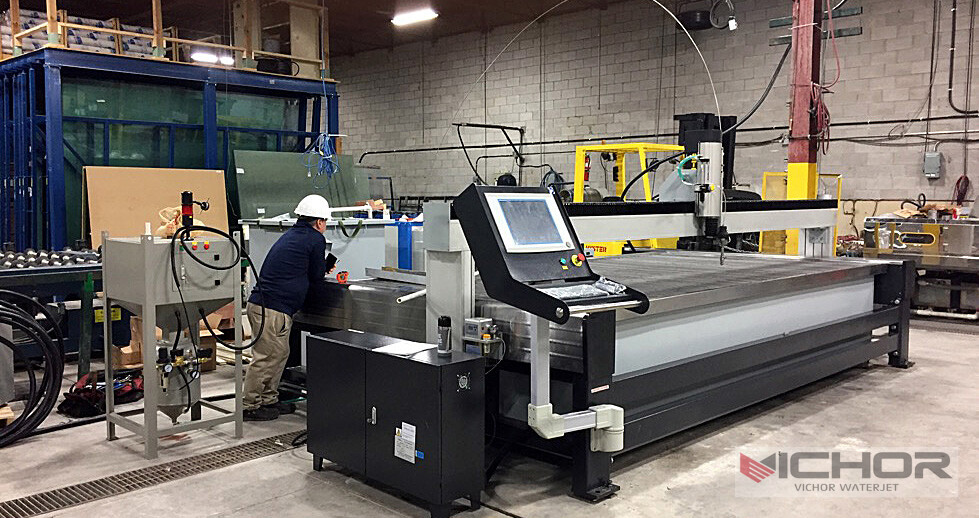
VICHOR designs waterjet machines with the abrasive process in mind. From the pump to the cutting head, every component is selected to maximize the effectiveness of garnet water jet cutting.
- Dual intensifier pumps for uninterrupted 94,000 psi operation
- Dynamic taper control for square edges in thick stacks
- Automated garnet delivery systems with real‑time flow feedback
- Modular tank designs from 2×2 m to 4×12 m
VICHOR’s application lab can test your specific materials with various garnet grades, providing optimized cutting parameters before you purchase. This pre‑sales support ensures your machine arrives ready for production.
Maximizing Results with Garnet Water Jet Cutting
Selecting the right combination of garnet grade, pump pressure, and cutting parameters transforms garnet water jet cutting from a simple process into a highly efficient manufacturing operation. By focusing on abrasive quality, mesh size, and machine maintenance, shops can reduce costs while improving throughput.
VICHOR’s engineering team works alongside customers to optimize every variable. Whether you are cutting 6‑inch titanium or intricate stone mosaics, we provide the equipment and expertise to achieve consistent, high‑quality results. Contact VICHOR to discuss your application and see how our systems deliver superior performance.
Frequently Asked Questions About Garnet Water Jet Cutting
Q1: What is the ideal garnet mesh size for cutting stainless steel?
A1: For stainless steel up to 1 inch thick, 80 mesh garnet water jet cutting provides the fastest cutting speed. For thinner sheets (under ½ inch) where edge finish is critical, 120 mesh offers a smoother surface with moderate speed reduction.
Q2: How fast can garnet water jet cut 2‑inch aluminum?
A2: With 80 mesh garnet and a 94,000 psi intensifier, typical cutting speed for 2‑inch aluminum is 12–18 inches per minute. Speed varies based on garnet quality and nozzle condition. VICHOR machines include real‑time feed rate optimization to maintain consistent performance.
Q3: Does garnet water jet cutting produce a heat‑affected zone?
A3: No. Garnet water jet cutting is a cold cutting process. The abrasive and water remove material through erosion, leaving no thermal distortion, micro‑cracks, or metallurgical changes. This makes it ideal for heat‑sensitive alloys and composites.
Q4: How often should I replace the mixing tube?
A4: Mixing tube life ranges from 80 to 150 cutting hours, depending on pressure and garnet quality. High‑purity garnet with consistent particle size extends tube life. VICHOR systems track hours and notify operators when replacement is recommended.
Q5: Can recycled garnet be used for precision cutting?
A5: Recycled garnet works well for many applications, especially where edge finish is not critical. For high‑precision cuts, fresh garnet is recommended. VICHOR offers modular recycling systems that allow shops to use recycled abrasive for secondary cuts and fresh garnet for critical parts.
Q6: What makes VICHOR waterjet systems different for garnet cutting?
A6: VICHOR machines feature abrasive flow sensors, dynamic taper compensation, and high‑pressure intensifiers designed for continuous garnet water jet cutting. Our integrated software adjusts parameters automatically to maintain cut quality regardless of material thickness variations.
For more technical data or to arrange a material test with your specific garnet grade, visit the VICHOR website. Properly optimized garnet water jet cutting delivers consistent, high‑quality results with lower operating costs. Let our team help you achieve the best possible performance from your waterjet investment.