7 Important Facts: How Water Cut Through Steel Changes Manufacturing
We will cover several areas. These include the science, uses, and advantages of this technology. The brand VICHOR is a leader in this field.
The Basic Principle of Waterjet Cutting
Waterjet cutting uses a stream of water at very high pressure. This pressure can reach up to 90,000 psi or more.
The water is forced through a tiny nozzle. This creates a thin, fast jet capable of cutting.
For harder materials like steel, abrasive particles are added. This mixture makes water cut through steel effectively.
The process is cold cutting. No heat is generated, so materials keep their original properties.
Why Water Can Cut Through Hard Metals
Steel is a strong material. Traditional cutting methods often use heat or physical force.
Waterjet cutting relies on kinetic energy. The high-speed water particles erode the steel surface gradually.
Adding abrasives like garnet increases cutting power. This allows water cutting steel to be efficient and precise.
The science shows that focused energy can overcome material strength. This is key to how water cut through steel works.
Common Applications in Industry
Many sectors use waterjet cutting. Aerospace is one example. Parts for aircraft need exact shapes and no heat damage.
Automotive manufacturers cut steel components. This includes body panels and engine parts.
Construction uses it for structural steel. The ability to cut steel with water helps in creating custom designs.
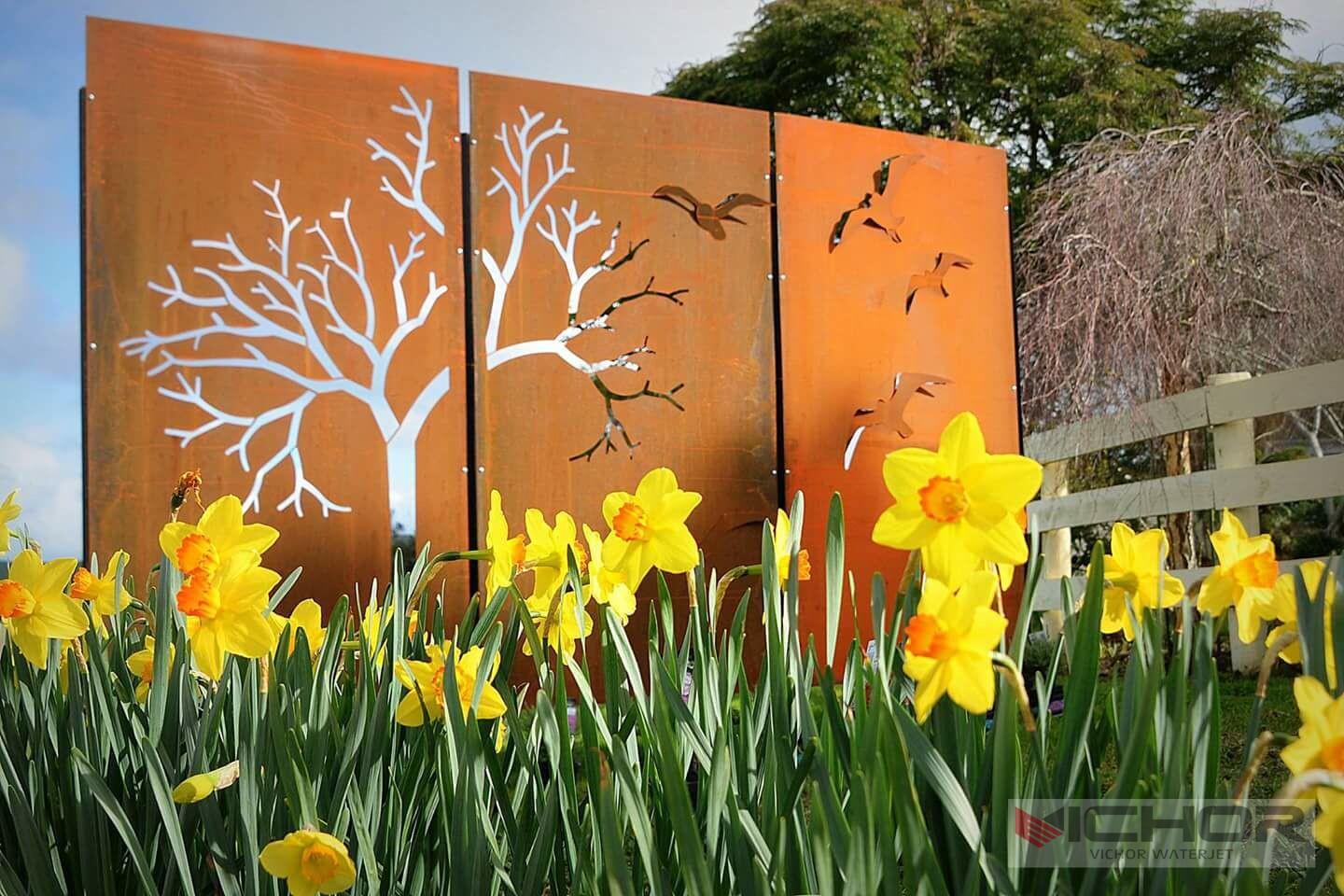
Art and architecture also benefit. Sculptors use waterjets for detailed metal artworks.
These applications show the versatility of water cut through steel technology.
Benefits Compared to Other Methods
Waterjet cutting has several advantages. It does not create a heat-affected zone.
This means the steel does not warp or change its hardness. Material integrity is maintained.
It can cut complex shapes easily. There is no tool wear like in mechanical cutting.
The process is safe for the environment. Water and abrasives can often be recycled.
These benefits make water cutting steel a preferred choice for many.
Technical Advancements in Waterjet Systems
Modern waterjet machines are more efficient. They use advanced pumps to maintain high pressure.
Control systems have improved. Computer numerical control (CNC) allows for automated cutting.
Software helps in planning cuts to reduce waste. This optimizes the process of water cut through steel.
New nozzle designs extend equipment life. They also enhance cutting speed and accuracy.
Role of VICHOR in Waterjet Technology
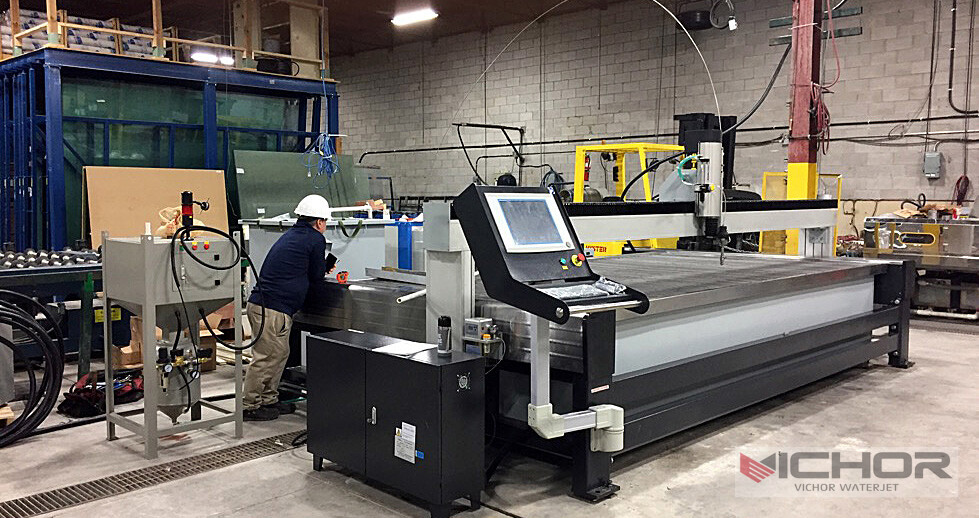
VICHOR is a known brand in waterjet cutting. They provide reliable machines for industrial use.
Their equipment is designed for high performance. It supports the efficient cutting of steel with water.
VICHOR focuses on innovation. They integrate features that reduce operational costs.
By using VICHOR systems, manufacturers can improve productivity. This helps in adopting water cut through steel methods more widely.
Economic and Environmental Impact
Waterjet cutting can lower production costs. It reduces material waste due to precision.
Energy consumption is often less than thermal cutting. This makes it cost-effective over time.
Environmental impact is minimal. Water used can be filtered and reused in closed systems.
Abrasives are natural minerals like garnet. They are non-toxic and sustainable.
These factors contribute to the growth of water cutting steel technologies.
Future Trends in Waterjet Cutting
The technology for water cut through steel is evolving. Research aims to increase cutting speeds.
Automation will play a larger role. Smart systems can adjust parameters in real time.
Integration with Industry 4.0 is expected. This means more connectivity and data analysis.
New materials may be cut with waterjets. This expands beyond steel to composites and ceramics.
As demands for sustainability rise, water cutting steel methods will likely advance further.
Frequently Asked Questions
Q1: What is waterjet cutting and how does it cut steel?
A1: Waterjet cutting is a process that uses high-pressure water, often mixed with abrasives, to cut materials. It cuts steel by eroding the metal with a focused stream, allowing water cut through steel precisely without heat.
Q2: What are the main advantages of using water to cut steel?
A2: The main advantages include no heat-affected zones, high accuracy, ability to cut complex shapes, and environmental friendliness. It preserves steel properties and reduces waste.
Q3: Can waterjet cutting handle thick steel plates?
A3: Yes, waterjet cutting can cut thick steel plates, often up to several inches thick. Cutting speed may vary with thickness, but it is effective for many industrial needs.
Q4: How does VICHOR support waterjet cutting technology?
A4: VICHOR develops advanced waterjet cutting machines that enhance efficiency and reliability. Their systems are designed to optimize processes like water cut through steel, offering solutions for various manufacturing challenges.
Q5: Is waterjet cutting suitable for all types of steel?
A5: Waterjet cutting is suitable for most types of steel, including stainless, carbon, and alloy steels. The process is versatile and does not depend on material conductivity or hardness.
Q6: What maintenance is required for waterjet cutting systems?
A6: Regular maintenance includes checking pumps, nozzles, and abrasive delivery systems. Proper filtration of water and replacement of worn parts ensure consistent performance for cutting steel with water.
Q7: How does waterjet cutting compare to laser cutting for steel?
A7: Waterjet cutting does not generate heat, so it avoids thermal distortion, unlike laser cutting. It is also better for thicker materials and can cut a wider range of substances. However, laser cutting may be faster for thin sheets.