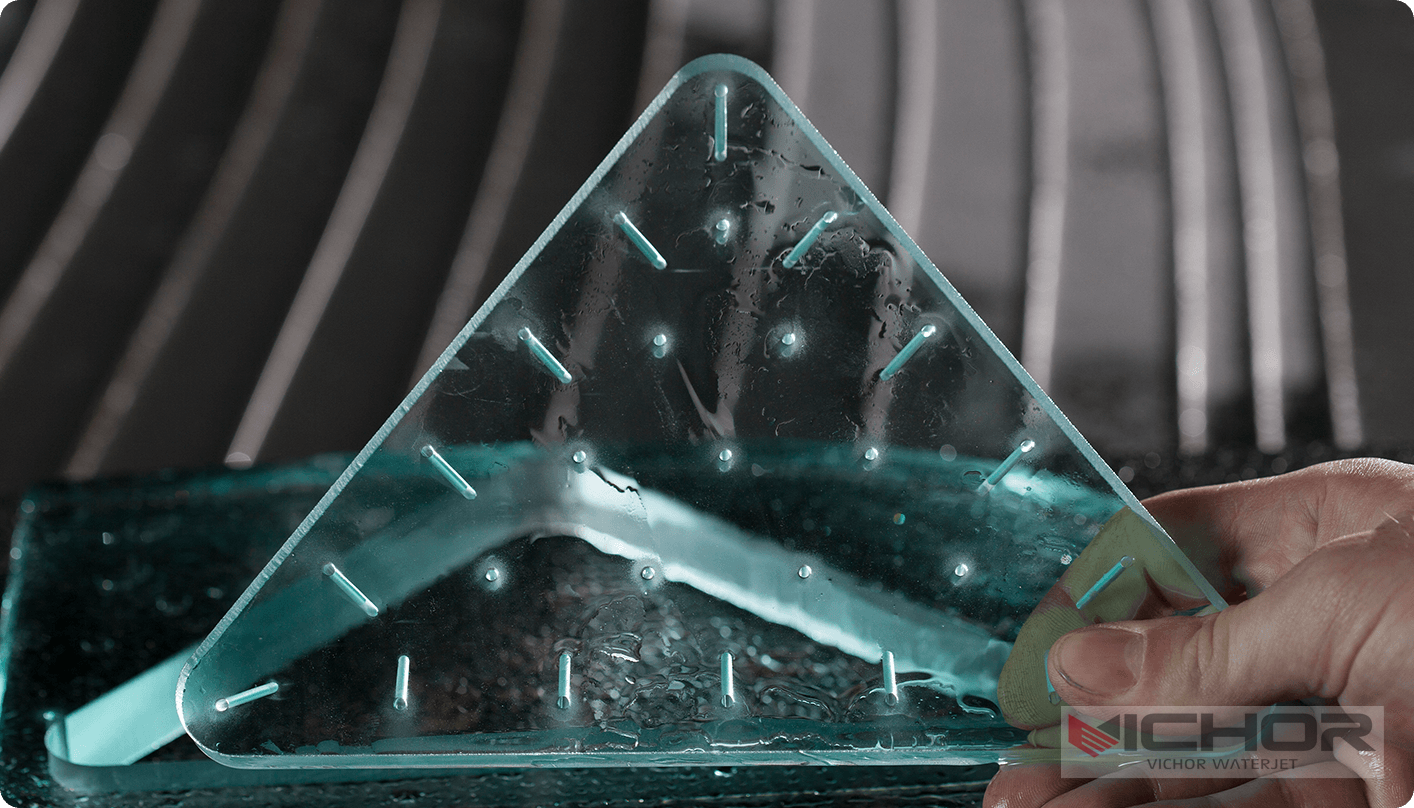

7 Game-Changing Advantages of Water Jet Plastic Cutting for Modern Manufacturing
If you have spent any time on a shop floor trying to machine polymers, you know the struggle. You put a sheet of polycarbonate under a laser, and you get discolored edges. You put it on a CNC router, and you deal with chip welding or chatter marks. This is where the specific technology of water jet plastic cutting changes the conversation completely.
As someone who has managed fabrication lines for decades, I have seen trends come and go. But the shift toward water jet plastic cutting isn’t a trend; it is a necessity for shops that demand precision without the thermal damage. Whether you are running a high-end VICHOR system or a standard setup, understanding the nuances of this process is what separates the amateurs from the professionals.
In this article, I am going to break down why water jet plastic cutting is superior, how to optimize your setup, and why big players in the industry are switching their polymer processing to high-pressure water.
The Cold Cutting Advantage of Water Jet Plastic Cutting
The single biggest enemy of plastic fabrication is heat. Thermal distortion ruins tolerances, and heat-affected zones (HAZ) weaken the material. When we talk about water jet plastic cutting, we are talking about a cold erosion process. There is no heat generated at the cutting point because the water stream acts as a coolant while it cuts.
In traditional methods, you often have to do secondary finishing. You have to sand down melted edges or anneal the plastic to relieve stress. With water jet plastic cutting, those steps are largely eliminated. The part comes off the table ready for assembly.
For materials like acrylic or complex composites, water jet plastic cutting ensures that the chemical structure of the material remains unaltered. This is why aerospace and medical device manufacturers prefer water jet plastic cutting over lasers. They cannot afford material properties changing due to heat stress.
Understanding the Mechanics of Water Jet Plastic Cutting
To master water jet plastic cutting, you need to understand the stream. We are usually talking about pressures ranging from 60,000 to 90,000 PSI. At these pressures, the water travels at supersonic speeds. When you engage in water jet plastic cutting, you are essentially accelerating erosion to an instant.
For softer plastics like foam or thin rubber, we use pure water cutting. This version of water jet plastic cutting uses a very fine orifice, sometimes as small as 0.004 inches. It slices through soft material like a scalpel.
However, for harder reinforced plastics, we introduce an abrasive, typically garnet. The abrasive water jet plastic cutting process turns the stream into a liquid sandpaper. This is powerful enough to cut through inches of reinforced plastic without slowing down. Brands like VICHOR have optimized their cutting heads to switch between pure and abrasive modes efficiently, making water jet plastic cutting incredibly versatile.
Material Versatility in Water Jet Plastic Cutting
I am often asked what plastics can actually be cut. The answer is practically everything. Water jet plastic cutting does not discriminate based on optical properties like a laser does. You can cut clear acrylic, opaque HDPE, or reflective vinyl with the exact same ease.
Let’s look at reinforced plastics. Carbon fiber reinforced polymer (CFRP) or glass-filled nylon are notorious for eating up CNC bits. The tool wear is expensive. In water jet plastic cutting, the “tool” is a stream of water and garnet. It never gets dull. This makes water jet plastic cutting the most cost-effective method for abrasive composites.
Furthermore, water jet plastic cutting handles stacked materials beautifully. You can stack 20 sheets of thin PVC and cut them all at once. As long as you secure the material properly to prevent water floating, water jet plastic cutting offers a throughput that single-ply laser cutting cannot match.
Precision and Tolerance in Water Jet Plastic Cutting
There is a misconception that water jets are “sloppy” compared to EDM or milling. That might have been true in the 1980s, but modern water jet plastic cutting is highly precise. With the right machine calibration, you can hold tolerances of +/- 0.005 inches or better.
The key to precision in water jet plastic cutting is controlling the stream lag. As the cutting head moves, the bottom of the stream can lag behind the top if you move too fast. Advanced software controls this. When using high-end equipment like VICHOR pumps and heads, the stream coherence is maintained longer, resulting in straighter edges during water jet plastic cutting.
Another factor is the kerf width. In water jet plastic cutting, the material removed is very minimal, usually around 0.030 to 0.040 inches for abrasive cutting. This allows for tight nesting of parts. You waste less expensive raw material with water jet plastic cutting than you do with a router bit that has a 0.25-inch diameter.
Eliminating Hazardous Fumes with Water Jet Plastic Cutting
Safety is a massive concern in modern shops. If you cut PVC (Polyvinyl Chloride) with a laser, you create hydrochloric acid gas. It destroys the optics of the laser and destroys the lungs of your operators. It is dangerous and often illegal without massive filtration.
Water jet plastic cutting completely solves this. Because the cut happens underwater or under a stream of water, particulates and fumes are trapped. The dust from the plastic is washed into the tank. Water jet plastic cutting is arguably the safest method for processing hazardous plastics.
For shops looking to meet strict OSHA or environmental standards, switching to water jet plastic cutting is an easy win. You eliminate airborne micro-plastics and toxic off-gassing in one go.
Optimizing Production Speeds with VICHOR Technology
Speed is money. In the realm of water jet plastic cutting, speed is determined by pump horsepower and nozzle efficiency. This is where equipment choice matters. Using a VICHOR high-pressure intensifier allows for faster cutting speeds because more energy is delivered to the material.
However, speed in water jet plastic cutting must be balanced with edge quality. If you push the machine too hard, you get striations (rough marks) on the bottom edge of the plastic. An experienced operator knows the “sweet spot” for water jet plastic cutting speeds.
Nesting software also plays a role. Since water jet plastic cutting does not require heat dissipation zones between parts, you can nest parts sharing a common line (common line cutting). This reduces cut time by up to 40%. Water jet plastic cutting is not just about the cut; it is about the strategy of the path.
Water Jet Plastic Cutting vs. CNC Routing
The debate between CNC routing and water jet plastic cutting is common. CNC routers are fast for 3D shaping and pocketing. However, for 2D profiles, water jet plastic cutting often wins.
CNC routers require hold-down vacuum pressure. If you are cutting small plastic parts, they can fly off the table once cut loose. Water jet plastic cutting applies downward force. The water pushes the part down onto the slats. You rarely have issues with parts moving during water jet plastic cutting if you use small tabs or proper weighting.
Furthermore, the setup time for water jet plastic cutting is minutes. You load the file, set the zero point, and go. CNC routing requires tool changes, depth checks, and vacuum zoning. For low-to-medium volume runs, water jet plastic cutting is simply more agile.
Solving the Delamination Issue
One specific challenge in water jet plastic cutting is piercing. When the high-pressure stream first hits a laminate or a brittle plastic, it can cause the layers to separate (delaminate) or crack. This used to be a major drawback.
Modern technology has fixed this. We now use low-pressure piercing. The machine starts the water jet plastic cutting process at a lower pressure (perhaps 20,000 PSI) to pierce the hole, then ramps up to high pressure to cut the profile.
Advanced heads from manufacturers like VICHOR allow for vacuum assist, which pulls the abrasive into the stream before the water fires, ensuring an abrasive-rich stream hits the material instantly. This makes water jet plastic cutting safe even for delicate composites.
Cost-Efficiency and ROI
Let’s talk numbers. The operating cost of water jet plastic cutting includes water, electricity, abrasive, and wear parts. While the hourly rate might be higher than a simple saw, the reduction in labor makes up for it.
Because water jet plastic cutting delivers a finished edge, you save the labor cost of deburring. Because you can nest tightly, you save material yield. When you factor in the total cost per part, water jet plastic cutting is often the winner for material thicknesses over 0.25 inches.
Also, consider fixture costs. Water jet plastic cutting requires very little custom fixturing. You can throw a sheet on the table, weigh it down, and cut. This rapid turnaround improves cash flow for job shops relying on water jet plastic cutting.
The Future of Polymer Fabrication
The demand for high-performance plastics is growing. PEEK, Ultem, and heavy composites are being used in everything from drones to deep-sea drilling. These materials are expensive and hard to machine. Water jet plastic cutting is the only technology capable of handling this diversity without risk.
As we look forward, the integration of 5-axis water jet plastic cutting is opening new doors. Now, we can cut beveled edges and 3D shapes in plastic. Companies utilizing VICHOR 5-axis heads are producing complex geometries that were previously impossible.
If you are not utilizing water jet plastic cutting in your manufacturing workflow, you are limiting your material capabilities. It is the cold, clean, and precise solution for the modern age of plastics.
Common Questions About Water Jet Plastic Cutting
Q1: Can water jet plastic cutting handle very thick plastic blocks?
A1: Yes, water jet plastic cutting is exceptionally good at cutting thick materials. It can easily cut plastic blocks up to 10 inches thick or more. Unlike lasers that lose focus, the water stream stays coherent, although you must adjust speed to maintain a straight edge and minimize taper.
Q2: Will water jet plastic cutting cause the plastic to absorb water?
A2: Generally, no. Most plastics are not hygroscopic enough to absorb significant water during the short duration of the cut. The water jet plastic cutting process is fast, and surface water is blown off immediately. For specific nylon composites that absorb moisture, drying after cutting is a simple solution.
Q3: Is abrasive required for all water jet plastic cutting?
A3: No. For soft plastics, foams, rubber, and thin films, we use pure water cutting (no abrasive). This is faster and cleaner. Abrasive water jet plastic cutting is reserved for hard, rigid plastics or reinforced composites that require the eroding power of garnet.
Q4: How does VICHOR equipment improve water jet plastic cutting?
A4: VICHOR specializes in high-pressure stability and durable cutting heads. In water jet plastic cutting, consistency is key to avoiding edge blemishes. VICHOR pumps deliver a smooth, non-fluctuating stream pressure, which results in a satin-smooth edge finish on plastics.
Q5: Does water jet plastic cutting leave a taper on the edge?
A5: All water jets naturally create a slight V-shaped taper. However, in modern water jet plastic cutting, this is minimized by slowing the speed or using a tilting 5-axis head (dynamic taper compensation) which tilts the nozzle to ensure the part edge is perfectly perpendicular.