
7 Essential Facts About the Water Jet Tool: Technology, Applications, and Selection
From aerospace components to intricate architectural designs, the water jet tool has transformed how manufacturers cut materials. Unlike thermal processes, this technology uses high-pressure water—often combined with abrasive—to slice through nearly any material without heat distortion. Whether you are new to the technology or evaluating an upgrade, understanding the core capabilities of this equipment helps you make informed decisions. This article covers seven critical aspects, from basic mechanics to advanced applications.
What Exactly Is a Water Jet Tool and How Does It Operate?
A water jet tool uses an ultra-high-pressure pump to accelerate water through a small orifice, creating a concentrated stream. For hard materials, abrasive garnet is introduced into the stream, turning it into a high-speed cutting force. The system includes a motion control gantry or robot that guides the jet along programmed paths. No heat-affected zone forms, preserving the material’s structural integrity.
Key components:
- High-pressure pump: Generates pressures from 60,000 to 90,000 psi.
- Cutting head: Houses the orifice and mixing tube.
- Abrasive delivery system: Meters garnet into the water stream.
- CNC controller: Interprets CAD files and directs motion.
Core Components That Define Performance
Not every water jet tool delivers the same results. Component quality directly impacts cutting speed, edge finish, and long-term reliability.
Pump Technology: Intensifier vs. Direct Drive
Intensifier pumps use hydraulic oil to drive a piston, compressing water to ultra-high pressures. They excel in continuous, heavy-duty production environments. Direct-drive pumps employ a crankshaft and plungers, offering energy savings for intermittent use. Both designs are available from leading suppliers like VICHOR, allowing shops to match pump type to their cutting schedules.
Nozzle and Mixing Tube Precision
The mixing tube (focusing tube) determines the jet’s coherence. A high-quality tungsten carbide tube maintains diameter longer, producing consistent kerf width. Operators should monitor wear: a worn tube reduces cutting efficiency by 15–30% before complete failure.
Materials You Can Cut With a Water Jet Tool
One of the greatest strengths of this equipment is its material versatility. From soft rubber to hardened steel, the cutting process remains consistent.
- Metals: Stainless steel, aluminum, titanium, copper, brass, and tool steels.
- Stone and ceramics: Granite, marble, porcelain, and engineered stone.
- Composites: Carbon fiber, fiberglass, laminates, and Kevlar.
- Glass: Tempered, laminated, and artistic glass.
- Plastics and rubber: Acrylic, polycarbonate, foam, and gasket materials.
Thickness limits vary by material. With an abrasive water jet tool, operators cut steel up to 8 inches and aluminum up to 10 inches under optimal conditions.
Industrial Applications Where Water Jet Tools Excel
The cold-cutting nature of water jets makes them indispensable in industries where heat distortion is unacceptable.
Aerospace and Defense
Components for aircraft interiors, engine housings, and armor plating require precise cuts without micro-cracking. Water jets produce burr-free edges in titanium and Inconel, reducing secondary finishing.
Automotive Manufacturing
From interior trim to structural brackets, water jets handle high-volume production with tooling-free changeovers. Multiple parts can be nested from a single sheet, minimizing scrap.
Architecture and Stone Fabrication
Countertops, cladding, and decorative features demand intricate shapes. A water jet tool delivers smooth edges in natural stone without the risk of chipping found in mechanical saws.
Medical Device Manufacturing
Surgical instruments, implants, and specialized components benefit from the sterile, heat-free cutting environment. No slag or residue remains, simplifying post-processing.
Advantages Over Other Cutting Technologies
When comparing a water jet tool to laser, plasma, or mechanical saws, several distinct benefits emerge.
- No heat-affected zone (HAZ): Material properties remain unchanged.
- Material versatility: One machine cuts metals, stone, glass, and composites.
- No tool wear: The abrasive stream is the only consumable; no blades to sharpen.
- Stack cutting: Multiple layers can be cut simultaneously, increasing productivity.
- Intricate geometries: Narrow kerf allows tight radii and complex patterns.
Maintenance Practices for Consistent Performance
Regular maintenance ensures your water jet tool operates at peak efficiency and avoids unplanned downtime.
Recommended maintenance schedule:
- Daily: Check water quality filters, inspect abrasive hopper, clean nozzle area.
- Weekly: Monitor pump oil levels, examine high-pressure seals for leaks.
- Monthly: Measure mixing tube diameter; replace if worn beyond 0.1mm increase.
- Quarterly: Calibrate pressure sensors, test emergency stop systems.
Manufacturers like VICHOR provide detailed maintenance guides and remote diagnostic tools to simplify these procedures.
Selecting the Right Water Jet Tool for Your Shop
Choosing the correct configuration involves evaluating cutting area, material types, thickness ranges, and production volume.
Decision factors:
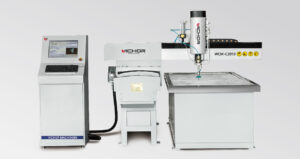
- Table size: Standard sizes range from 2×2 ft to 6×12 ft; custom sizes available.
- Pressure rating: 60,000 psi suits most materials; 90,000 psi increases speed on thick plates.
- Abrasive vs. pure water: Abrasive required for metals and stone; pure water suffices for soft materials.
- Automation level: Robotic loaders, conveyor tables, and nesting software improve throughput.
Conclusion: Maximizing Productivity With the Right Water Jet Tool
Investing in a water jet tool provides unmatched flexibility across diverse materials and industries. Understanding component quality, application requirements, and maintenance best practices ensures you get maximum return from your equipment. With the right partner—such as VICHOR—you gain access to robust engineering, responsive support, and systems designed for demanding production environments.
Frequently Asked Questions About Water Jet Tools
Q1: What is the maximum pressure a water jet tool can achieve?
A1: Modern industrial systems operate at pressures ranging from 60,000 psi to 90,000 psi. Specialized ultra-high-pressure units can reach 100,000 psi, enabling faster cutting speeds and greater thickness capacity in hard materials. The pressure choice depends on the materials you cut most frequently.
Q2: Can a water jet tool cut hardened steel without affecting its temper?
A2: Yes. Because the cutting process is entirely mechanical (erosion) and generates no heat, the material’s temper and hardness remain unchanged. This makes water jets ideal for cutting hardened tool steels, springs, and wear-resistant alloys where thermal methods would alter properties.
Q3: How thick can a water jet tool cut?
A3: Thickness capacity depends on material hardness and machine pressure. With an abrasive system, steel up to 8 inches (200 mm) and aluminum up to 10 inches (250 mm) are achievable. Softer materials like foam can be cut over 12 inches thick. Multi-pass strategies extend these limits further.
Q4: What is the typical accuracy of a water jet tool?
A4: Precision water jet systems hold tolerances of ±0.003 to ±0.005 inches (0.076–0.127 mm) under normal conditions. With dynamic taper compensation and proper calibration, some machines achieve ±0.001 inches on thinner materials. Accuracy depends on motion system quality, nozzle condition, and material stability.
Q5: How often do mixing tubes and orifices need replacement?
A5: Mixing tube life typically ranges from 80 to 200 cutting hours, depending on abrasive type and pressure. Orifices (sapphire or diamond) last 200–400 hours. Operators should monitor cut speed and kerf width to detect wear early. Using high-quality garnet and clean water extends component life.
Q6: Can I cut stacked sheets with a water jet tool?
A6: Yes, stacking multiple sheets is a common productivity technique. The total stack thickness should remain within the machine’s single-pass capacity. Proper clamping and interlayer bonding prevent jet deflection. Stack cutting reduces handling time and maximizes material utilization.
Q7: What safety precautions are required when operating a water jet tool?
A7: Operators must wear impact-resistant safety glasses, hearing protection, and gloves. The cutting area should be enclosed or shielded to contain the high-pressure stream. All personnel should be trained on emergency shutoff procedures and proper abrasive handling to prevent dust inhalation.
Explore advanced water jet solutions: VICHOR waterjet cutting machines offer precision engineering and global support for demanding applications.