7 Critical Factors Before Buying a Water Jet Cutter Metal Machine (2025 Market Review)
Cutting thick steel, titanium, or complex copper designs requires a solution that does not warp the material. This is where the specific technology of a water jet cutter metal machine becomes the industry standard. Unlike laser or plasma cutting, water jet technology offers a “cold cutting” process that preserves the structural integrity of your raw materials.
For shop owners and industrial manufacturers, selecting the right equipment is a massive investment. You aren’t just buying a machine; you are buying a capability. Whether you are running a small fabrication shop or a large aerospace facility, understanding the nuances of a water jet cutter metal system is vital for your bottom line.
In this article, we will look at how this technology works, the costs involved, and why brands like VICHOR are leading the charge in the international market. We will skip the fluff and get straight to the engineering and business facts you need to know.
How a Water Jet Cutter Metal System Actually Works
The concept seems simple: use water to cut. However, a water jet cutter metal machine is a sophisticated piece of engineering. It relies on a high-pressure pump to pressurize water to levels between 60,000 and 90,000 PSI (pounds per square inch).
For metal cutting, pure water isn’t enough. The system introduces an abrasive material, typically garnet, into the stream. The nozzle accelerates this mixture to speeds up to Mach 3. When this focused beam hits the material, it erodes the metal on a microscopic scale.
This process allows a water jet cutter metal unit to slice through inches of hardened steel without generating heat. This “cold” nature is the defining feature that separates it from thermal cutting methods. There is no melting, no distortion, and no hardening of the cut edges.
Material Versatility and Thickness Capabilities
One of the main reasons machine shops choose a water jet cutter metal solution is versatility. While lasers struggle with reflective metals like copper or aluminum, a water jet has no such issues.
You can effectively cut:
Carbon Steel: Up to 6 inches thick (or more depending on pump power).
Stainless Steel: Cuts cleanly without bluing or heat tint.
Titanium: Essential for aerospace where heat-affected zones (HAZ) are prohibited.
Copper and Brass: Highly reflective metals that are difficult for lasers.
When you use a water jet cutter metal machine, you are not limited to flat sheets. With 5-axis cutting heads available from manufacturers like VICHOR, you can handle bevels and complex 3D shapes. This flexibility allows one machine to handle jobs that previously required three different setups.
The VICHOR Advantage in Metal Cutting
In the competitive landscape of industrial machinery, VICHOR has established itself as a reliable partner for high-precision cutting. When sourcing a water jet cutter metal system, the build quality of the gantry and the reliability of the pump are non-negotiable.
VICHOR focuses on stability. A water jet cutter metal machine vibrates during operation due to the immense kinetic energy involved. VICHOR engineers their frames to dampen this vibration, ensuring that the nozzle stays true to the cutting path.
Furthermore, VICHOR creates solutions that balance power with efficiency. Their software integration makes nesting parts easier, reducing material waste. When you are cutting expensive alloys, saving 5% of your material cost can pay for the machine over time. A water jet cutter metal system from VICHOR is designed to maximize profit per sheet.
Comparing Water Jet Cutter Metal Tech vs. Laser and Plasma
This is the most common debate in the industry. Why buy a water jet cutter metal machine when fiber lasers are so fast? The answer lies in thickness and edge quality.
Fiber Laser: Excellent for thin sheet metal (under 1 inch). It is very fast. However, as the metal gets thicker, the edge quality drops, and the machine cost skyrockets.
Plasma: Great for rough cutting mild steel plates. It is fast and cheap, but the edge quality is poor, and the heat-affected zone is large. You almost always have to machine the part after cutting.
Water Jet Cutter Metal: It is slower than a laser on thin stuff. However, on material thicker than 1 inch, the water jet cutter metal system wins. It leaves a satin-smooth finish that often requires no secondary machining. It eliminates the need for a milling machine to clean up the edges, saving you labor hours.
Understanding the Operating Costs
Buying the machine is the initial step; running it is the ongoing reality. A water jet cutter metal system has consumables that you must budget for.
Abrasive (Garnet): This is your biggest ongoing cost. The machine consumes garnet by the pound. Efficient machines use metering valves to optimize flow, so you don’t waste abrasive.
Nozzles and Orifices: The high-pressure stream wears these parts down. A water jet cutter metal nozzle might last 60 to 100 hours of cutting time.
Water and Electricity: Pumps require significant power. However, compared to the gas costs of a high-power laser, a water jet cutter metal unit can sometimes be cheaper to run per hour, depending on your local utility rates.
When analyzing the ROI of a water jet cutter metal machine, calculate the cost per part, not just cost per hour. Since you save on secondary finishing, the cost per finished part is often lower with water jet technology.
Maintenance and Service Solutions
High-pressure systems develop leaks if not maintained. Seals and check valves are wear items. When you look for a water jet cutter metal supplier, check their service availability.
You need a machine that is easy to service. VICHOR designs their pumps with maintenance in mind. Quick-change seal kits and accessible hydraulic components mean your water jet cutter metal machine spends more time cutting and less time under repair.
Preventative maintenance is key. Changing high-pressure water seals before they fail prevents damage to the intensifier or direct drive pump. A well-maintained water jet cutter metal system can last for decades.
Price Ranges for Industrial Systems
The price of a water jet cutter metal machine varies wildly based on size and power.
Entry-level (Prototyping): Small tables (4×4 feet) with lower pressure pumps. Good for occasional use.
Mid-Range (Job Shops): Standard 5×10 foot tables with 60,000 PSI pumps. This is the workhorse of the industry. Most water jet cutter metal applications fall here.
High-End (Aerospace/Heavy Industry): Large gantries (10×20 feet or larger), 90,000 PSI pumps, 5-axis heads. Brands like VICHOR offer competitive pricing in this segment, providing high-end features without the markup of some legacy western brands.
Do not just look at the sticker price. A cheap water jet cutter metal machine with a flimsy frame will cost you more in ruined parts and downtime.
Applications in Specialized Industries
The water jet cutter metal technology is not just for general fabrication.
Automotive: Prototyping body panels and cutting thick brackets for suspension components.
Aerospace: Cutting titanium engine components and aluminum wing sections. The cold process of the water jet cutter metal system ensures the metal structure remains unaltered.
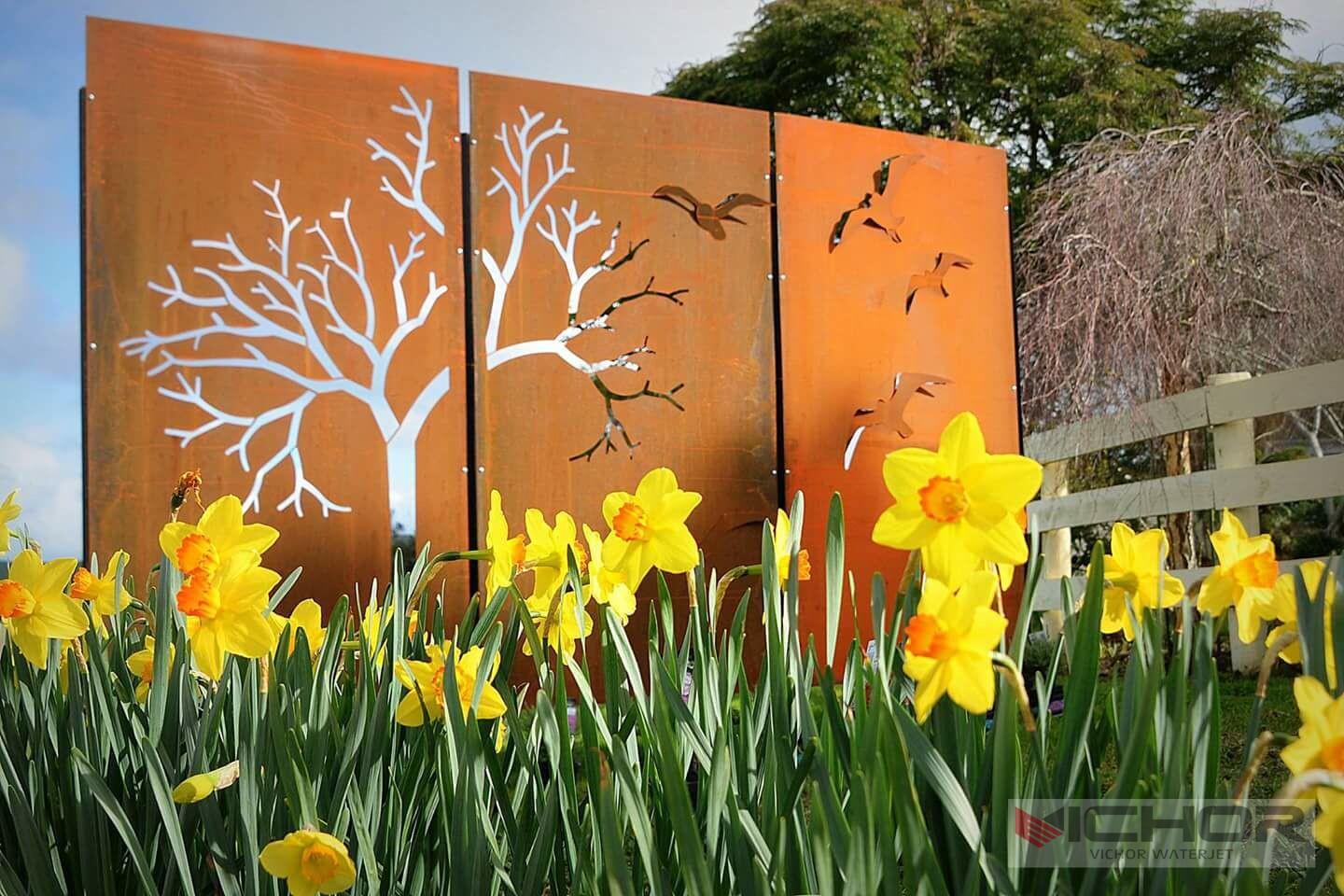
Art and Architecture: cutting intricate patterns in brass or stainless steel for signage and facades.
No other tool offers the flexibility to switch from cutting 4-inch steel plate to cutting a delicate copper gasket in minutes. This is the power of a water jet cutter metal solution.
Future Trends in Water Jet Technology
The industry is moving toward automation. Modern water jet cutter metal machines are being integrated with robotic arms for loading and unloading.
Software is also improving. Predictive algorithms now adjust the cutting speed around corners to prevent “taper” (where the bottom of the cut is wider than the top). VICHOR is continually updating their control systems to ensure their water jet cutter metal units stay ahead of the curve.
We are also seeing 90,000 PSI pumps becoming more common. Higher pressure means faster cutting speeds and lower abrasive usage. As technology advances, the water jet cutter metal process becomes more efficient and cleaner.
Why VICHOR Fits Your Production Line
Choosing a manufacturer is about trust. VICHOR understands the international market. They know that when you order a water jet cutter metal machine, you expect it to work out of the crate.
Their support teams assist with installation and training. Learning to operate a water jet cutter metal system is easier than learning a CNC mill, but training is still essential. VICHOR ensures your operators know how to handle the high-pressure systems safely.
From spare parts availability to software upgrades, partnering with a brand like VICHOR ensures your water jet cutter metal investment is protected.
The decision to invest in a water jet cutter metal machine changes the capabilities of your workshop. You gain the ability to cut virtually any material without heat damage, significantly reducing post-processing time.
While lasers are fast and plasmas are cheap, the water jet cutter metal system offers the balance of precision, thickness capacity, and material versatility that modern manufacturing demands. Whether you are cutting heavy machinery parts or delicate aerospace components, the water jet is often the best tool for the job.
If you are ready to explore high-performance cutting solutions, consider VICHOR. Their dedication to quality and support makes them a standout choice in the global market. A water jet cutter metal machine is a long-term asset; make sure you choose the right one.
Common Questions About Water Jet Metal Cutting
Q1: Will a water jet cutter metal machine cause the metal to rust?
A1: The cutting process uses water, so the metal gets wet. However, the process is very fast. Most operators use an air hose to dry the parts immediately after cutting. For materials prone to rapid rusting (like mild steel), rust inhibitors can be added to the water tank of the water jet cutter metal system to prevent surface corrosion during the cut.
Q2: How thick can a water jet cutter metal machine actually cut?
A2: A standard industrial water jet cutter metal machine can cut through 6 to 12 inches of steel. While it can cut thicker, the speed decreases significantly. For most commercial applications, cutting between 0.5 inch and 4 inches is the “sweet spot” where water jet is the most efficient choice compared to other methods.
Q3: Is the “water jet cutter metal” process loud?
A3: Yes, the process involves high-volume noise, primarily from the water stream breaking the sound barrier (Mach speeds) and hitting the water in the tank. However, most modern water jet cutter metal machines allow for “underwater cutting.” By raising the water level in the tank to submerge the nozzle and the workpiece, noise is drastically reduced, and the workshop stays much cleaner.
Q4: How expensive is the abrasive for a water jet cutter metal system?
A4: Garnet abrasive is the main consumable cost. Prices vary by location and quality, but it typically costs between $0.20 and $0.40 per pound. A typical water jet cutter metal machine might use 0.5 to 1.5 pounds per minute depending on the pump setting and nozzle size. Brands like VICHOR help optimize this consumption to save money.
Q5: Can a water jet cutter metal machine engrave as well as cut?
A5: Yes. By lowering the water pressure and adjusting the speed, a water jet cutter metal machine can perform “etching” or scribing. This is useful for adding part numbers, logos, or assembly marks directly onto the metal piece before cutting it out, all in the same setup.