6 Key Benefits of Water Jet Cutting Steel for Industrial Fabrication
In the world of industrial manufacturing and metal fabrication, precision and versatility are non-negotiable. One technology stands out for its ability to handle complex tasks with exceptional accuracy and minimal material waste: water jet cutting steel. This process utilizes a high-pressure stream of water, often mixed with an abrasive substance, to slice through steel and other tough materials. Unlike thermal cutting methods, water jet cutting steel is a cold process, meaning it produces no heat-affected zones (HAZ), preserving the structural integrity and original properties of the metal. This makes it an indispensable solution for industries ranging from aerospace to architectural design.
How Does the Water Jet Cutting Process Work?
The core principle behind water jet cutting steel is deceptively simple yet engineered for extreme power.
A high-pressure pump intensifies water pressure to levels exceeding 60,000 PSI. This ultra-pressurized water is then forced through a tiny gemstone orifice, creating a supersonic stream.
For cutting hard materials like steel, an abrasive garnet is introduced into this stream. The abrasive particles mix with the water in a focusing tube, creating an erosive jet that cuts through the metal.
The cutting head is controlled by a computer numerical control (CNC) system. This allows for incredibly precise movements, enabling the cutting of intricate shapes and patterns directly from digital design files.
Primary Applications and Industries Served
The ability of water jet cutting steel without altering its internal structure opens doors to countless applications.
In aerospace, it is used for cutting turbine components, titanium parts, and aluminum alloys where precision and no thermal distortion are critical.
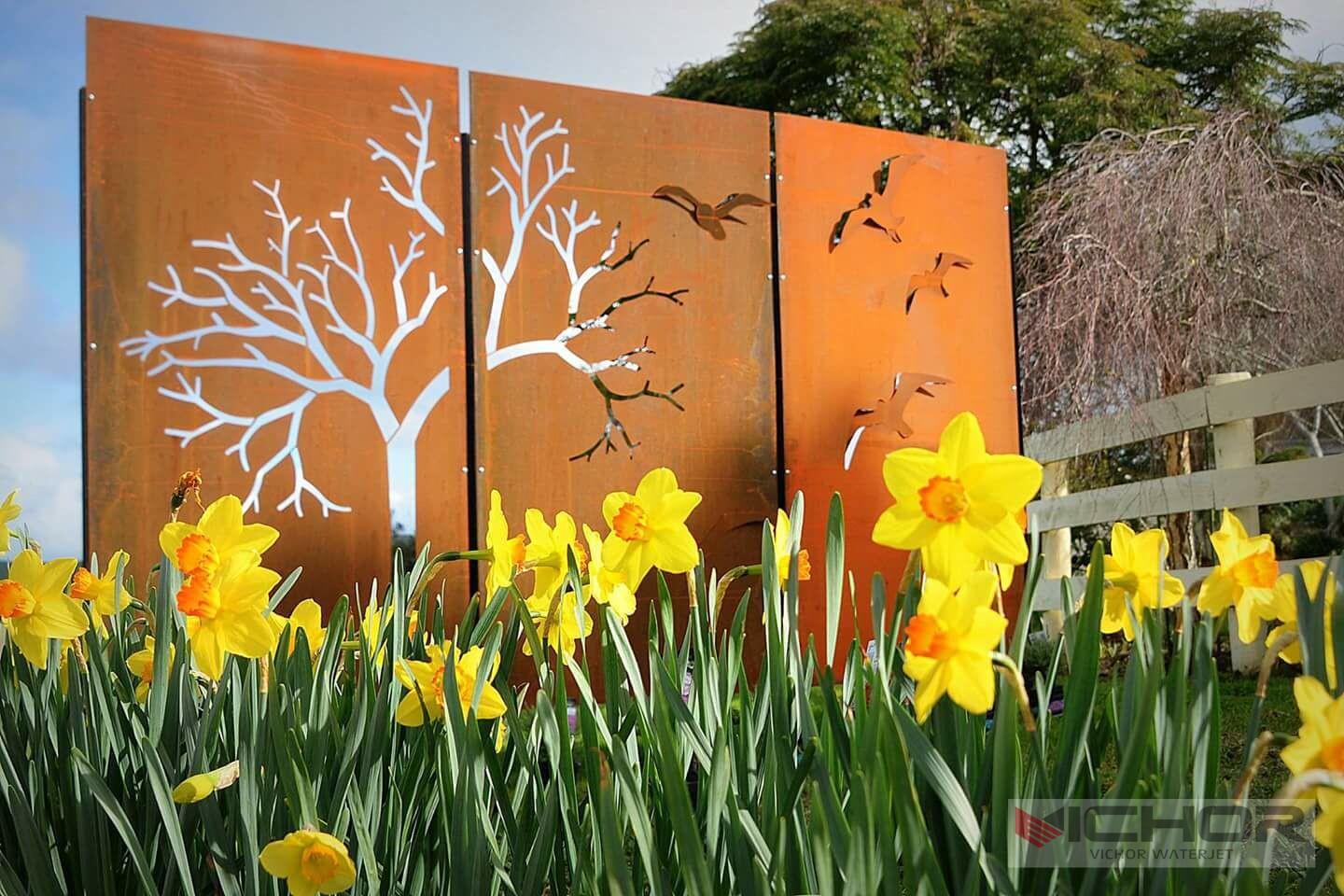
The architectural sector relies on it for creating detailed decorative panels, signage, and structural components from stainless steel and other metals.
Heavy machinery manufacturers use it to produce thick, durable parts. The automotive industry utilizes it for prototypes, gaskets, and interior components.
Artists and sculptors also favor this method. It allows them to work with metal as a medium, achieving detailed artistic expressions that would be impossible with traditional tools.
Major Advantages Over Other Cutting Methods
Choosing water jet cutting steel offers distinct functional benefits that other technologies cannot match.
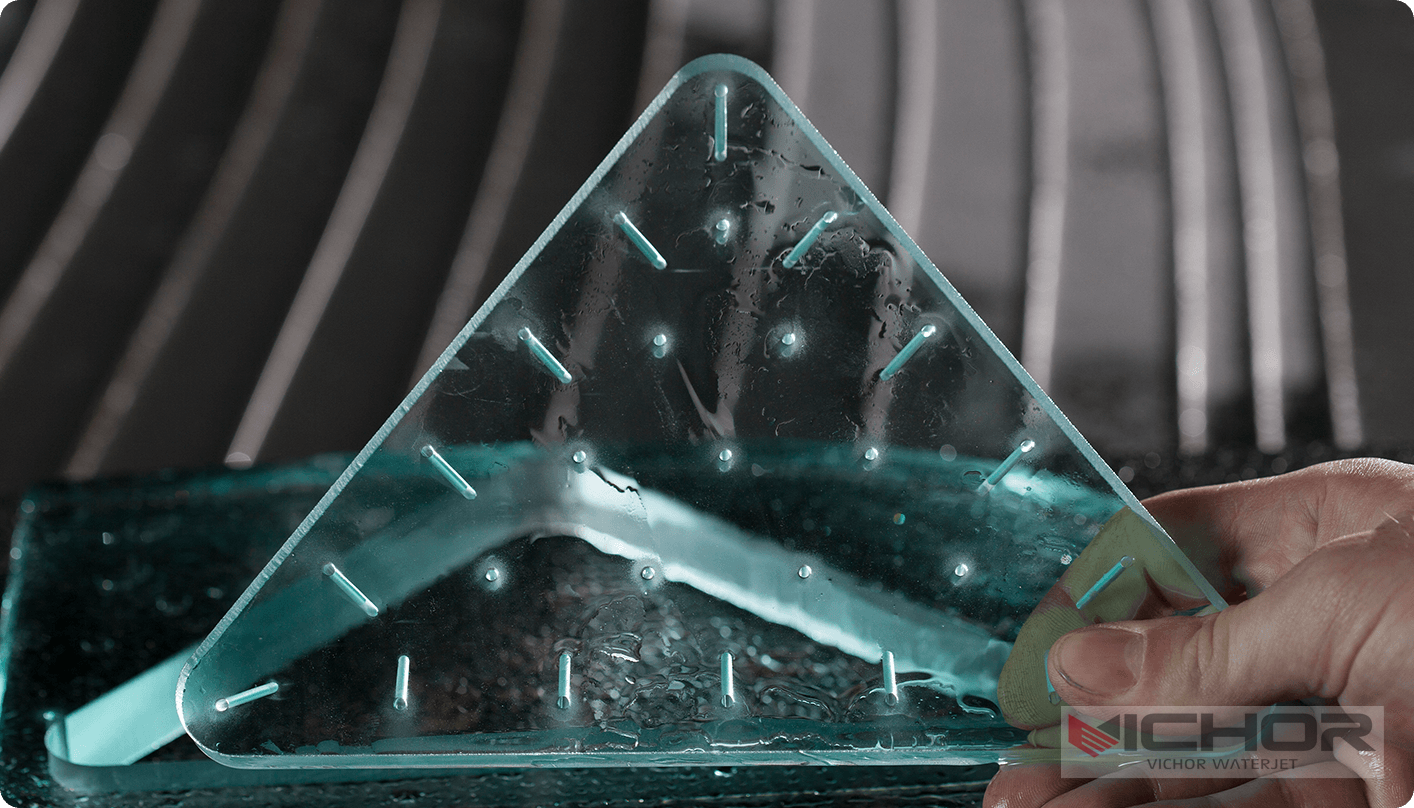
The complete absence of heat is the most significant advantage. There is no thermal stress, hardening, or warping of the cut edges.
It is a truly versatile, multi-material process. The same machine can cut steel, aluminum, stone, glass, rubber, and composites simply by adjusting parameters.
It produces a high-quality edge finish, often requiring no secondary finishing work. The cut is clean, smooth, and precise.
The process is environmentally friendly. It uses water and natural garnet, producing no toxic fumes or gases. The water can be recycled in closed-loop systems.
Understanding the Different Types of Water Jets
Not all water jet systems are the same, and selection depends on the material.
Pure water jets are used for cutting soft materials like rubber, foam, and food products. They are not suitable for metals.
Abrasive water jets are the standard for cutting steel, metals, stone, and ceramics. The addition of garnet abrasive enables the cutting of hard materials.
Systems can also be categorized by pressure levels. Standard systems operate around 60,000 PSI, while ultra-high pressure systems can reach 90,000 PSI or more for faster cutting speeds on tough materials.
Cost Considerations and Pricing Factors
The price of water jet cutting steel services is not a flat rate. It depends on several project-specific variables.
Material type and thickness are primary cost drivers. Thicker steel requires more time and abrasive, increasing the price.
The complexity of the cut is crucial. Simple straight lines cost less than intricate designs with many curves and sharp angles, which reduce cutting speed.
Quantity also affects pricing. High-volume production runs often benefit from a lower cost per part due to optimized setup and running time.
Operational costs include abrasive garnet consumption, pump maintenance, and machine wear parts. Reputable providers like VICHOR optimize these factors to offer competitive and transparent pricing.
Selecting a Service Provider: What to Look For
Finding the right partner for your water jet cutting steel needs requires careful evaluation.
Look for a provider with a proven track record and technical expertise in handling projects similar to yours. Experience with complex, high-tolerance work is key.
Inspect their equipment portfolio. Modern, well-maintained pumps and CNC tables ensure precision, reliability, and the capability to handle your material thickness.
Assess their design support and software capabilities. A good service will help optimize your designs for the water jet process to save time and material.
Consider their secondary service offerings. Providers like VICHOR often offer value-added services such as finishing, deburring, and assembly, providing a complete fabrication solution.
Integrated Solutions for Complex Fabrication Challenges
Today’s leading companies offer more than just cutting; they provide integrated engineering solutions.
This begins with design-for-manufacturability (DFM) consultations. Experts analyze your part design to suggest modifications that improve cut quality and reduce costs on the water jet.
Material sourcing and logistics support can be part of the package, streamlining your supply chain.
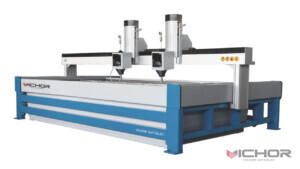
For large-scale projects, providers may employ multiple cutting heads or advanced nesting software. This maximizes material utilization from a single steel sheet, minimizing waste.
Global leaders like VICHOR excel in delivering these tailored, end-to-end solutions. They combine advanced water jet cutting steel technology with deep industry knowledge to solve complex fabrication challenges efficiently.
In conclusion, water jet cutting steel represents a pinnacle of flexible, precise, and material-friendly fabrication technology. Its unique cold-cutting capability ensures that the inherent qualities of the steel remain untouched, making it the preferred choice for critical applications across diverse industries. As technology advances, the efficiency, speed, and affordability of this process continue to improve, solidifying its essential role in modern manufacturing.
Frequently Asked Questions (FAQs)
Q1: What is the maximum thickness of steel that can be cut with a water jet?
A1: Abrasive water jets are capable of cutting steel over 12 inches (300 mm) thick. However, the practical maximum thickness for maintaining high precision and a quality edge finish is typically in the range of 6 to 8 inches (150-200 mm). Extremely thick cuts are possible but at a reduced cutting speed.
Q2: Does water jet cutting cause any corrosion on the steel afterward?
A2: When cutting mild steel, there is a potential for surface rusting if the cut parts are not dried promptly, as the process uses water. However, this is superficial and can be easily prevented by applying a rust inhibitor or drying the parts immediately after cutting. Stainless steel and other corrosion-resistant alloys are generally not affected.
Q3: How does the precision of water jet cutting compare to laser cutting for steel?
A3: Water jet cutting is highly precise, with tolerances typically around +/- 0.005 inches (0.13 mm). Laser cutting can achieve similar or slightly tighter tolerances on thin to medium-thickness steel. The key difference is that water jet has no heat effect, making it more precise for parts where thermal distortion is a concern, and it can cut much thicker materials than a standard laser.
Q4: What is the typical lead time for a custom water jet cutting steel project?
A4: Lead time varies based on project complexity and provider capacity. For standard projects, it can range from a few days to a week. Providers like VICHOR often offer rapid prototyping services with shorter turnarounds. Complex, high-volume jobs require more time for programming, setup, and production.
Q5: Is water jet cutting a cost-effective method for prototyping?
A5: Absolutely. Water jet cutting steel is excellent for prototyping. It requires no hard tooling, so design changes can be made quickly and inexpensively in the CAD file. It allows for the use of actual production-grade materials, providing a functional prototype that accurately represents the final part’s properties, all without the high setup costs associated with die or mold making.