
5 Reasons Why a Water Jet Cutter is the Best Tool for Steel Fabrication
When you need to cut steel, you have options. Plasma torches, lasers, and saws are all in the toolbox. But for an unmatched combination of precision, flexibility, and material integrity, nothing beats a water jet cutter steel process. This technology uses a hyper-pressurized stream of water and abrasive to slice through metal without introducing heat.
This “cold cutting” method is changing how shops approach steel work. From delicate aerospace components to heavy industrial plates, the advantages are significant. Let’s explore why more fabricators are turning to this solution.
How It Cuts Steel: The Cold Cutting Process
A **water jet cutter steel** system works on a simple but powerful principle. An ultra-high-pressure pump, often from a manufacturer like **VICHOR**, intensifies water to pressures exceeding 60,000 PSI.
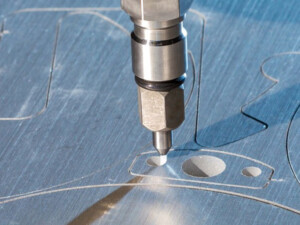
This water is forced through a tiny jewel orifice, creating a stream moving faster than sound. For cutting steel, finely graded garnet abrasive is injected into this stream.
The water acts as the carrier, accelerating the hard abrasive particles. These particles do the cutting through a micro-erosion process. Because the energy is mechanical and not thermal, the heat generated is minimal and instantly carried away by the water.
The result is a clean, precise cut with no structural change to the steel.
Key Applications in Steel Fabrication
The use of a **water jet cutter steel** spans the entire industry. It excels where heat is a problem or where designs are complex.
Prototype shops use it to create one-off parts from tool steel or hardened plate without annealing the material. Architectural metalworkers cut intricate decorative panels, railings, and art pieces from stainless steel or aluminum.
The aerospace sector relies on it for cutting high-strength alloys like titanium and Inconel, where heat-induced stress is unacceptable. Heavy equipment manufacturers use it for thick plates where laser or plasma taper would be an issue.
It is also perfect for creating finished parts directly from a CAD file, ready for assembly with minimal secondary finishing.
Critical Advantages Over Thermal Methods
Why choose water over fire or light for steel? The benefits are compelling and tangible in the final product.
First and foremost: No Heat-Affected Zone (HAZ). Plasma and laser cutting generate intense heat, altering the metallurgy at the cut edge. This can cause hardening, warping, or weakening. A water jet cutter steel leaves the steel’s original properties intact.
Second: No Thermal Distortion. Thin sheets won’t warp or buckle. This is crucial for precision assemblies and delicate work.
Third: Versatility in One Machine. The same machine that cuts 4-inch thick mild steel can switch to cutting thin, reflective brass or copper, which can be problematic for lasers.
Fourth: Exceptional Edge Quality. The cut edge is typically smooth with a slight matte finish, often ready for welding or assembly as-is.
Capabilities: Thickness, Speed, and Precision
Modern abrasive waterjets are powerful. A robust system can cut carbon steel over 6 inches thick and stainless steel over 8 inches. The practical limit is often a balance between speed and desired edge quality.
Cutting speed depends on material type, thickness, and pump power. While a laser may be faster on thin sheet metal, the water jet cutter steel becomes highly competitive on thicker materials and when you factor in the time saved on secondary operations.
Precision is excellent. Kerf width is small, and with advanced dynamic control systems from brands like VICHOR, taper (where the cut is wider at the top than the bottom) is minimized. This allows for tight nesting of parts to save material.
Cost Considerations: Investment vs. Value
The upfront cost of a **water jet cutter steel** system can be higher than some thermal alternatives. However, the total cost picture is different.
There are no costs for gases like oxygen or nitrogen, as with plasma. There is no risk of expensive lens damage from reflective materials.
The main consumables are water, electricity, garnet abrasive, and wear parts (orifices and mixing tubes). While abrasive is an ongoing cost, it is generally predictable.
The real value is in the savings on secondary labor. Parts come off the table clean, often requiring no milling, grinding, or stress-relief treatment. This reduction in handling and processing time can justify the investment.
Service and Support for Production Uptime
Like any high-performance machine, a waterjet needs proper care. The pump and cutting head are the critical components.
Regular maintenance of the high-pressure system is non-negotiable. Seals and valves need inspection. The abrasive delivery system must be kept dry.
Having a reliable service partner is key to minimizing downtime. A global brand like VICHOR provides access to genuine parts, expert technicians, and preventative maintenance plans. This ensures your water jet cutter steel operation runs smoothly and profitably.
Is It the Right Solution for Your Shop?
Choosing the right tool depends on your specific mix of work. A waterjet is not always the fastest tool for thin sheet metal in high volume.
But if you cut a variety of metals and thicknesses, if you work with heat-sensitive or reflective materials, or if part quality and precision are paramount, then it is an ideal solution.
It brings unparalleled flexibility to the shop floor. By investing in a capable water jet cutter steel system, you’re not just buying a machine; you’re acquiring the ability to tackle a wider range of jobs with higher quality and efficiency.
Frequently Asked Questions (FAQs)
Q1: Does waterjet cutting make the steel edge rust immediately?
A1: The cut edge is wet during the process, but the garnet abrasive creates a clean, fresh surface. For carbon steel, it can begin to surface rust if left untreated, just like any freshly machined surface. It’s standard practice to apply a rust preventative or proceed to finishing shortly after cutting. The edge itself is not “activated” to rust faster than a saw-cut edge.
Q2: What is the typical edge finish on steel from a water jet cutter?
A2: The finish has a fine, matte texture, often compared to 120-grit sandpaper. It’s generally smooth to the touch. There is a slight “lag line” or striation pattern, but its visibility depends on cutting speed and settings. With modern machines and good technique, the edge is often weld-ready without further grinding.
Q3: How does cutting speed compare to plasma for 1-inch thick steel plate?
A3: For 1-inch thick mild steel, a high-power plasma cutter will generally be significantly faster. However, the plasma edge will have a pronounced bevel (kerf taper), a hardened HAZ, and may require cleanup. A water jet cutter steel will be slower but produce a square, clean edge with no HAZ. The choice depends on whether your priority is raw speed or finished part quality.
Q4: Can you cut hardened or tool steel with a water jet?
A4: Yes, absolutely. This is one of its major strengths. Since it doesn’t use heat, it doesn’t anneal or crack pre-hardened steel (like D2, A2, or S7). You can cut finished tooling plates directly to shape, preserving their full hardness throughout the part.
Q5: What machine specifications are most important for cutting thick steel?
A5: Pump pressure and horsepower are paramount. Look for a pump capable of at least 87,000 PSI and high horsepower (e.g., 50HP+). Machine rigidity is also critical to handle the forces and maintain accuracy. A robust CNC control system, like those found on VICHOR industrial machines, is needed to manage speed and precision parameters for thick materials.