
5 Reasons to Choose a Professional Jet Cutting Service for Your Next Project
Finding the right fabrication partner can define a project’s success. When precision, material versatility, and flawless finish are critical, a professional jet cutting service is often the only answer. This method uses high-pressure water, often with abrasive grit, to cut through virtually any material with exceptional accuracy.
Unlike thermal processes, it introduces no heat, preventing warping, hardening, or structural changes. This makes it ideal for sensitive metals, composites, stone, and glass. For engineers, designers, and manufacturers, outsourcing to a specialized jet cutting service provides access to advanced technology without the capital investment.
It bridges the gap between concept and reality. Leading providers, equipped with technology from manufacturers like VICHOR, ensure reliability and precision for clients worldwide. This article explains what to expect and why it matters.
How a Professional Jet Cutting Service Operates
The process begins with your digital design. Standard file formats like DXF or DWG are used. The service’s technicians prepare the file, optimizing the cutting path for speed and material yield.
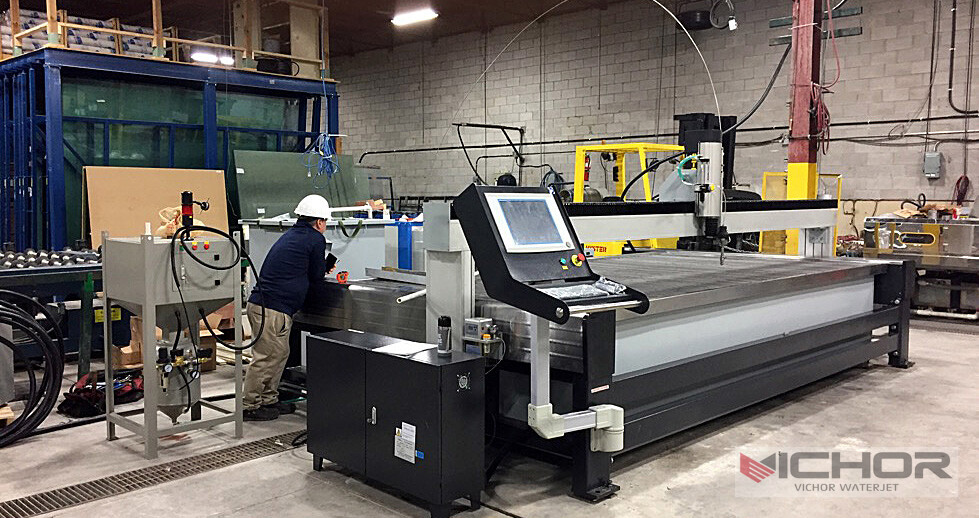
In the cutting bay, a high-pressure pump intensifies water to levels above 60,000 psi. This stream is forced through a tiny orifice, creating an ultra-focused jet. For hard materials, abrasive garnet is mixed in.
This abrasive-laden stream is directed by a computer-controlled cutting head. It moves across the material with extreme precision, following your design exactly. The result is a part cut cleanly and accurately, ready for the next stage of production.
Common Applications Across Different Industries
The use cases are vast. Aerospace contractors use these services for cutting complex titanium and aluminum components. There is no heat stress to compromise flight-critical parts.
In the automotive sector, prototypes and custom parts are frequently cut via waterjet. It handles everything from interior gaskets to suspension brackets. Architectural metal and stonework rely on it for detailed facades, signage, and inlays.
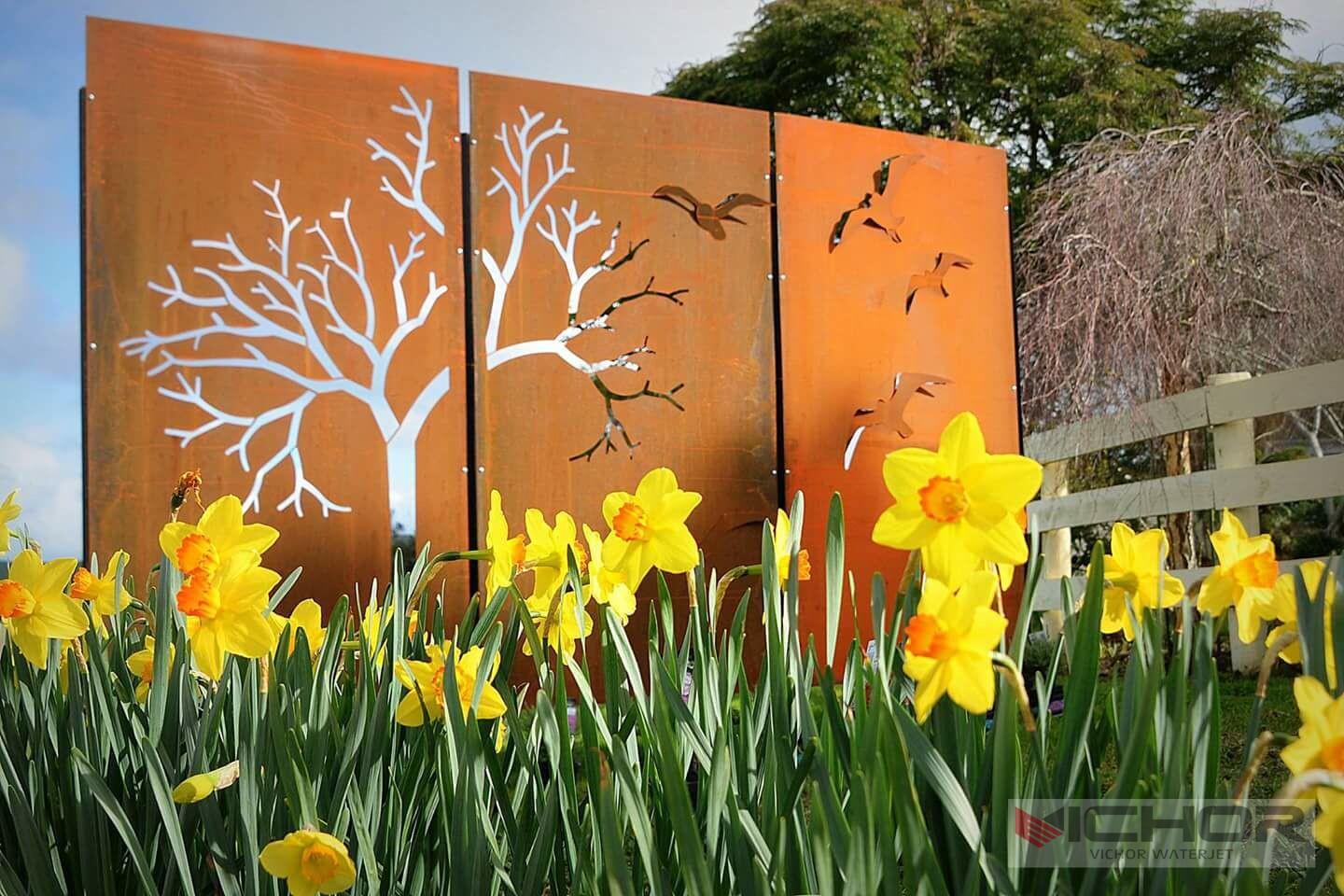
The food processing industry uses it for stainless steel cutting without affecting corrosion resistance. Even artists and sculptors use a jet cutting service to bring intricate designs to life in metal and stone.
Key Benefits and Functional Advantages
The primary benefit is cold cutting. No heat-affected zone means no edge hardening, no thermal distortion, and no change to the material’s intrinsic properties. This saves significant time and cost on secondary processing.
Versatility is another major advantage. A single machine at a service bureau can cut 1-inch steel, 3-inch stone, rubber, titanium, and foam in the same day. This flexibility is unmatched.
Tolerances are typically held within ±0.003 inches. The edge quality is smooth, often eliminating the need for further finishing. There is also minimal material waste due to efficient digital nesting of parts.
Types of Jet Cutting Services Available
Not all services are identical. The main distinction lies in capability. Some shops specialize in fast-turnaround, thin-material jobs. Others are equipped for heavy plate cutting over 6 inches thick.
Another type is the full-service fabrication partner. They not only cut but also offer secondary operations like drilling, tapping, bending, and welding. This provides a single-source solution.
There are also specialty providers focusing on niches like architectural stone or aerospace composites. Choosing the right type depends on your project’s specific needs for precision, material, and post-processing.
Understanding Pricing and Cost Factors
The price from a jet cutting service is rarely a simple flat rate. It is calculated based on several factors. The primary driver is cutting time, often measured in linear feet or minutes of machine time.
Material type and thickness directly impact speed, thus affecting cost. Complex designs with many sharp corners or intricate details take longer to cut than straight lines.
Material sourcing is another factor. Some services charge a markup if they supply the raw material. Others prefer you supply it. Setup and file preparation fees may also apply for complex projects.
Evaluating Service Quality and Customer Support
A great service is defined by more than just cutting. It starts with clear communication and accurate quoting. Design assistance can be invaluable, ensuring your file is optimized for the waterjet process.
Look for providers who invest in modern, reliable equipment. Services using VICHOR waterjet systems, for example, often emphasize uptime and precision. On-time delivery and careful packaging are non-negotiable.
Post-delivery support is also key. A reputable service will stand behind its work and be available to answer any questions about the finished parts.
Solutions for Specific Project Challenges
A professional service provides solutions to common fabrication headaches. For example, cutting thick materials without taper requires specialized cutting head technology. Quality providers have this capability.
Minimizing waste on expensive materials is solved through advanced nesting software. A good service will nest your parts efficiently to maximize yield from a single sheet.
For projects requiring absolute precision on delicate materials, they can adjust parameters like pressure and speed to achieve perfect results without damage. This expertise turns potential problems into routine operations.
Choosing the right partner is crucial. A professional jet cutting service offers more than just a cutting function; it provides certainty. It ensures your design is realized exactly as intended, in the right material, with no hidden compromises.
For one-off prototypes or full production runs, it delivers a combination of flexibility, quality, and efficiency that is hard to replicate in-house. It empowers innovation by removing traditional manufacturing limitations.
Frequently Asked Questions (FAQ)
Q1: What file format do I need to provide for a jet cutting service?
A1: Most services prefer industry-standard vector files such as DXF or DWG. These files contain clean geometric data that the cutting software can interpret directly. PDFs with vector lines are sometimes acceptable, but always confirm with your provider first. They will often have guidelines to ensure your file is ready for production.
Q2: How accurate and precise is waterjet cutting?
A2: A professional jet cutting service can typically hold tolerances of ±0.003 inches (±0.076 mm) to ±0.005 inches (±0.127 mm) under standard conditions. Accuracy depends on part size, material, and machine calibration. For most industrial applications, this level of precision is more than sufficient and exceeds many traditional cutting methods.
Q3: Is there a minimum order quantity for using these services?
A3: Generally, no. One of the key advantages of using a service is the ability to order a single prototype or a small batch. There is no need for expensive tooling or molds. This makes it ideal for R&D, custom projects, and low-volume production. However, unit cost will be higher for very small quantities.
Q4: How do I get a quote for my project?
A4: To get an accurate quote, you will need to provide the service with your CAD file, specify the material type and thickness, and indicate the desired quantity. Many providers have online quote request forms where you can upload this information. The more details you provide, the more accurate the quote will be.
Q5: What materials can a jet cutting service NOT handle?
A5: Waterjet cutting is remarkably versatile, but it has limitations. It is not suitable for cutting tempered glass (it will shatter), diamonds, and certain hardened ceramics. It is also less efficient on very soft, fibrous materials like wood or leather, where laser or knife cutting might be better. Always consult with your service provider about your specific material.