
5 Key Benefits of Using a Water Jet Steel Cutting Machine
Steel fabrication shops constantly seek methods that deliver speed without compromising edge quality. A water jet steel cutting machine from VICHOR solves this challenge by using ultra‑high pressure water mixed with garnet to slice through steel cleanly. Unlike plasma or laser, this process creates no heat‑affected zones, preserving the material’s integrity. In this article, we examine five major advantages of investing in a water jet steel cutting machine for your operation, and how VICHOR’s engineering makes it a smart choice.
Why a Water Jet Steel Cutting Machine Outperforms Traditional Methods
Cutting steel, especially hardened grades, often challenges thermal cutters. A water jet steel cutting machine works mechanically, eroding the material with abrasive particles. This cold‑cutting process avoids warping, cracking, or changes in metallurgy. Parts come off the table ready for welding or assembly, often eliminating secondary operations.
No Heat‑Affected Zone (HAZ)
Laser and plasma cutters generate intense heat, which can harden edges or create micro‑cracks. Waterjet cutting leaves the steel structure unchanged. This is critical for aerospace, automotive, and structural components where strength cannot be compromised.
Burr‑Free Edges
Mechanical cutting often leaves burrs that require grinding. The abrasive stream in a water jet steel cutting machine produces smooth edges. Many parts can be used immediately after cutting, saving labor and time.
Key Components of a VICHOR Water Jet Steel Cutting Machine
VICHOR builds systems that balance power with precision. Here are the essential parts you will find in our water jet steel cutting machine lineup:
- High‑Pressure Pump – Up to 90,000 psi (6,200 bar) to accelerate abrasive particles for fast steel cutting.
- Abrasive Delivery System – Precision metering ensures consistent flow of garnet, preventing nozzle clogging.
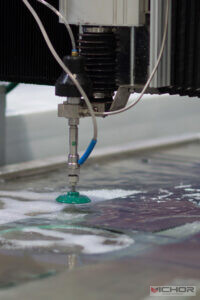
- Cutting Head with Mixing Tube – Tungsten carbide or diamond orifices focus the stream for narrow kerfs.
- CNC Motion System – Servo drives and linear guides maintain accuracy across the entire table.
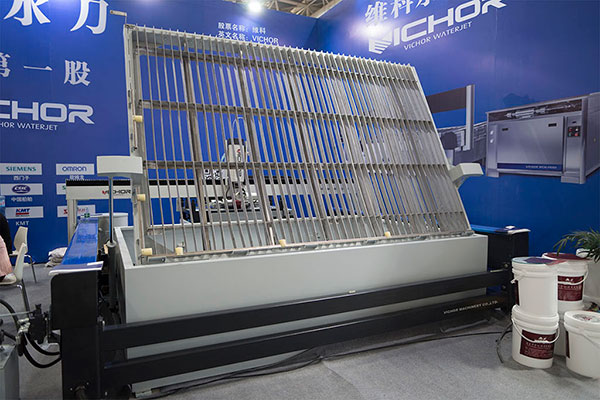
- Catch Tank & Slat Support – Heavy‑duty slats support steel plates while allowing debris to settle.
Every component is designed for 24/7 industrial use, ensuring your water jet steel cutting machine delivers consistent results.
Types of Steel You Can Cut with a Water Jet Steel Cutting Machine
Waterjet technology handles virtually every steel grade. Common applications include:
- Mild Steel – Structural beams, plates for construction, and automotive frames.
- Stainless Steel – Food equipment, architectural panels, and medical devices.
- Tool Steel – Dies, molds, and cutting tools without softening the material.
- High‑Strength Alloys – Armor plate, aerospace components, and heavy machinery parts.
- Spring Steel – Thin strips that would warp under heat.
Thickness capabilities range from 0.5 mm foil up to 200 mm plate, depending on pump power and abrasive mix.
Comparing Cutting Speeds: Water Jet Steel Cutting Machine vs. Other Methods
Speed depends on material thickness and desired edge quality. Below is a general comparison for 10 mm mild steel:
- Waterjet (60,000 psi) – 150–300 mm/min, with perfect edge quality and no HAZ.
- Laser – 500–1000 mm/min, but may cause dross on thicker steel and requires gas.
- Plasma – 1000–2000 mm/min, though edges are rougher and a HAZ is present.
- Oxy‑Fuel – 100–200 mm/min, limited to mild steel and leaves heavy scale.
While waterjet is not always the fastest, it often eliminates secondary finishing, making total throughput competitive.
Operating Costs of a Water Jet Steel Cutting Machine
Understanding ongoing expenses helps you budget accurately. Major cost factors include:
- Abrasive (Garnet) – Typically $0.15–$0.30 per kg. Consumption ranges 0.3–0.8 kg/min depending on nozzle size.
- Electricity – Pump motors consume 30–150 kW. VICHOR pumps feature variable frequency drives to optimize power use.
- Water – Minimal cost, especially if using a closed‑loop filtration system.
- Maintenance Parts – Mixing tubes, seals, and nozzles wear and need periodic replacement.
- Labor – One operator can often run two machines simultaneously due to CNC automation.
VICHOR provides cost calculators to help you estimate per‑part expenses.
Choosing the Right Water Jet Steel Cutting Machine for Your Shop
Selecting a machine involves matching capabilities to your production needs. Consider these factors:
- Table Size – Standard sizes: 2×4 m, 2×6 m, or custom dimensions for large plates.
- Pump Power – 30 HP for light gauge, 100 HP+ for thick plate and high throughput.
- Number of Cutting Heads – Dual or triple heads can multiply productivity for repetitive parts.
- Z‑Axis Clearance – Ensure enough height for thick stacks or tall parts.
- Software – Look for nesting capabilities to maximize material yield.
VICHOR offers free consultations to recommend the optimal configuration based on your typical steel cutting jobs.
Maintenance Best Practices for Longevity
Proper care keeps your water jet steel cutting machine running efficiently for decades. Follow these guidelines:
- Flush the system daily to prevent abrasive settling in lines.
- Inspect mixing tubes every 40–80 hours of cutting; replace when bore wear exceeds 0.1 mm.
- Check pump oil levels weekly and change per manufacturer schedule.
- Clean the tank and remove sludge regularly to maintain water quality.
- Calibrate abrasive flow monthly to ensure consistent cut quality.
VICHOR provides remote monitoring options that alert you to maintenance needs before failures occur.
Conclusion: Upgrade Your Fabrication with a Water Jet Steel Cutting Machine
Investing in a water jet steel cutting machine from VICHOR brings precision, versatility, and cold‑cutting benefits to your steel work. Whether you cut structural beams, intricate brackets, or thick armor plate, our machines deliver consistent results with minimal waste. Contact VICHOR today to discuss your requirements and request a cutting test on your own steel samples.
Frequently Asked Questions (FAQ)
Q1: How thick of steel can a water jet steel cutting machine cut?
A1: With a 100 HP pump and abrasive, it can cut mild steel up to 200 mm thick. Thinner materials (0.5 mm) are also cut easily without distortion.
Q2: Does waterjet cutting rust the steel?
A2: The process uses water, but parts are typically dried immediately after cutting. For carbon steel, some shops apply a light rust preventative if parts will be stored. Stainless steel is unaffected.
Q3: What is the typical kerf width when cutting steel?
A3: Kerf width ranges from 0.7 mm to 1.2 mm depending on nozzle size and abrasive flow. This is wider than laser but still allows tight nesting.
Q4: Can I cut stacked steel plates at once?
A4: Yes, waterjet can cut through stacked sheets clamped together, as long as the total stack height is within the machine’s capability. This improves productivity for thin parts.
Q5: What safety features are included on VICHOR machines?
A5: Full enclosure with safety interlocks, emergency stop buttons, pressure relief valves, and compliant guarding. VICHOR meets CE and OSHA standards.
Q6: How often must I replace the mixing tube?
A6: With proper abrasive quality, a tungsten carbide mixing tube lasts 80–120 hours of cutting. Diamond‑reinforced tubes can last 300+ hours.
Q7: Does VICHOR provide training for operating a water jet steel cutting machine?
A7: Yes, every purchase includes on‑site operator training, access to video tutorials, and a comprehensive manual. Remote support is also available.
For more information about a water jet steel cutting machine tailored to your needs, visit VICHOR online or speak with one of our application engineers.