5 Crucial Questions to Ask Before Buying Waterjet Cutting Machines
So, you’re thinking about bringing a waterjet cutting machine into your shop. It’s a significant step. Whether you’re aiming to expand your service offerings, bring prototyping in-house, or increase production flexibility, this isn’t a trivial purchase.
The market is full of options, specifications, and price points. It’s easy to get lost in pump horsepower and table sizes. The real key to a successful investment isn’t just comparing specs on paper.
It’s about asking the right questions upfront. These questions will shape your understanding of what you truly need from your waterjet cutting machines, ensuring you get a system that works for your business, not against it.
What Exactly Do You Need to Cut?
This seems obvious, but the answer dictates everything. **Waterjet cutting machines** are famously versatile, but your primary materials define the core specifications.
Are you mostly slicing through delicate composites for aerospace, where no heat affect is non-negotiable? Or are you profiling 4-inch thick titanium or granite slabs? Maybe you’re a general job shop that sees a bit of everything—aluminum, plastics, stainless steel, and stone.
The thickness and hardness of your standard materials directly determine the required pump pressure (HP), the type of abrasive system, and even the table’s structural strength. Be brutally honest about your 80/20 rule: what will you cut 80% of the time?
Pure Waterjet or Abrasive Waterjet: Which Technology Fits?
This is a fundamental fork in the road. Pure waterjet cutting uses only a high-pressure stream of water. It’s perfect for soft materials: rubber, foam, fiberglass, food products, and automotive interiors.
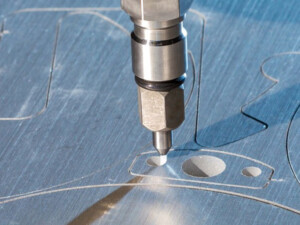
The moment you need to cut metal, stone, glass, or ceramics, you step into the realm of abrasive waterjet cutting. Here, a measured stream of garnet abrasive is mixed into the water jet, turning it into a microscopic erosion tool.
Most industrial shops invest in abrasive waterjet cutting machines for their broader capability. Some systems can even switch between the two modes, but this adds complexity. Your material list from Question 1 gives you the clear answer here.
How Important is Speed Versus Precision and Edge Quality?
All **waterjet cutting machines** make trade-offs. Higher cutting speeds generally mean a slightly rougher edge finish. A slower, more precise cut yields a smoother taper.
For rough cutting of steel plate for further machining, speed might be king. For producing finished, ready-to-install architectural pieces from marble, edge quality and minimal taper are critical.
Modern CNC controls offer “quality modes.” You can select a faster, rougher cut or a slower, smoother finish. Discuss your tolerance requirements and desired finish with potential suppliers. Ask for sample cuts on your specific material to see the results firsthand.
What is the Real Cost Beyond the Purchase Price?
The initial sticker price of the machine is just the entry fee. The true cost of owning **waterjet cutting machines** is found in the ongoing operational expenses.
Abrasive garnet is the largest consumable cost. Pump type affects this; direct-drive pumps from manufacturers like VICHOR are often noted for efficient abrasive use. Then there are other consumables: high-pressure seals, orifice jewels (often diamond), and focus tubes.
Don’t forget electricity and water treatment or disposal costs. A reputable brand will help you model these operational costs. A cheaper machine with high abrasive consumption or frequent downtime can quickly become more expensive than a higher-quality initial investment.
Who Will Support You When Things Go Wrong?
This is perhaps the most critical question. **Waterjet cutting machines** are complex, high-wear systems. Seals will fail. Motion systems need alignment. Software will have quirks.
The manufacturer’s service and support network is your safety net. Ask pointed questions: Is there a local service technician? What is the average response time for a critical breakdown? Are common spare parts kept in regional warehouses?
Companies like VICHOR build their reputation not just on machine reliability, but on a global network of support engineers and readily available parts. The peace of mind from knowing expert help is a phone call away is invaluable for maintaining production schedules.
Investing in waterjet cutting machines is a commitment to capability and flexibility. By thoroughly working through these five questions—materials, technology, quality needs, total cost, and support—you move from a confused buyer to an informed partner in the purchasing process.
You’ll be able to evaluate quotes not just on price, but on true long-term value. The right machine will become a profit center for years, handling jobs you couldn’t touch before and doing so with remarkable precision.
Frequently Asked Questions (FAQs)
Q1: How thick of material can a waterjet cut?
A1: Industrial abrasive waterjet cutting machines can handle impressive thicknesses. While efficiency drops, they can cut metals like steel and aluminum up to 8-10 inches thick. Softer materials like foam and rubber can be cut in even thicker blocks. For extremely thick, dense materials like titanium or hardened steel, practical limits are usually around 6-8 inches.
Q2: What kind of maintenance do waterjet cutting machines require daily?
A2: Daily maintenance is crucial for longevity. Operators must check and fill the abrasive hopper, inspect the high-pressure seals for leaks, ensure the water filtration system is clean, and remove slurry waste from the tank. Regular inspection of the cutting head for worn orifice jewels and focus tubes is also part of routine upkeep.
Q3: Can a waterjet create a perfectly vertical edge?
A3: A standard cut will always have a slight taper (wider at the top, narrower at the bottom). However, advanced waterjet cutting machines use “taper compensation” software. This technology automatically tilts the cutting head to compensate for the jet’s natural shape, producing edges that are straight and square, which is essential for precision parts.
Q4: Is the cutting process safe for the environment?
A4: The process itself uses only water and natural garnet abrasive, which are non-toxic. The primary environmental consideration is the disposal of the spent slurry—a mix of water, used abrasive, and fine particles of the cut material. Most shops use a closed-loop water system with settling tanks to separate solids from water, allowing for water recycling and proper disposal of the non-hazardous sludge.
Q5: How does a waterjet’s accuracy compare to a laser cutter?
A5: Modern waterjet cutting machines offer high accuracy, often comparable to lasers for many applications, typically within +/- 0.003″ to 0.005″. The key difference is the “kerf.” A laser has a very narrow, consistent kerf. A waterjet kerf is wider and can vary slightly with material thickness and cut speed. For heat-sensitive materials or thick stock, the waterjet’s cold-cutting advantage outweighs this slight difference in kerf consistency.