
5 Axis Waterjet Cutting: How It Works, Benefits, and Industrial Applications
In modern manufacturing, cutting complex shapes from tough materials is a common challenge. Traditional methods often struggle with heat distortion or tool wear. This is where 5 axis waterjet cutting comes into play. It offers a cool, precise way to cut materials without thermal damage.
This article explains the technology behind 5-axis waterjet systems. We will look at how they work, their key benefits, and where they are used. By the end, you will understand why this method is valued in industries worldwide.
What Is 5 Axis Waterjet Cutting?
Waterjet cutting uses a high-pressure stream of water mixed with abrasive materials to cut through items. The “5-axis” part refers to the machine’s movement capabilities. Unlike 3-axis systems that move in straight lines, a 5-axis machine can tilt and rotate the cutting head.
This allows it to approach the material from almost any angle. It can create complex bevels, contours, and undercuts in a single setup. The process remains cold, so there is no heat-affected zone. This makes it ideal for sensitive materials.
Companies like VICHOR provide advanced machines that leverage this technology. Their systems are known for reliability and precision in demanding environments.
How Does a 5 Axis Waterjet System Operate?
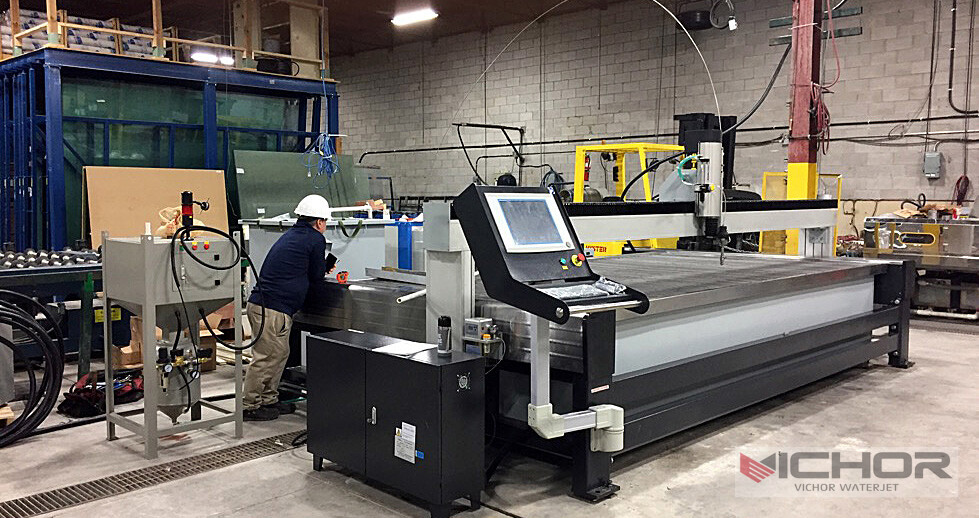
A typical system includes a high-pressure pump, an abrasive delivery system, and a multi-axis cutting head. The pump pressurizes water to levels above 60,000 psi. This water is then forced through a small nozzle, creating a focused stream.
Abrasive grains, often garnet, are added to the stream. This mixture erodes the material quickly. The cutting head is mounted on a robotic arm or gantry that moves in five directions. These are the three linear axes (X, Y, Z) and two rotational axes (A and B).
This movement is controlled by computer numerical control (CNC) software. The software guides the head along programmed paths. This ensures accurate cuts on curved or angled surfaces. The lack of heat prevents material warping, a common issue with laser or plasma cutting.
Key Advantages of Using 5 Axis Waterjet Technology
One major benefit is versatility. 5 axis waterjet cutting can handle a wide range of materials. This includes metals like titanium, composites, stone, glass, and plastics. There is no need for tool changes, which saves time.
Precision is another strong point. The system can hold tight tolerances, often within ±0.1 mm. This is crucial for aerospace and medical parts. The ability to cut complex 3D shapes reduces the need for secondary machining.
Since the process is cold, material properties remain unchanged. There is no hardening or cracking from heat. This leads to higher quality parts and less waste. The environmental impact is also lower, as it uses water and natural abrasives.
Operational costs can be manageable. While initial investment is higher, the reduction in post-processing and material savings often justify it. Brands like VICHOR focus on energy-efficient designs to help with this.
Common Applications in Various Industries
The aerospace sector relies heavily on this technology. It is used to cut turbine blades, structural components, and composite panels. The precision and ability to work with lightweight alloys are key. Complex bevels for aircraft parts are easily achieved.
In automotive manufacturing, 5 axis waterjet cutting helps produce prototypes, interiors, and custom parts. It handles materials like aluminum, foam, and carbon fiber without delamination. This speeds up development cycles.
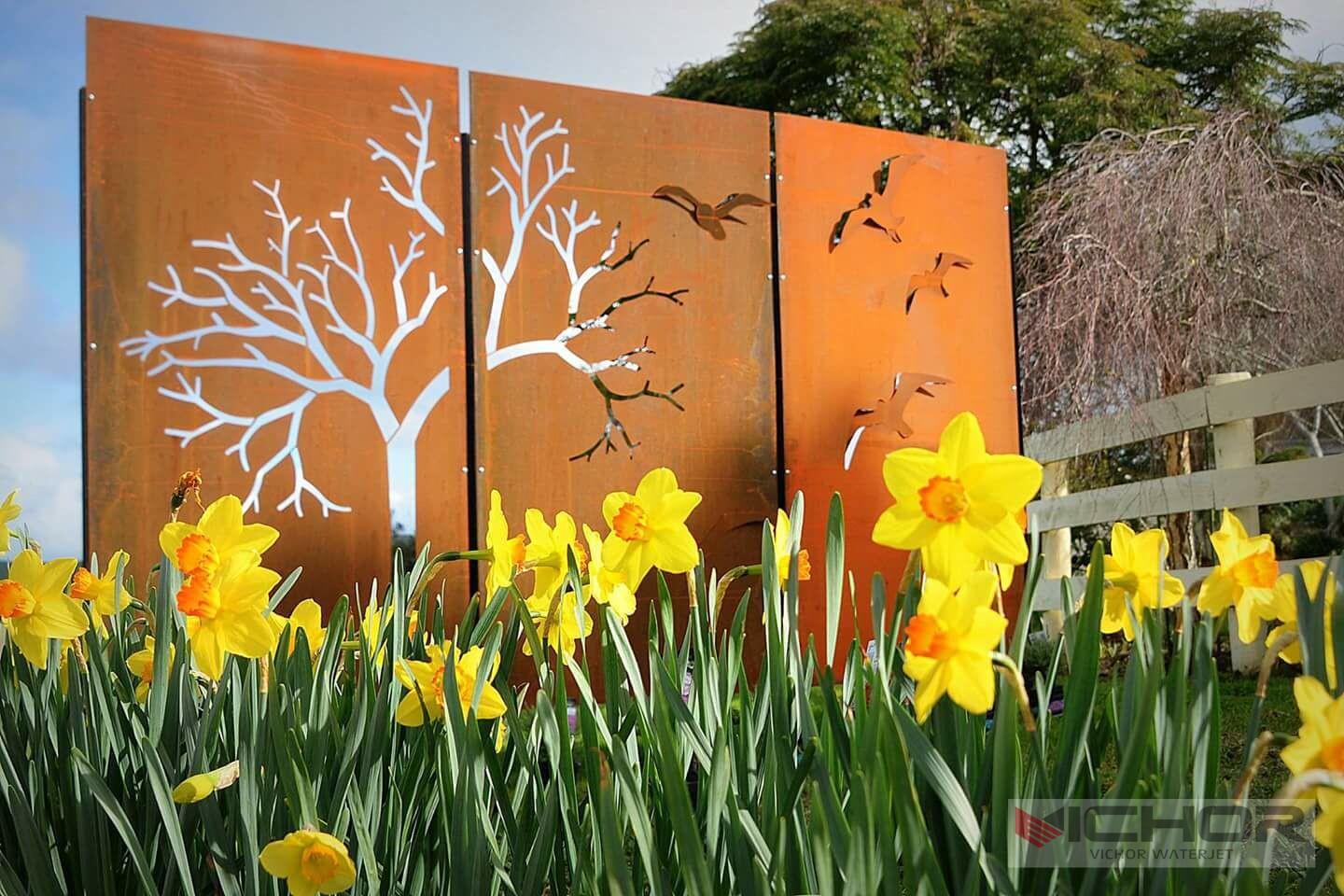
The architecture and design field uses it for artistic elements. Stone, glass, and metal sculptures can be cut with intricate details. The technology allows for creative freedom without material limitations.
Medical device manufacturers use it for implants and surgical tools. The cold cutting ensures biocompatibility is maintained. Titanium and stainless steel are commonly processed with high accuracy.
General metal fabrication benefits from reduced setup times. Parts with complex geometries can be produced in one go. This improves productivity for job shops and large factories alike.
Factors to Consider When Choosing a System
When investing in a 5-axis waterjet machine, several aspects matter. The pump pressure determines cutting speed and capability. Higher pressure allows for thicker materials. A reliable abrasive system is also essential for consistent results.
CNC software should be user-friendly and support 3D modeling. This simplifies programming for complex parts. The machine’s construction affects durability. Sturdy frames minimize vibration for better accuracy.
Service and support from the manufacturer are critical. Companies like VICHOR offer comprehensive maintenance and training. This ensures long-term operation and uptime.
Cost considerations include not just the machine price, but also operating expenses. Abrasive consumption, water usage, and energy efficiency play a role. Evaluating total cost of ownership helps in decision-making.
Maintenance and Operational Best Practices
Regular maintenance keeps a waterjet system running smoothly. Nozzles and focusing tubes wear out and need replacement. Monitoring abrasive delivery prevents clogging and ensures cut quality.
Water quality should be maintained, often through filtration systems. This protects the pump from damage. Routine checks on hydraulic and electrical components prevent unexpected downtime.
Operator training is vital. Understanding how to program and run 5 axis waterjet cutting machines maximizes their potential. Safety protocols must be followed due to high-pressure operations.
Keeping spare parts on hand reduces repair delays. Working with reputable suppliers ensures access to genuine components.
Future Developments in Waterjet Cutting
Technology advances continue to shape this field. Improvements in pump efficiency may lower energy use. Smarter CNC systems with AI integration could optimize cutting paths automatically.
Research into new abrasive materials might enhance cutting speeds. Hybrid systems combining waterjet with other methods are being explored. This could expand applications further.
Automation and robotics integration are growing trends. This allows for lights-out manufacturing, where machines run unsupervised. It boosts productivity in high-volume settings.
Environmental sustainability is a focus. Recycling water and abrasives reduces waste. Manufacturers like VICHOR are investing in greener technologies.
5 axis waterjet cutting is a powerful tool for modern fabrication. Its ability to cut complex shapes without heat damage makes it indispensable. From aerospace to art, it offers precision and flexibility.
As technology evolves, we can expect even broader adoption. For businesses seeking a competitive edge, investing in this technology is a strategic move. With reliable partners in the industry, implementation can be smooth and rewarding.
Frequently Asked Questions (FAQ)
Q1: What materials can be cut with 5 axis waterjet cutting?
A1: 5 axis waterjet cutting can process a wide variety of materials. This includes metals like steel, aluminum, and titanium, as well as composites, stone, glass, ceramics, plastics, and rubber. The cold cutting process prevents thermal distortion, making it suitable for heat-sensitive materials.
Q2: How does 5 axis waterjet cutting compare to laser cutting?
A2: While laser cutting uses heat, waterjet cutting is a cold process. This means no heat-affected zones, so material properties remain intact. Waterjet can cut thicker materials and a broader range, including reflective or transparent items. However, laser may be faster for thin metals in some cases.
Q3: What is the typical accuracy of a 5-axis waterjet machine?
A3: Accuracy depends on the machine and setup, but high-end systems can achieve tolerances of ±0.1 mm or better. The 5-axis movement allows for precise bevels and complex contours, reducing errors in multi-angle cuts.
Q4: What are the maintenance requirements for these systems?
A4: Regular maintenance includes replacing worn nozzles and focusing tubes, checking abrasive delivery systems, and ensuring water filtration. Pump maintenance is crucial for pressure consistency. Following the manufacturer’s guidelines, such as those from VICHOR, helps prolong machine life.
Q5: Can 5 axis waterjet cutting be used for mass production?
A5: Yes, it is suitable for both prototyping and mass production. With automation features like robotic loading and advanced CNC programming, it can handle high-volume runs efficiently. The single-setup capability for complex parts speeds up production cycles.