
water jet for industrial
The landscape of heavy manufacturing has shifted. Speed is no longer the only metric; material integrity and edge quality now dictate the market. This is where the specific capabilities of a water jet for industrial applications separate themselves from laser and plasma technologies. Unlike thermal processes that distort metal through high heat, waterjet technology offers a cold cutting solution that preserves the structural properties of the material.
Factory owners and procurement managers often struggle to balance operational costs with precision requirements. Choosing a water jet for industrial usage is not just about buying a machine; it is about integrating a versatile workflow that handles everything from 6-inch steel slabs to delicate aerospace composites.
Brands like VICHOR have recognized this need for adaptability. They engineer systems that withstand the rigorous demands of 24/7 production environments. This article analyzes the technical, commercial, and operational factors that define successful water jet for industrial implementation in modern factories.
The Cold Cutting Advantage in Water Jet for Industrial Applications
The primary reason engineers specify a water jet for industrial project is the absence of a Heat Affected Zone (HAZ). When you cut metal with a laser or plasma torch, the edges heat up rapidly. This changes the molecular structure of the metal.
Hardened edges can crack. They wreak havoc on milling tools during secondary machining. A water jet for industrial setup eliminates this issue entirely. The erosion process is mechanical, not thermal.
The friction heat generated by the abrasive particles is immediately absorbed by the water stream and flushed away. The part remains at room temperature. This is critical for aerospace components and certified structural steel where material properties must not be altered during fabrication.
Pressure Ratings: 60,000 PSI vs. 90,000 PSI
Pressure dictates speed. In the world of water jet for industrial processing, the standard has long been 60,000 PSI (4,100 bar). This pressure level is reliable and easier on seals and maintenance budgets.
However, the trend is moving toward hyper-pressure. Systems running at 87,000 or 90,000 PSI increase the velocity of the water stream. This results in a faster cut and lower abrasive consumption per inch.
For a high-volume water jet for industrial workshop, the higher pressure means more parts per hour. VICHOR offers intensifier pumps capable of sustaining these high pressures, ensuring that the velocity remains constant even during long cutting cycles on thick plates.
Versatility: One Machine for Multiple Materials
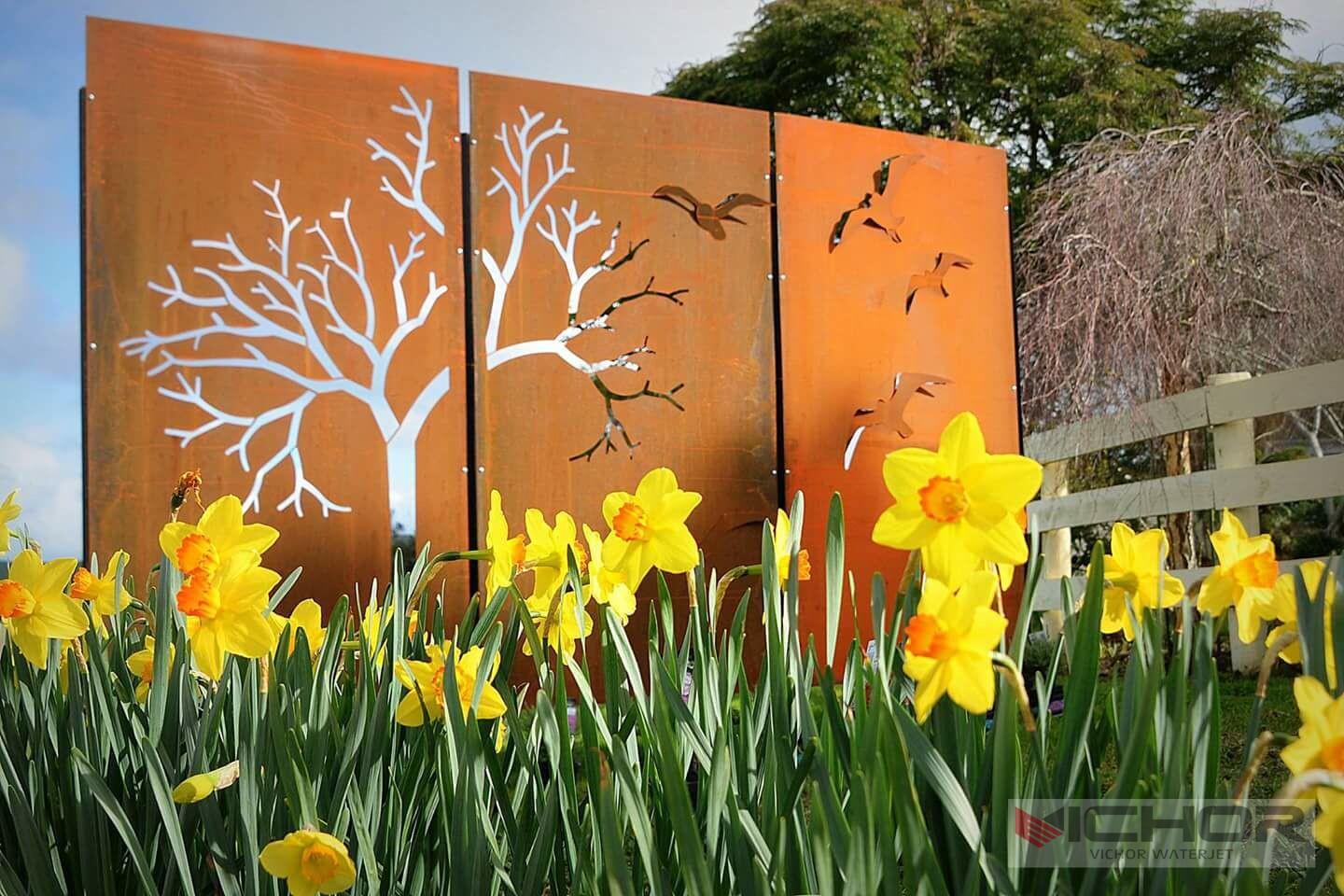
No other machine tool matches the versatility of a water jet for industrial use. A single workstation can process titanium in the morning and cut foam or rubber gaskets in the afternoon.
Lasers struggle with reflective metals like copper and aluminum. They also cannot cut thick composites without burning the resin. A water jet for industrial cutter does not care about reflectivity or electrical conductivity.
It cuts primarily based on material density. This flexibility allows job shops to bid on a wider variety of contracts without investing in multiple specialized machines. It is the “Swiss Army Knife” of the fabrication floor.
Understanding Abrasive Costs in Water Jet for Industrial Work
The largest variable cost in running a water jet for industrial machine is the abrasive garnet. This sand-like mineral is what actually does the cutting.
A typical machine might consume 0.5 to 1.5 pounds of garnet per minute. With garnet prices fluctuating, this adds up quickly. Optimizing the flow rate is essential for profitability.
Advanced software can regulate the abrasive flow. It reduces the amount of sand used on straight lines and increases it for corners. Managing this consumable is the key to maintaining a competitive hourly rate for any water jet for industrial service provider.
Edge Quality Standards: Q1 to Q5
Communication is vital in manufacturing. The industry uses a quality scale from Q1 to Q5 to define the finish produced by a water jet for industrial system.
Q1 is a separation cut. It is fast, rough, and used when the edge will be machined later. Q5 is a high-precision finish with virtually no taper or striations.
Understanding this range helps in quoting jobs. Not every part needs a Q5 finish. Running a water jet for industrial machine at Q5 speeds for a Q1 part is a waste of money. VICHOR controllers allow operators to select different qualities for different segments of the same part to optimize time.
The Role of VICHOR in Heavy Industry
Reliability is the currency of heavy industry. When a pump seal fails, production stops. VICHOR has carved a niche by focusing on the durability of their high-pressure components.
A water jet for industrial environment is harsh. Water, abrasive dust, and humidity are constant. VICHOR designs their machines with encapsulated ball screws and shielded ways to prevent premature wear.
Their focus on predictive maintenance helps facility managers plan downtime rather than reacting to emergency failures. This stability is what makes a water jet for industrial investment viable for just-in-time manufacturing supply chains.
Comparing Water Jet for Industrial Use Against Plasma
Plasma cutting is faster on mild steel. There is no debating that. If you are cutting mild steel plates where tolerances are loose, plasma is often cheaper.
However, plasma leaves a bevel (angle) on the edge and creates dross (slag). A water jet for industrial cut leaves a square edge with no dross.
If the part requires secondary operations like drilling or tapping, the hardened edge from plasma will destroy drill bits. The soft edge from a water jet for industrial process allows for immediate drilling and tapping, often saving money on the total process despite the slower cutting speed.
Taper Compensation Technology
The water stream naturally flares out as it cuts deeper. This creates a V-shaped taper on the part edge. In the past, this was a major limitation of water jet for industrial accuracy.
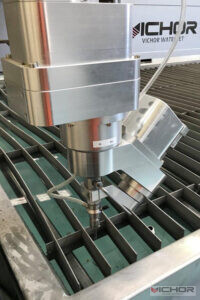
Modern systems use 5-axis cutting heads to compensate for this. The head tilts slightly to the side, angling the stream into the scrap material.
The result is a perfectly vertical part edge. This technology allows a water jet for industrial machine to hold tolerances as tight as +/- 0.002 inches, rivaling standard milling machines for certain applications.
Nesting Software and Material Yield
Raw material costs are rising. Steel, aluminum, and exotic alloys are expensive. The large kerf (cut width) of plasma or oxy-fuel wastes material.
A water jet for industrial nozzle has a small kerf, typically around 0.030 to 0.040 inches. This allows parts to be nested very closely together.
Sophisticated CAM software places parts with minimal webbing between them. For expensive sheets of Inconel or Titanium, the material savings generated by a water jet for industrial system can pay for the machine overhead purely through scrap reduction.
Environmental Impact and Sustainability
Modern factories are under pressure to be green. Water jet for industrial cutting is an inherently clean process. It produces no toxic fumes or vapors.
Laser and plasma cutting generate smoke and metal dust that require expensive filtration and ventilation systems. A water jet for industrial table cuts underwater or with a water catcher, trapping the dust.
The waste produced is inert garnet and metal particles. This sludge can often be disposed of in standard landfills. Furthermore, the water can be recycled using closed-loop filtration systems, making water jet for industrial technology a sustainable choice for eco-conscious manufacturers.
Maintenance Realities for Water Jet for Industrial Owners
Owning these machines requires a dedicated maintenance schedule. High-pressure water is destructive by nature. It wants to erode everything it touches, including the machine itself.
Seals, check valves, and orifices are consumables. A successful water jet for industrial operation has a routine. They swap high-pressure seals before they fail.
VICHOR supports this by providing accessible service points on their pumps. They understand that ease of maintenance directly correlates to machine uptime. Ignoring maintenance on a water jet for industrial unit will lead to catastrophic pressure loss and ruined workpieces.
Future Trends in Water Jet for Industrial Tech
The future lies in automation. Loading heavy plates onto the table is a bottleneck. We are seeing more water jet for industrial cells integrated with robotic loading arms.
Additionally, micro-waterjet technology is shrinking the scale. New nozzles can cut features smaller than a human hair. This opens up the medical device market to water jet for industrial fabrication.
As software becomes smarter, the machines will self-adjust for wear and abrasive inconsistencies. The definition of a water jet for industrial tool is evolving from a standalone machine to a fully connected node in the smart factory.
Conclusion: The Strategic Value of Waterjets
The adoption of water jet for industrial manufacturing is driven by the need for higher quality parts and material flexibility. While it may not always be the fastest method for every material, it is frequently the most accurate and risk-free.
By eliminating thermal distortion and enabling the cutting of virtually any material, these systems provide a safety net for fabricators. Companies that invest in robust equipment from partners like VICHOR position themselves to handle complex, high-margin work.
Ultimately, the choice to deploy a water jet for industrial solution is a strategic decision to prioritize edge quality and versatility over raw speed. In a market demanding ever-tighter tolerances, that is a winning strategy.
Common Questions About Water Jet for Industrial Use
Q1: How thick can a water jet for industrial applications cut?
A1: A standard water jet for industrial setup can cut steel up to 12 inches thick. However, the most common commercial range is between 0.5 inches and 4 inches. While it is physically possible to cut thicker materials, the cutting speed decreases significantly, which may affect the economic viability of the project compared to other methods like wire EDM.
Q2: Is a water jet for industrial cutting safer than laser cutting?
A2: Generally, yes. Water jet for industrial cutting does not generate heat, smoke, or toxic fumes, reducing fire risks and respiratory hazards. However, the system operates at extreme pressures (up to 90,000 PSI) and is very loud, so operators must strictly follow safety protocols regarding noise protection and high-pressure zones.
Q3: Can a water jet for industrial machine cut tempered glass?
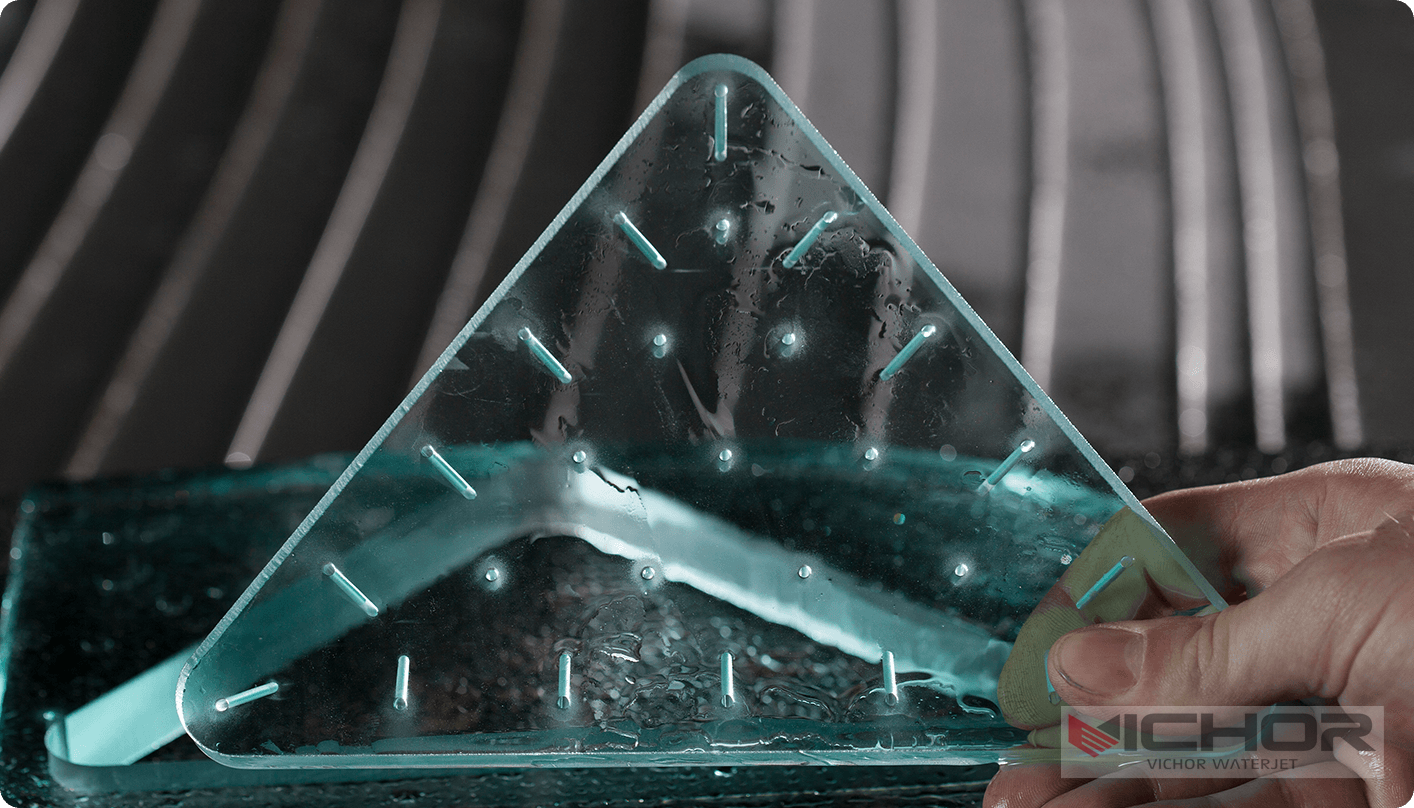
A3: No. Tempered glass is under high internal stress. If you attempt to pierce it with a water jet for industrial stream, it will shatter into thousands of pieces instantly. Waterjets can cut annealed (standard) glass efficiently, which can then be tempered after the cutting process is complete.
Q4: How does VICHOR improve the reliability of a water jet for industrial setup?
A4: VICHOR focuses on the longevity of the high-pressure intensifier pump. By using premium materials for seals and check valves, and designing the pump for easier maintenance access, they reduce the unexpected downtime that plagues many water jet for industrial operations. Their systems are built to handle the continuous duty cycles required in heavy manufacturing.
Q5: What is the primary operational cost for a water jet for industrial machine?
A5: The abrasive garnet is usually the single highest operational cost. In a heavy-use water jet for industrial scenario, garnet can account for over 50% of the hourly running cost. Other significant costs include electricity to run the high-horsepower pump, water consumption, and wear parts like mixing tubes and orifices.